Leg 5, Blog 1, March 25, 2026
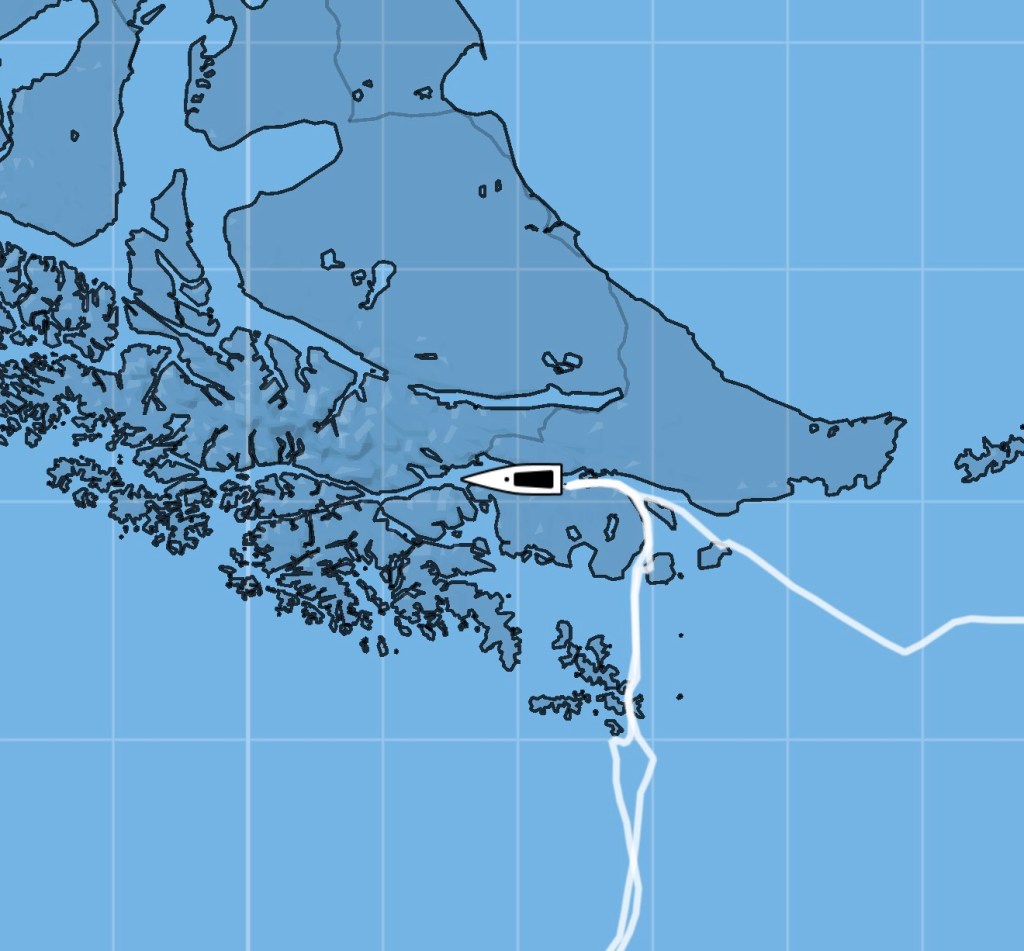
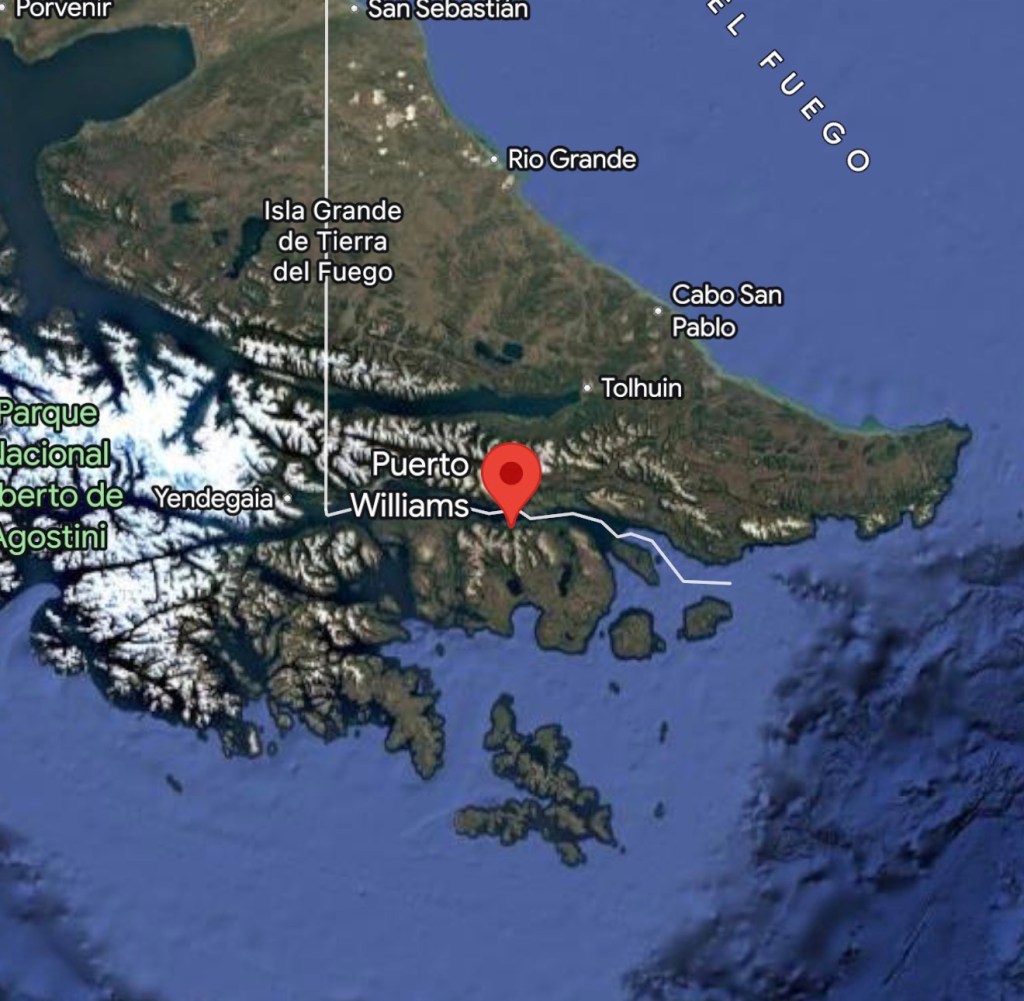
After a nice winter break, I arrived back to Puerto Williams on March 15th. Randall had arrived one week earlier to begin his preparations that included refueling, changing oil and various other maintenance items. Getting to Puerto Williams (“the end of the world”) is no easy task. I recall that it took me 36 hours (and five flights) to get home. Randall to PW returned via Santiago (where he overnighted after an overnight flight), and I came in by boat from Ushuaia (having spent some time in Patagonia) having flown into Santiago, made my way to Buenos Aires, and then flown south to Ushuaia
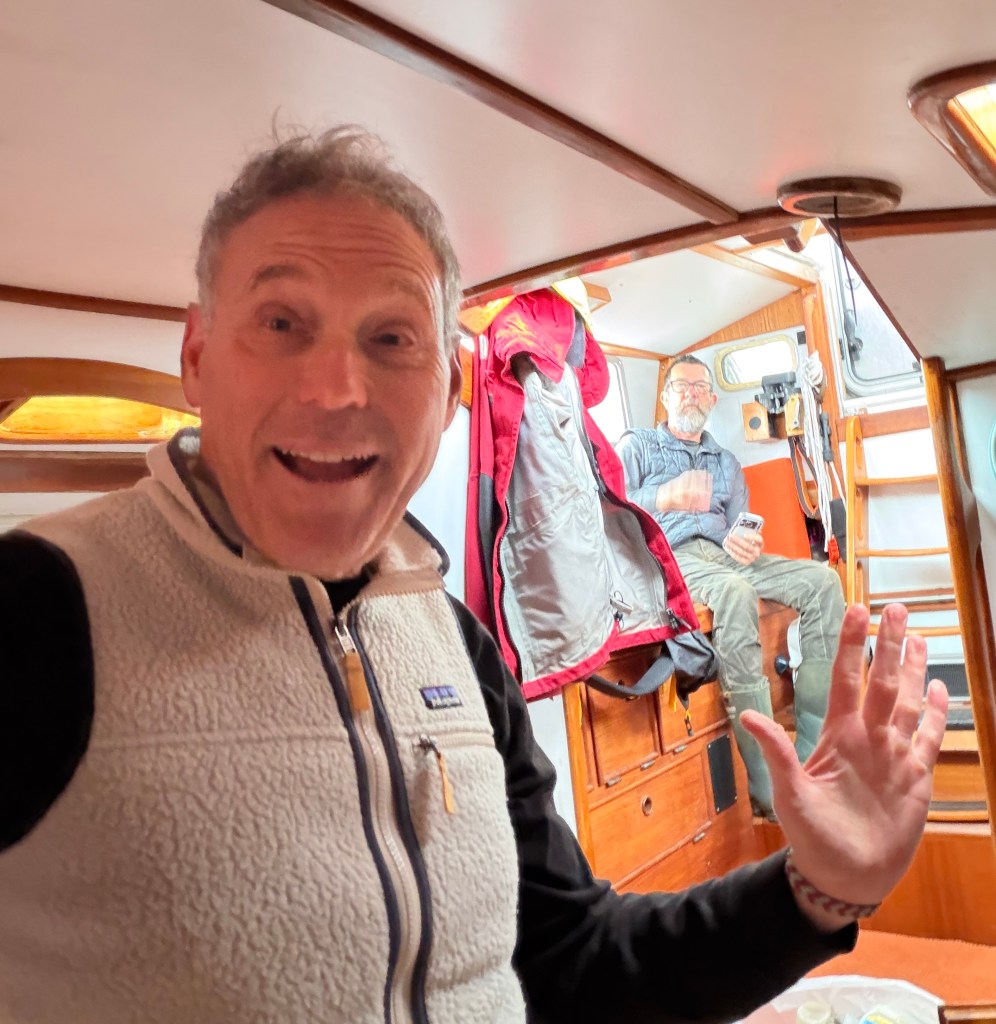
As soon I cleared customs and my health inspection, Randall picked me up at “Club” Micalvi (our literal shipwreck of a “yacht club”). We said our “hello’s”, I dropped of my bags on the boat and we immediately went to the local food store to shop for supplies for our next leg.
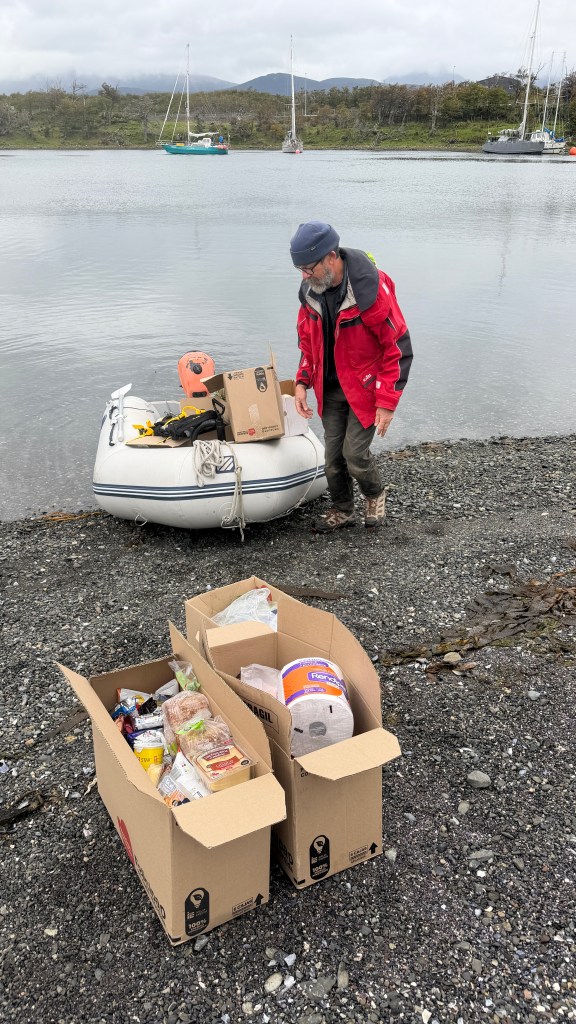
Above: We purchased five boxes of basics including fresh fruits and vegetables, cheese, bread, soap and paper towels. For whatever reason, the produce and variety of foods in Ushuaia, a mere 25 miles away is considerably fresher, and more diverse. One can “sneak” a bag or two of groceries over the boarder without causing an international incident, but I noticed that I was the only one doing this. Getting all of our newly shopped food back to Mōli (which was still moored out in the middle of the channel) was no easy task and required the help of the store manager to drop the boxes off at the dock and it took three different trips to do the drop off to Mōli. We made our best efforts not to lose any foodstuffs overboard.
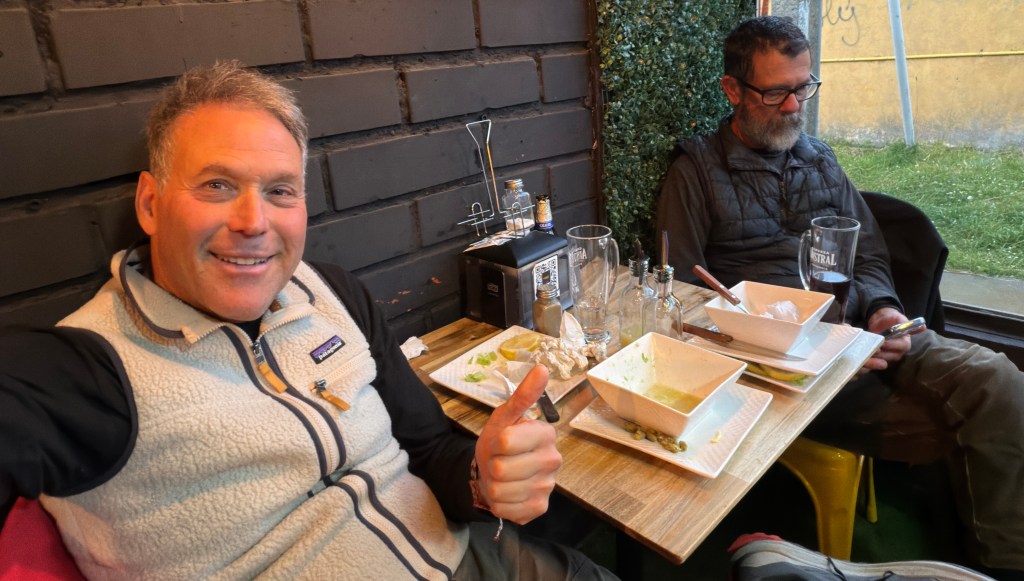
Above: We celebrated our last night (Sunday) at the only open restaurant in Puerto William’s, “The Bistro”. There was one other pizza joint in town, except that it blasted disco music all day and night and the pizza was definitely not worth the headache (maybe after two months at sea??!!). Our favorite dish at the Bistro was the Chilean crab in avocado. Embarrassed to say that we did not figure out until too late that in PW, one orders pasta and then orders sauce (at an extra charge). This just did not make sense to us and there was no way that we were going to pay extra for our sauce. That said, dry ravioli is about as good as it sounds. Lesson learned.
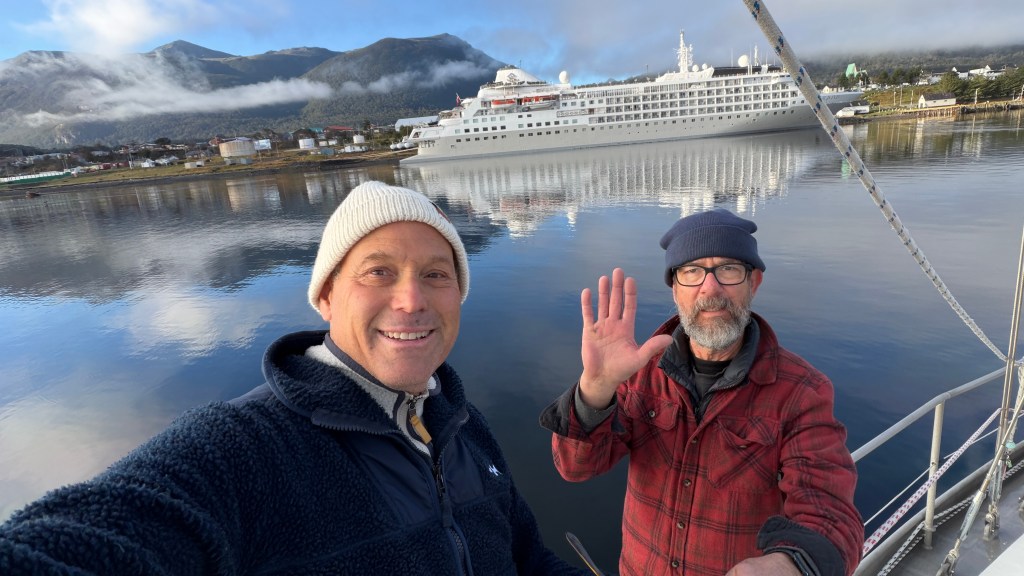
Above and Below: We woke up early on March 16th to a clear and calm morning – perfect conditions to take leave. Above: Behind us is one of the Princess Lines mini (200 passenger) cruise ships that is finishing up its Antarctic tours and will be heading up to North America or Europe empty to prepare for the spring season. They seem to be the only cruise line operating out of PW as all others are based out of Ushuaia.
We said out goodby’s to PW, and with any luck we will proceed up the Beagle Channel past Ushuaia until the point we can connect to the Straits of Magellan.
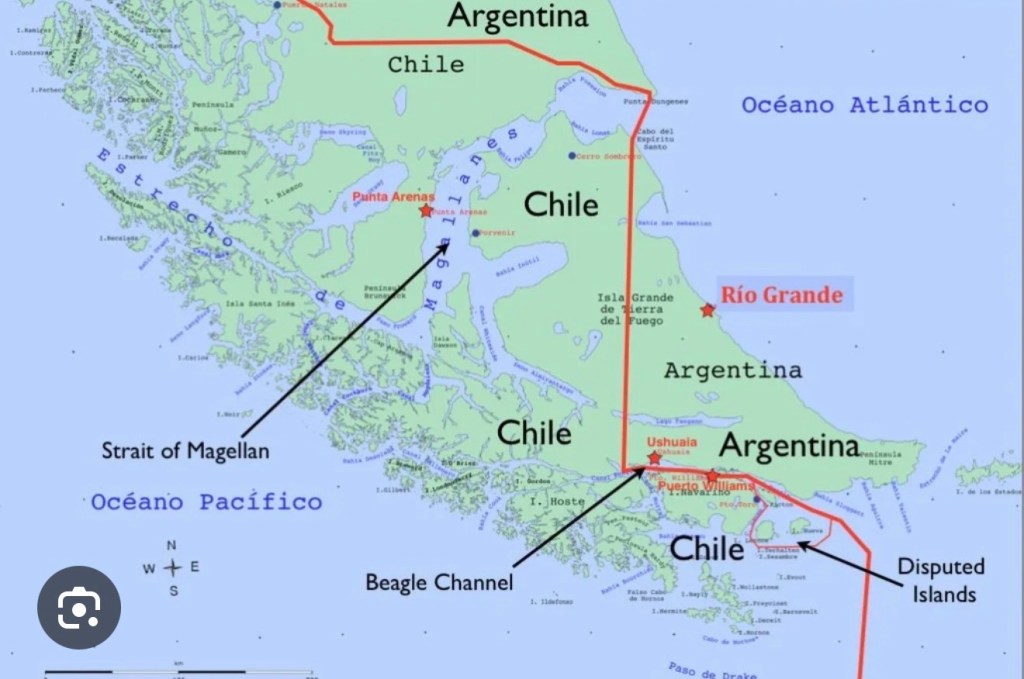
The Beagle Channel is a 240-kilometer (150-mile) long 5-kilometer wide strait at the southern tip of South America, separating the Argentina portion of Tierra del Fuego) from Chile (Navarino and Nueva Islands). Perhaps most important is that it is the southern-most connecting body of water that brings together the Atlantic and Pacific Oceans, acting as a short-cut around Cape Horn as-well-as a gateway to Antarctica offering dramatic glacial scenery, biodiversity, and maritime history.
Located at roughly 55°S, this waterway flows through the Tierra del Fuego archipelago. It lies south of the Straits of Magellan and stretches from Tierra del Fuego towards the Drake Passage. Named after the HMS Beagle, which surveyed the area between 1826 and 1830, the channel was famously explored by naturalist Charles Darwin during the vessel’s second voyage.
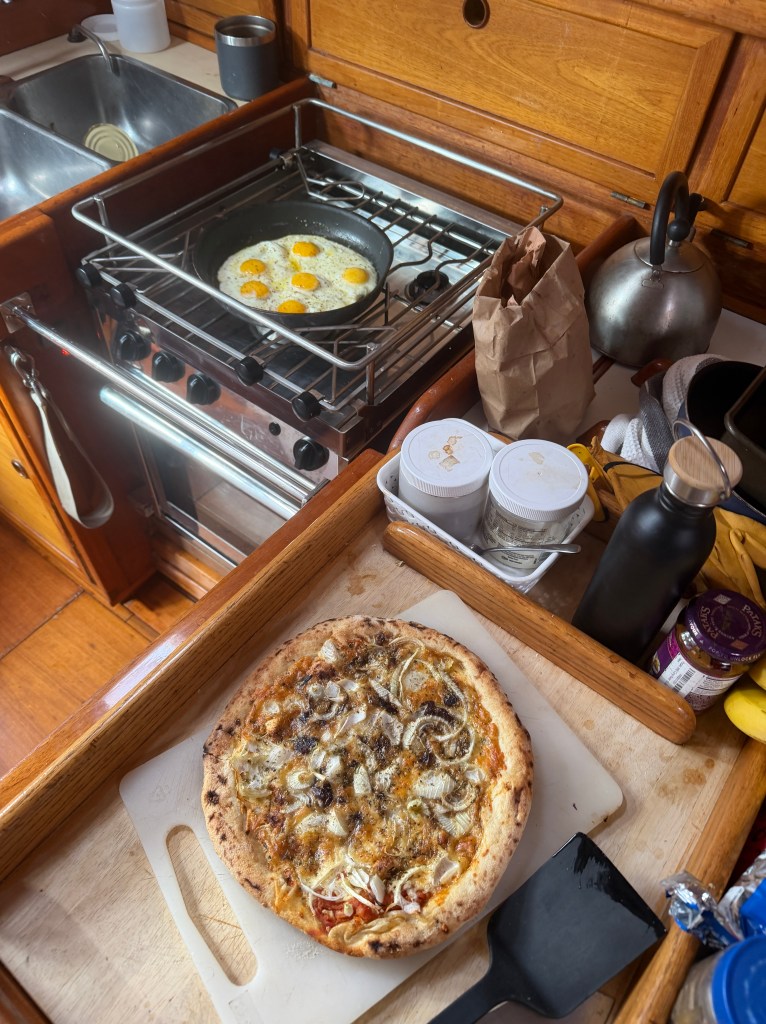
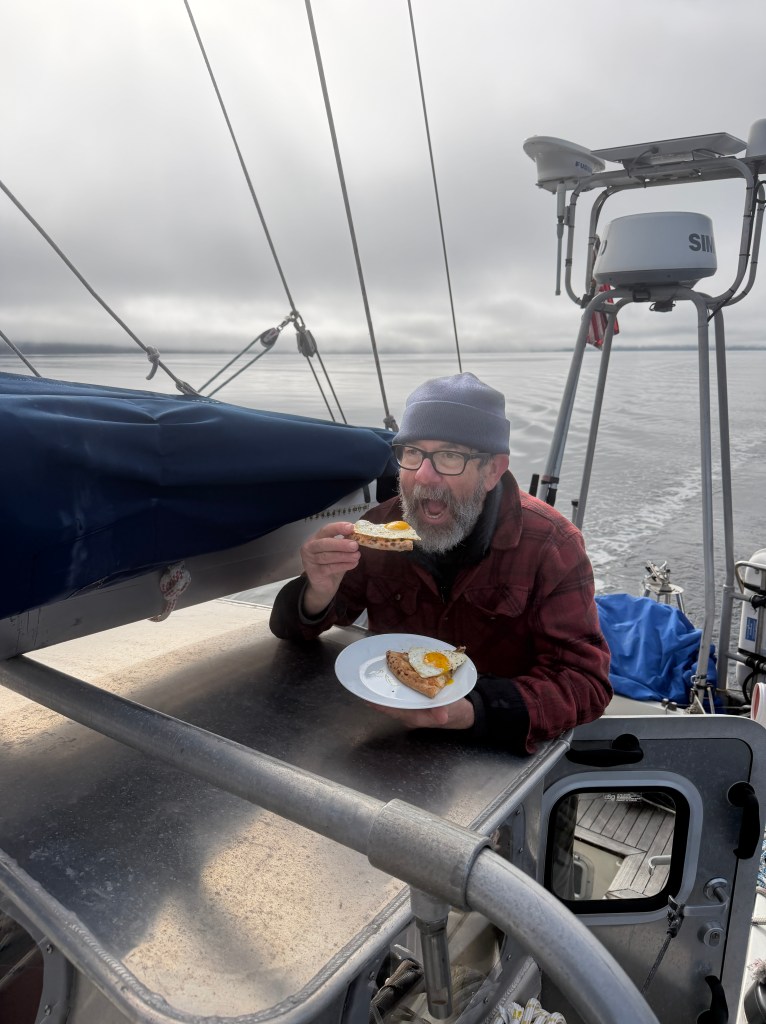
While underway with plenty of supplies on board, I prepared a 1/2 baked pizza I purchased in Ushuaia (yes, I smuggled it into Chile) for an early lunch. I adorned it with fresh vegetables and added eggs to make it brunch-like.
Above: Dolphins ALWAYS make it fun!
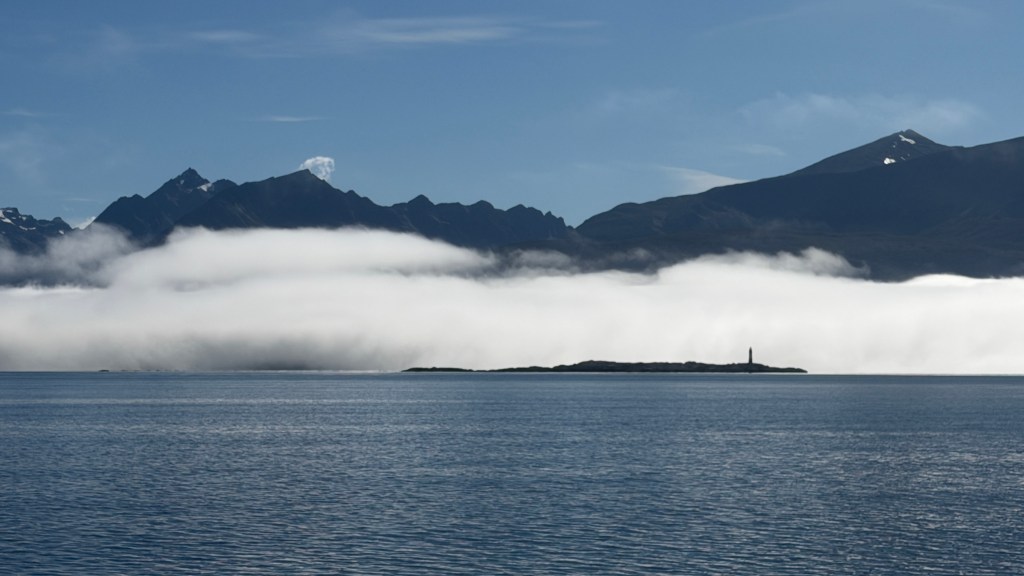
Below: We have nothing but good things to say about the Chilean Navy. They operate a simple but structured bureaucracy and insist on knowing the comings, goings and daily positions of the simplest sailboat in their waters. They actively manage the waterways of Chilean side of Tierra del Fuego all the way up through Patagonia. The major waterways are well marked with plenty of buoys, channel markers ,GPS beacons (that may or may not be in service).
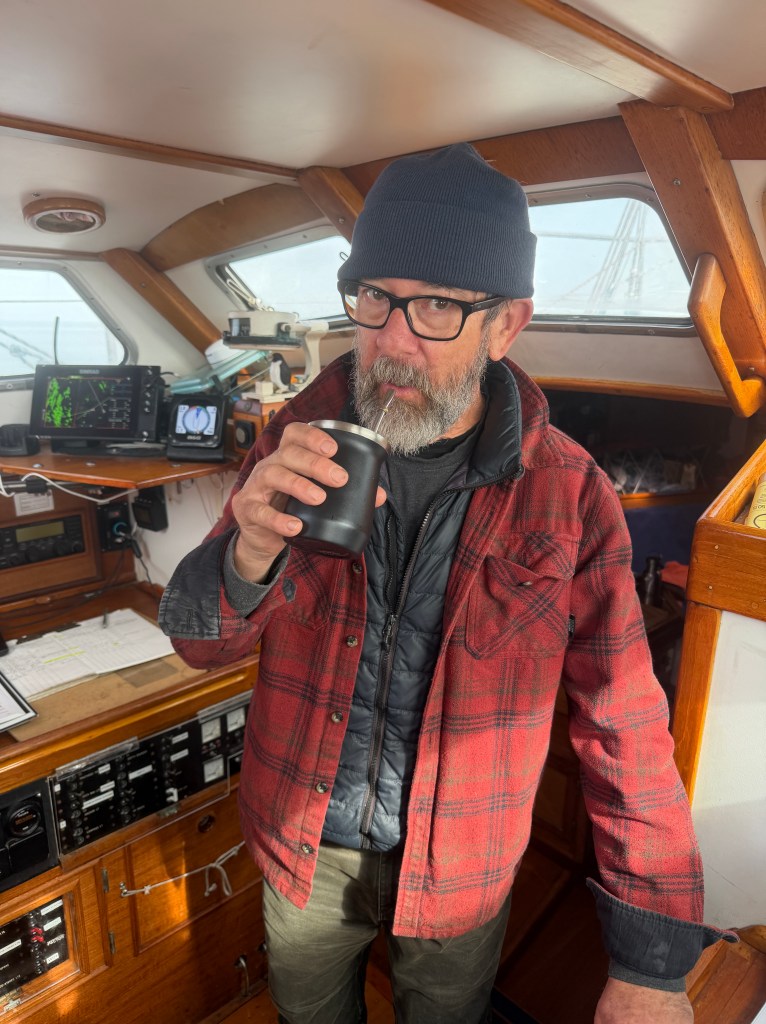
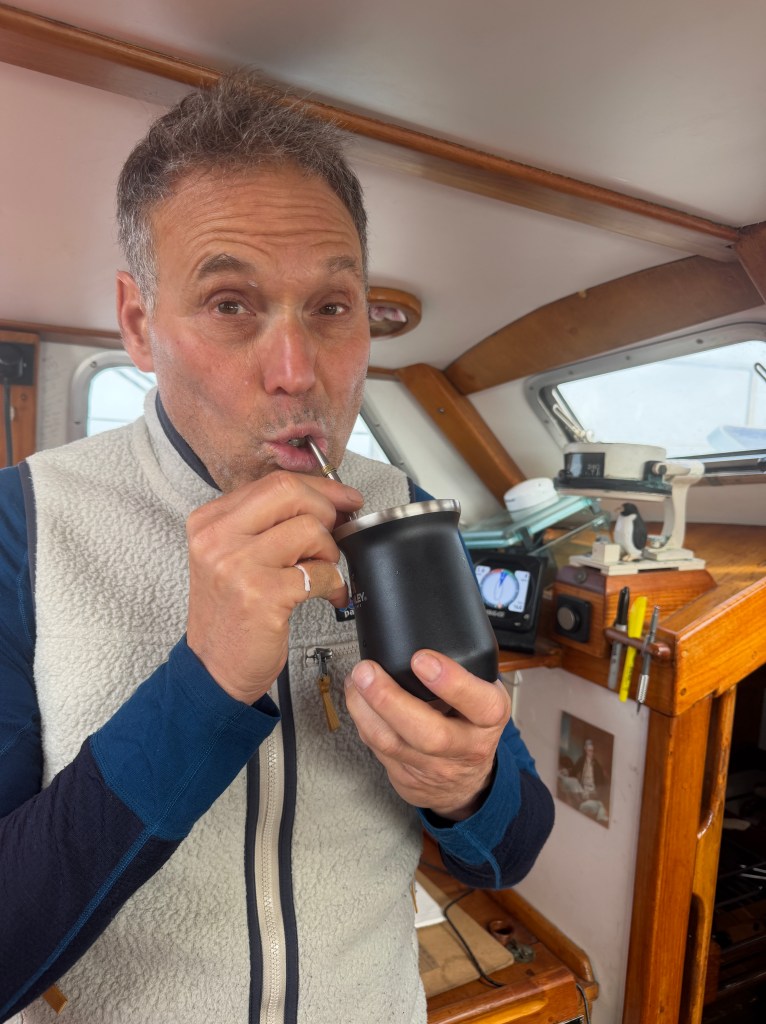
Above and Below: I cannot quite get the swing of the mate-thing, but I assure you that we are trying. After having watched the multitudes of citizens from Uruguay, Chile and Argentina take their mate super seriously, I just had to bring it on to Mōli. I had fantasies of cold mornings and icy evenings made delicious and cozy by warm mate. Mate is a robust green tea with just a bit of roughage added in (hay and alfalfa??) It Is a traditional South American caffeine-rich herbal beverage made from dried leaves of the Ilex paraguariensis plant.
Known for its earthy, bitter taste, it is prepared by soaking leaves in hot (not boiling) water and drinking through a metal straw called a bombilla from a gourd. It is highly prized as a stimulating beverage that locals drink even in the evening (??!!)
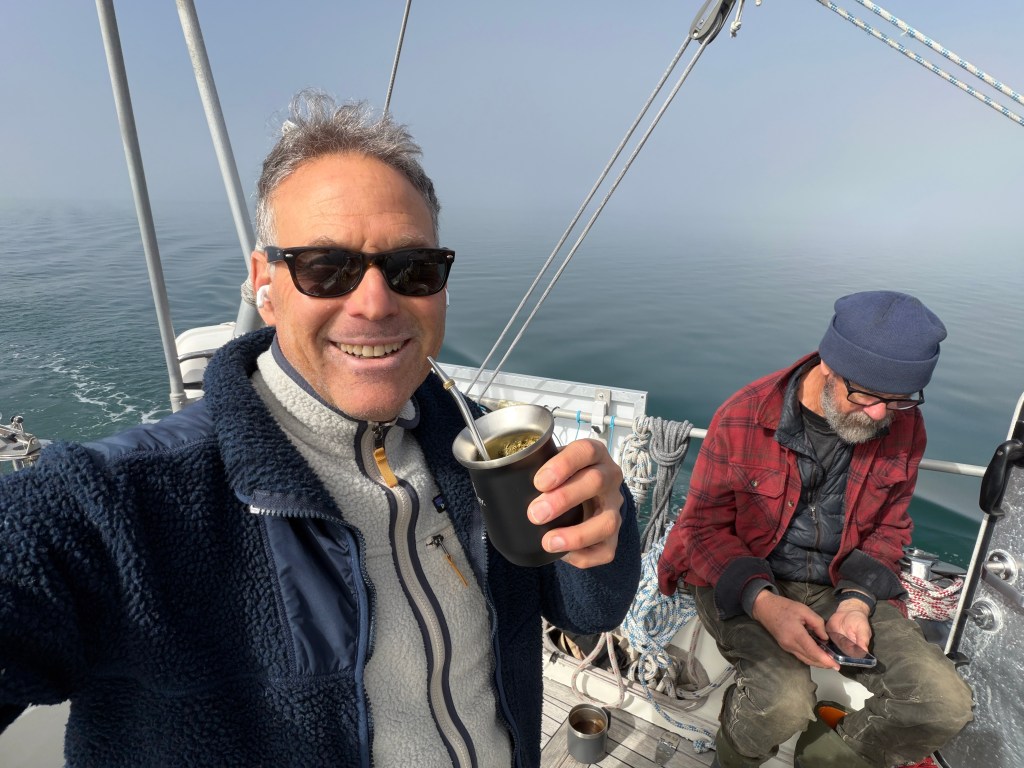
Above: Randall, in his defense gave the mate a fair shot but he is back to his coffee. I try to pretend that I understand the flow-dynamics of adding just enough hot water to the bottom of the cup where the dry mate has been tilted like a pyramid with the base at the bottom with a hole just big enough to allow for the metal straw to sit at the bottom to absorb the fresh hot water poured in one sip at a time to allow a steady, even absorption of the mate. All of this, of course, while holding the cup steady enough so the dry mate will not collapse inwards. Sometimes, to the horror of native drinkers, I get frustrated and impatient and just pour in a cupful of hot water and sip it like a proper cup of tea (albeit with the metal straw).
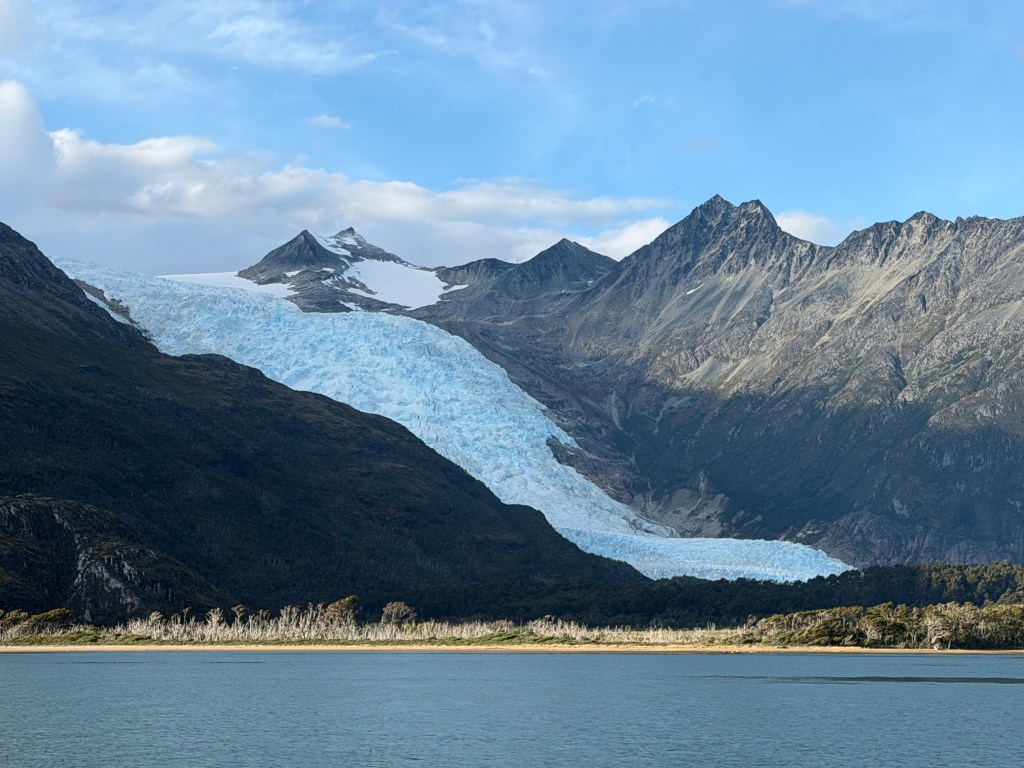
Beginning our northward journey from the southern tip of Chile gives us an understanding of the rugged simpleness of the country. Miles and miles of empty coastline populated with rugged mountains. We see no signs of human activity. No houses, no industry. The primary industries of Chile are mining, agriculture and fishing with tourism a distant fourth. Puerto Williams is still a Naval town, while its nearby Argentinian counterpart, Ushuaia, is a mecca for ecotravel, cruising and anything related to tourism to the Antarctic Peninsula. We have yet to see any of the aquaculture (salmon farms) but we are lookiing out for them.
The origins of Patagonia and the Chilean Channels was best described by Rolfo and Ardrizzi in their Patagonia and Tierra Del Fuego Nautical Guide (with much “borrowed” from them:
The orgin of such a fragmented geography along the Patagonian fjords and those of Tierra del Fuego can be put into four main factors:
- The meeting of the oceanic plate with the continental shelf;
- Massive erosion by water during the pre-Tertiary periods;
- Intense glaciation from 2 million years ago ending at the last ice-age 14,000 years ago;
- Massive earthquakes which made the ground sink opening a breach from inland to the ocean.
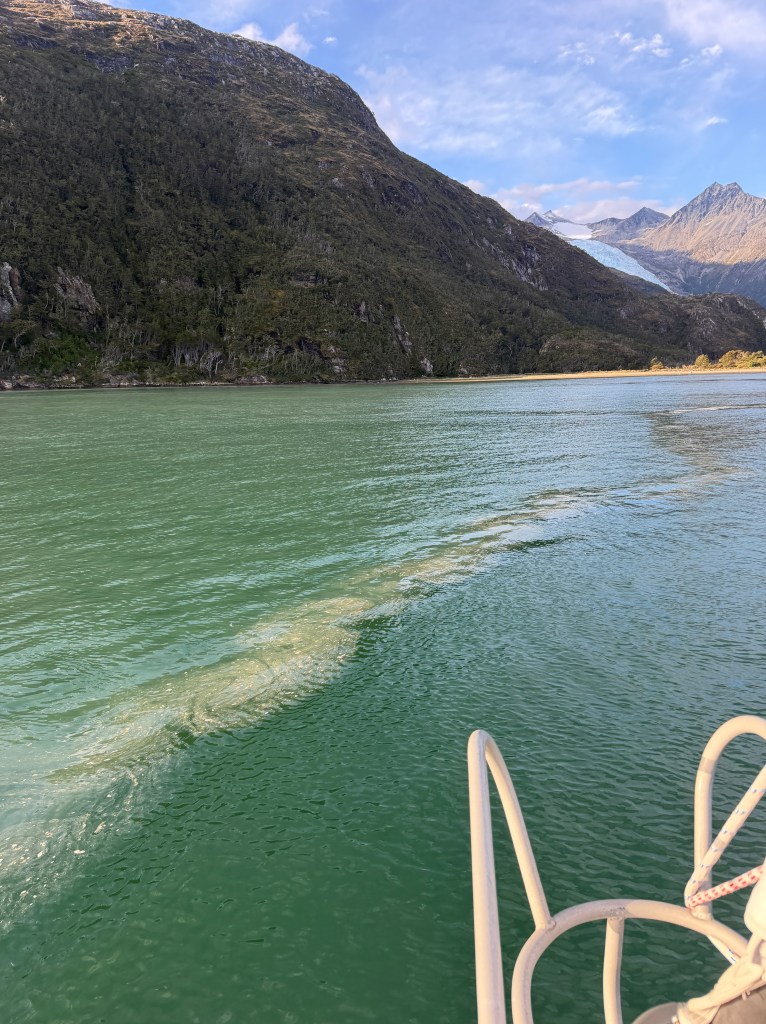
Above: The Patagonian waterways and canals are all connected to the Pacific Ocean, and therefore have their own tidal and current patterns. The color of the water can turn from an azure blue to a (British Racing?) green depending on depth. What I found interesting in the picture above is the delineation of the tide line in a canal off the Beagle Channel.
Night 1: Caleta Olla Evening of March 16th
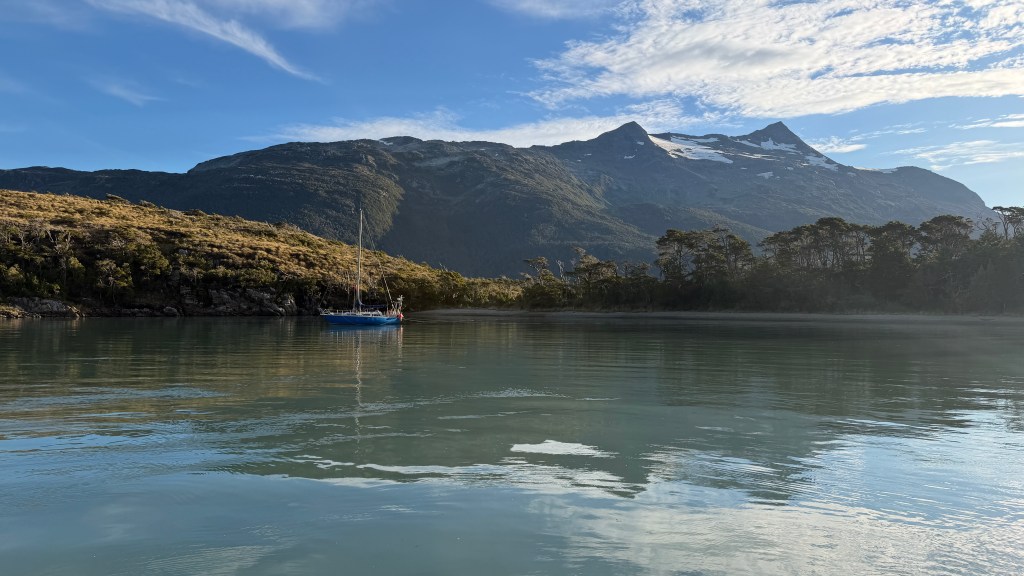
We arrived at Caleta Olla, our first night’s camping spot after motoring 66 miles from Puerto Williams. This took us a little over 10 hours. The surroundings were tall mountains, tall trees and the shelter of the bay allowed us to simply anchor the boat. As you can see above, one boat was already there by the time we arrived. With a French flag, and looking hardy, Randall remembered seeing this craft in Puerto Williams.
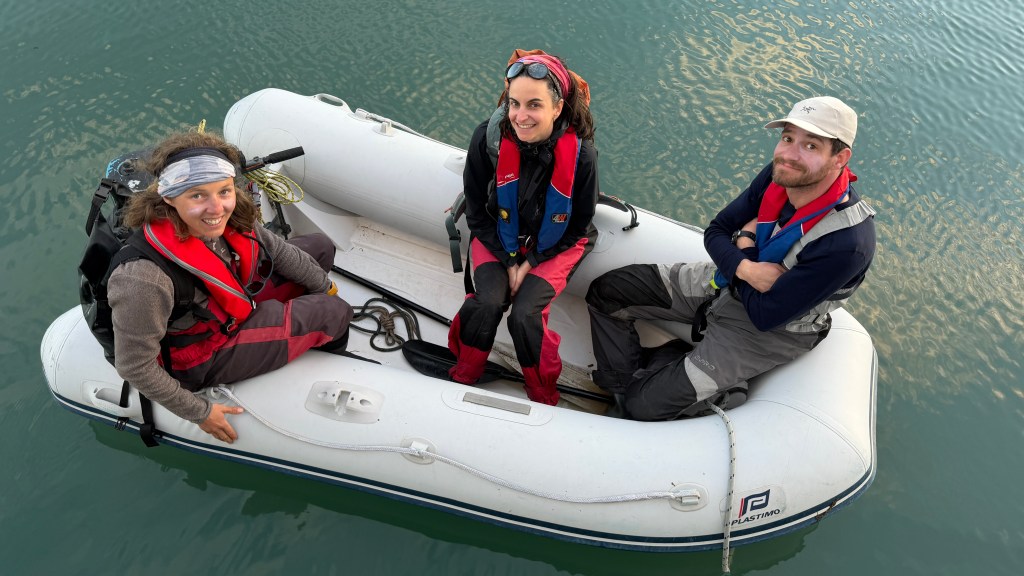
The three crew-members had arrived the night before, and had spent the day hiking the area. They are staying the winter in Puerto Williams and had been making their living by crewing boats that went to the Antarctic the past summer. They came over to say “hello” and smelled our dinner cooking and commented favorably. “Dang”, I thought to myself, French people who like what they are smelling…what a compliment! I hinted to Randall that perhaps we could invite them in for dinner. Randall, giving me the look that only a skipper can give, said “I am going to sleep in one hour and we are getting up at 0400″. Ok…Ok….”Sorry guys!!” Maybe next time!
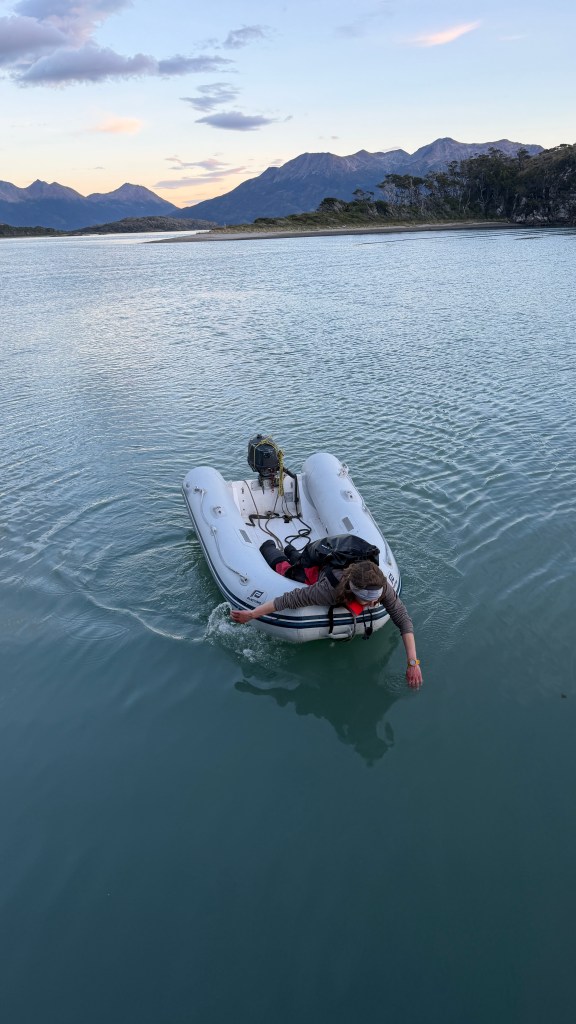
Above: This really impressed me. One of the French crew was motoring the dingy back to us to ask a question about our travels tomorrow. Her outboard cutout and she was left without propulsion as the oars were back on her boat. After failing to start the outboard, she didn’t miss a beat and started rowing by hand. I would have called for help and then been blown away by the wind to a far away shore!
We left Caleta Olla at 0415 a little bleary-eyed (me anyway).
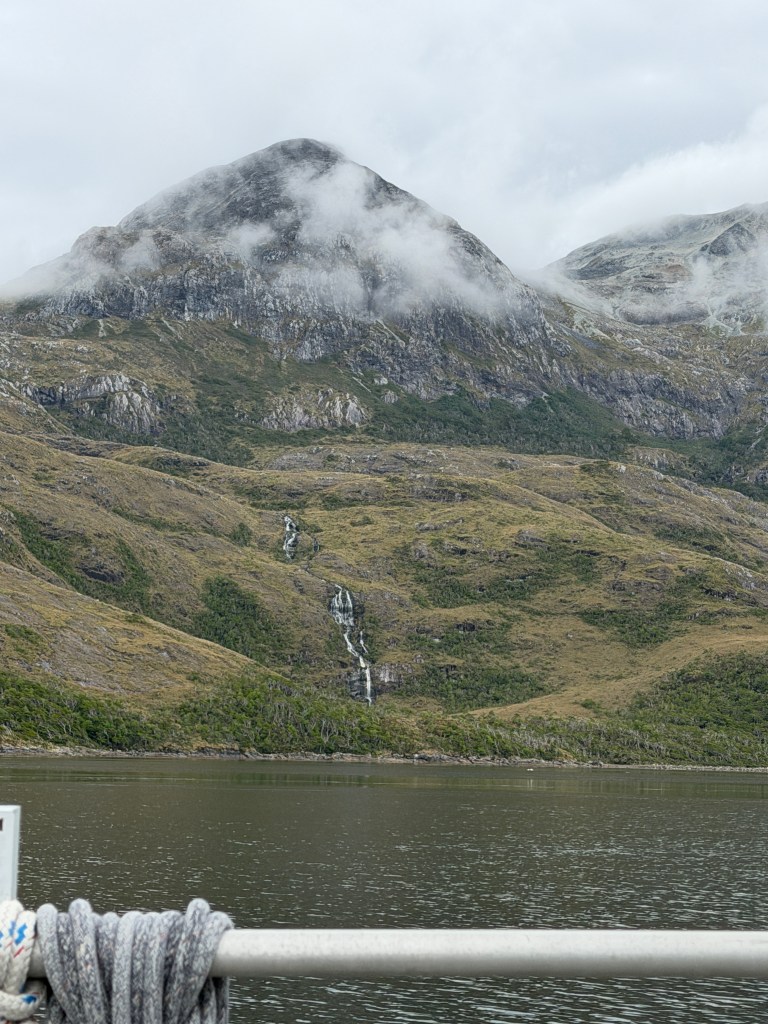
Above: Passing beautiful mountain ranges, one after another. We pass so many of these low-lying mountains with their streams pouring water into the channel.
Above: It is not uncommon to see the Black-browed Albatross (Thalassarche melanophris) resembling a large white-bodied gull with dark wings. Albatross think nothing of resting on the water in these parts. This took some getting used to by me as I typically see them out on the open ocean as they spend their days and nights hovering about at a low altitude searching for their next meal. Here, they hang out like Seagulls, either alone or in a group. That said, they are an endangered species suffering greatly from the effects of long-line fishing.
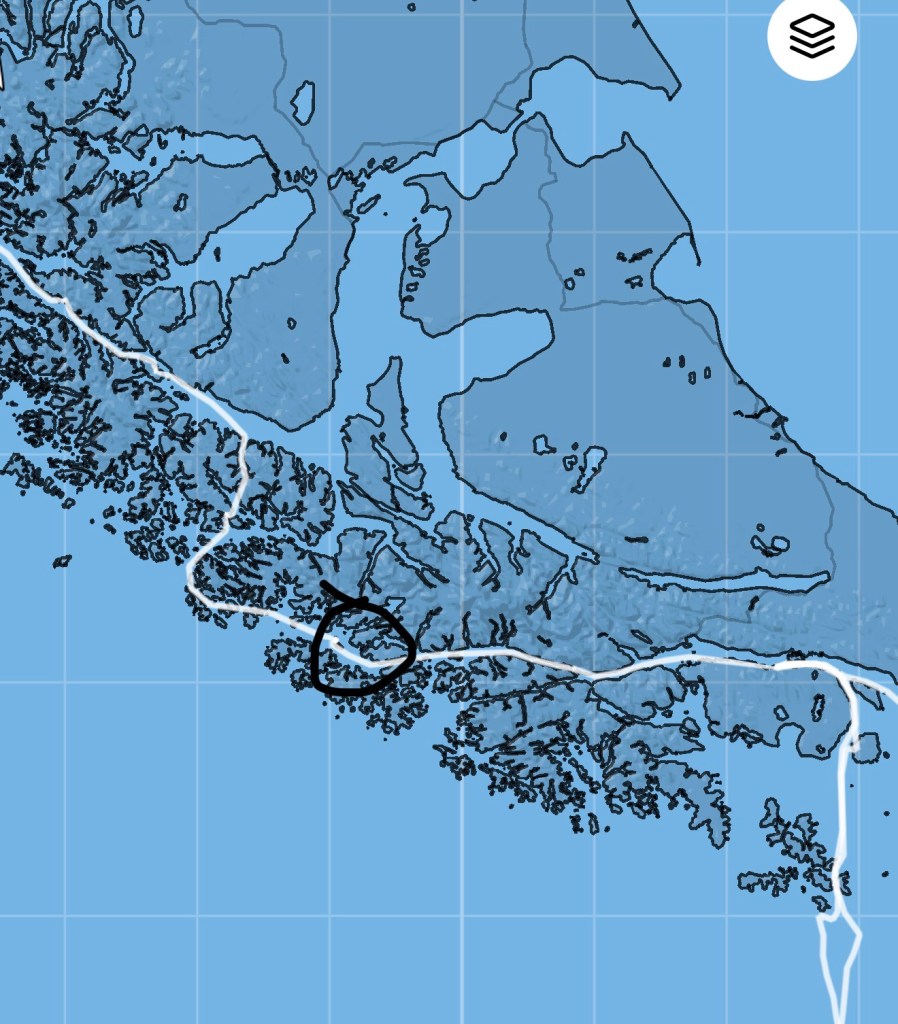
Night 2: Pozo Isla del Medio Evening of March 17 & 18
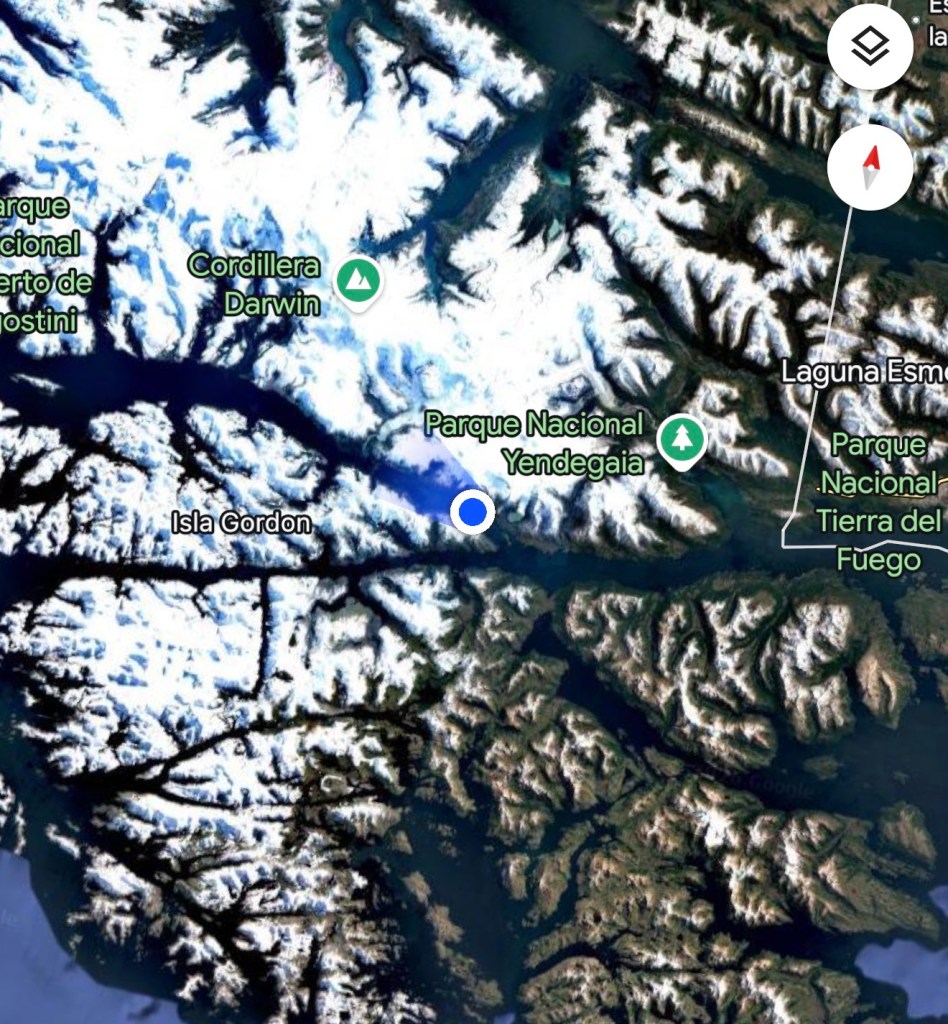
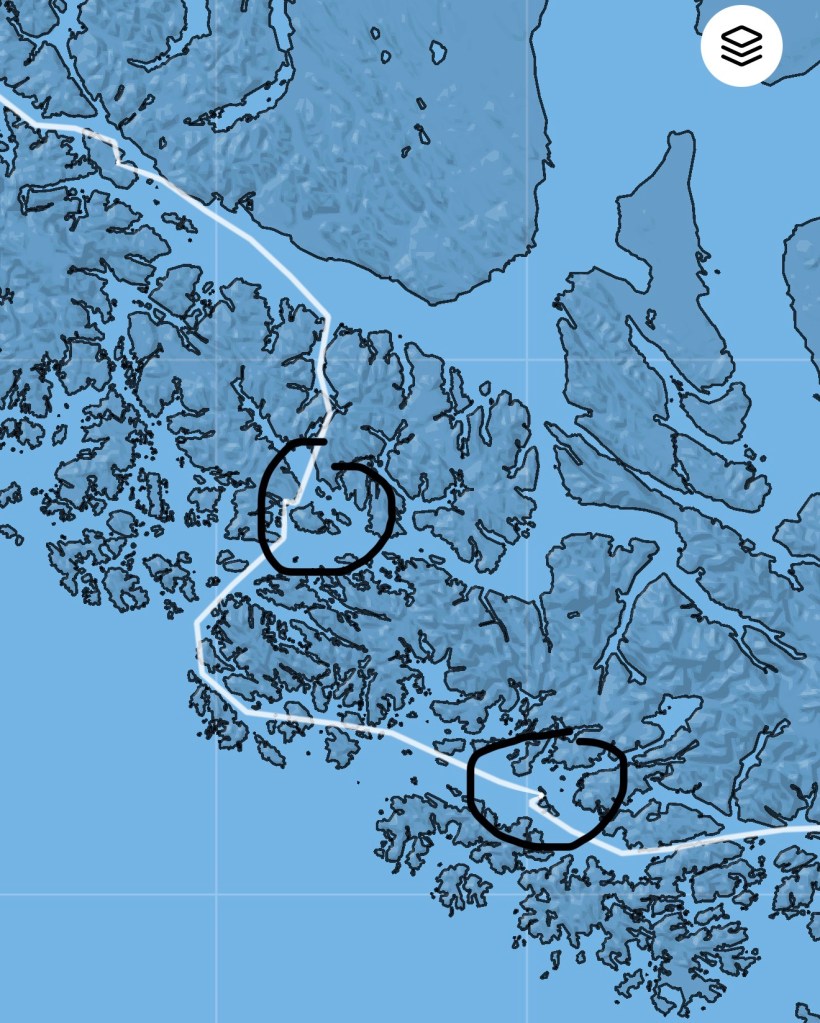
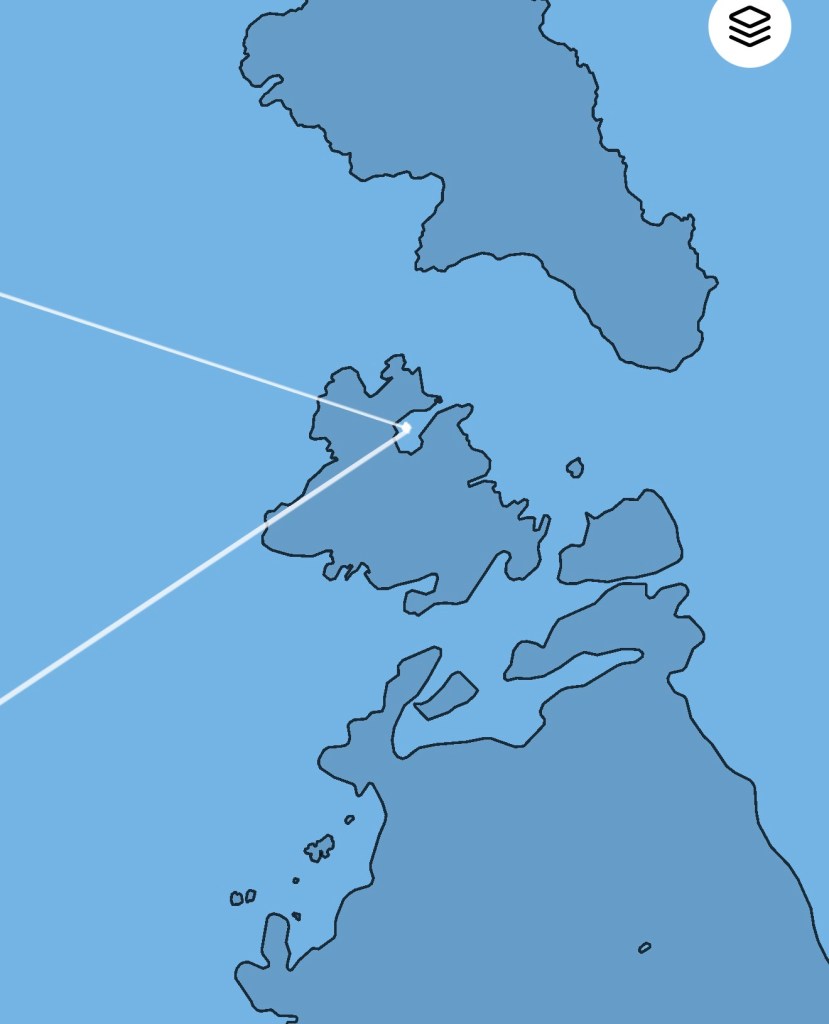
Above: The lower circle is our first night, and the upper circle is our second night at Pozo Isla del Medio.
This incredible natural pool hidden in the northern coast of an unnamed island the authors of the Nautical Guide named Isla del Medio is regularly used by local fisherman. You can see the pre-laid ropes the fishermen have left tied to shore. Randall chose not to rely on them, so we tied our own onto the shore.
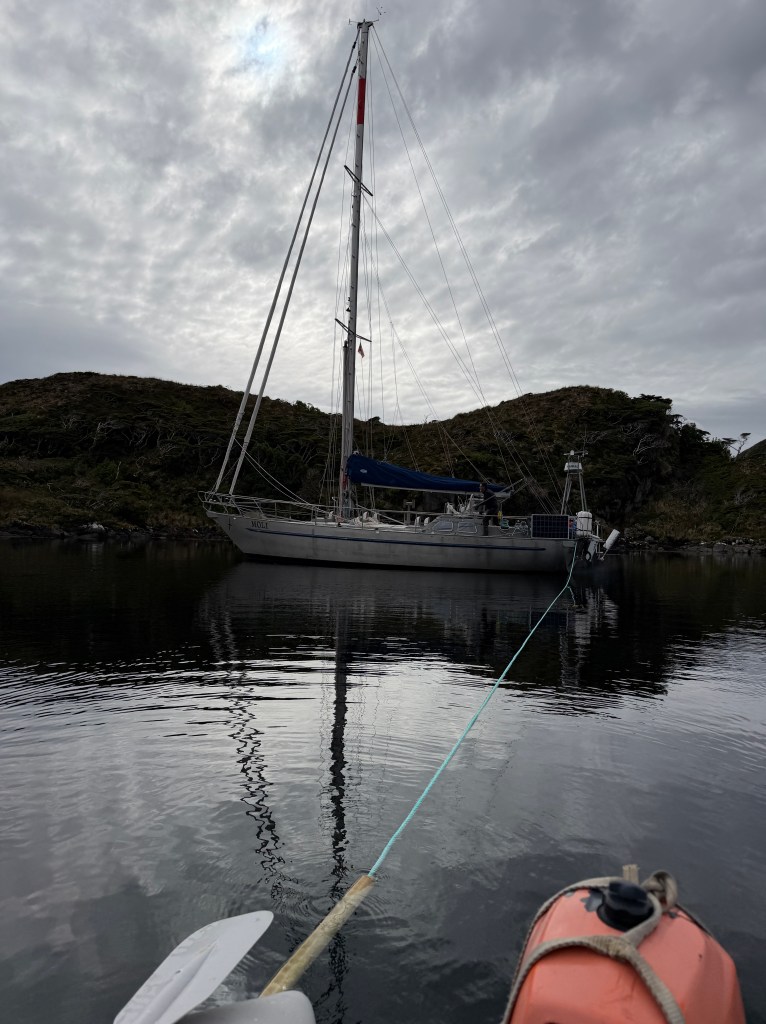
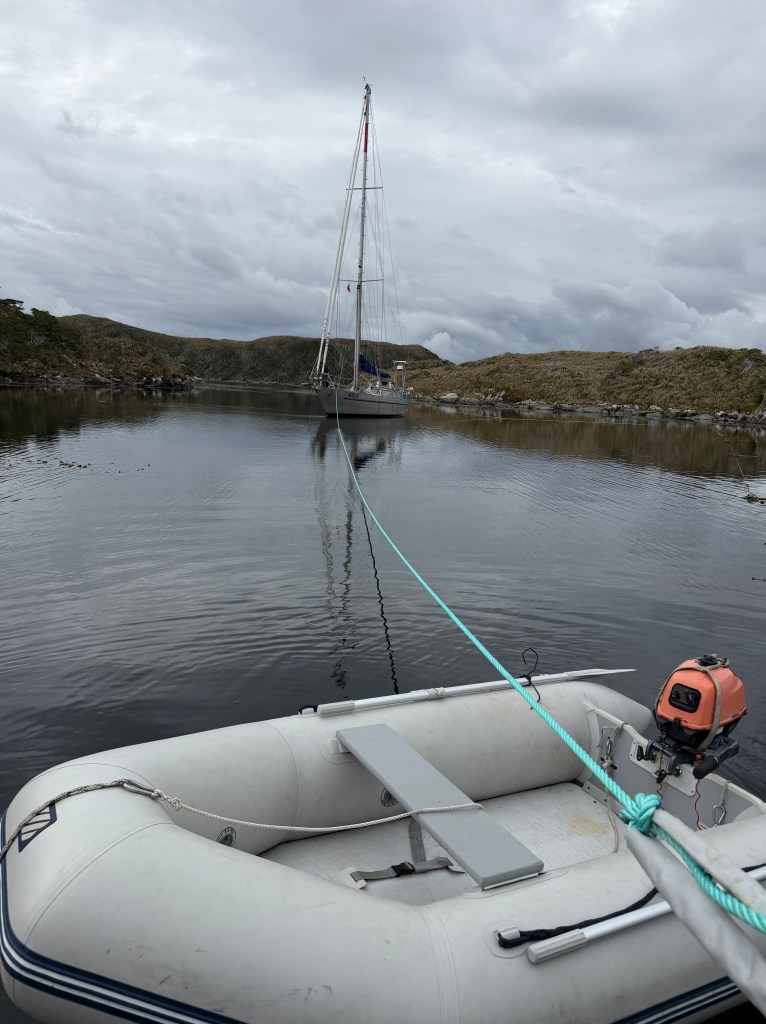
I rather enjoyed pulling the thick line from Mōle as Randall would let it out as I approached the shore. This was a considerably more difficult task in the Antarctic where I was battling ice, freezing winds and cold currents. With water here that is is the 30’s, I need to remind myself not to fall into the drink.
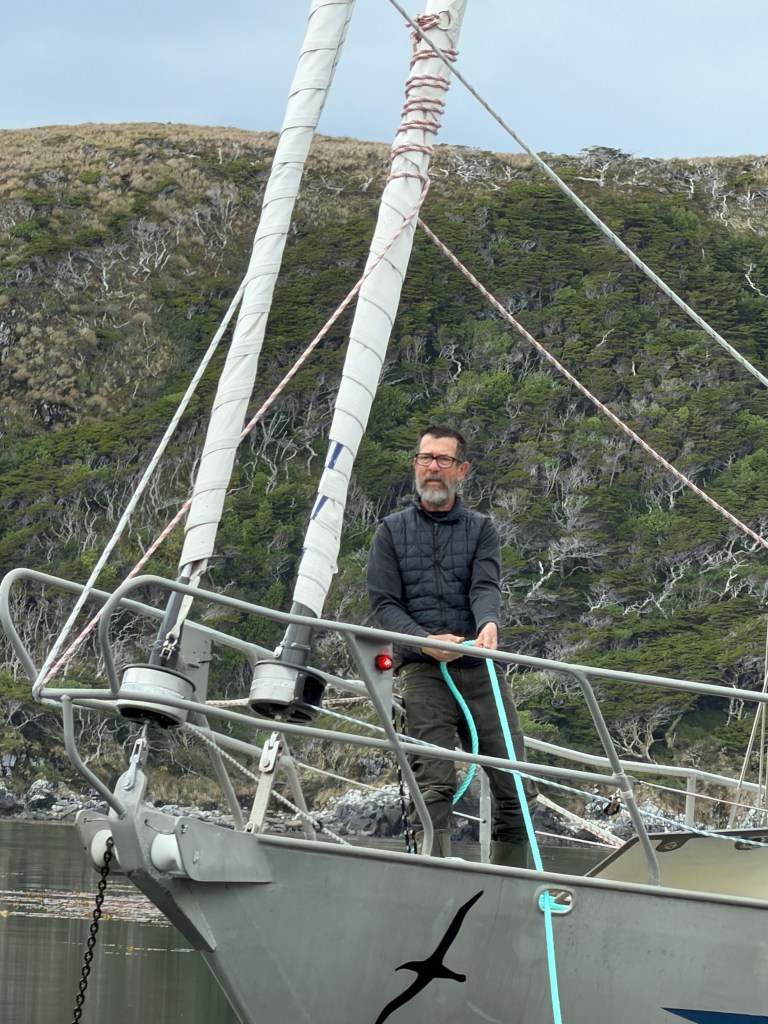
Above: Here is Randall simultaneously letting out the line and tightening when necessary.
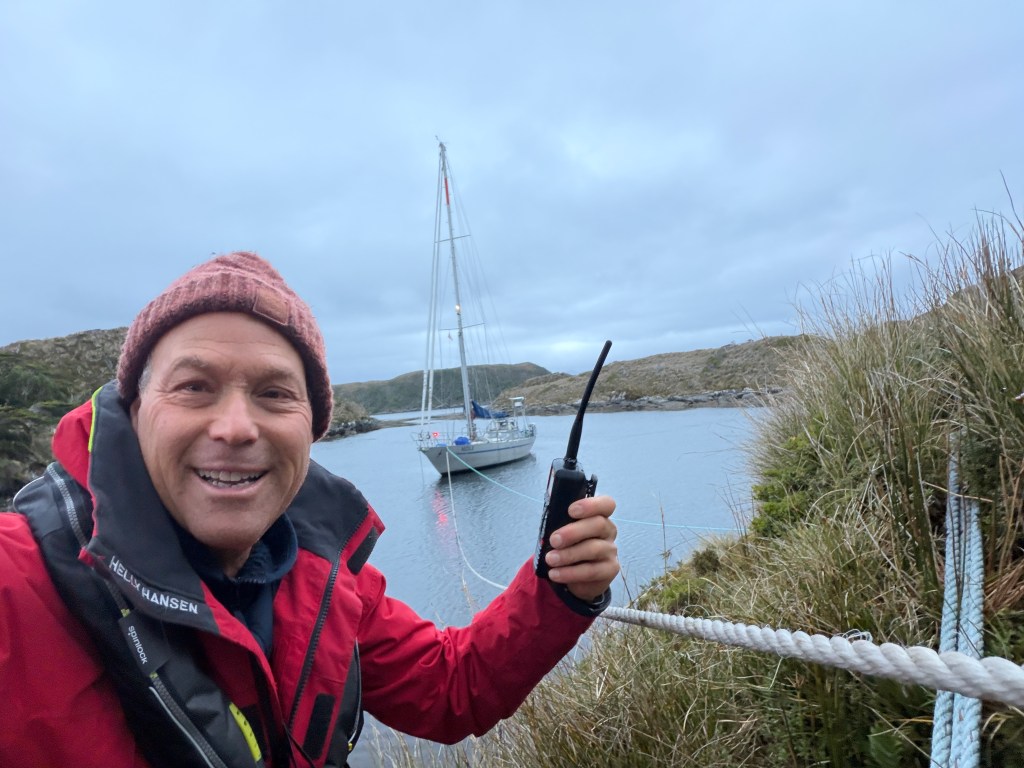
Above: Here I am at shore. I have the hand-held radio to communicate with Randall. As you can see, our boat line is above the fisherman’s pre-laid lines that they tie into.
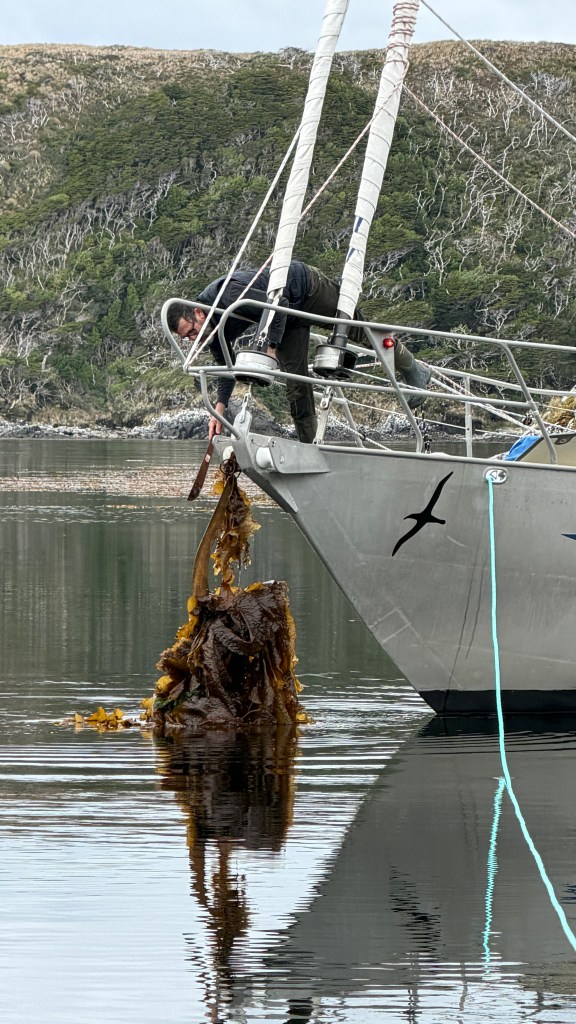
Above: After Randall adjusts the lines I have brought to shore, he then needs to adjust the anchor. Here he raises it and brings up a considerable amount of kelp to which he hacks away with his machete. Almost like being in the jungle.
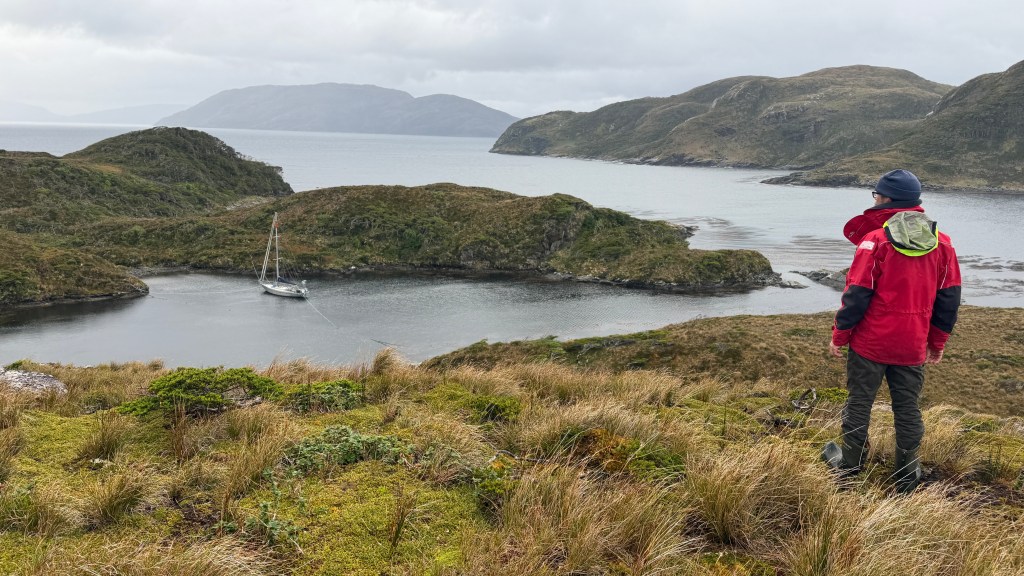
Above: We have a little bit of time, so we take the dingy to the shore and climb the nearest mountain. It felt good to exercise our legs. We are all alone in this beautiful land.
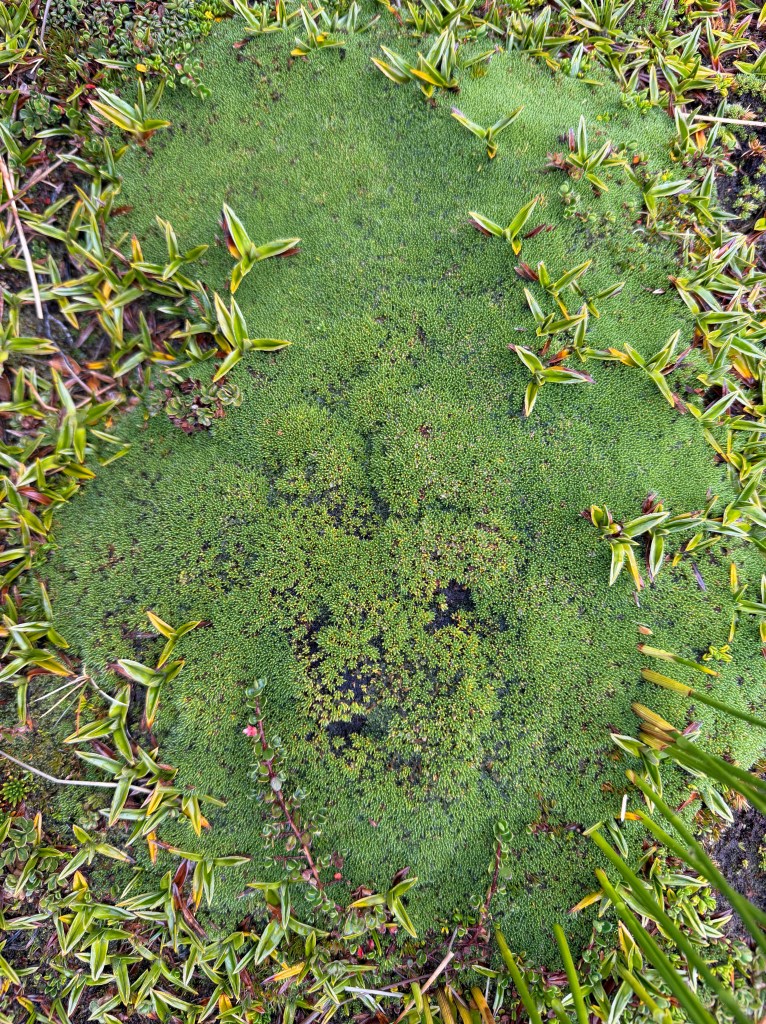
Above: This low growing cushion plant is possibly Yareta or a similar alpine species. This type of plant can form tight hard cushions that are highly adapted to cold, windy conditions (although this one is soft). They grow extremely slowly, often only a few millimeters a year. The overall soil is so soft and wet due to continual rain. Kind of like Arctic Tundra, but without all of the lichen.
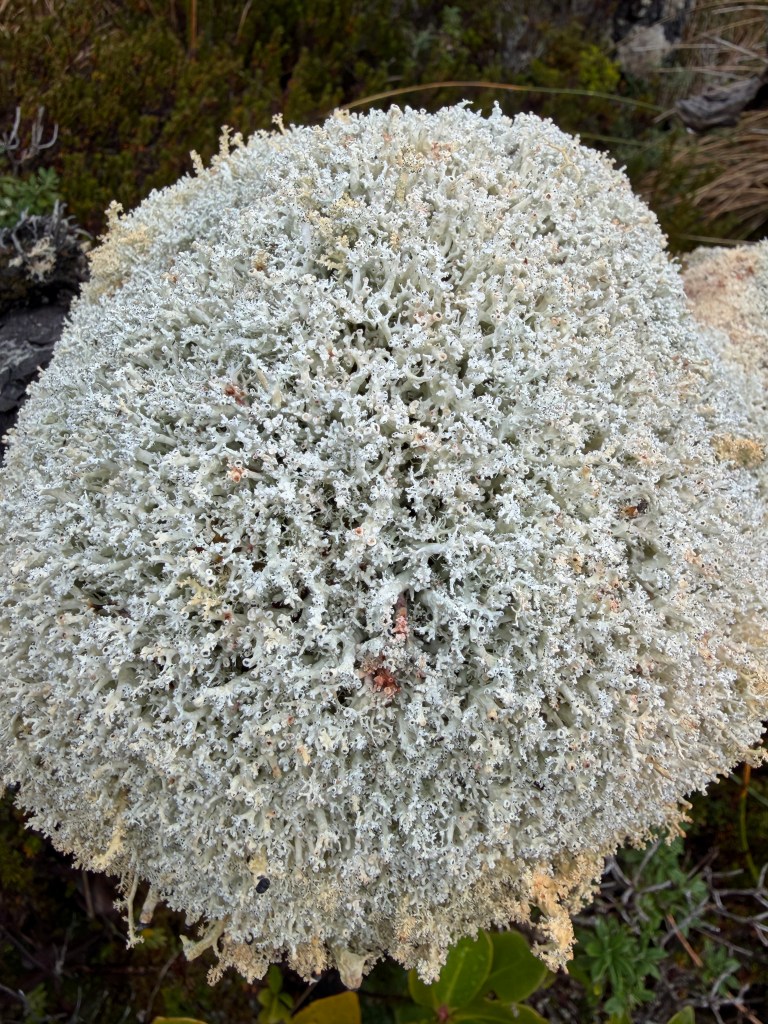
Above: This is likely a fruticose lichen commonly known as reindeer lichen or caribou moss. This particular one grew off of a host tree and thrives in cold, Arctic (Antarctic) or boreal environments. Perfect food for caribou, but there is not even a Guanaco in site, and even if there was Guanaco’s eat grass!
Time to leave
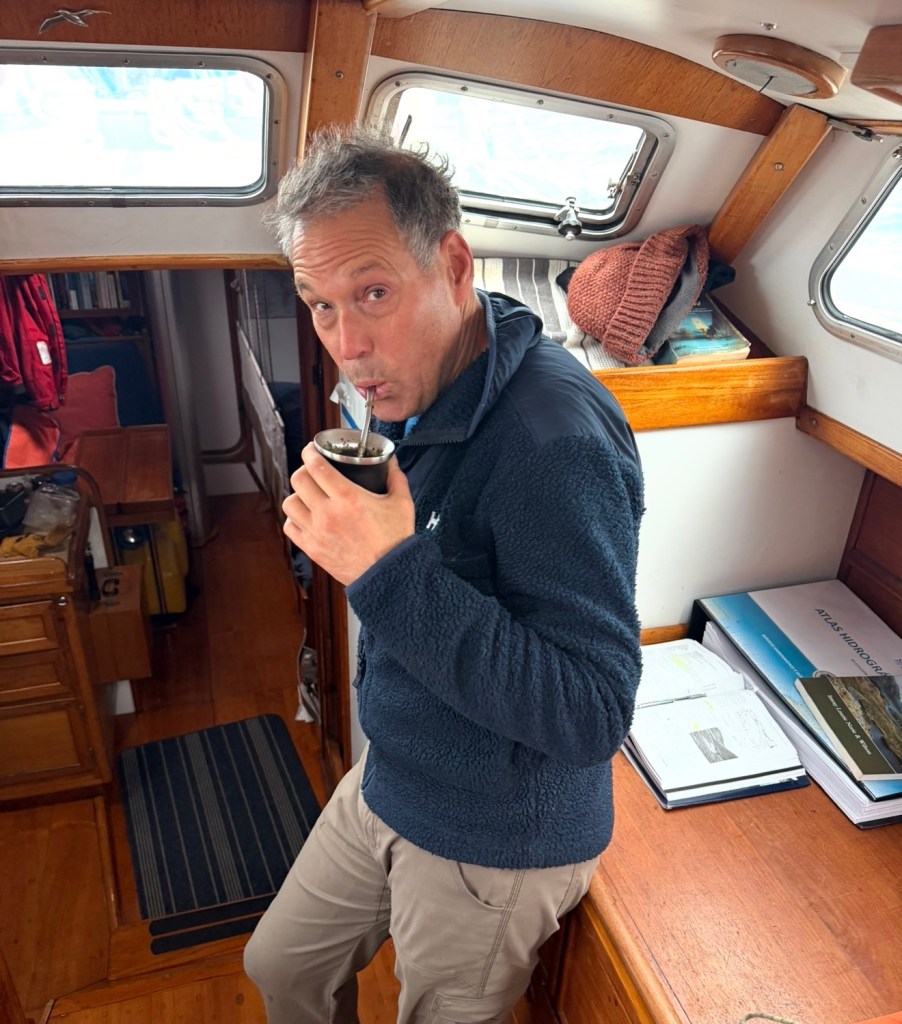
“Here’s looking at you, kid”
Hang on for Night 3 as we are getting ready to leave the Beagle Channel and transit to the Straits of Magellan
 Harmon and Randall's Voyage...
Leave a comment