Leg 5, Blog 3, April 1st, 2026
Well, ok, to be honest, we left the Strait in the middle of last Blog. But after five nights at Caleta Mallet, just happy to be making our way north up the Patagonian Canals.
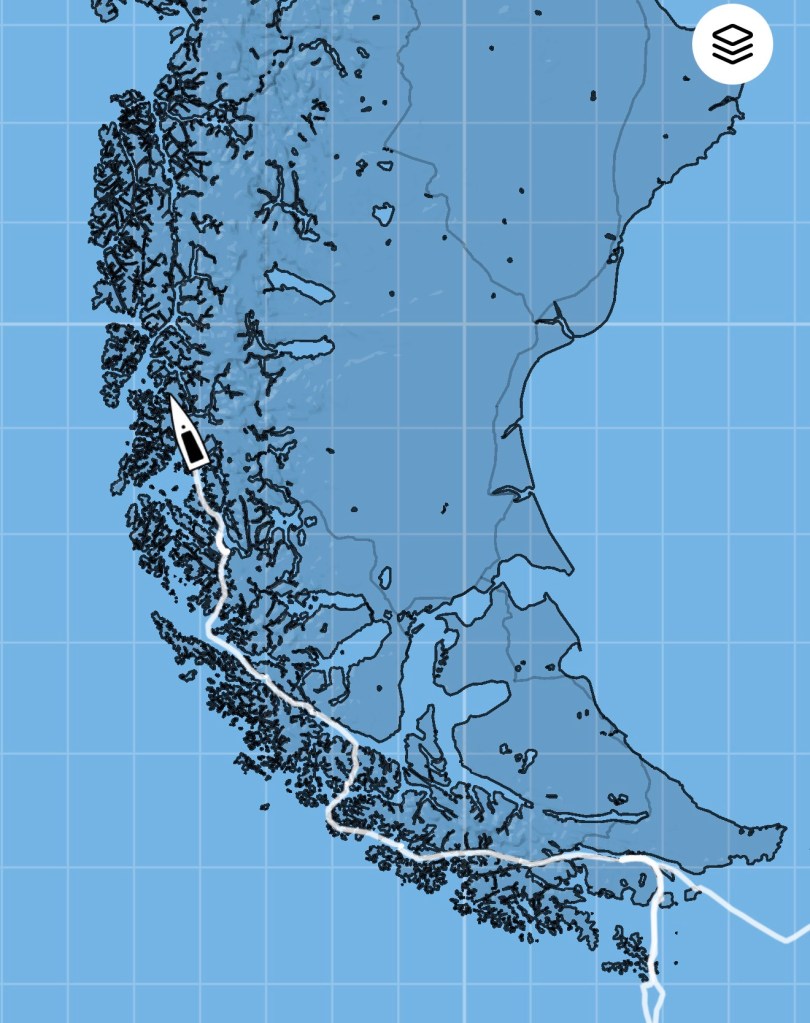
It always feels like we are getting away with something when the wind slacks off and does not blow on our bow. When one goes the “wrong way” around the Cape, the odds and the weather are stacked up against you spend your life waiting for the moment when the “God” of wind gets distracted and finally abnormal weather patterns (which are what we need) are allowed to prevail (kind of like “when the cat is away the mice will play”). Not exactly the case these last weeks as the cat is for sure not away. Regardless, we do try to push on as the wind increases in our faces.
It is fun to leave the narrow channels and transit in the wide open channel. There is a lot more activity day and night. But the small fishing boats are gone, and we have not yet seen a sailboat coming one way or the other
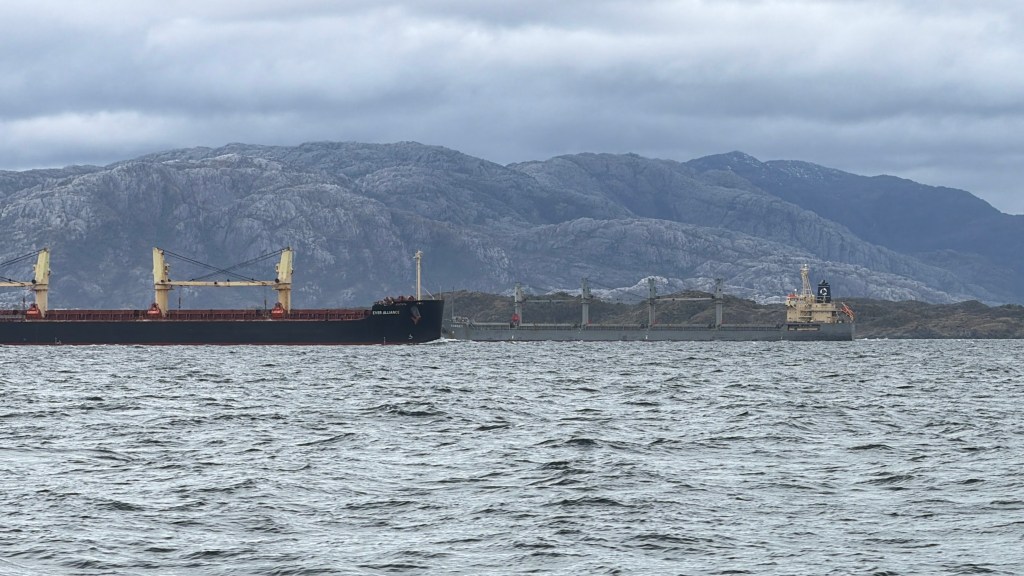
Wow! Two ships…We have not seen this activity for quite some time.
Above: Ordinarily, I would not find a video of two bulk cargo ships passing each other to be of interest. But it has been so long since we have seen this level of maritime activity so we are excited!
Night 12 & 13: Puerto Mayne – Night of March 27 and 28
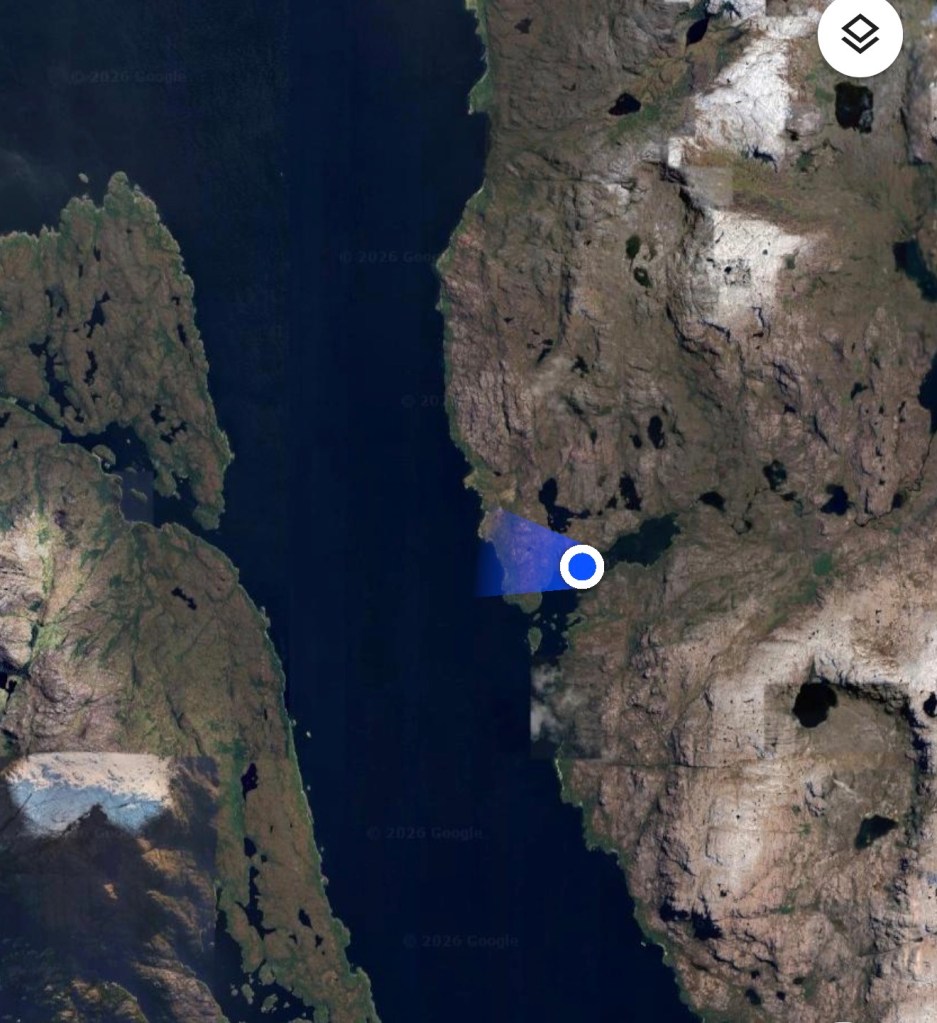
Puerto Mayne is a fairly deep inlet that provides good anchorage in two different places. The bay was named after the British Captain Richard Charles Mayne who sailed these waters in 1867 aboard HMS Nassau on a expedition to the Straits of Magellan and Patagonian Channels to complete hydrographic surveys initiated by R. FitzRoy and P. Parker King.
Above: We arrived at 1730 after covering 53 miles in about 12 hours. We took in a lot of headwind and rain. Boat is nice and clean. Pulling into a beautiful inlet after a long day is such a pleasurable experience. The quite solitude, the beauty of the surroundings and the anticipation of discovering the unexpected gems of the area, be it flora or fauna.
Above: Believe it or not, the highlight of my day is tying into our “anchorage’ or spot for the night. Maybe because it is because I am alone on the dingy??!! Anyway, Randall has typically spent hours finding the best anchorages for the evening. Our route and daily mileage counts revolve around looking at the various maps and books that discuss these anchorages. By the time we pull in, Randall already has a good idea of where we will position ourselves, where we will drop the anchor, and where we will tie in. Once we get in, it is then my turn to take Randall’s direction and dinghy into shore to find the right tree or rock to tie into. This can be easy if there is a good tree and there is no wind or rain, or it can be quite difficult in poor weather conditions and no good places to tie into once I reach shore.
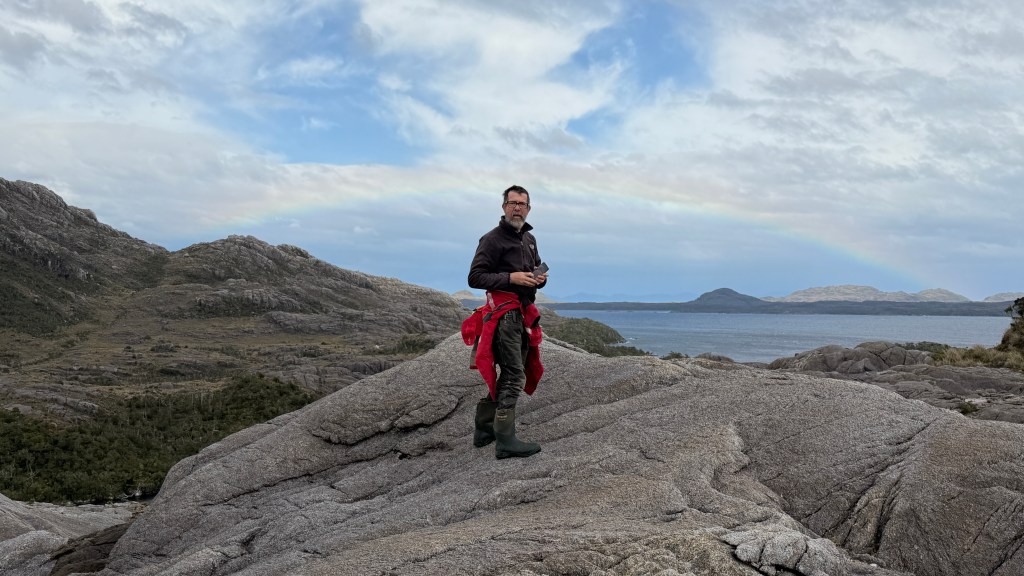
Above: After we were safely tied in for the evening, we took the dinghy into shore and took a much needed hike.
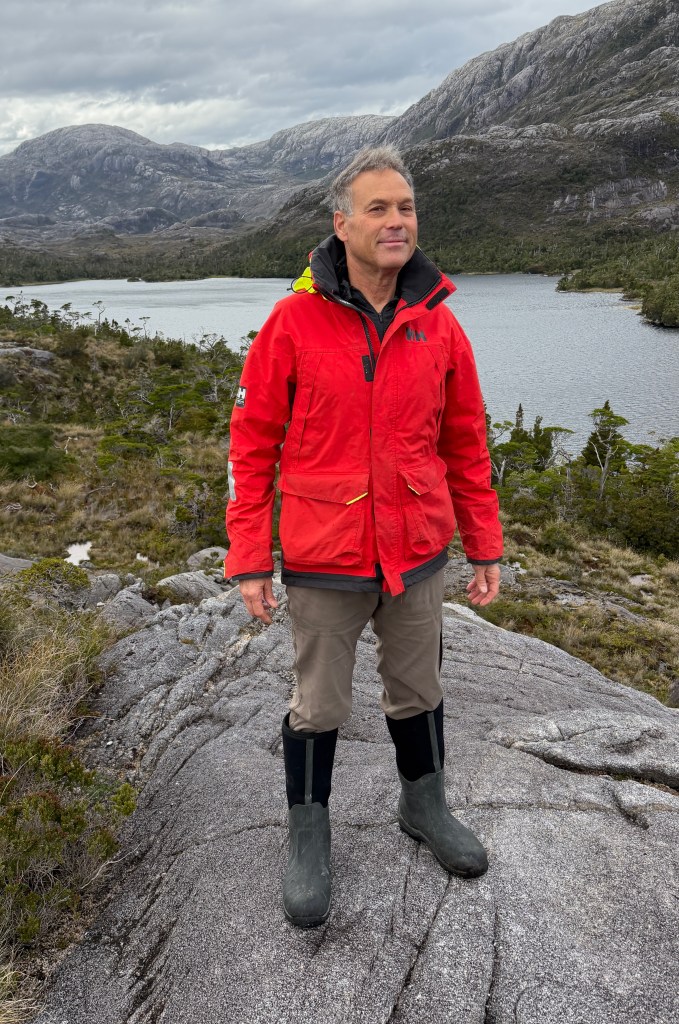
Felt good to stand on a solid rock that was not rocking and rolling!
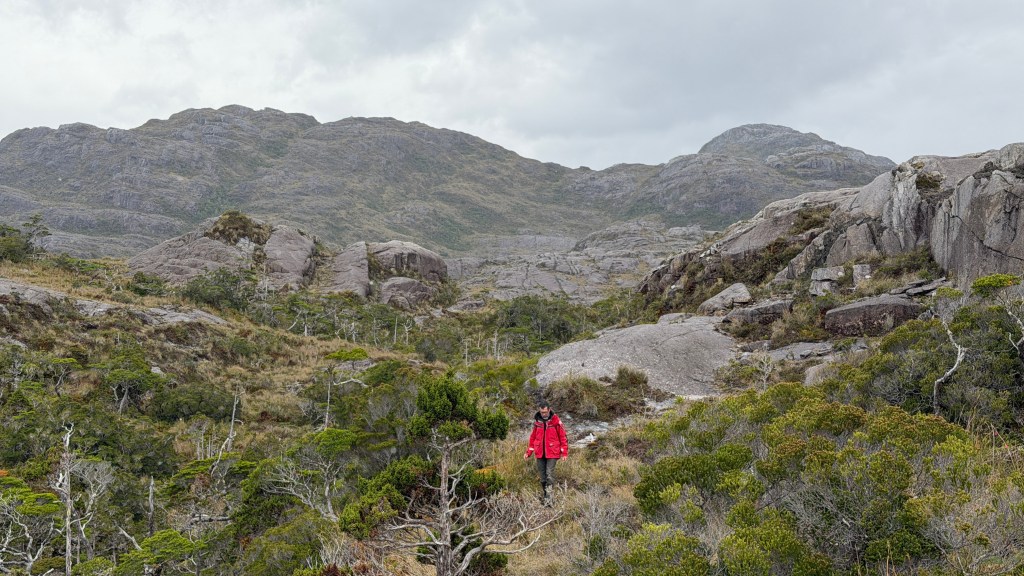
Randall happy to be exploring on his own.
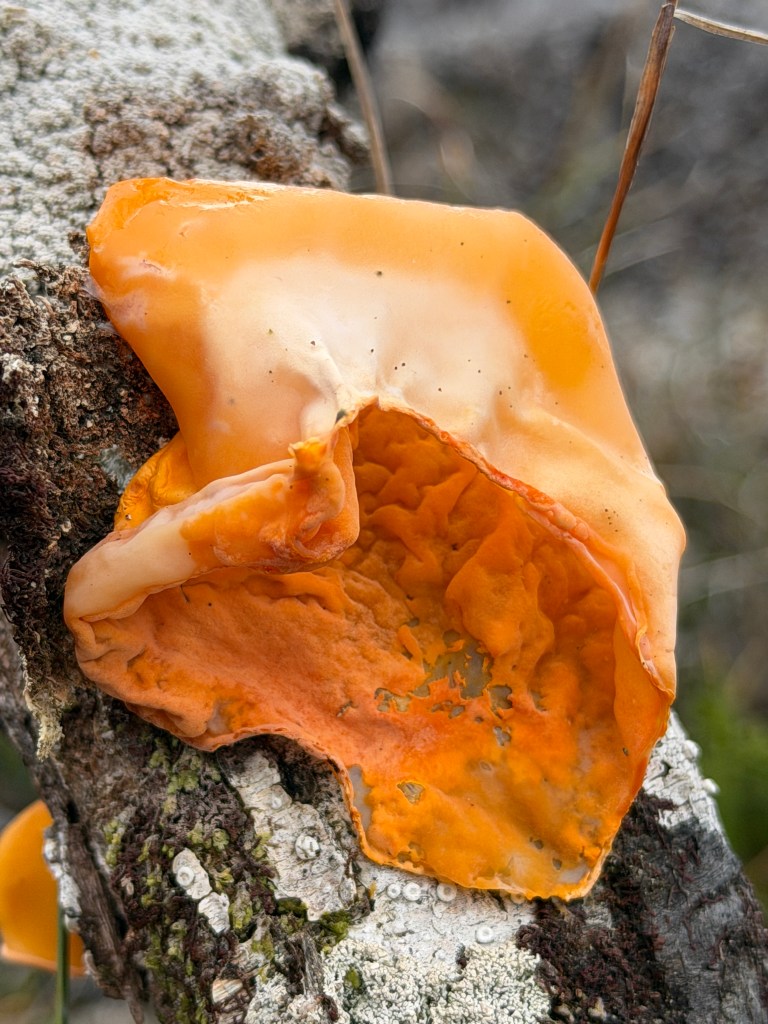
Above: This is a wonderful example of a Golden Ear fungus. It typically appears as an orange, brain-like mass with convoluted folds. It is a parasitic fungus that grows on other fungi. Yes, it IS edible, but generally flavorless so we will not use it for dinner tonight or breakfast tomorrow.
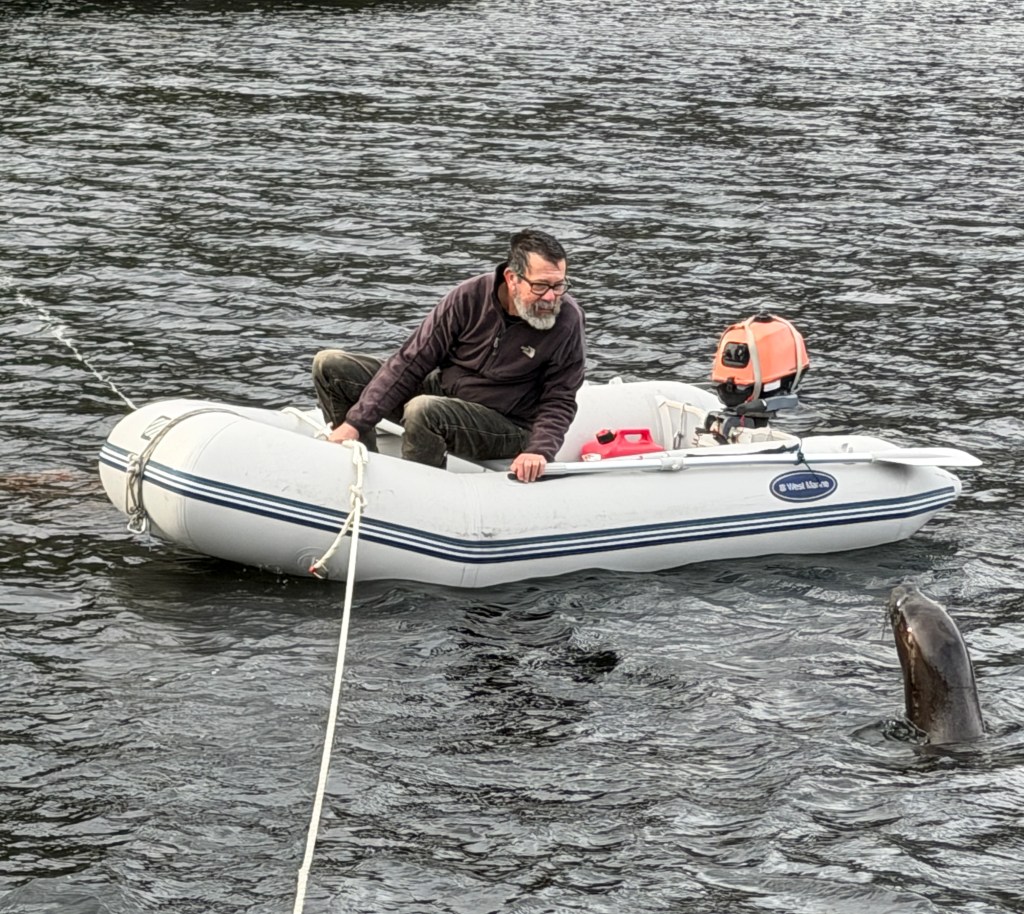
Above and Below: As anyone who knows Randall, he has a certain animal magnetism. During my forays in the water, I did not draw any attention. As soon as Randall got in the dinghy, he received the undivided attention of this seal. It is either a South American Fur Seal, or a South American Sea Lion (on the smaller size). This seal was frisky.
Above: Regardless of its species, this seal was clearly up to no good and we did not trust it for an instant. It was entirely within the realm of possibility that he (it is typically the males that behave in this manner) would take a bite out of the dinghy for his dinner. Randall was not about to let that happen.
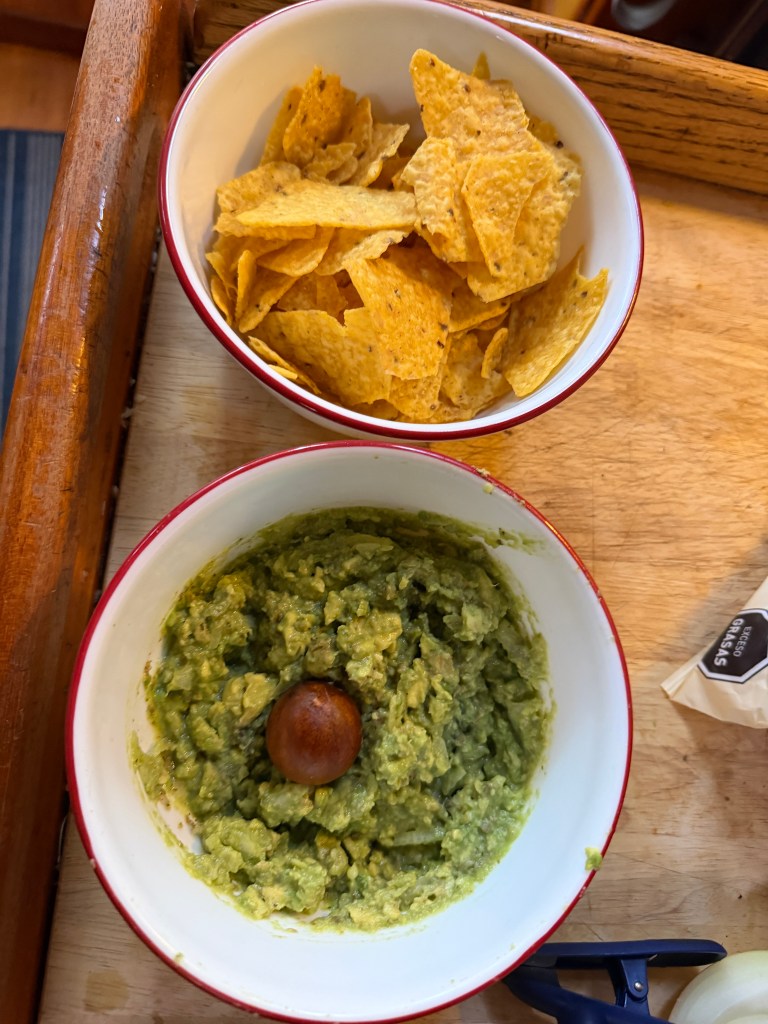
Above: Speaking of dinner, by this time of our trip, our avocados achieved maximum ripeness so it was guacamole night.
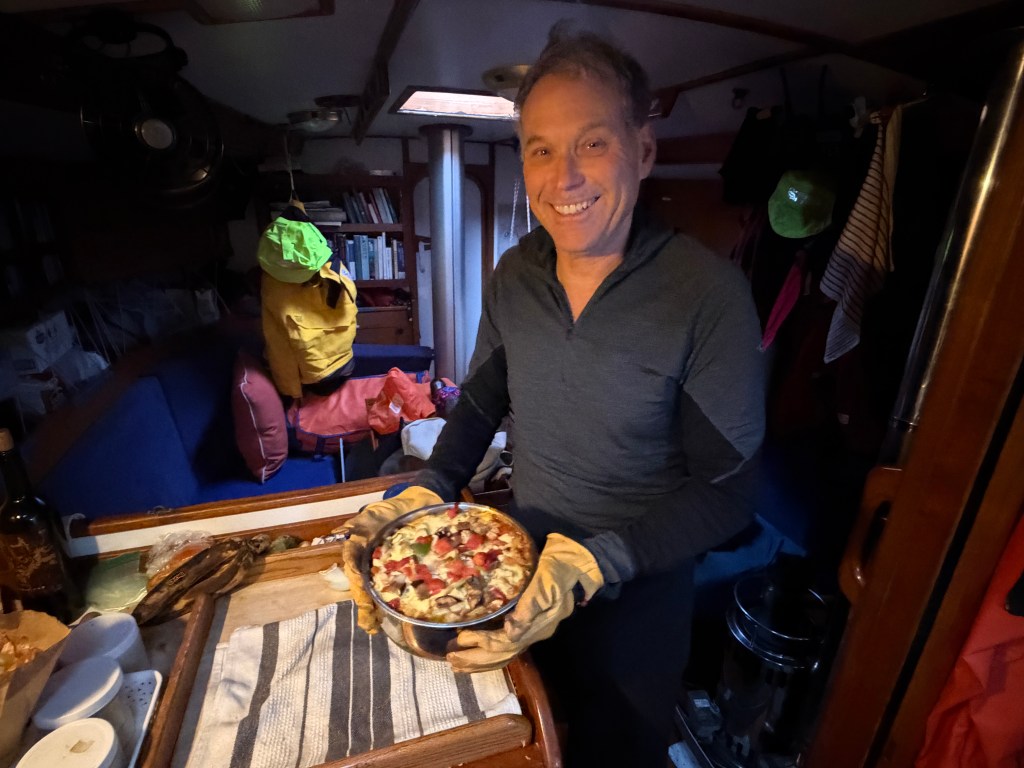
Above: We still had lots of vegetables, so I threw them together, added cheese and made a ratatouille of sorts.
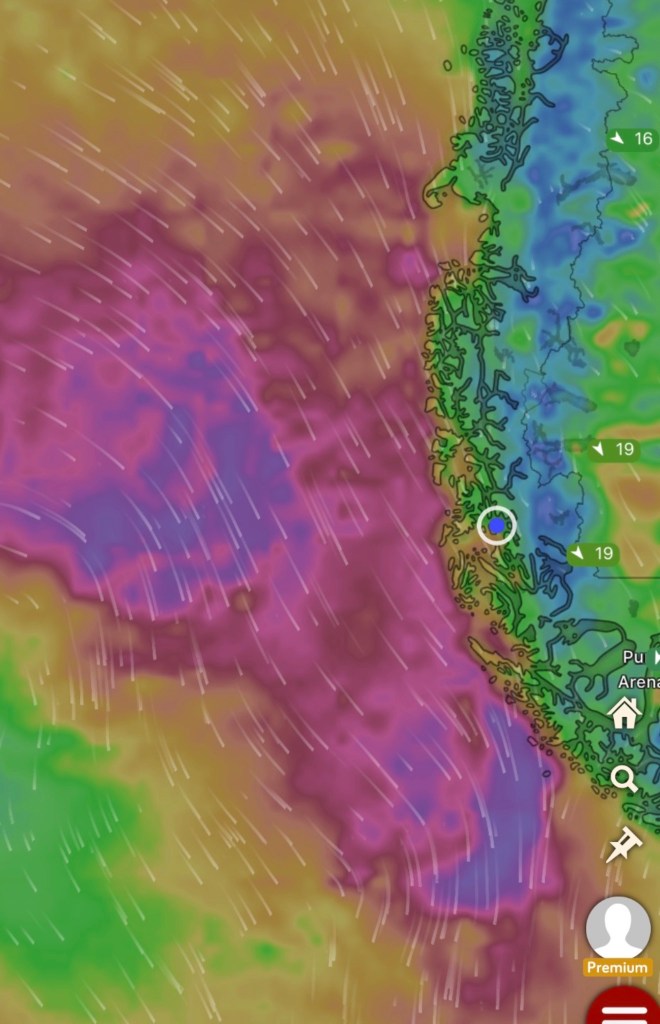
Above: The South Patagonian winds (and rain!) from the northwest were in their prime, so we held fast for a second night of sour weather.
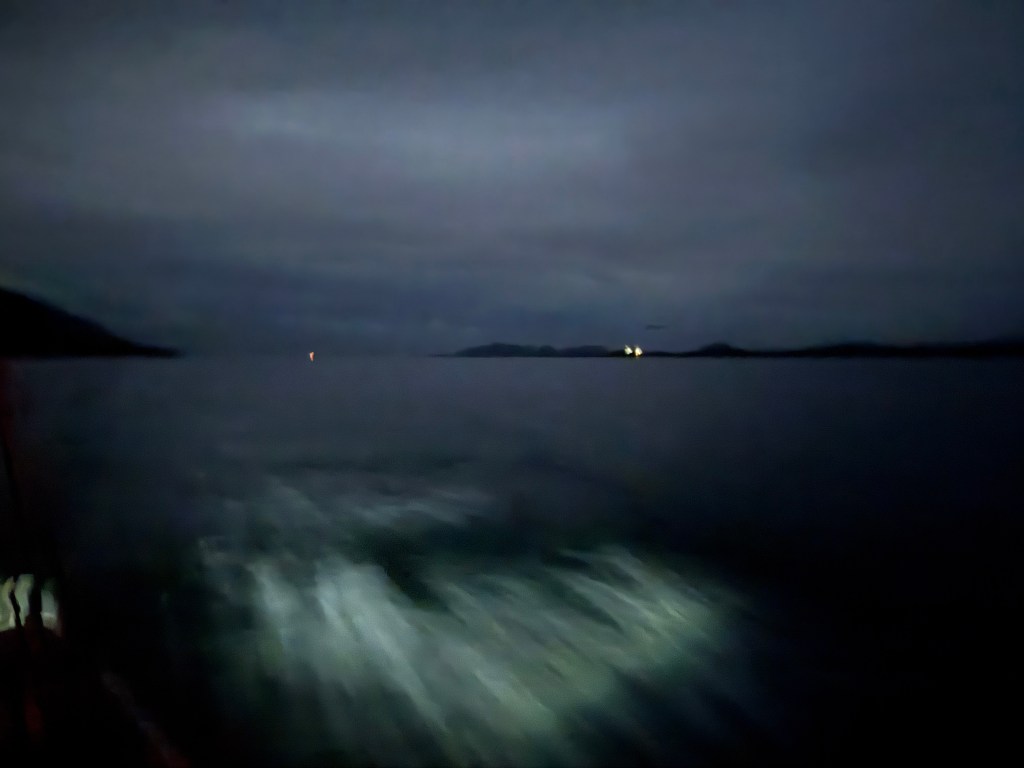
Above: We woke up at 0115 the next morning and cleared lines. The wind and rain gave us a little break and we took it! The lights are two other sailboats that we spotted on our exit…
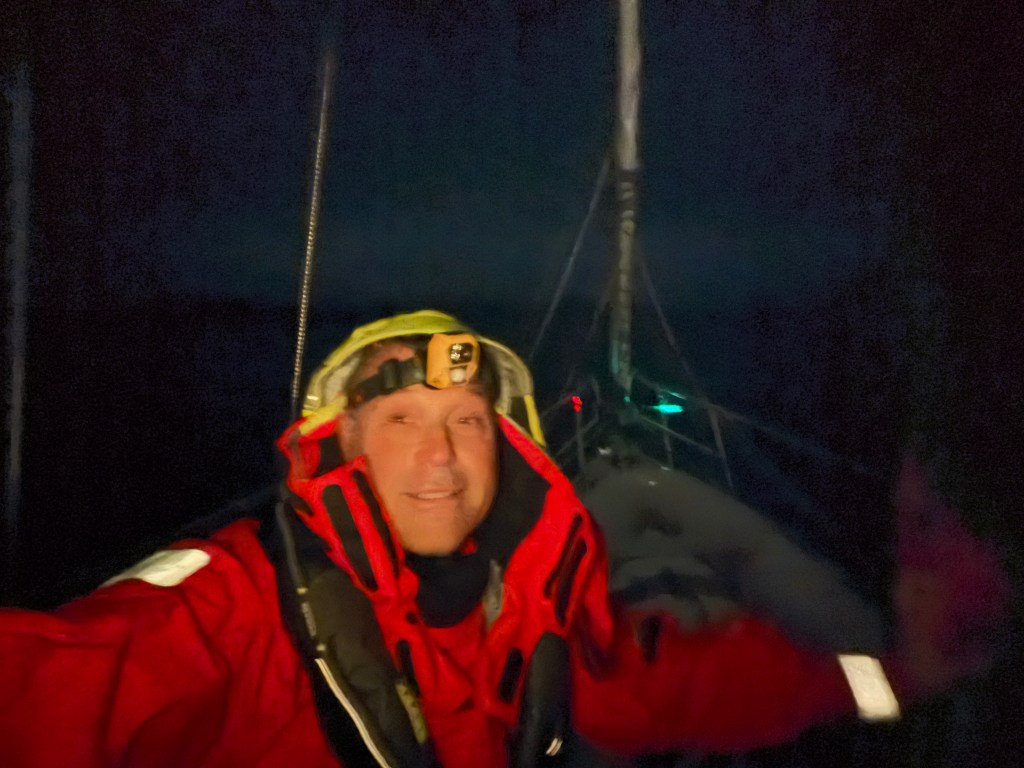
Above: The rain continued so I kept my drysuit on. Putting the drysuit makes me feel like a superman of sorts. I have no fear or rain or ocean splash because I know that I will stay warm and dry on the inside. Best investment ever.
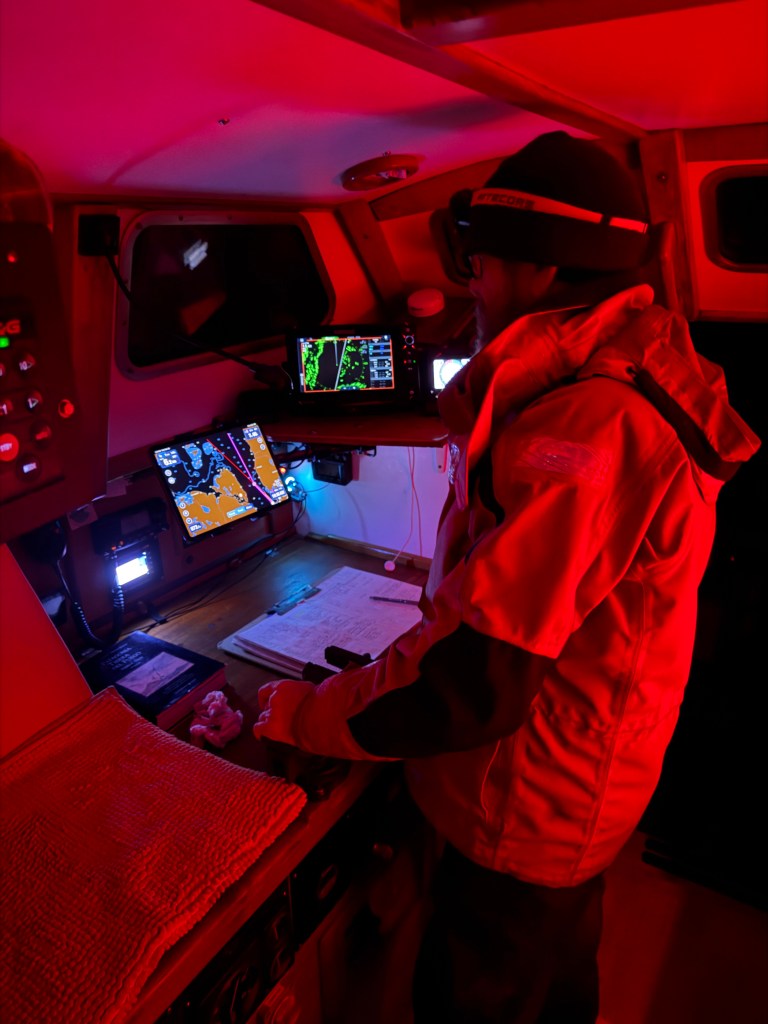
Above: Randall down below charting our exit as we had to dodge several sets of rock outcrops.
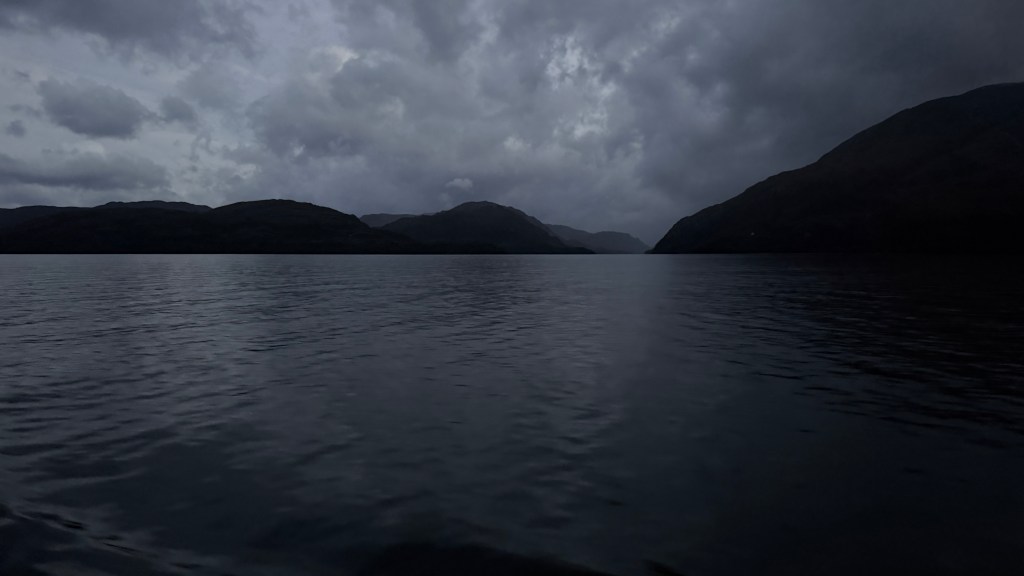
Above: By 0700 the wind and rain had cleared and it was so lovely out.
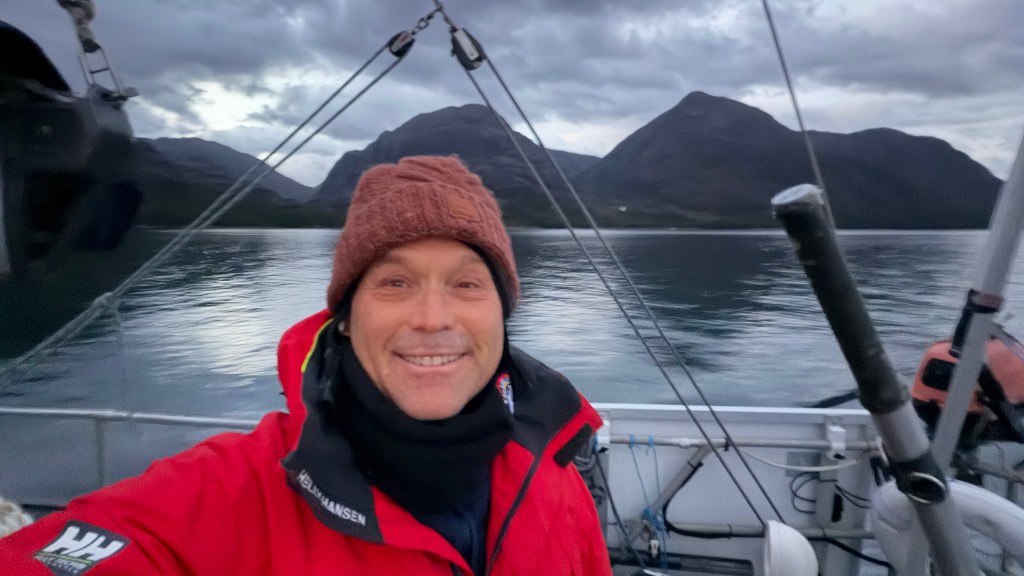
Above: It was a beautiful dawn. You can see that by this point, I had changed out of my HH drysuit into my HH ocean jacket.
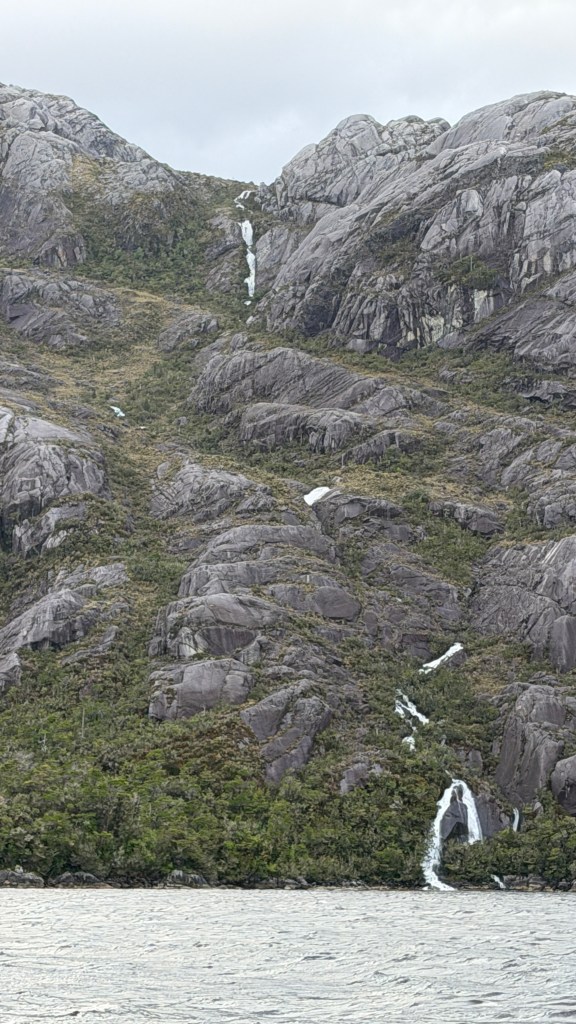
Above: We would continue to pass spectacular scenery including many waterfalls that were pouring their hearts out.
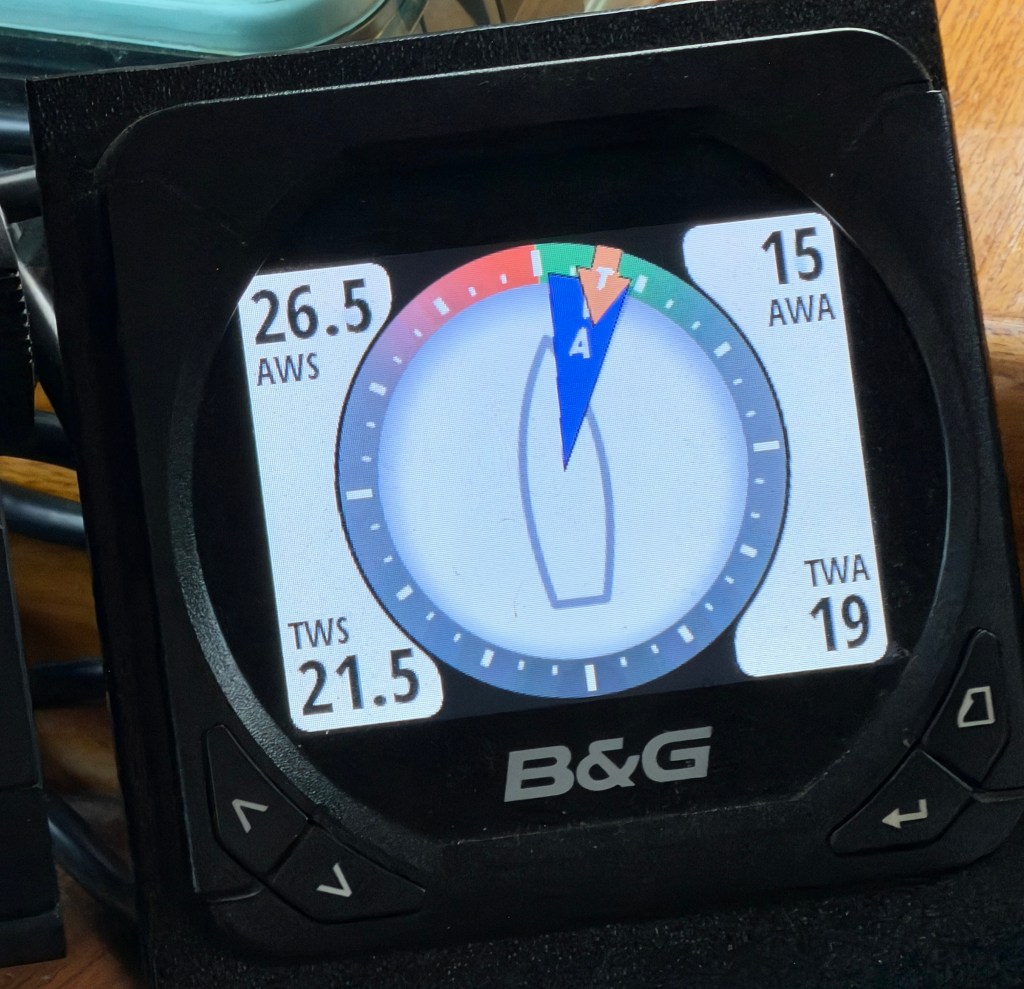
Above: Well, it did not take long, but by 1000, the wind picked back up making passage difficult. Typically, anything over 20 knots is problematic.
Above: This video dies not quite capture it, but this is how the waterways look at north of 20 knots.
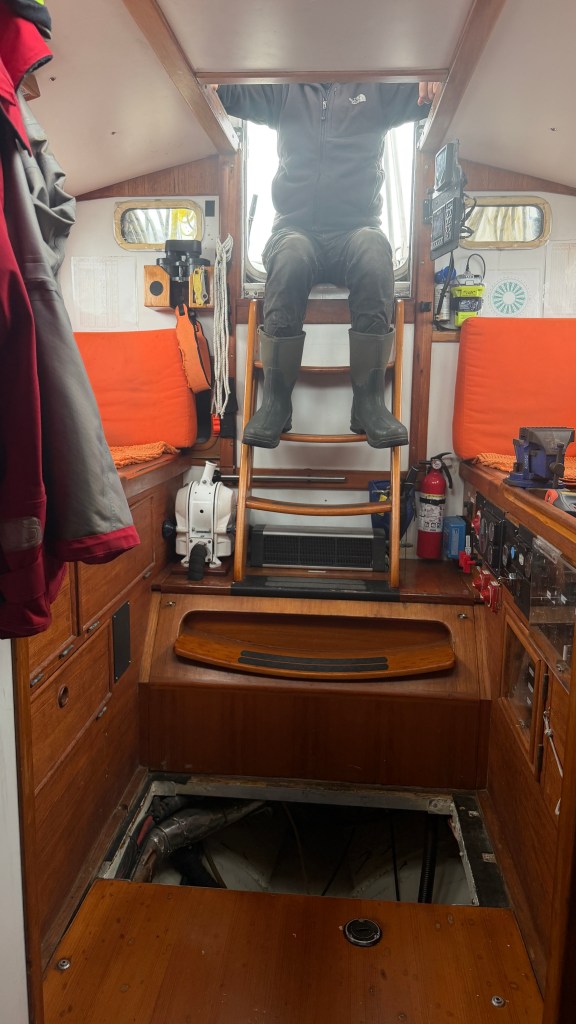
Above: I have got to give credit when credit is due. We are still ten miles short of our destination and the wind has picked up north of 20. Not a whole lot of alternatives, and no place to stop, so we all have to do our part. Randall pushes the engine to the maximum sustainable RPM’s of 2600 and we push against the wind doing 3 to 4 knots – if we are lucky. To keep the engine from overheating, Randall removes the wooden engine cover. While the cabin becomes insanely hot and noisy, the engine temperature is reduced and we persevere and are able to continue our slow forward progress.
Night 14-18: Poza de las Nutrias (Otter Pool) – Night of March 29 to April 2
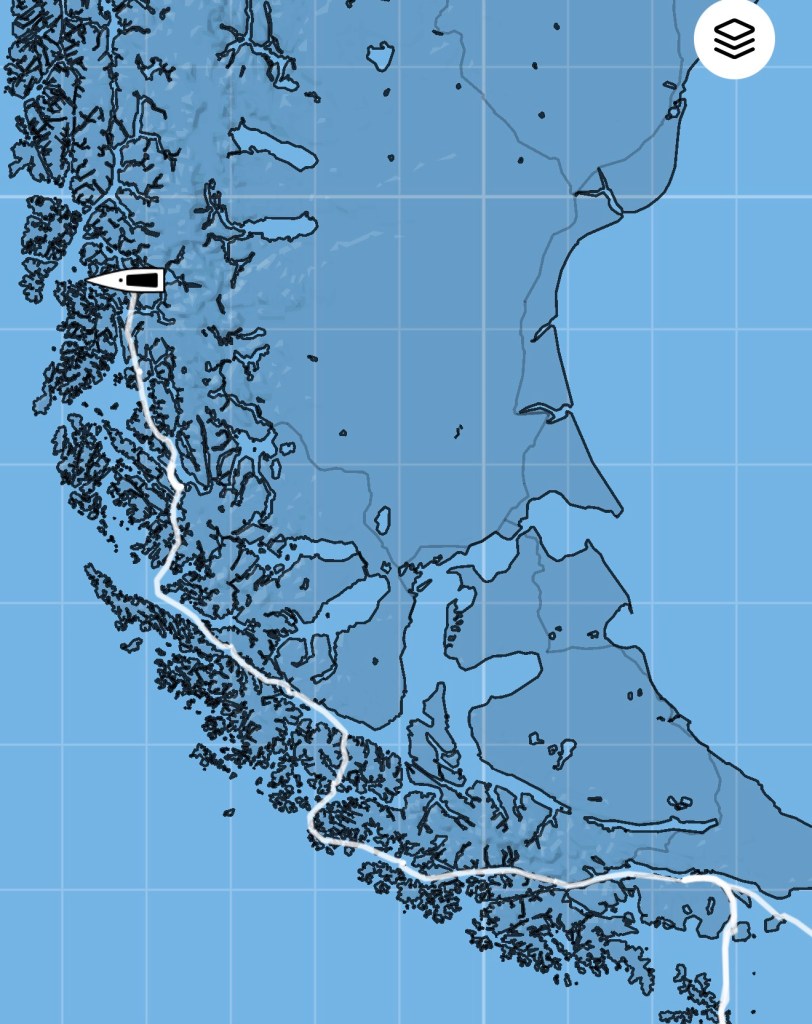
Above and Below: After departing Puerto Mayne at 0200 (up at 0100), we arrived at Poza by noon after 53 hard miles. We are finally making a little bit of northward progress.
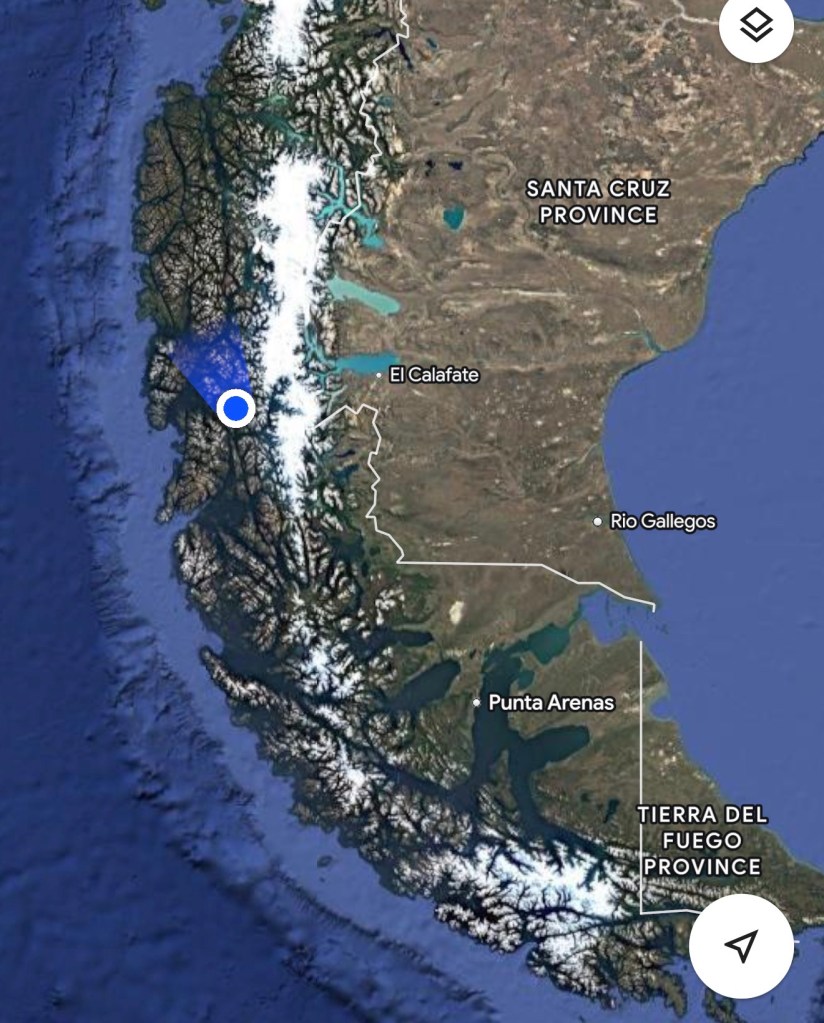
Located on the west side of Canal Pitt, is Poza de las Nutrias (Otter Pool). There are reports of sea otters and steamer ducks playing about, but there were no signs of them during our visit.
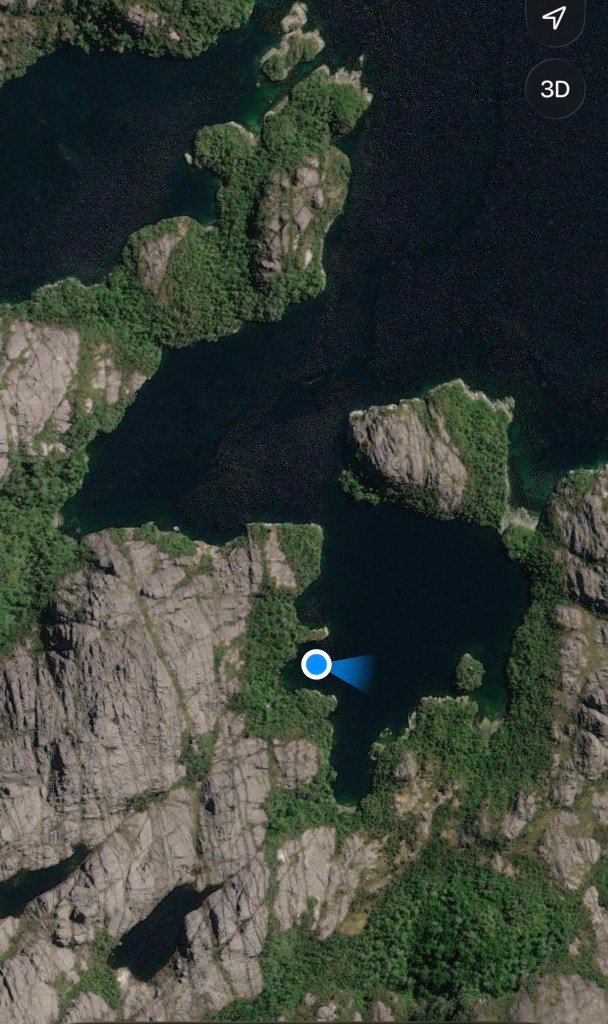
Above: There were supposed to be several places to tie up, but the one we are at seemed the only real possibility, especially due to the impending weather system that was coming (more rain and wind) surprise surprise.
Again, it is always fun and exciting to venture for the first time into a cut-out of the canal to seek refuge. Randall does quite a bit of research into these spots, and does his best to time them according to our pace and mileage and current weather conditions. If we can get 50 miles of forward progress in a day, we are doing well. We receive quite a bit of help and support from Randall’s friend Barry who has traversed this passage on multiple occasions and who provides us with “the inside scoop” on where and how to tie-in.
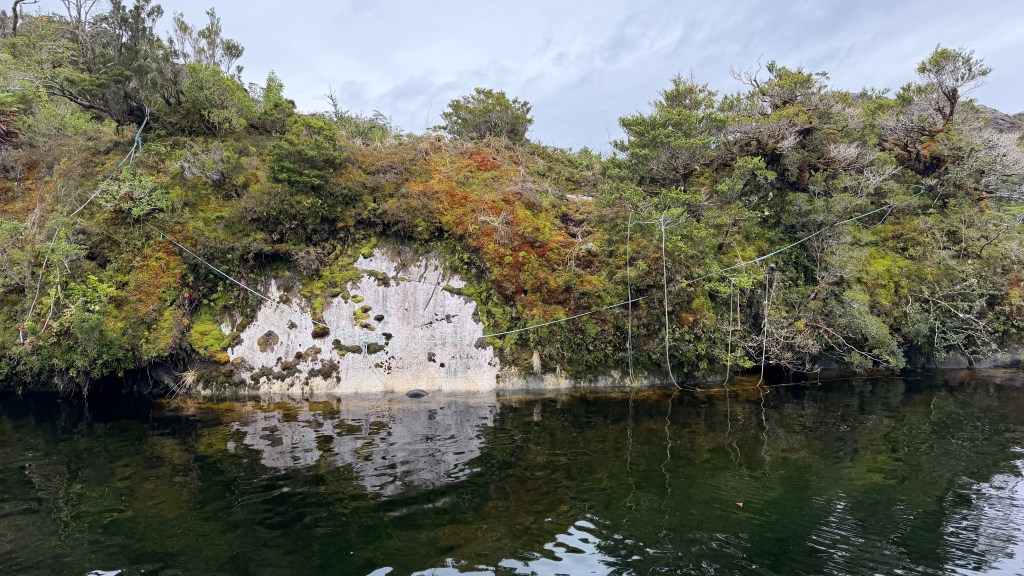
Above: You can see how the local fisherman have set up their lines to make it easy for them to tie up for the evening. Naturally, Randall does not trust most of the already laid lines, and as we are not a wooden fishing boat, we cannot simply tie up adjacent to the rock wall.
We did a temporary tie-in on the rock above, and took a tour of the Pool by dinghy.
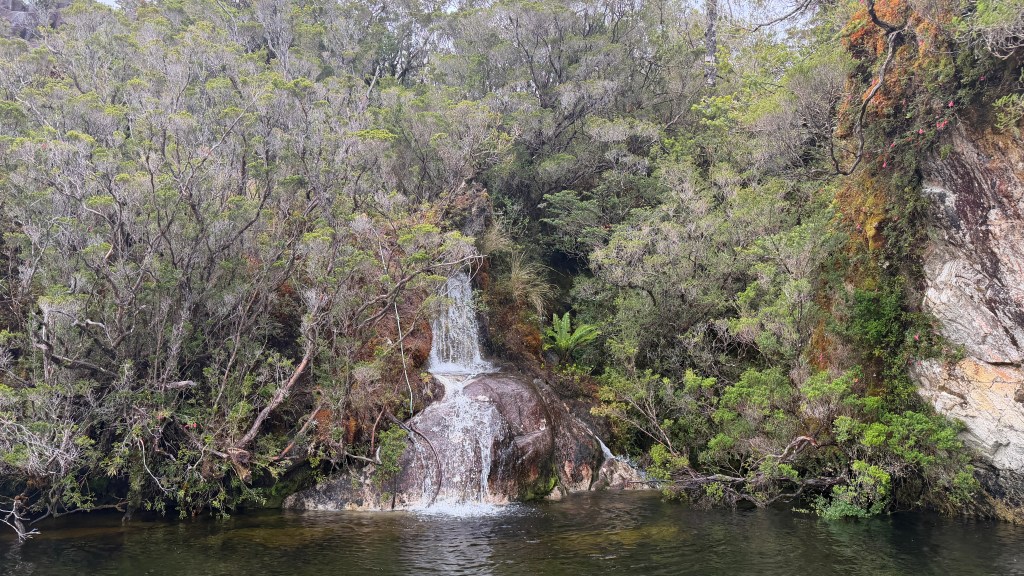
Simply spectacular! Had it been just a wee bit warmer, we would have certainly taken a swim.
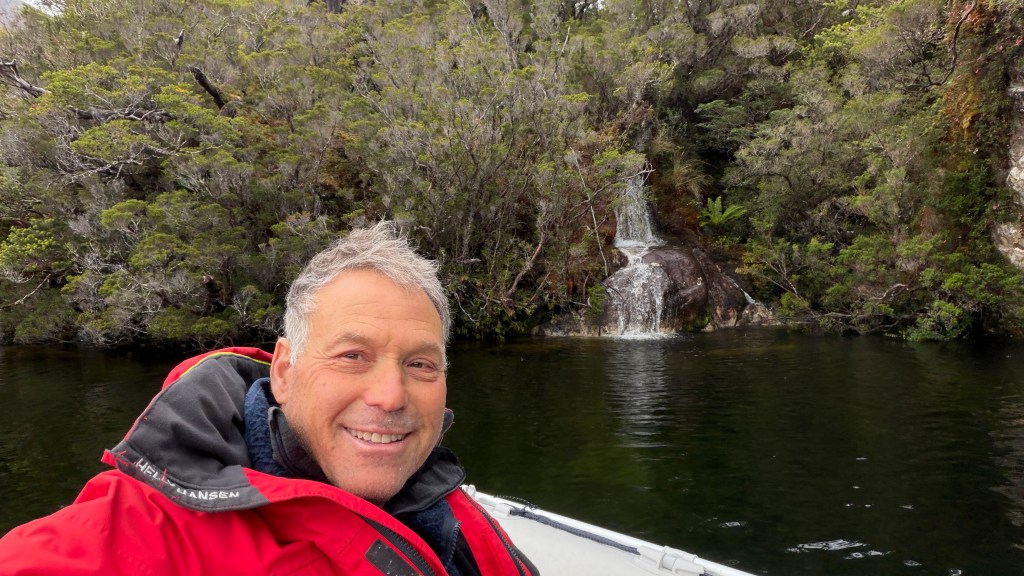
We were anything but thirsty, but this could have been a perfect source of fresh water.
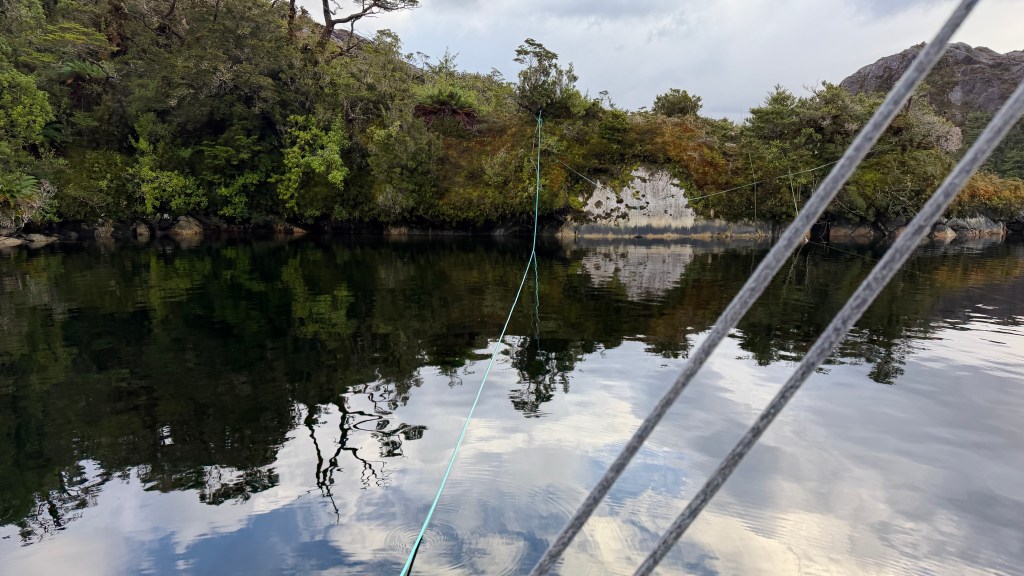
Above: While we did not tie-in fisherman style, we used the wall as a “suggestion” of where to tie our own ropes.
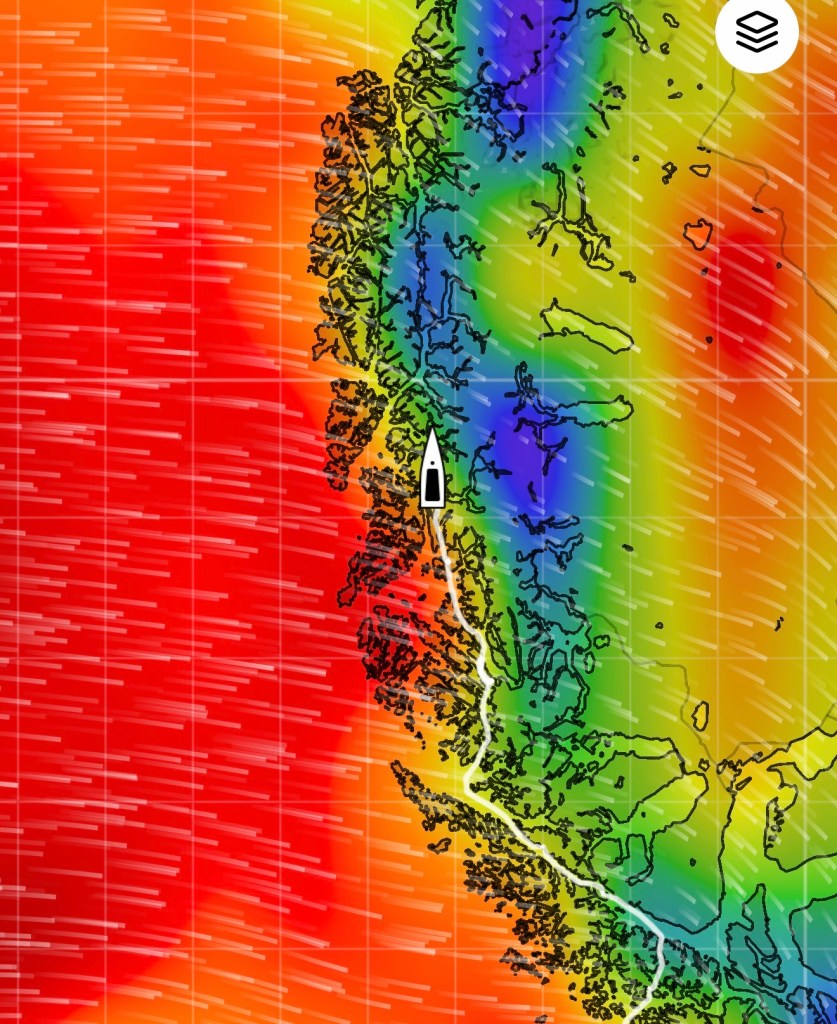
Above: It did not take long for the weather to worsen and the wind began a consistent and powerful blow from the west. It poured cold rain for the next 48 hours nonstop.
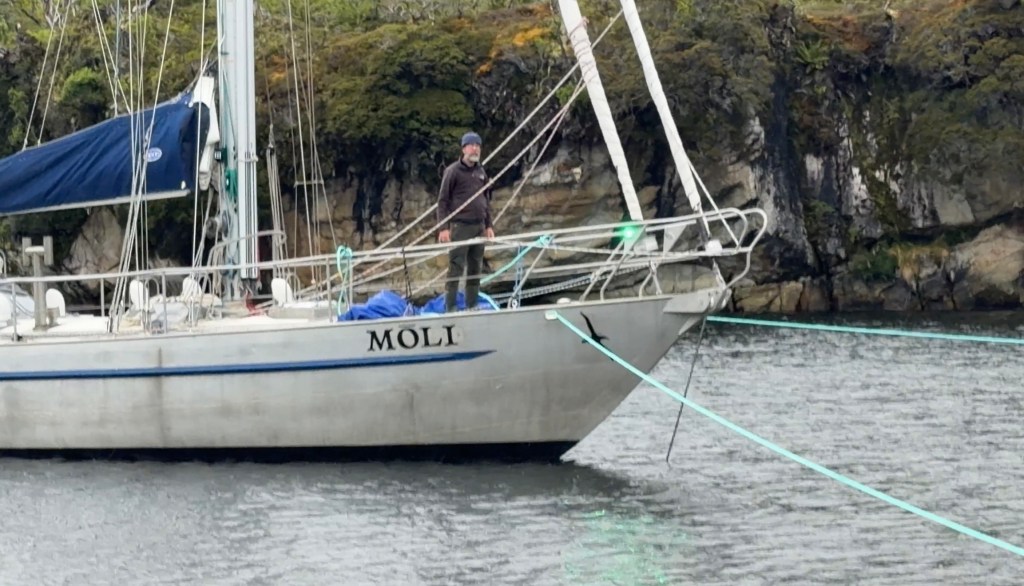
Above: After “surviving” the first night of the storm, Randall looked off the bow at our five points of holding and determined that we could use a sixth – meaning we would add one additional line to weather.
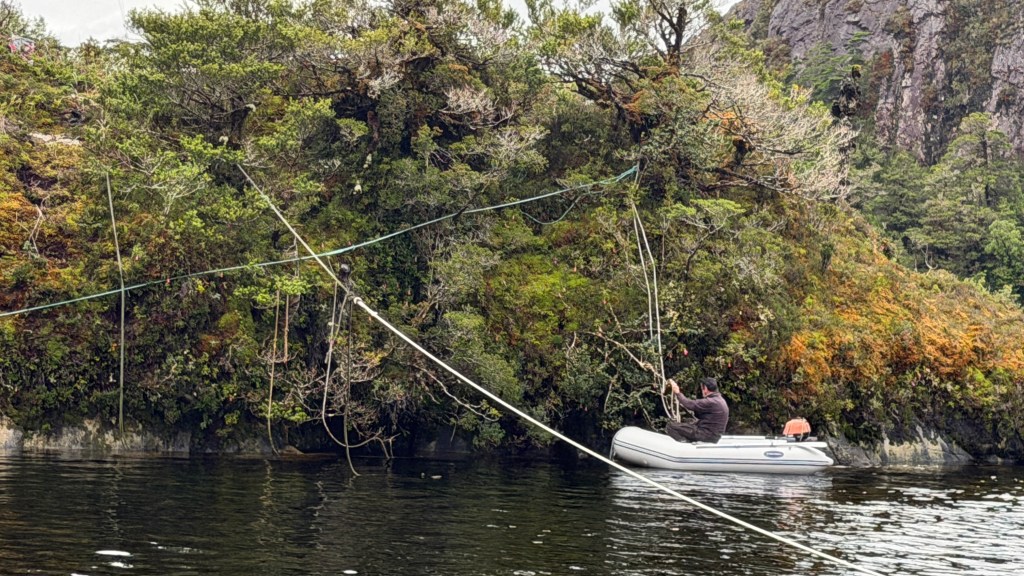
The tide had come up to the fisherman’s wall, but it was still a good spot to attach one more line to windward. A good move because while we did not know it at the time, we would he holed up in this spot for two days as we waited for the weather to calm. While we did not know it at the time, another fellow traveler at a different spot was woken in the middle of the night by a branch that they had tied into that broke. They had to go out in the middle of the stormy night and replace that tie.
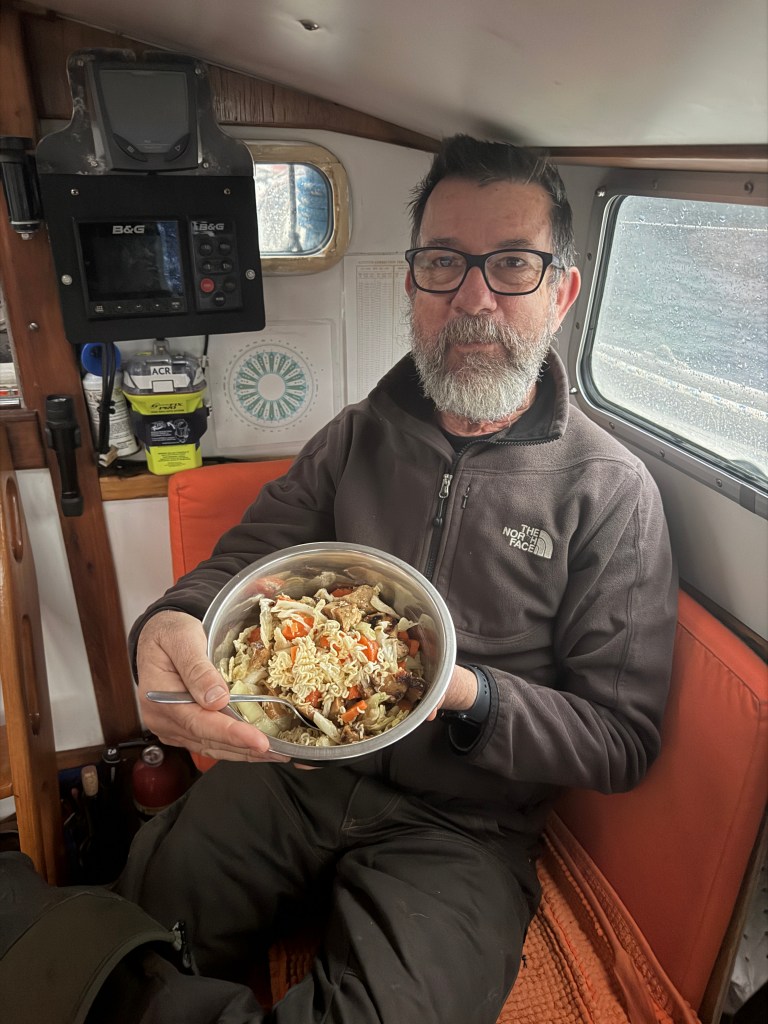
Above: A man’s gotta eat, and last night we made Chinese “Chicken” salad.
Next stop Estero Dock!!
Thank you all for following!!
 Harmon and Randall's Voyage...
Leave a comment