July 1, 2024
By Randall
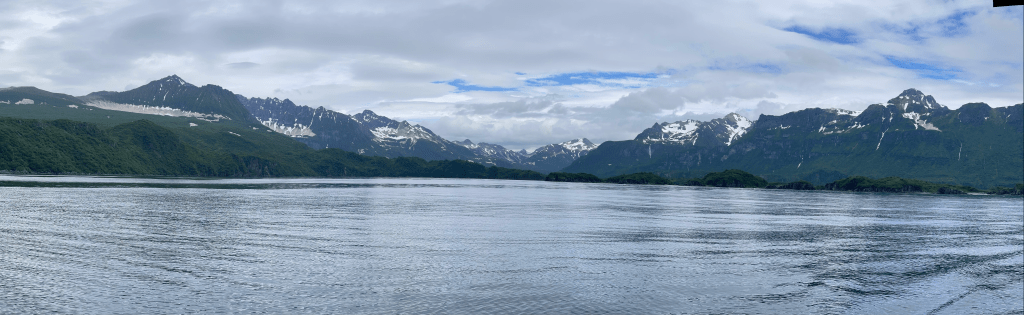
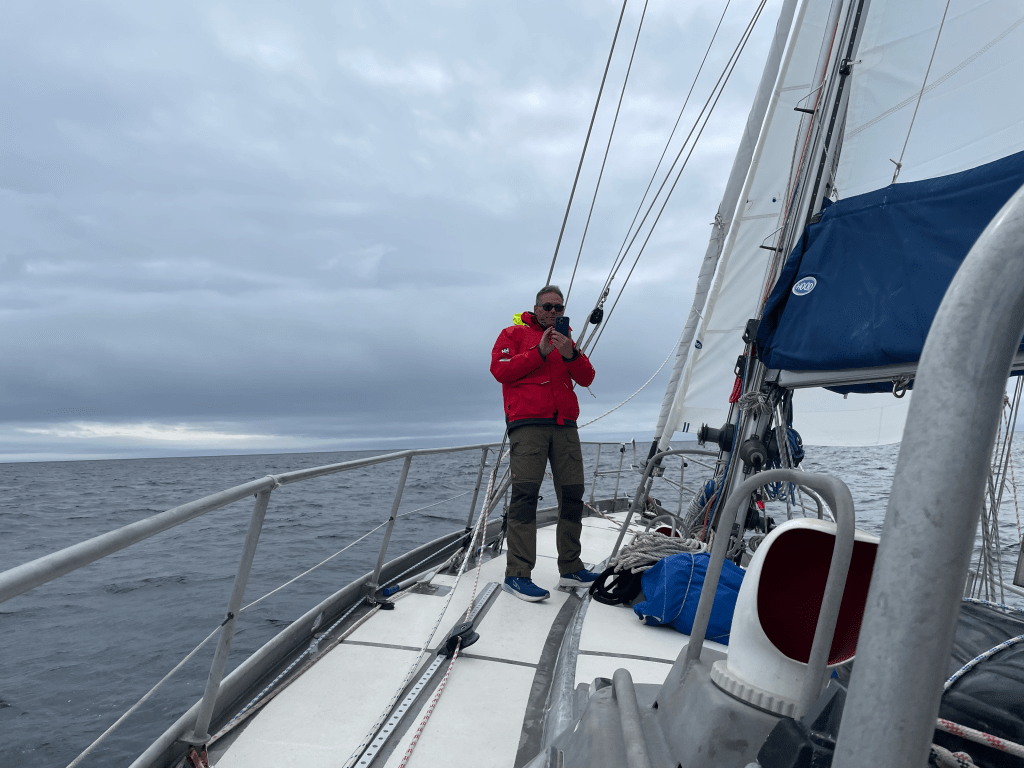
The crossing of Shelikof Strait from landlocked Anton Larsen Bay on NE Kodiak to landlocked Geographic Harbor on the S Alaskan mainland required 12 hours of motoring to make the nearly 70 miles. A temperamental drizzle and its low sky later yielded to downright rain but with not quite enough following wind to permit sailing. The interior passages were cruise-ship flat; then the strait rolled Mo to her rails.
At Whale Narrows the foretold four knots of beneficial current was actually four knots against. We hugged the shoreline following the 25 foot contour to get out of the main flow and crawled along anyway. Sports fishermen hunted in the colliding currents. A cloud of diving Kittiwakes–“only gull that plunge-dives headfirst like a tern” says Sibley–followed by an explosion of bubbles and black maws rising told that whales did too.
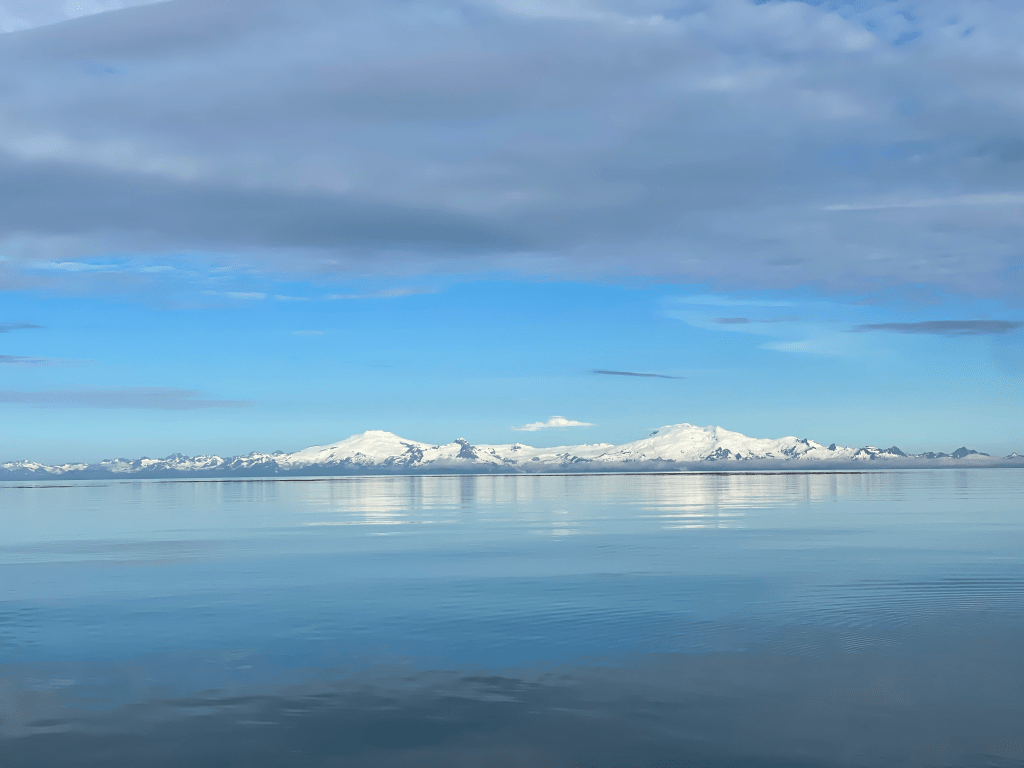
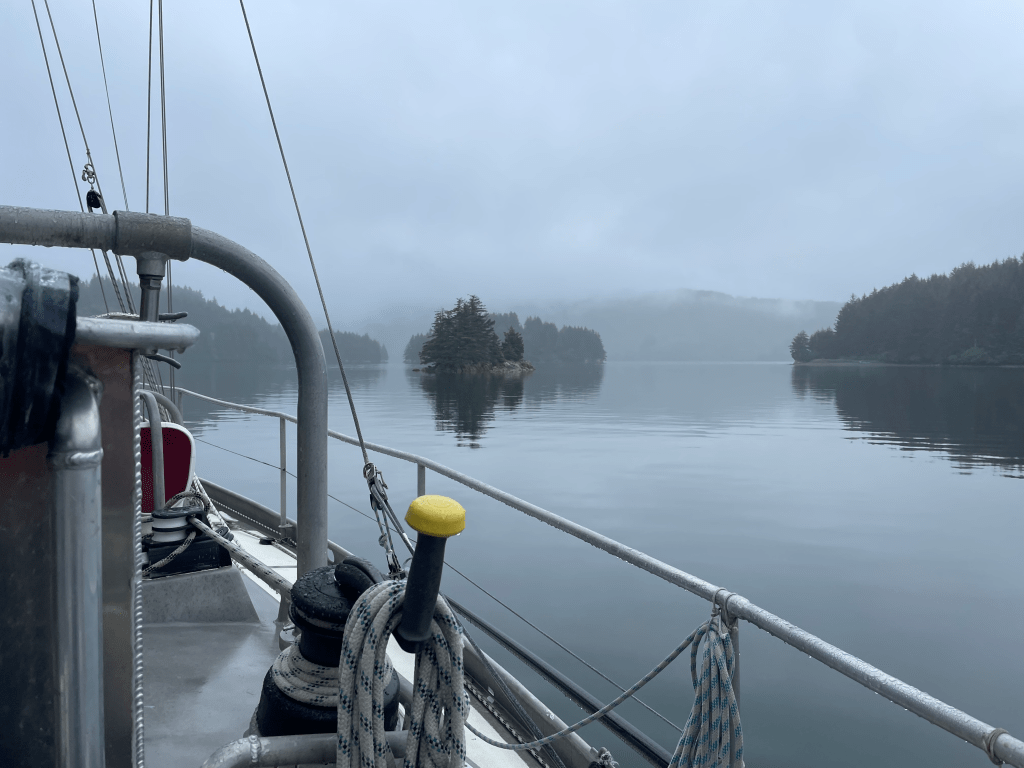
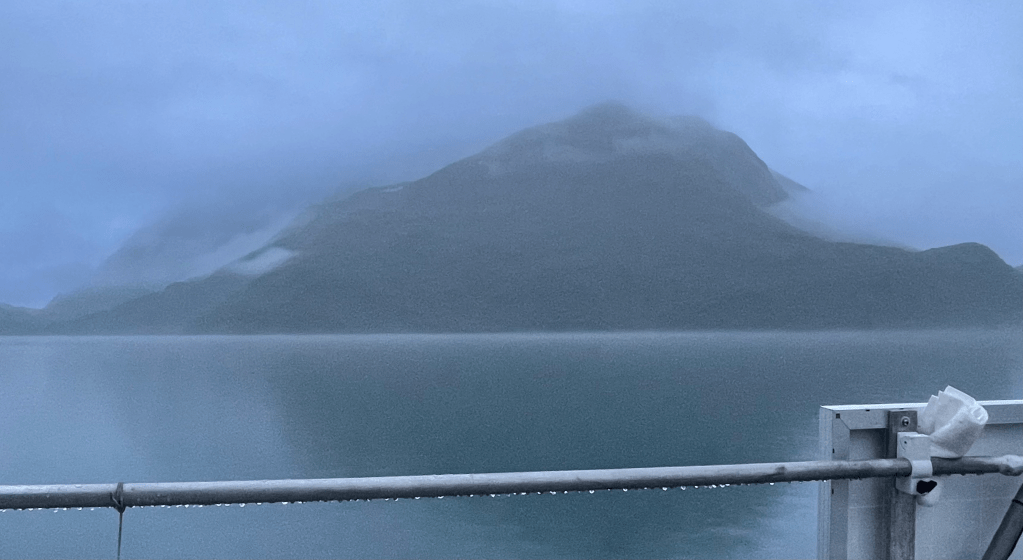
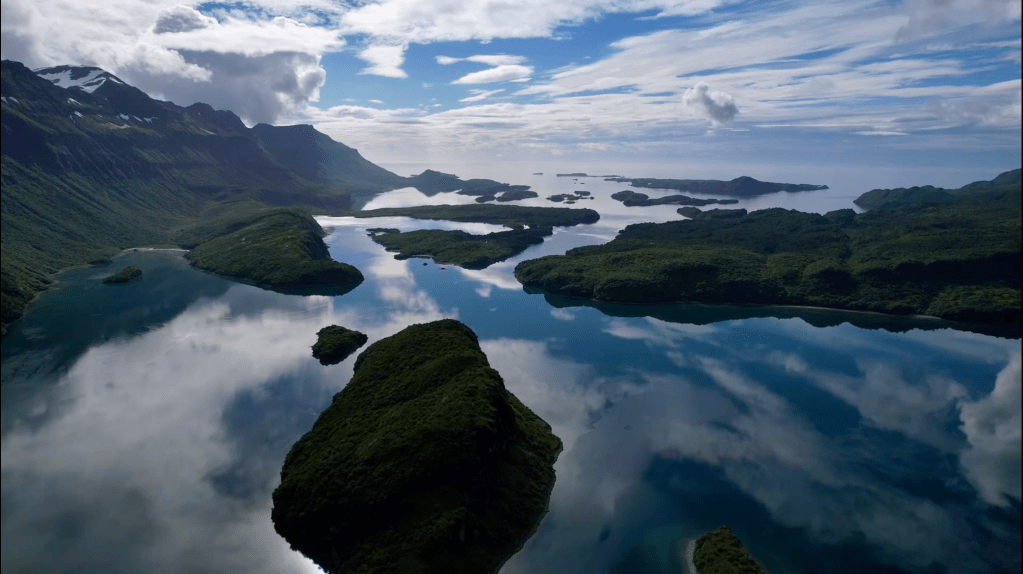
A landlocked anchorage draws one’s attention. By landlocked we mean that islands and spits and other terra firma overlap around the harbor so as to entirely close off the small inner body of water from the larger outer. It implies safety in all weathers, something unusual in an anchorage, and suggests that once hooked, you can let your guard down. Larsen’s interior was rimmed by a few homes well spaced; here and there smoke curled from the chimney and into the fir trees. Geographic is rimmed by nothing but mountains containing yet enough snow to pour waterfalls from every face steep enough. As we entered, bears: one caramel smudge crawling shoulder deep in the green bushes scrounging for berries, then a pair running at full tilt across a sandy beach.
For an hour we meandered through the maze of small islands and channels to the inner sanctum rimmed by heavy black peaks and there dropped the anchor in 70 feet at 2030 hours. Wind in this inner-inner bay was lightly from the SW, the opposite of the main, down channel flow in the strait, this the result of mountain funneling. Thus, I was not surprised when at one in the morning and as wind in Shelikof was forecast to come round to up channel, our wind again did the opposite and began to push Mo toward a rocky bluff. I sat up with her for an hour as she sailed back and forth; then, convinced the anchor was fast and the wind past its zenith, I returned to my bunk.
—
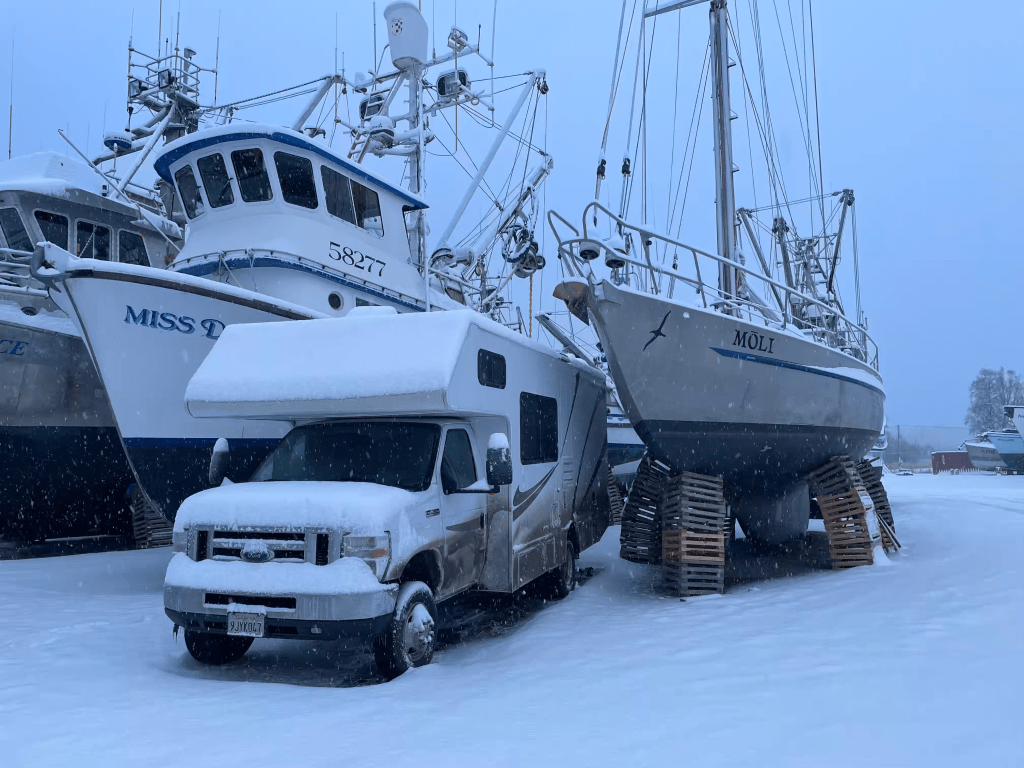
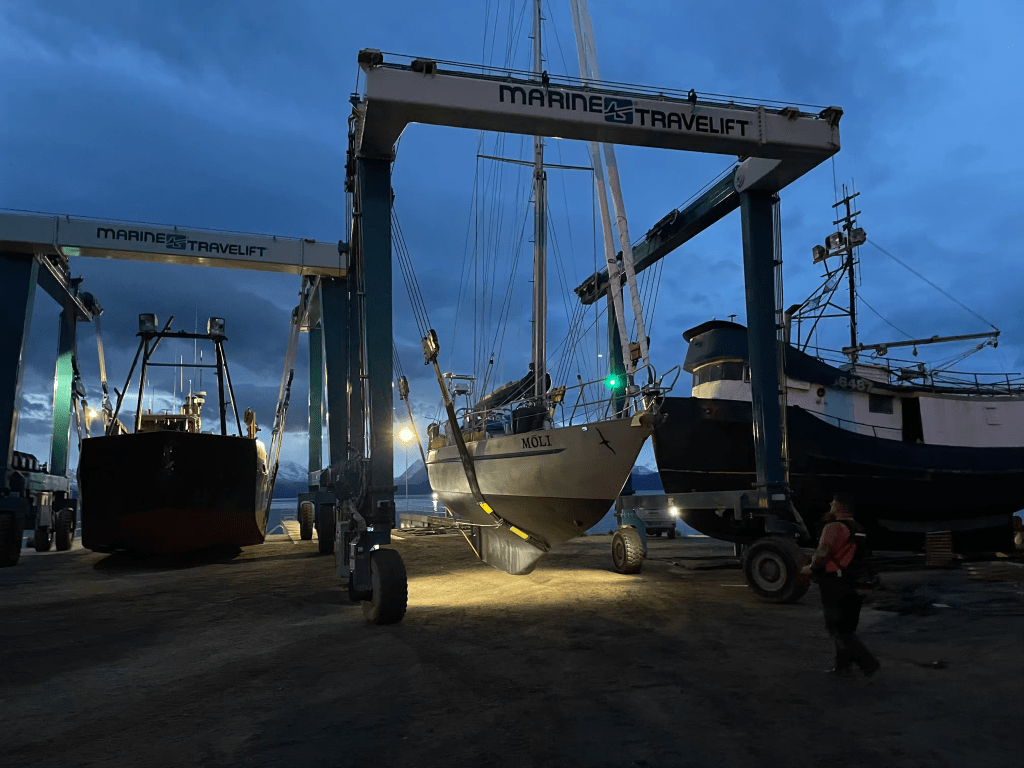
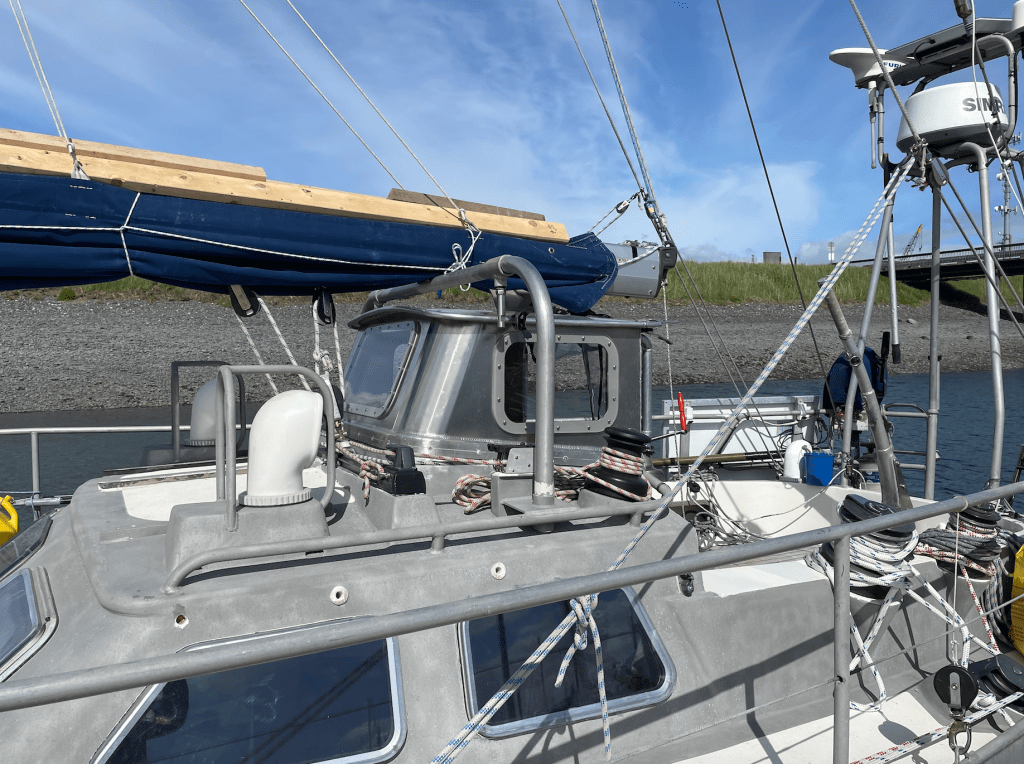
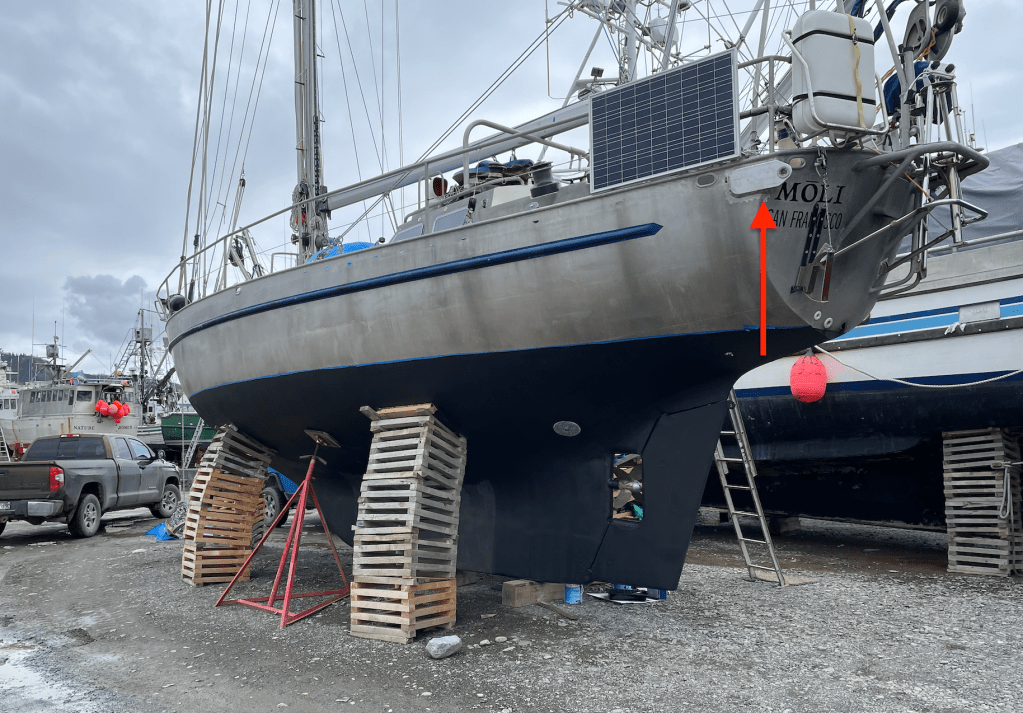
No matter the time allotted for preparation, more is wanted. I had driven to Homer in late February for a month of boat work, to repair the propeller shaft assembly, to replace the engine’s water pump, to figure out why the autopilot had died just S of Kodiak the previous October. Much else made the list that trip, but snow prevented all but interior work. In late May I returned for another month and with a list requiring a size nine font to fit it to one page. In time, all the must-do items were crossed off and a few nice-to-haves as well: a new aluminum dodger, welded tangs on the aft quarter for the Jordan Series Drogue, new Hood sails.
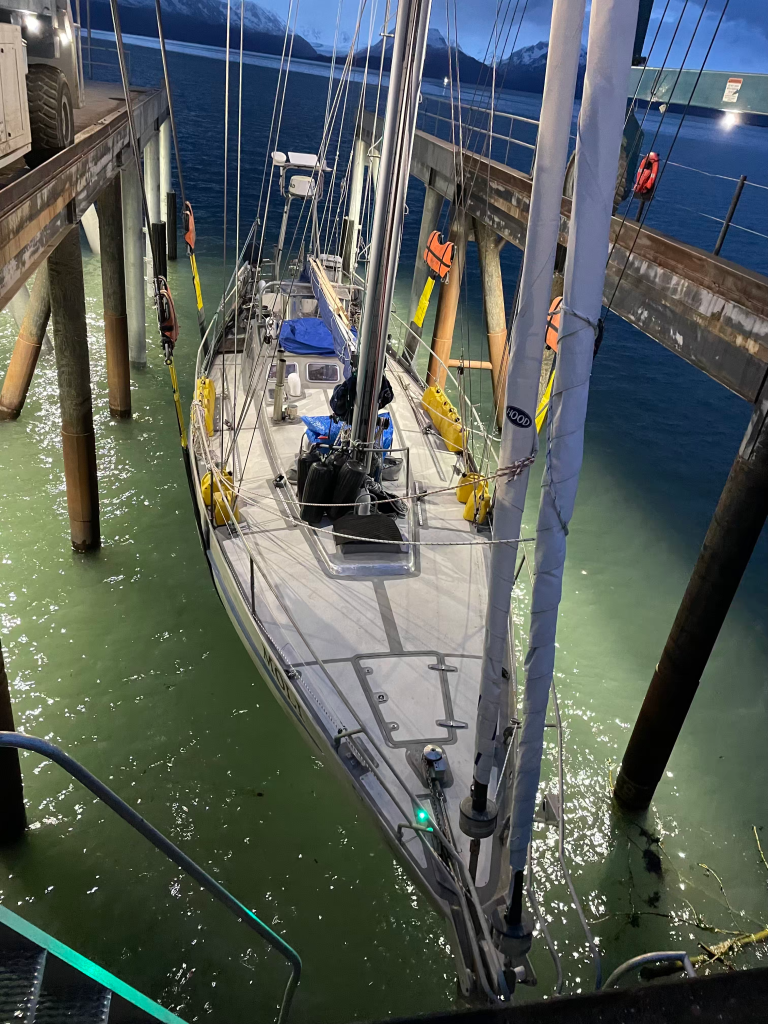
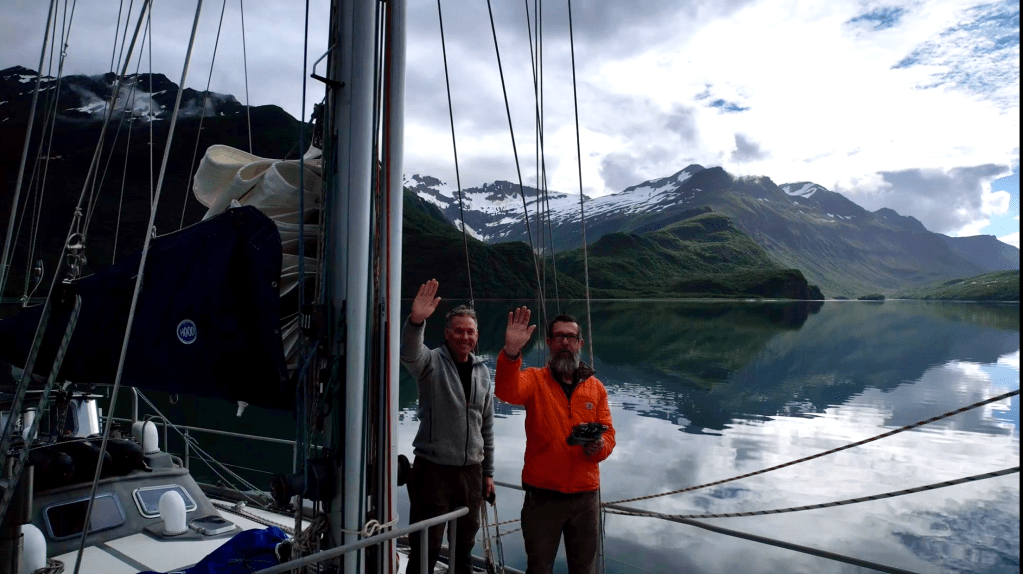
By some miracle of rescheduling, Harmon arrived on June 25 from Scotland as per plan and we departed on time the following day, the latter a remarkable turn for Mo’s present skipper. A gentle southerly and a flood tide let us cross the often difficult Barrens in style for a first night in Shuyak Island’s landlocked Big Bay (a theme develops?). Then to Kodiak town for a last minute engine part (gear box seal set); then to Anton Larsen and then to Geographic, which returns us up to the present moment.
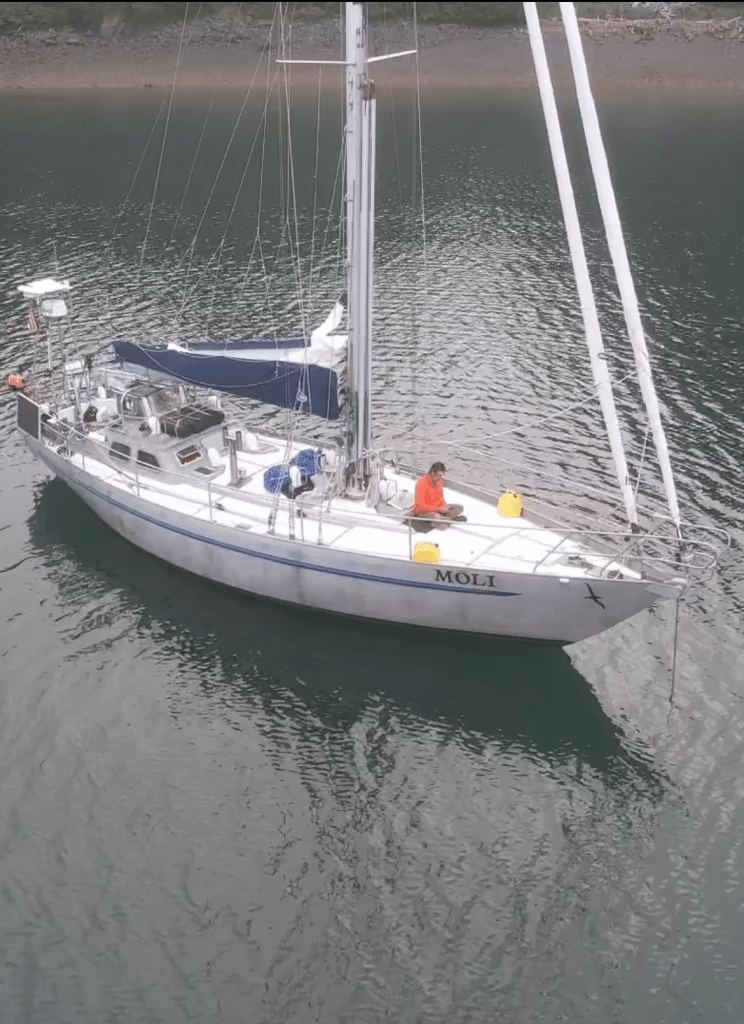
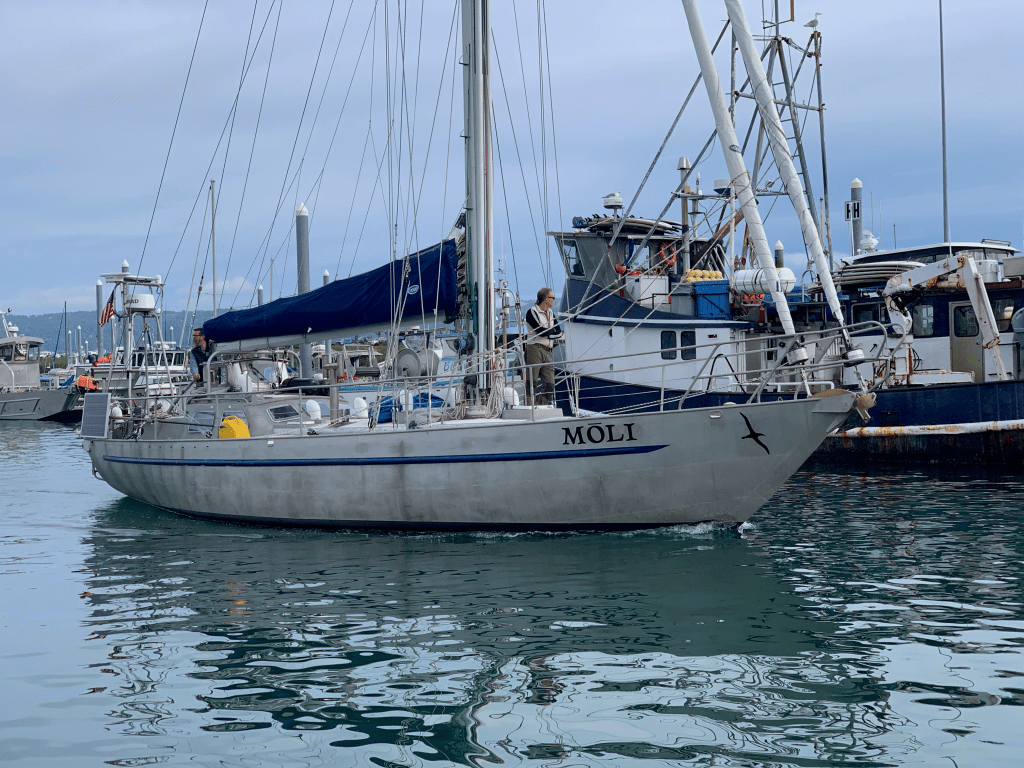
And so this attempt at a W to E Northwest passage commences. Mo has completed three Northwest Passages: As Asma with Clark Stede and Michelle Poncini in 1993*, as Gjoa with Ann and Glenn Bainbridge in 2014, and then in 2019 as Moli with the current skipper. All these transits were made E to W. This will be her first W to E attempt, as it will be for her crew.
*for those interested in official records, i.e. that of transits kept by R. K Headland at the Scott Polar Institute, Asma’s passage does not count because after her embaying by ice, she was lifted onto the deck of a Canadian Coast Guard cutter and cargoed to the nearest open water. I consider this a quibble, but so far Headland has held firm.


 Harmon and Randall's Voyage...
Leave a reply to Nick Stewart Cancel reply