Leg 2
Blog 6
July 8, 2024
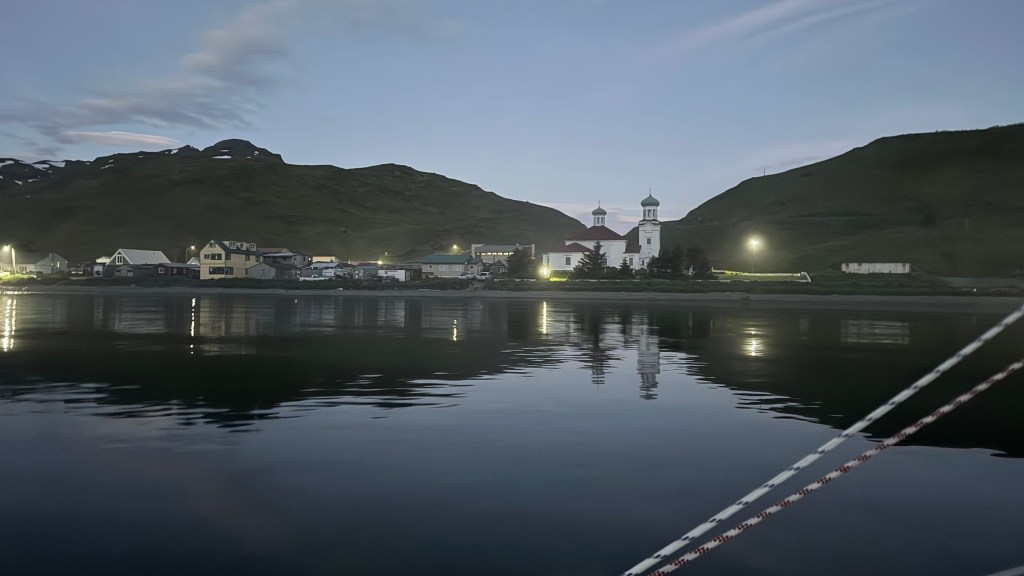
Right on schedule, we arrived at Dutch Harbor at 0530 on July 5th. You can see the famous Russian Orthodox Church center right. This was to be the second time for both of us to sail into Dutch. Randall first came here in 2017 as he was near completing his Figure 8 (on his way back to SF), and I sailed here with Mike Johnson (along with Nick Wynn in 2015). Nick and I got on Gitana in Nome and worked our way to Dutch as Mike had already sailed three years on his way through the passage (from east to west) and was on his way to Seattle.

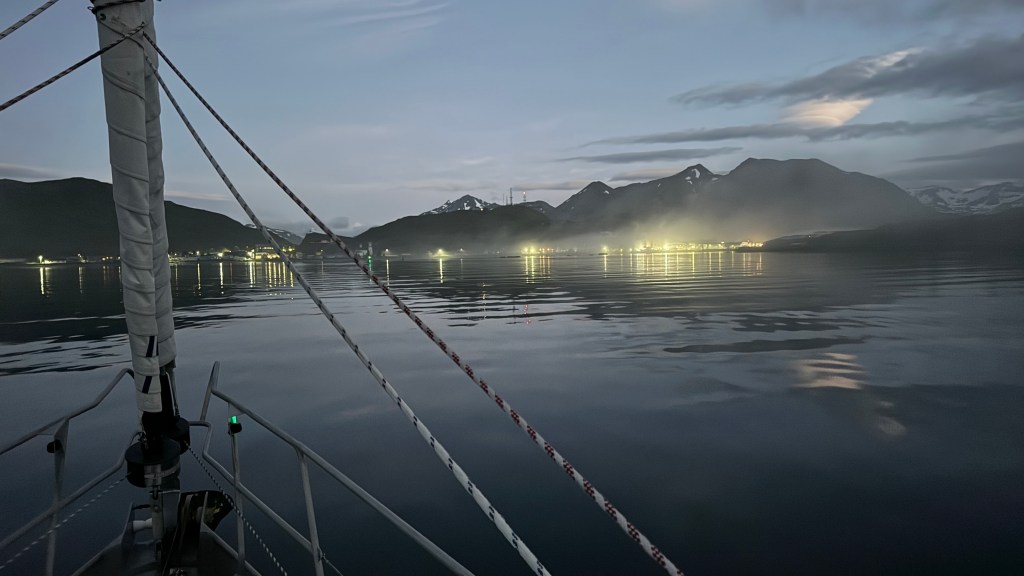
To me, finding our way in among shoals and rocks seemed quite treacherous as the fog was thick in the entrance. As I had just awoken, I was somewhat disoriented as to how to find our way into the harbor but Randall had plotted our course in advance.
It felt good to get past the fog, and see the monster sized fishing boats…I know they get bigger, but in California, we don’t see the ones even this size. We pulled into the harbor, and instead of taking a walk and looking for insomniatic citizens, we decided to go back to bed.
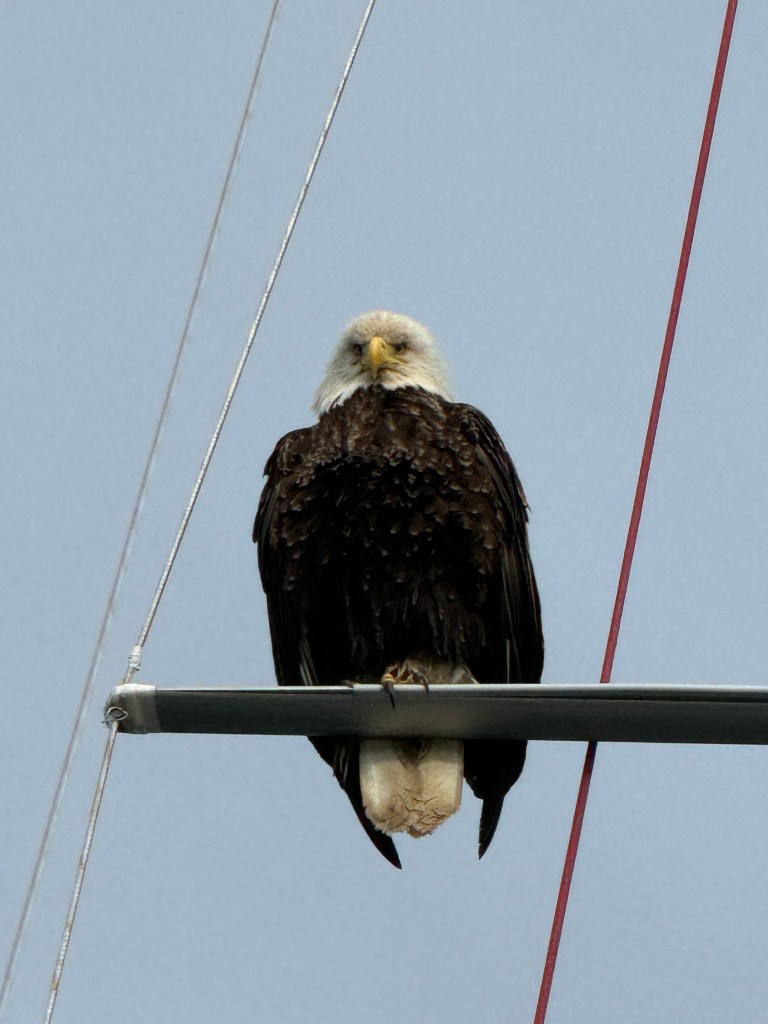
I woke up four hours later and still bleary-eyed, stumbled up the companionway into the cockpit outside and took a look up and who did I see staring down at me? I must be dreaming, I thought. I went back down and came up again thinking this must be a sign from up above that I have not been performing sufficient mitzvoth because this seemingly angry bird was about to bite my head off. Nope. Just my first Dutch Harbor Bald Eagle.
Now before you get too excited, my friend Dan Zeisler put it this way, “I thought Bald Eagles were special until I walked past the Dutch Harbor landfill and saw so many that I lost count…here, they are just like pigeons.” So true, but I was fascinated by these magnificent creatures during the course of our 48 hour stay.
While I began my love affair with the Bald Eagle, our fellow mariners were less than thrilled with them. In fact, two boats on our marina had their antennas and wind meters destroyed within the last week by Eagles landing on top of their masts.
From Britanica I learn that the Bald eagle is actually a sea eagle. Lynda, our guide you will meet later in this blog tells us that it is nearly impossible to distinguish male and females except that the women are bigger and males are more aggressive (sound familiar?) Bald Eagles pluck fish out of the water with their talons and prey on other small animals including snakes, crabs. They can live up to 30 years.
In Alaska, where eagles perched on fish traps and scared away salmon, Alaskan bounty hunters killed more than 100,000 in the period 1917 to 1952. The U.S. government’s Bald Eagle Protection Act of 1940 made it illegal to kill them, but Alaska was exempted. DDT then came along and almost finished the rest. By 1995, there were only an estimated 4,500 nesting pairs in the lower 48, but by 2007, they had rebounded sufficiently to have them removed from the endangered and threatened species list.
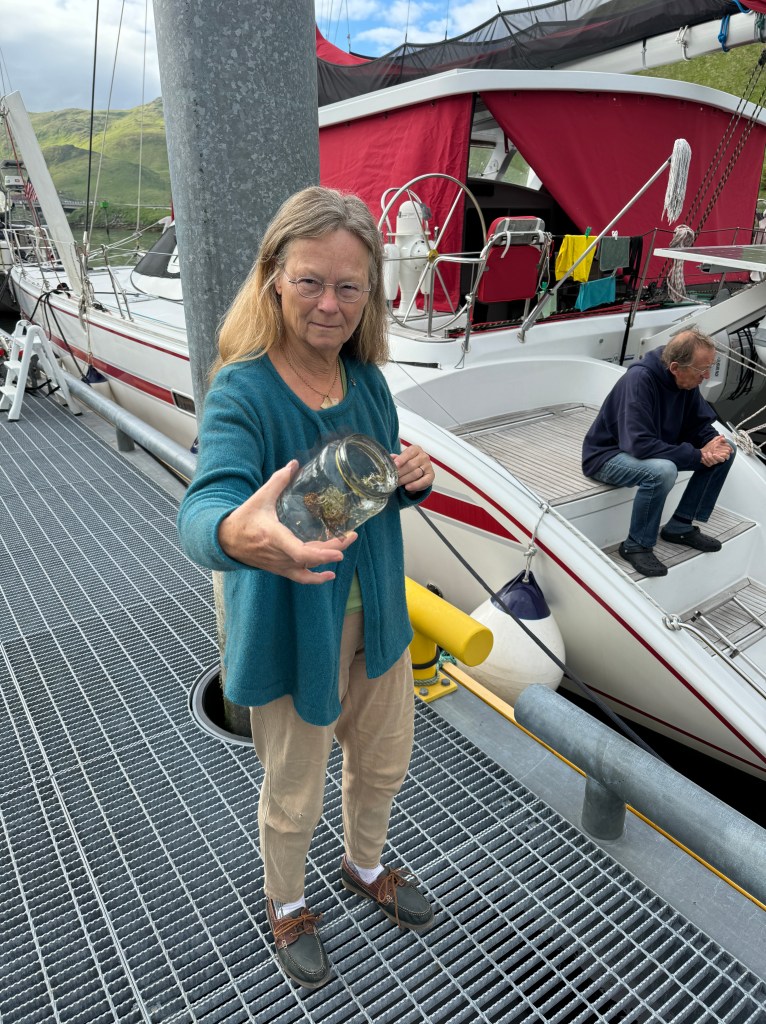
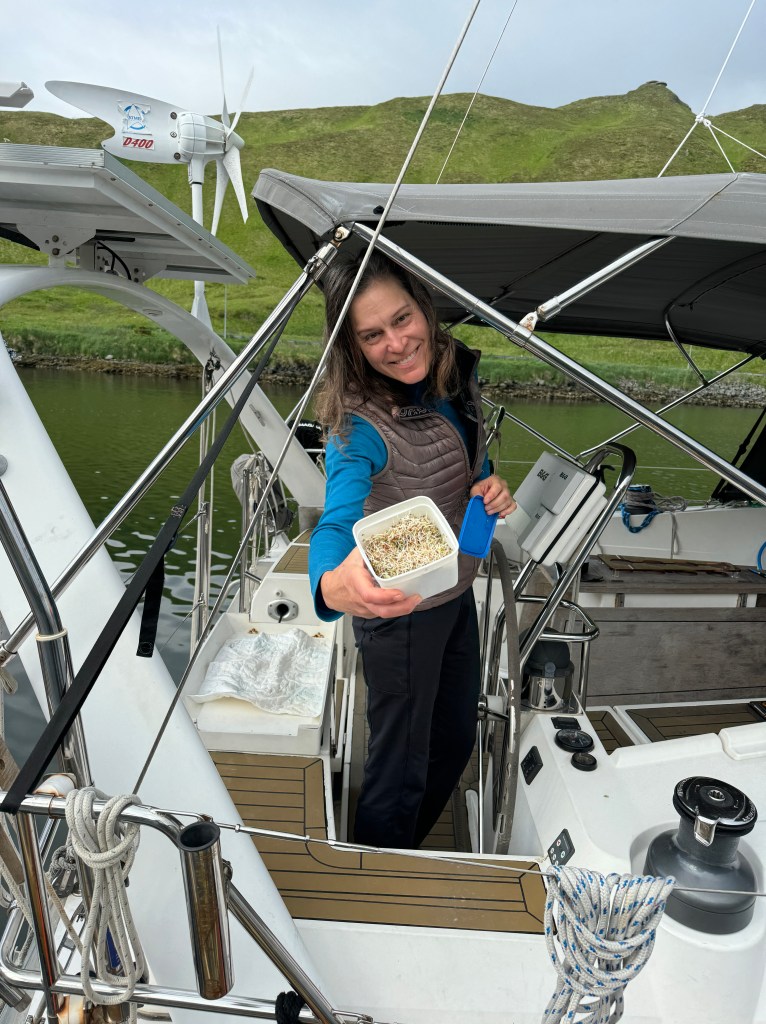
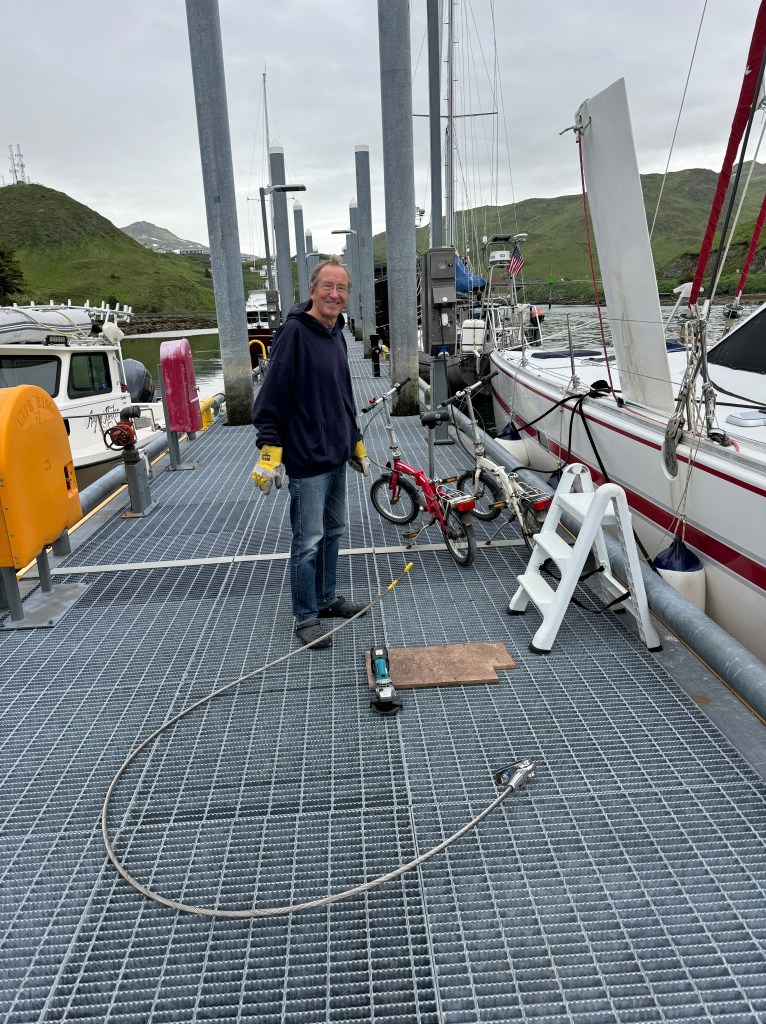
Here are a couple of our dock-mates. Two different couples that sailed into Dutch, one from Japan and the other from New Zealand (in a catamaran). The lady on the left and her husband originally from Holland, giving out her special boat grown sprouts.
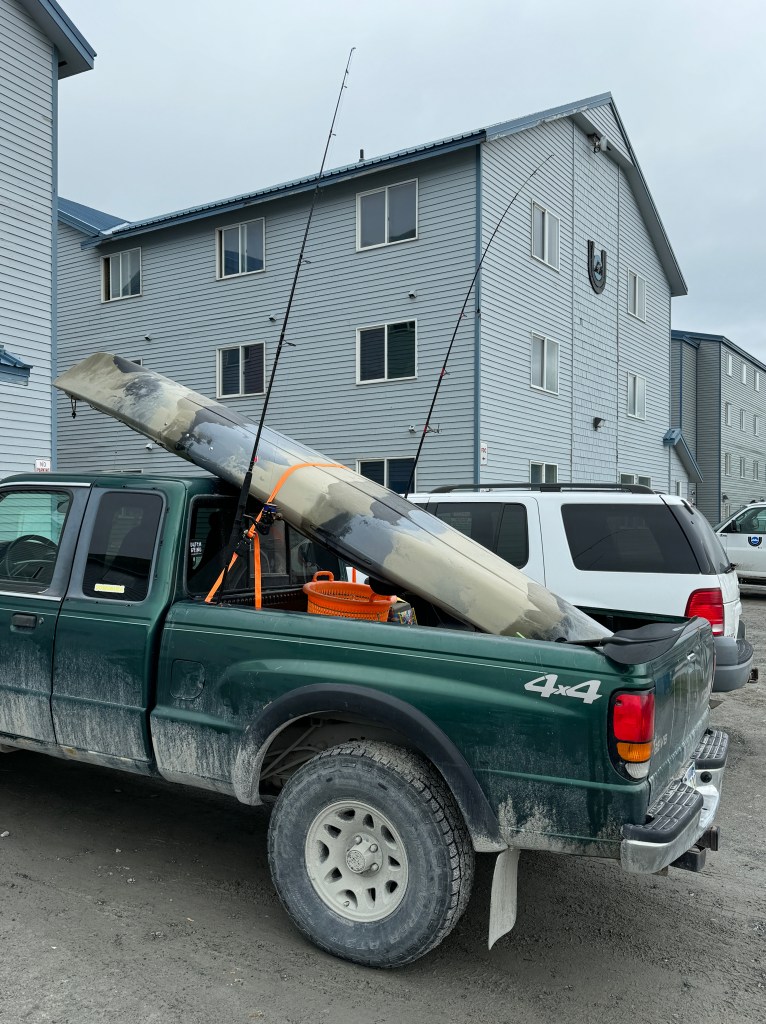
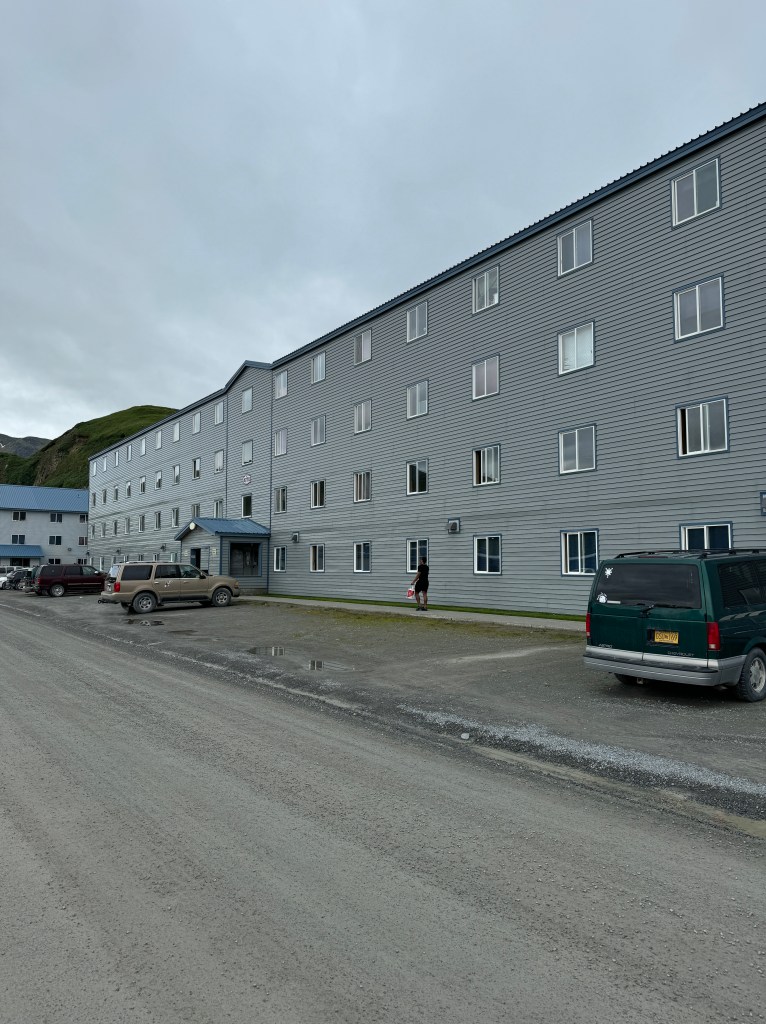
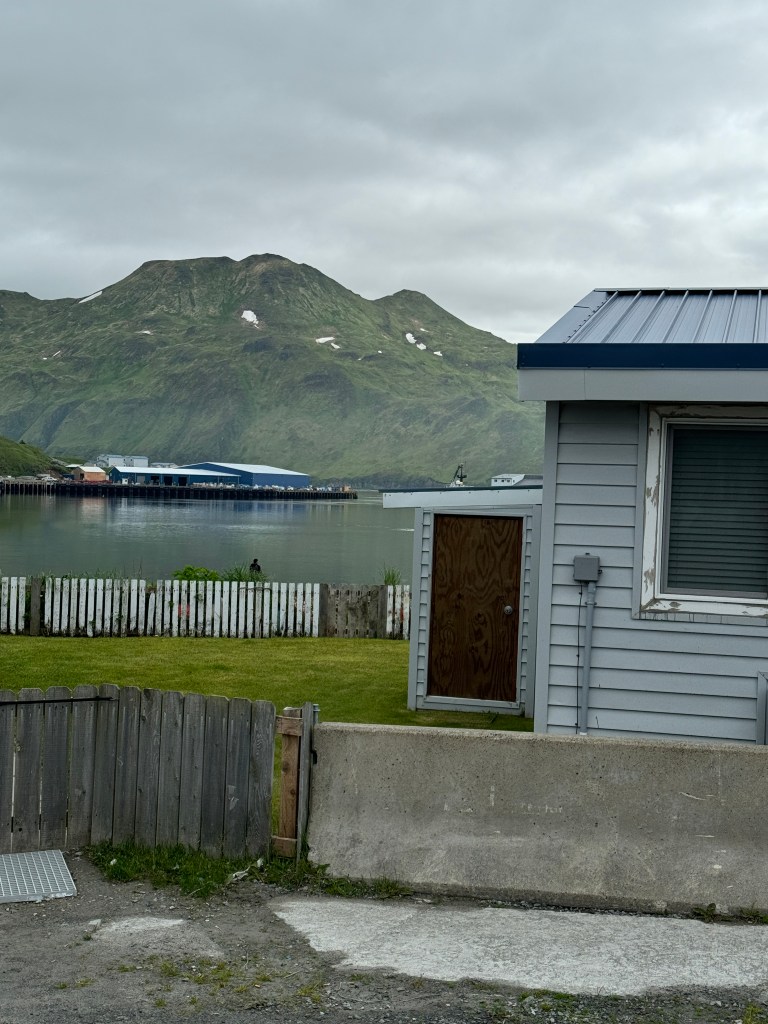
Near our dock was the Unisea https://www.unisea.com fish processing facility. On the left is one of their workers trucks with trolling rods and kayak. In the center is the dormitory for the factory workers (not bad) but on the left you can see where management gets to live. My understanding is that there are three major fish processing companies in Dutch. Besides Unisea, the other two are Westward https://www.westwardseafoods.com/company.php and the third is Alyeska https://www.ci.unalaska.ak.us/business-directory/alyeska-seafoods-inc. Unisea is American while Alyeska and Westward are Japanese.
Each company hires multitudes of foreigners to man (and woman) the facilities during the harvest season. It is not uncommon to hear Russian, Tagalog and to see Nigerians and Eastern Europeans as you pass through. The primary export is Pollock fish (think fish sticks, fish burgers and surimi) along with Salmon, Cod, Sable and Crab.
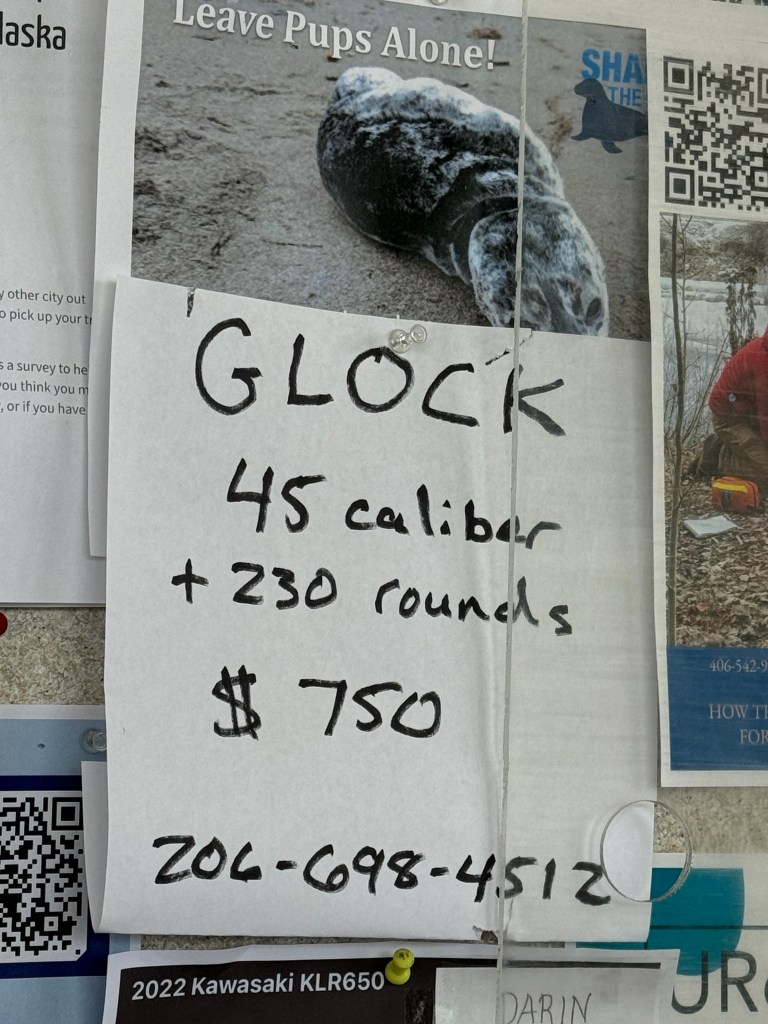
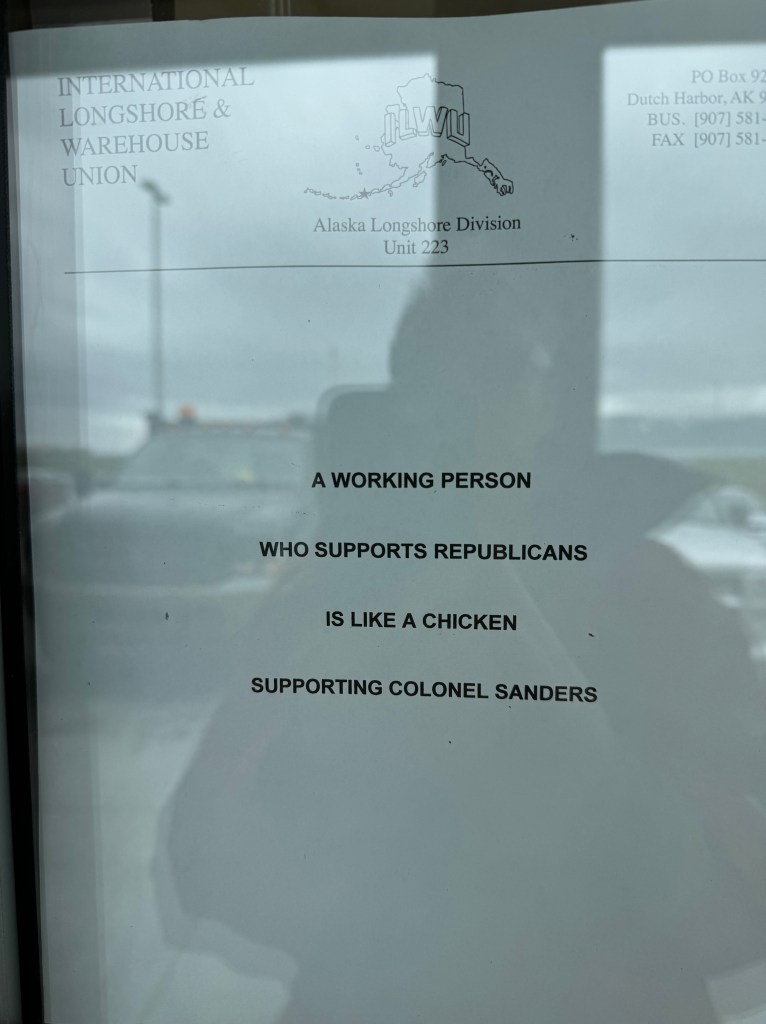
Yes, the locals are very interesting. Not a bad price for that Glock (sign posted in the local food, fishing and hardware store) and on the left is an uplifting political message from the Longshoreman center (I wonder who they will be endorsing for president?)

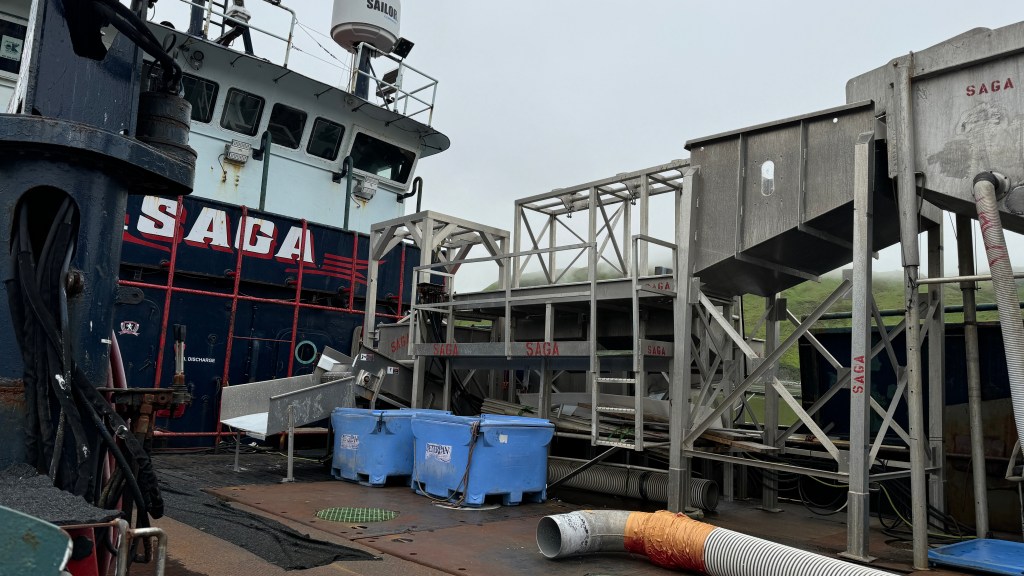
What is Dutch Harbor without one of the world’s most famous fishing boats made popular by “Worlds Deadliest Catch”? The 107 foot F/V Saga skippered by Captain Jake Anderson, a fifth generation fisherman, is legendary and has its own website http://www.fv-saga.com. Sorry to have to be the one to tell you that the Saga has now been repossessed. But the good news is that it is available today for purchase at a mere $1.8 million!!! https://dockstreetbrokers.com/vessels/cr24-006. All my fishing buddies (Greg, Hugs, Rodes and Alex) let’s all go in on this right NOW before she get’s away from us. Our gal’s can be the deckhands. (Time to wake up Harmon).
They call the blue ships Trampers (derived from the word tramp) as they have no set schedule. They are often foreign vessels that are not able to dock in the U.S but will instead anchor in a place like Dutch Harbor and await commercial fishing vessels (like the black vessel in front of it) to unload their catch. Not a bad deal for the local fisherman as they do not have to deal with the local fish processing plant. Often times the tramp boats are way off shore and are more convenient for the fisherman to unload and sell their wares (instead of having to go all the way back to harbor). Tramper’s like this one fill up on local seafood and then return home to somewhere like South Korea where the seafood is processed. The best of the stock remains in the orient. The second grade is shipped to the U.S. and our guide tells us that all the rest then comes to Alaska (I think that is a joke, but I am not sure).
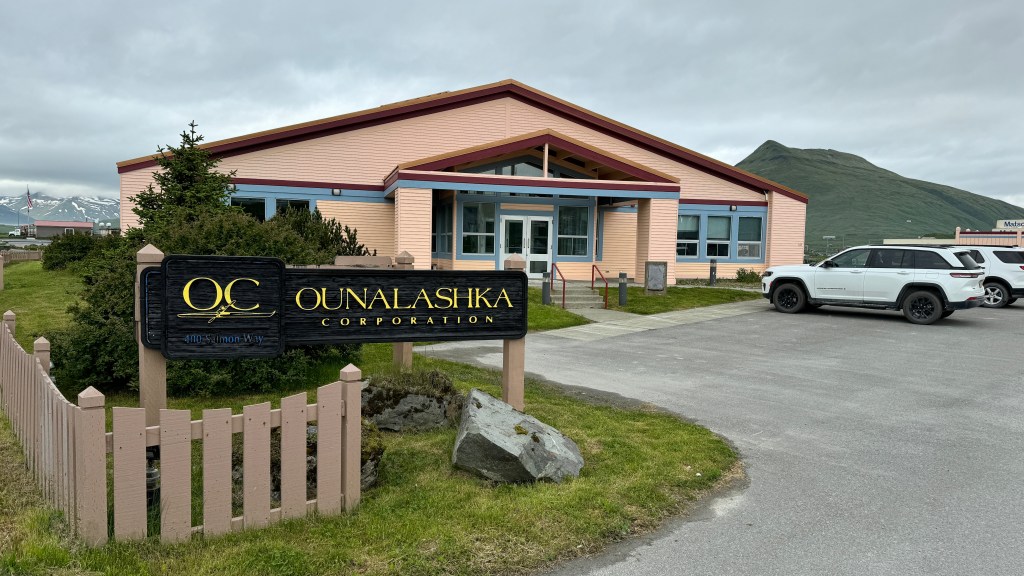
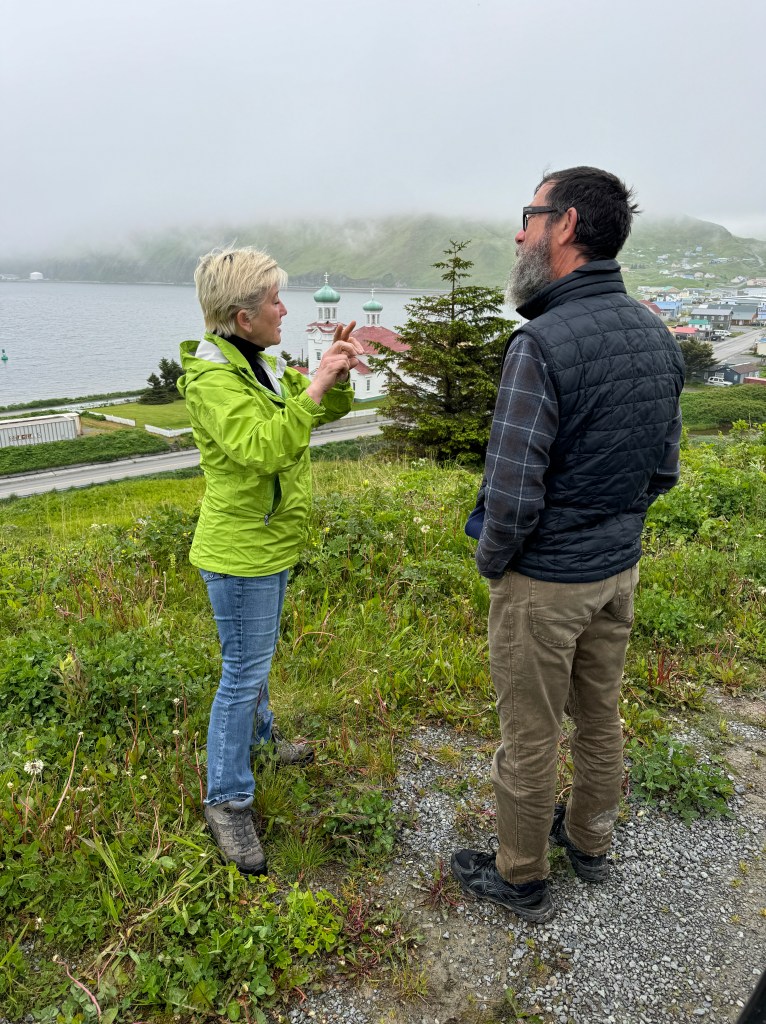
On the left is the Ounalashka Corporation Headquarters which governs the majority of Unalaska on behalf of the native population. Like Hawaii, most property outside of land previously owned by the U.S. Government (read: taken around the WWII era) cannot be purchased, and is run and managed on behalf of Alaskan Natives.
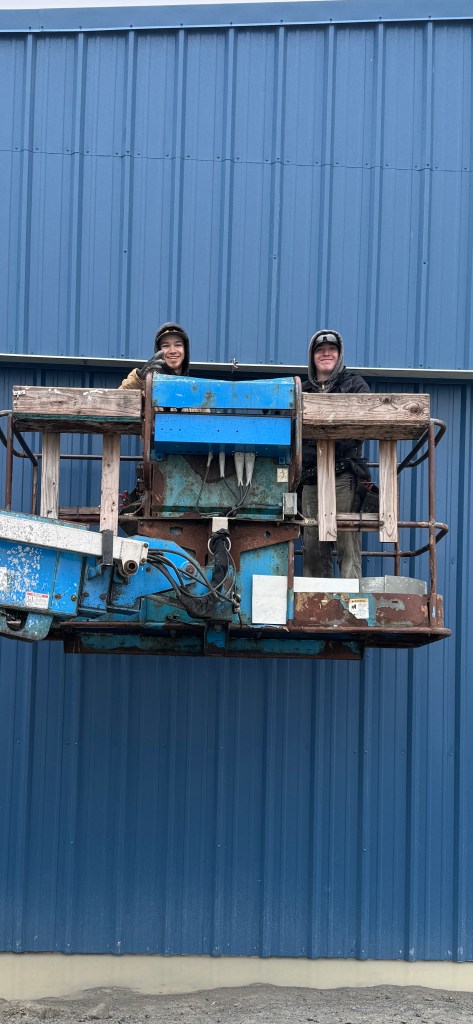
On the right is our guide, Lynda Lybeck-Robinson. She came to Homer some 25 years ago as performing pianist. She explains that she thought she was “too good” for a place like Dutch Harbor (so she did not accept her first offer to play here), but quickly realized how wrong her thinking was. She then took a gig here, fell in love with a native boy, had two kids, teaches piano, is an incredible nature photographer a birder second to none and an amazing guide. Thank you Lynda! Oh yes, and that is her youngest son in the cherry picker repairing the metal building. I hope my kids are as happy in their work!
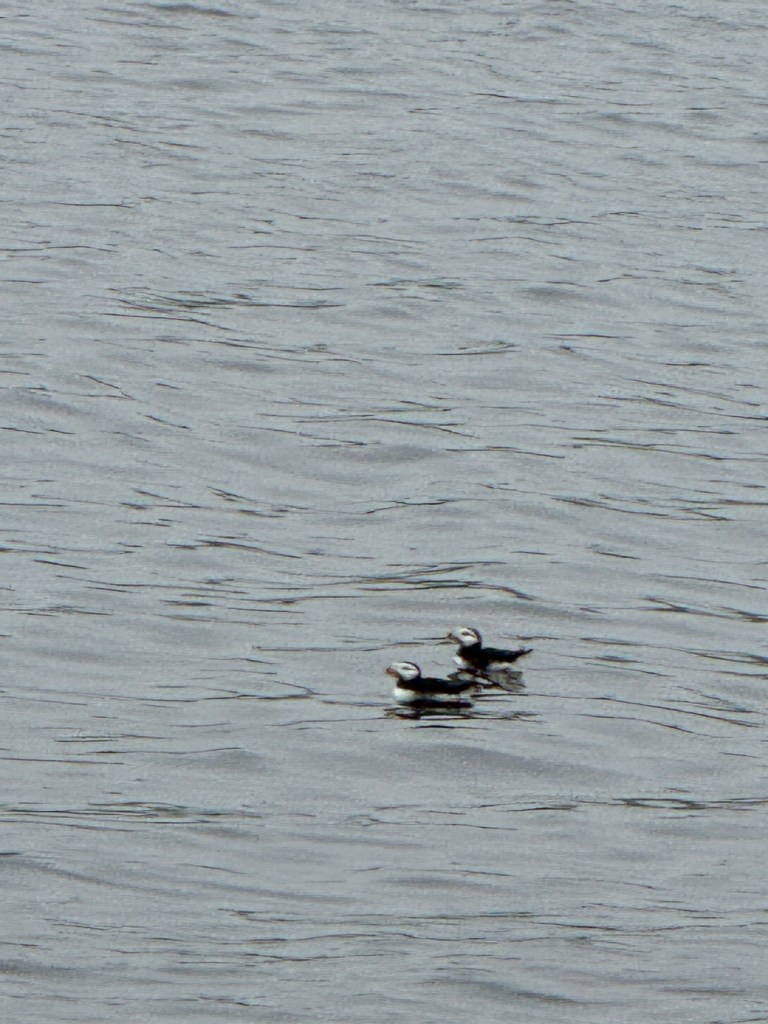
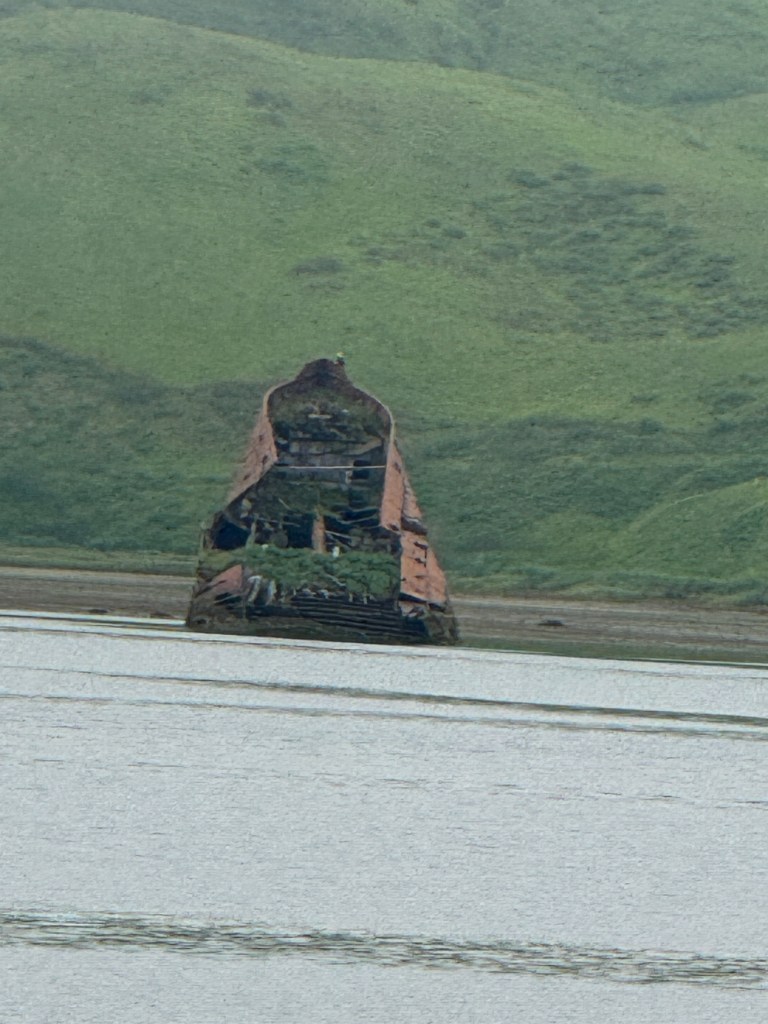
Unalaska, like so much of Alaska, is a birders paradise. Lynda took us to Captians bay. On the left are two Horned Puffin’s. On the right is the wreck of the Northwestern, also in Captians Bay. She was sunk in the Japanese attack of 1942, but she had quite a history before that. https://en.wikipedia.org/wiki/SS_Northwestern She had been around the Horn, grounded more than once, had been used and ridden and carried people and freight through thick and thin. But here she lies.
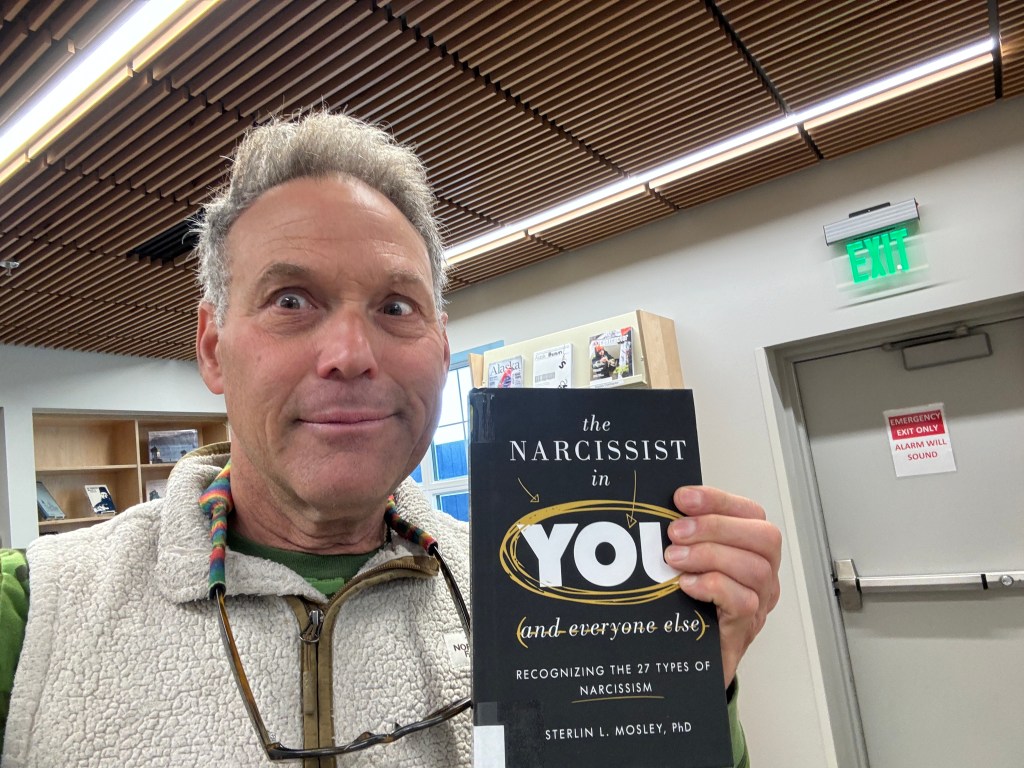
Lynda then took us to the local library housed in a brand new beautiful building with a fireplace and all kinds of books, periodicals and community meeting rooms. I have no idea why I would be attracted to a book like this??!!
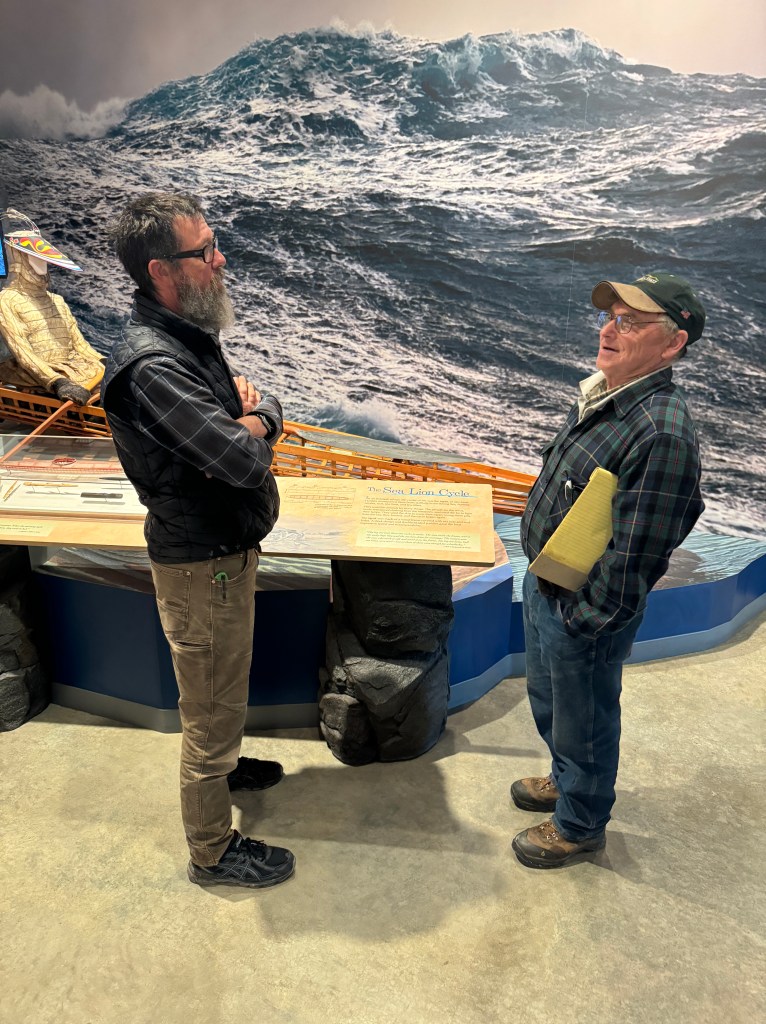

Dutch Harbor has two world class museums. The first is the WWII Visitor Center https://www.ci.unalaska.ak.us/business-directory/aleutian-wwii-visitor-center. It is superb and whomever curated that museum deserves an award. The second is the Museum of the Aleutians. https://www.aleutians.org. Again simply superb.
At the Aleutian Museum, we had the privilege to meet Art Christinsen – aka The Shepperd – who runs 200 head of sheep in a remote part of the island, accessible only by sea plane or boat. He comes into town periodically to sell a couple of sheep, or to try to get out of town (he winters in Red Bluff and is a fellow gradate of California State University Chico). He graciously gave us a ride in his van that has as much character as he.

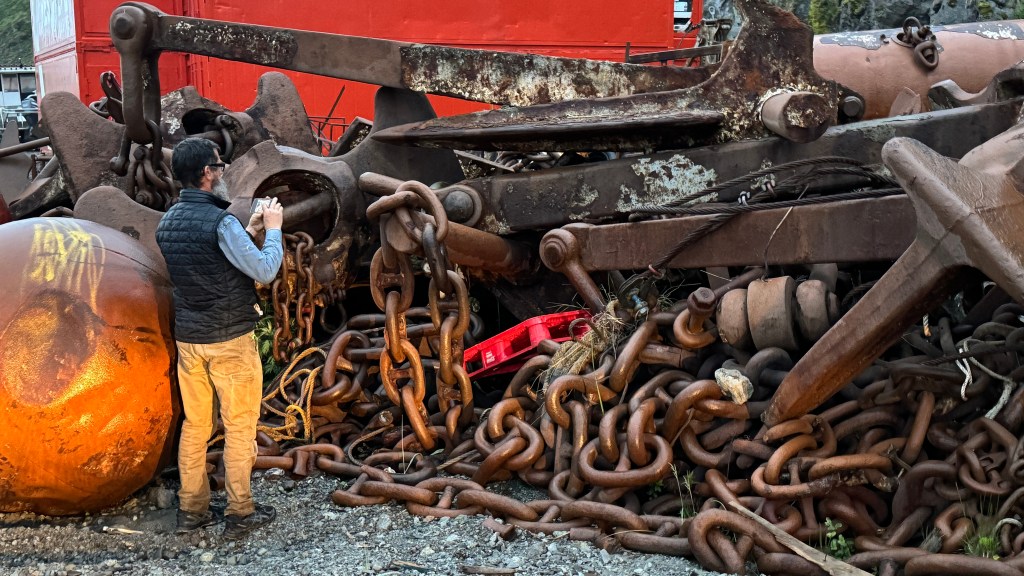

Randall and I both share a love and interest in abandoned fishing and maritime gear. Here we are trying to figure exactly how much of this beautiful bounty we can take home and put in our backyards with our wives noticing.
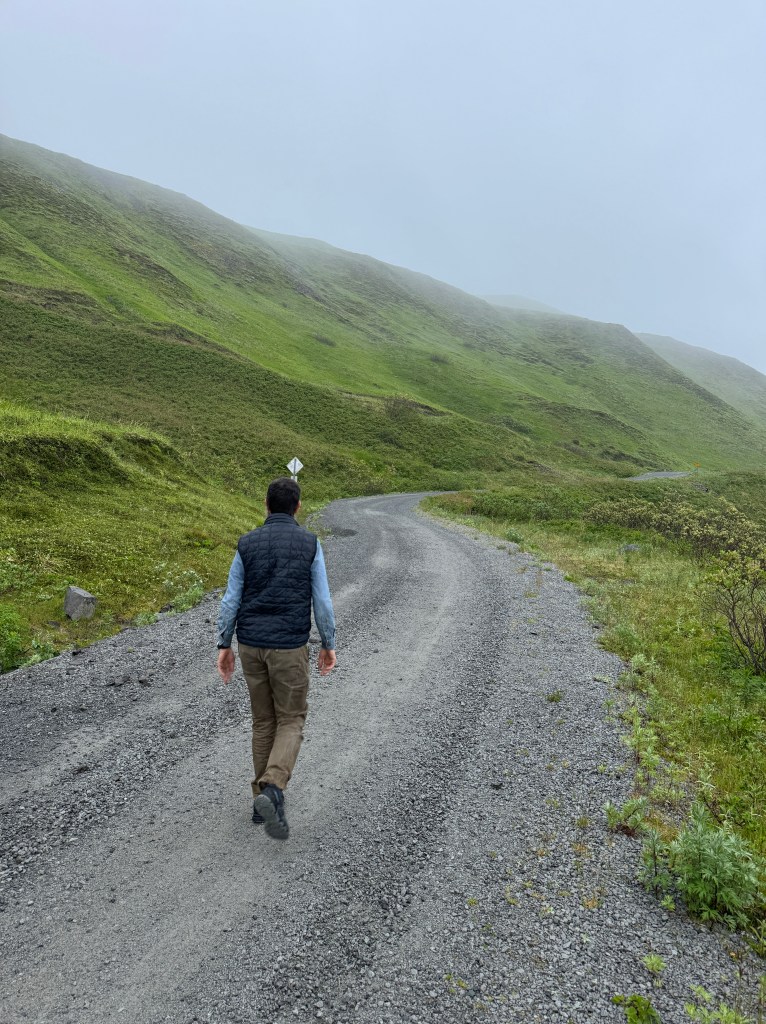
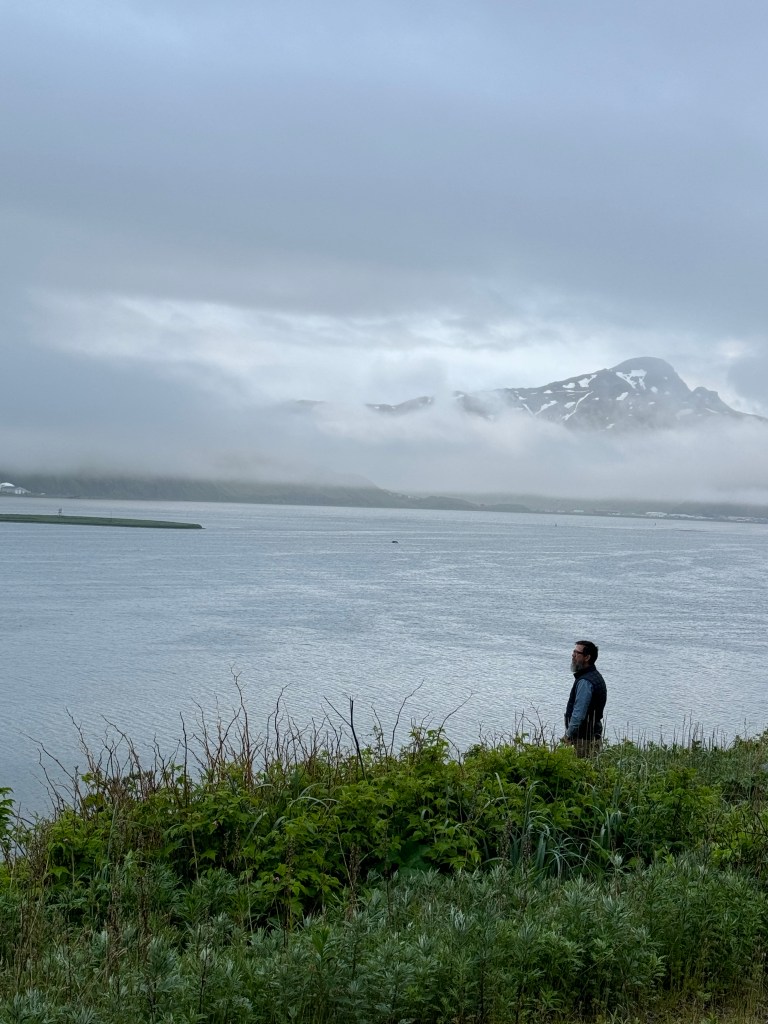
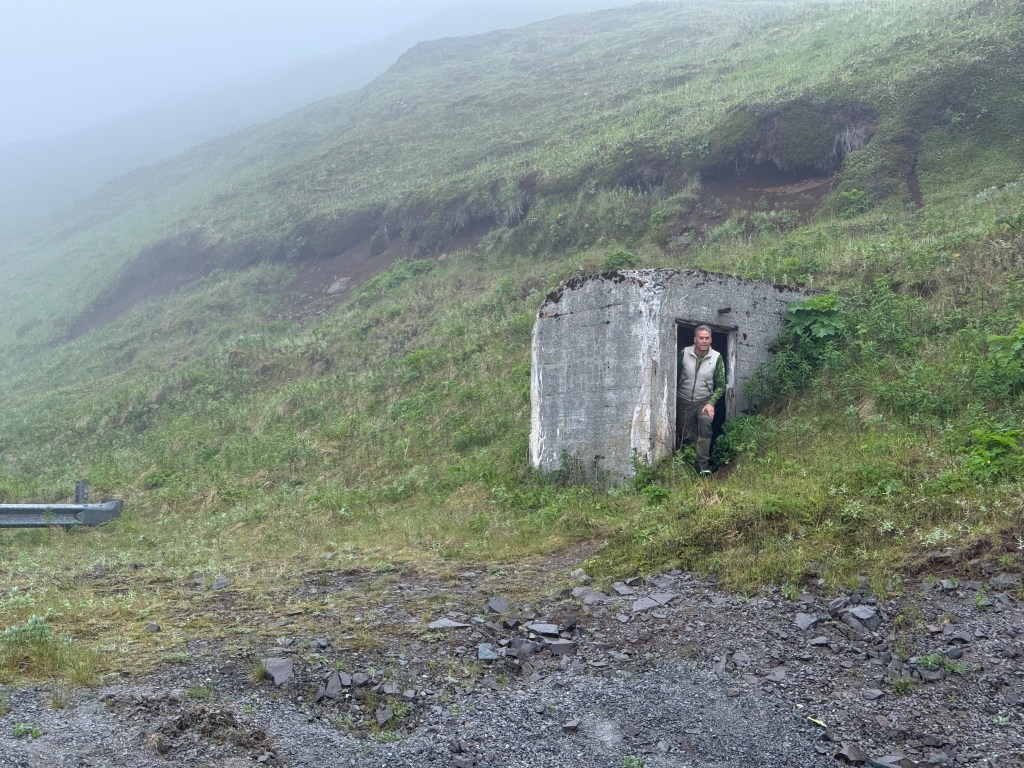
Randall and I took a walk at 1100 our first evening to see the WWII bunkers. We were tired and sleepy and it was raining fog, but we made it up to the top of the hill (but it turns out not quite far enough to see the WWII bunkers. Oh well…next trip.
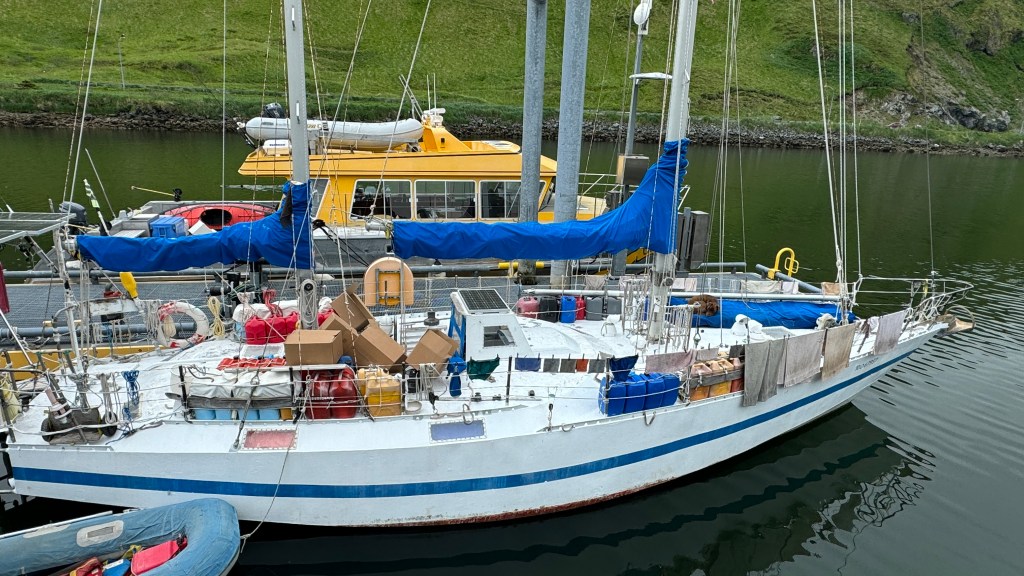
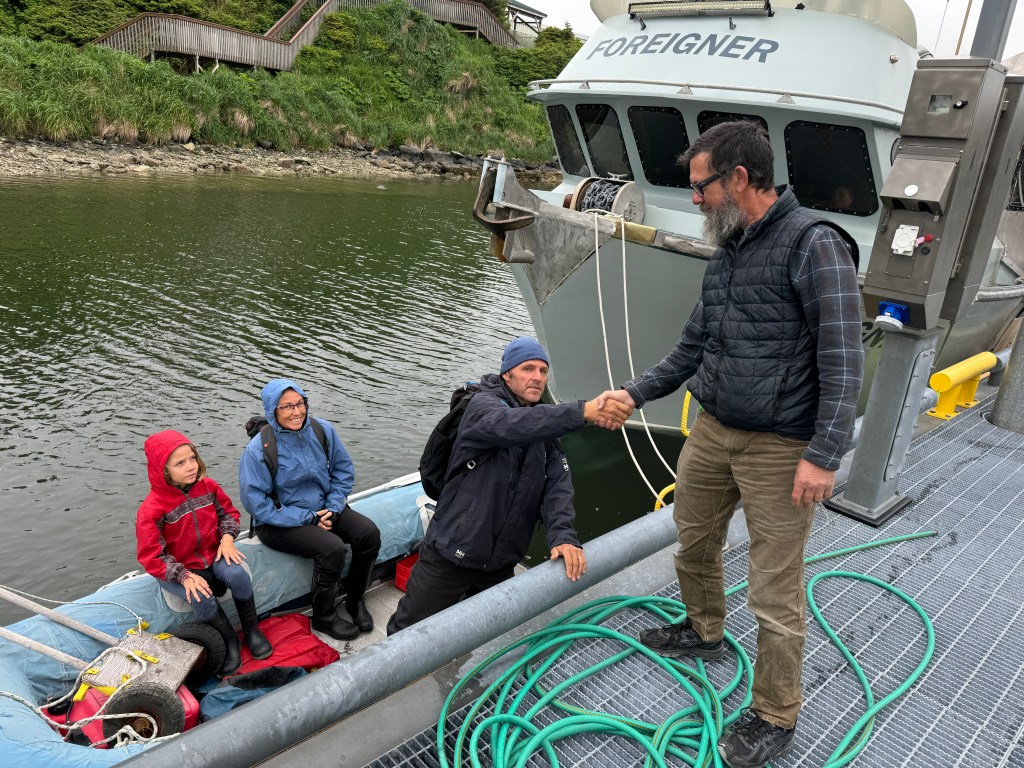
We also shared the dock with this French Canadian family from Quebec. They have been sailing around the world for eight years, have seven children (six are with them). The seventh, at age 18, fell in love with a Marshall Island girl at her native island and got married and returned to Quebec. They are the nicest, calmest and one of the strongest families I have had the pleasure to meet. Like us, they will attempt to transit the northwest passage only for them, they will then return home to complete their journey.
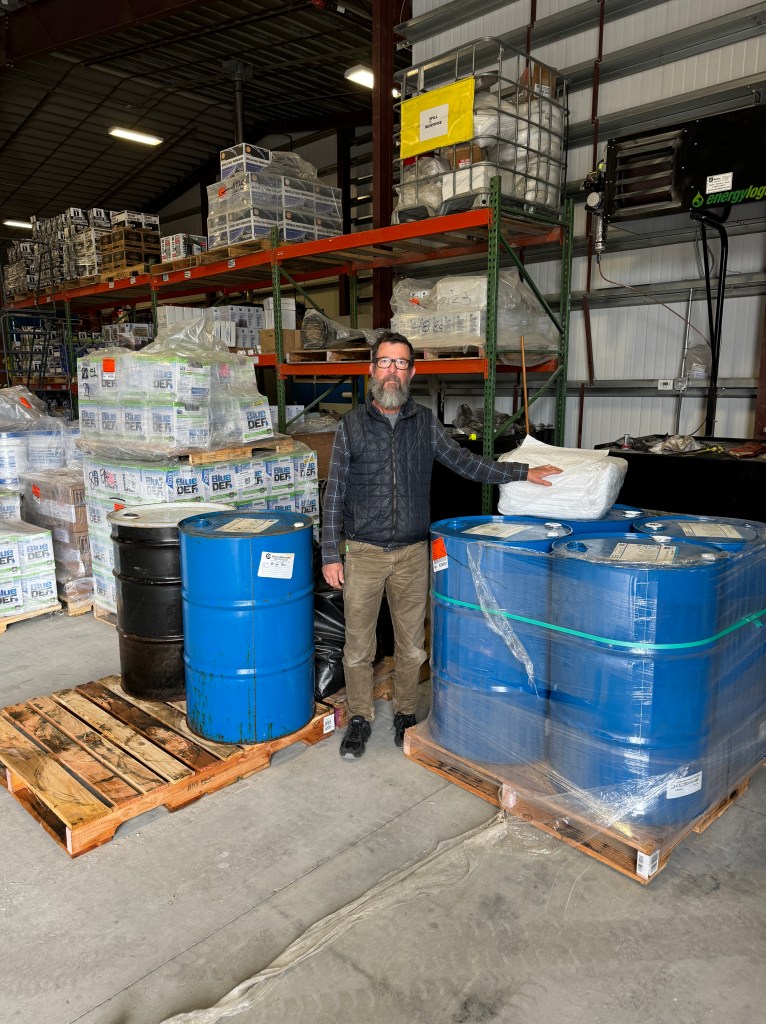
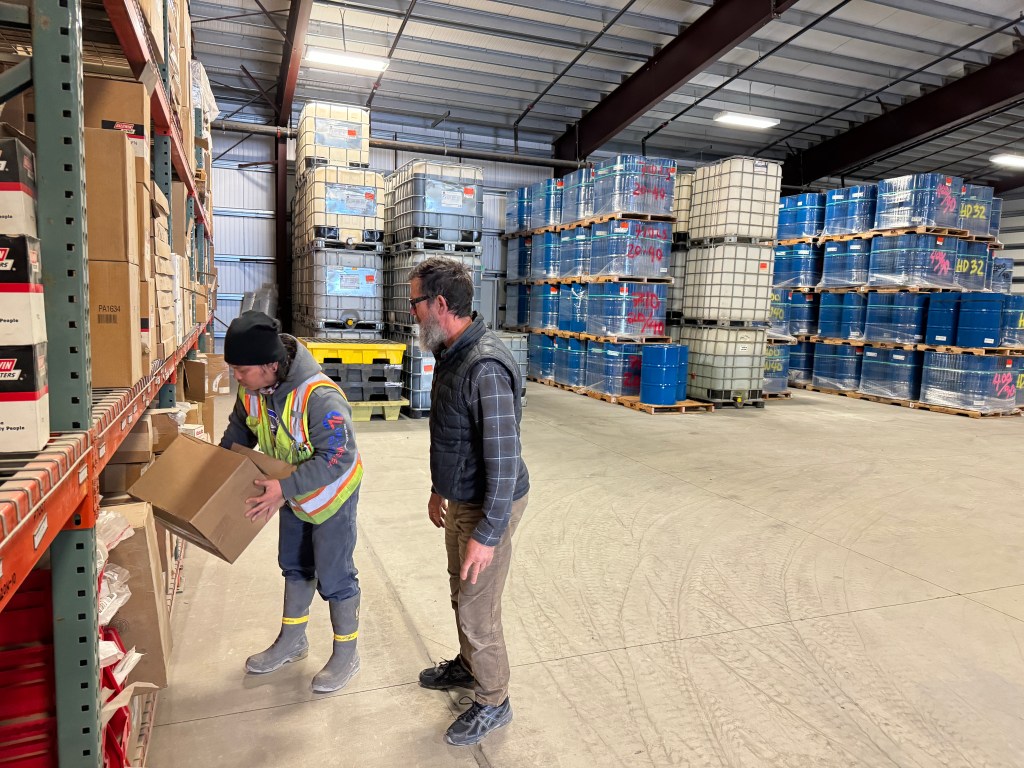
Randall sent me to search out a place to purchase rather mundane boat supplies including a special kind of motor oil plus a certain type of oil rag. I tried all three places in town that most people go for supplies and came up empty handed. By chance I heard of a special warehouse, only frequented by the major shipping companies. It had no sign, no storefront, was not open to the public, and had no workers inside. It was the essentially an industrial speakeasy. Randall and I found a worker at the fuel dock, we drove over to the warehouse in separate cars, and then talked our way into the warehouse. The worker tried to sell us a 55 gallon drum of oil. That was the small size…he really wanted to sell us the 450 gallon tank of oil – they were having a special that day. We finally found the one gallon size hidden in back (in three pack boxes). We bought two. There was no cash register. He took Randall’s credit card number with the understanding that he will be charged some amount at some point in the future. As brother Abe would say, (It’s Chinatown Jake) or in this case it’s Alaska.
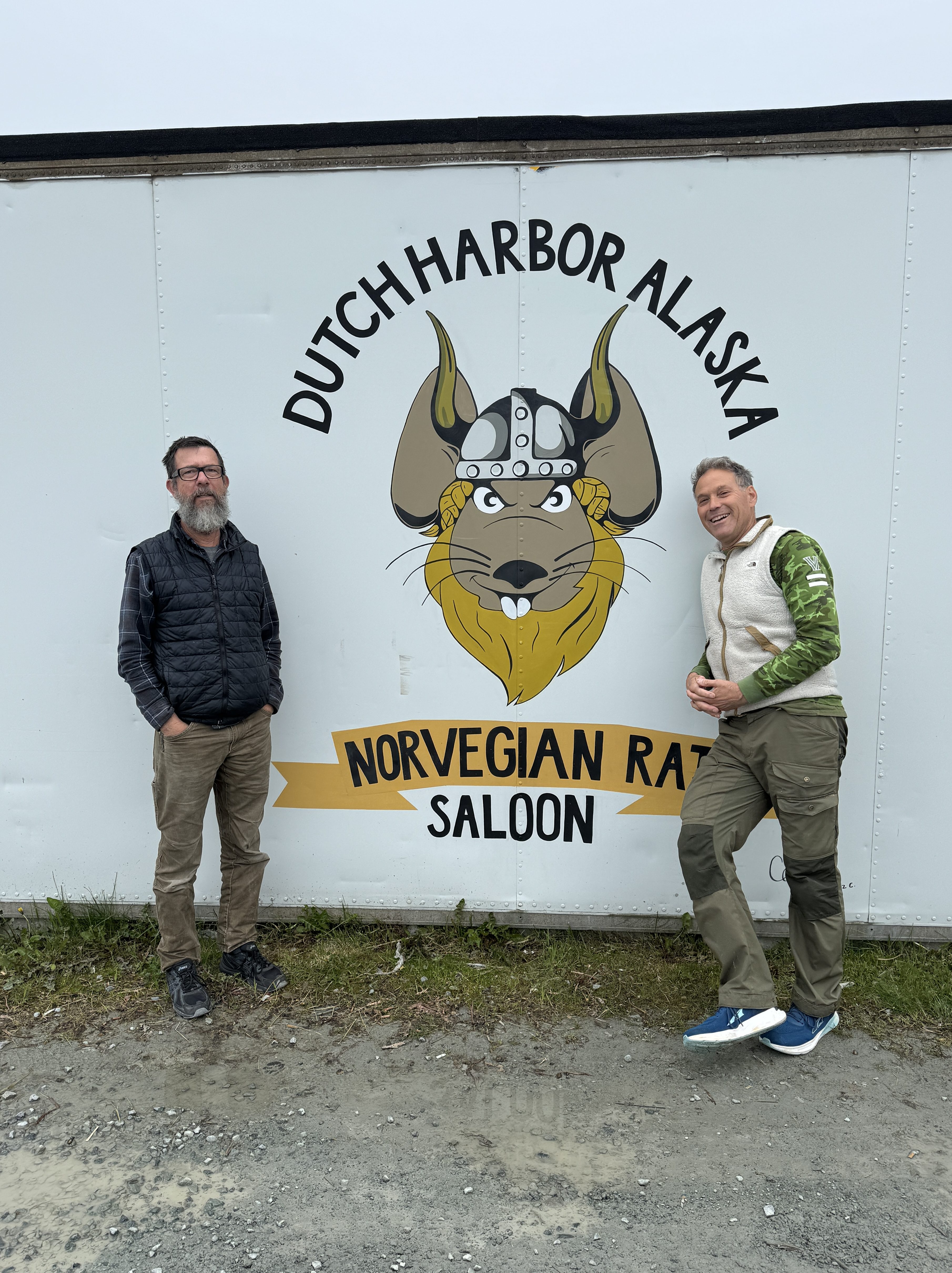
With a nod to the Scandinavian heritage of our wives, this is our new favorite Dutch Harbor bar.

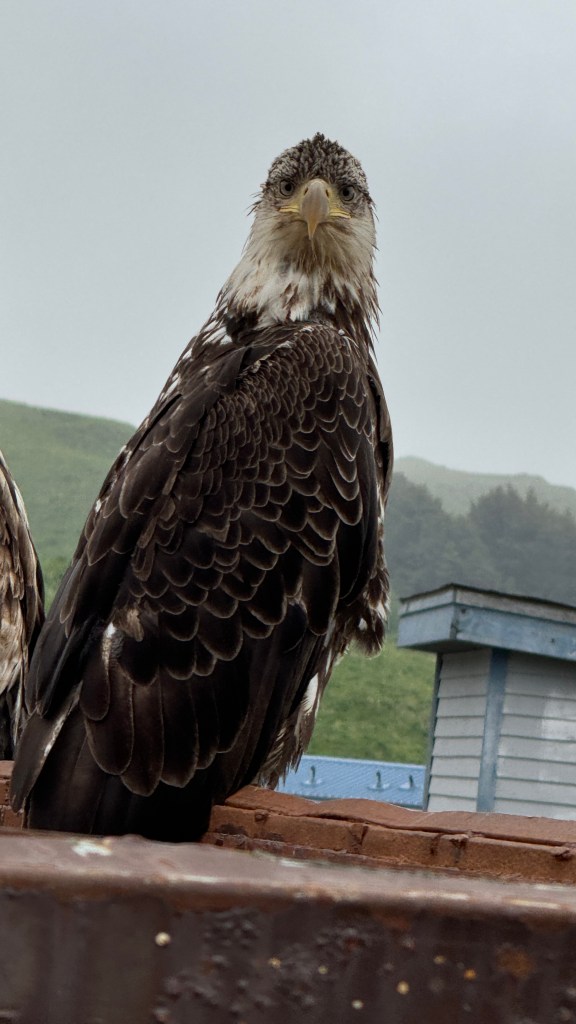
I promised myself that after 80 pictures of Eagles that I was done, done, done. But on my way back to the boat before we headed out, these two caught my eye and I could not resist. The one on the right is a teenager, with full color not quite there yet.
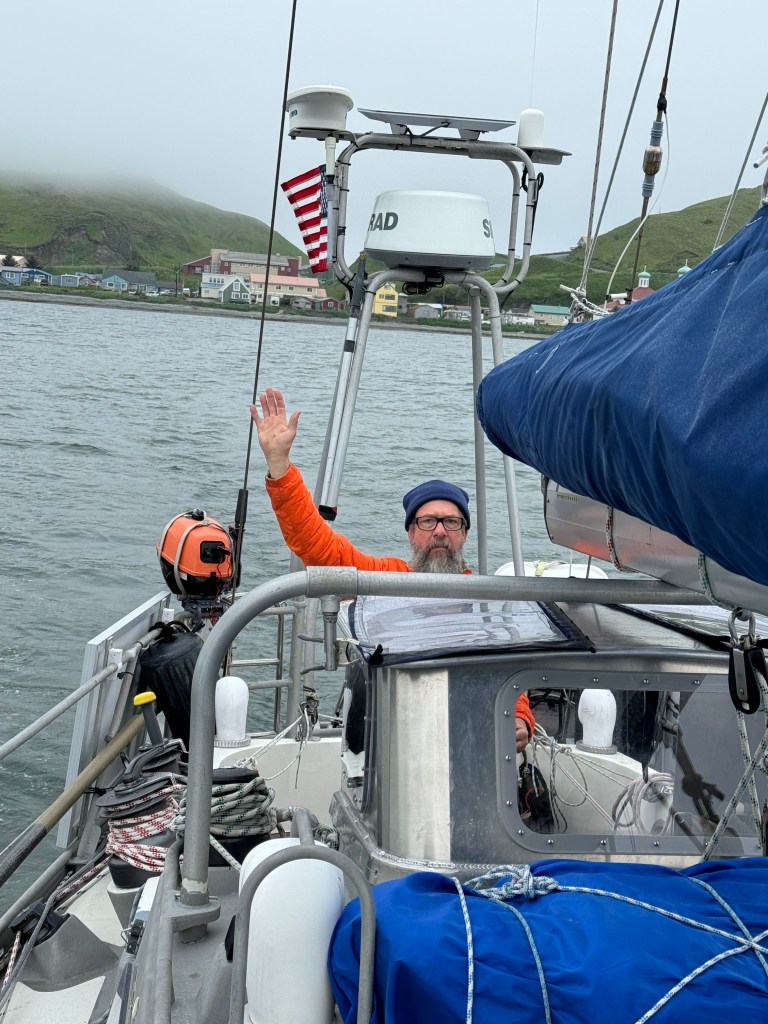
Wow…this was a long blog. Hope you made it to the end. Here we are on our way having just set sail from Dutch. We have officially left the North Pacific and are now on the Bering Sea heading north.


 Harmon and Randall's Voyage...
Leave a reply to wynnnick Cancel reply