Leg 2
Blog 8
July 14, 2024
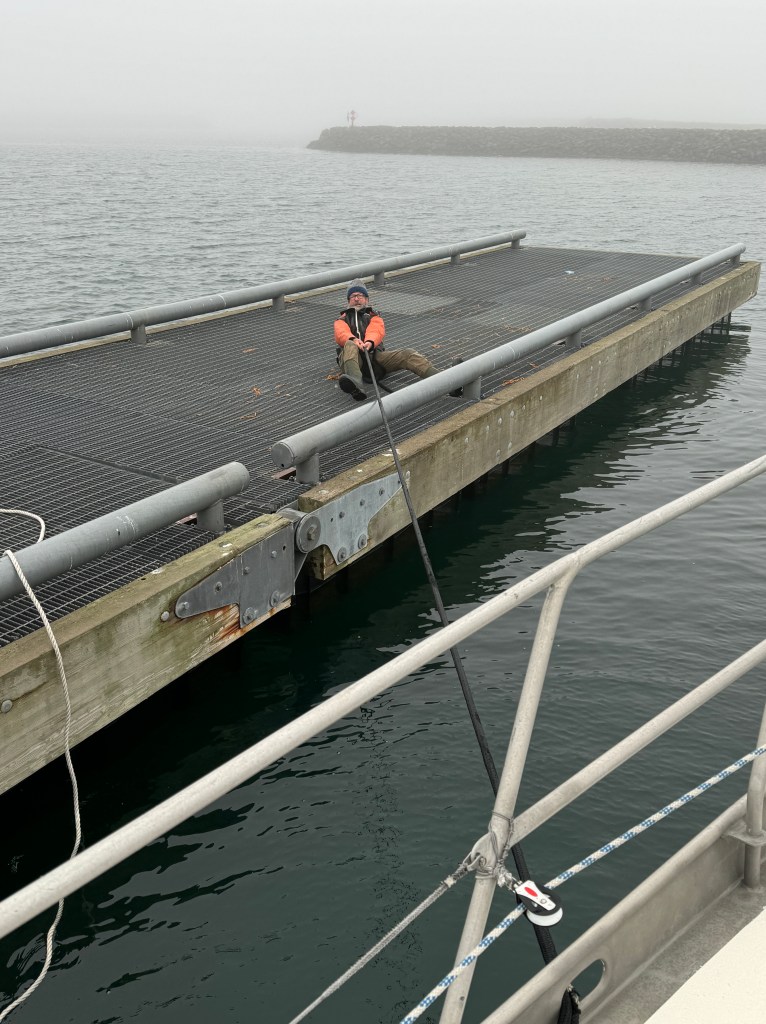
Randall and I had planned on spending the night in the St. George harbor following our visit, but on our weather forecasting app we saw that a massive head wind was developing which would make our eight hour crossing to St. Paul miserable. So we made the decision to take off directly and set sail for St. Paul that night – sleep is overrated anyway. Above, here we are arriving in St. Paul early the next morning, but we chose the wrong side of the dock to tie up to and the wind was pushing us away. Nothing that Randall could not handle (Mōli only weighs 17 tons fully loaded).
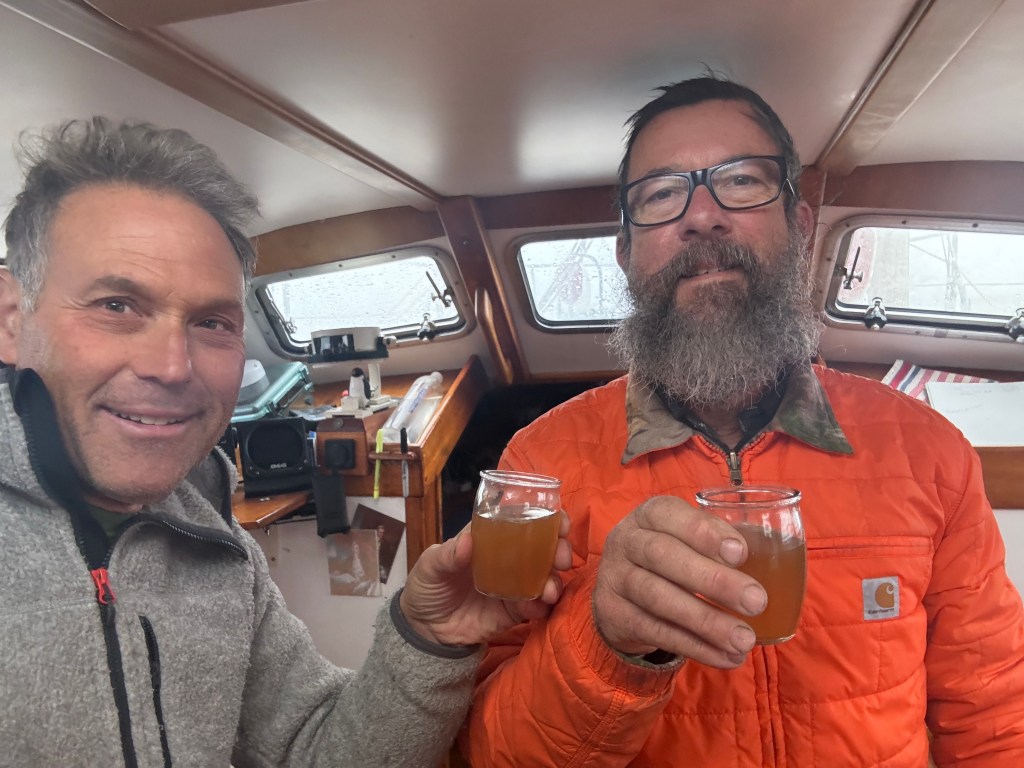
Drinking a rum toddy upon arrival to a new port is a tradition I have carried over since I sailed with Mike Johnson last time we were in the Bering Sea. I was pleased that Randall wholeheartedly accepted this custom as soon as we secured Mōli by tying up on St. Paul (even though it was 8:00 in the morning).
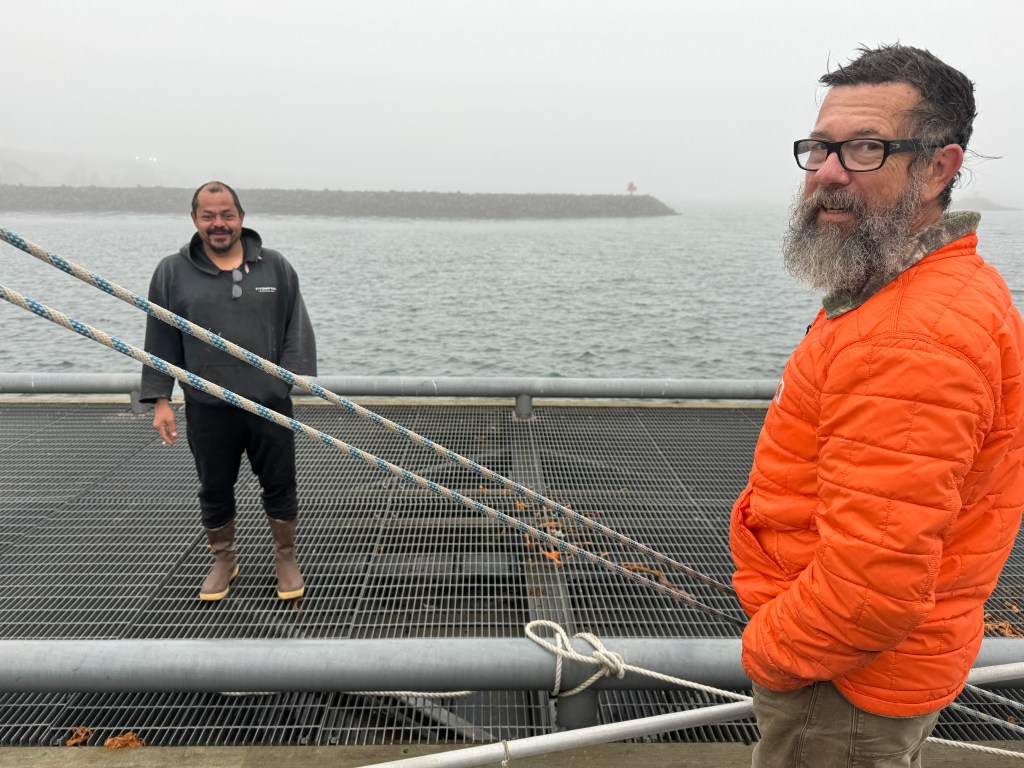
Our first visitor – Halibut fisherman Juan. We never quite figured out Juan’s connection to St. Paul, but he seemed ever so slightly down on his luck as the Halibut he fished for were just out of reach. Further, his wife refused to accompany him on his boat this year (choosing to remain somewhere in Los Angeles County). Know the feeling Juan.
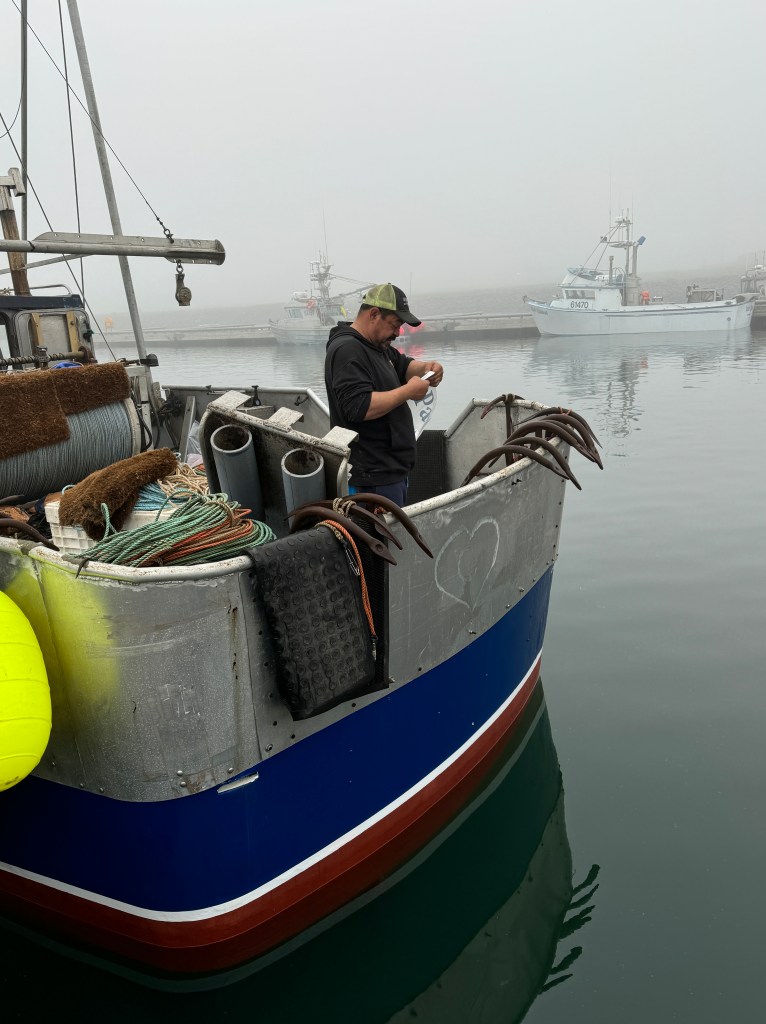
This is Juan’s boat that he goes out on with one or two deck hands. He is not entirely happy with them yet – he describes them as “greenhorns” (beginners) that are not quite picking up the trade as quickly as he would like. But with a little bit of training and elbow grease, I am sure the fish will be jumping in his boat soon and he can reach his allocation of 40,000 pounds of Halibut. Hope so because he says that this will be his last year.
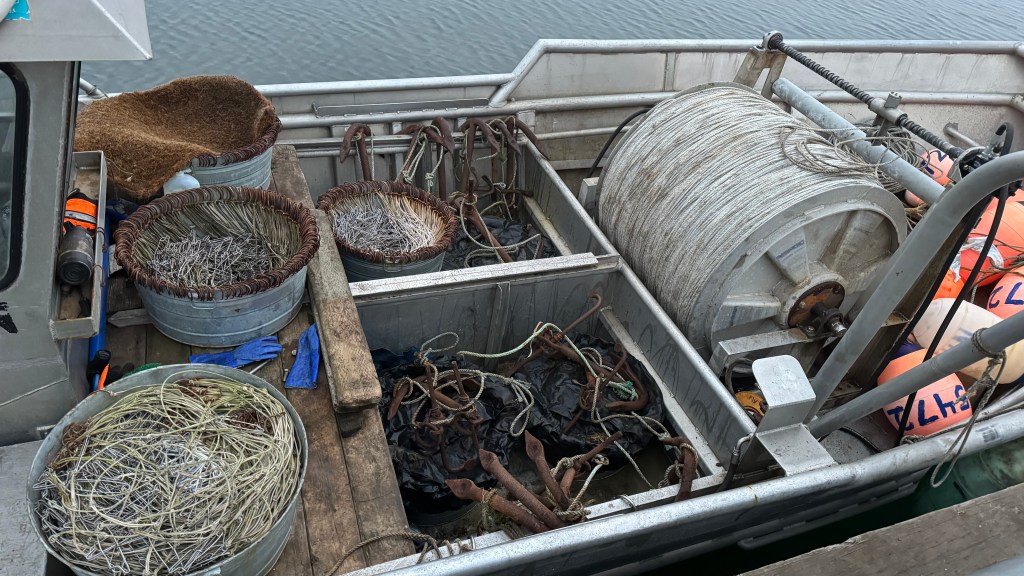
This is another Halibut boat tied up near Juan’s. Something about this boat caught my eye. It was open, compact and incredibly well organized – you can see the line, the hooks, the anchors and the buoys. Halibut fishing is done by longline where the line can extend for many miles with hundreds or thousands of baited hooks. The lined spool in the upper right of the above picture contains 25 “skates”. Each skate is 1,800 linear feet of line, so if we do the math, that spool contains 8.5 miles of line (and this is a small boat).
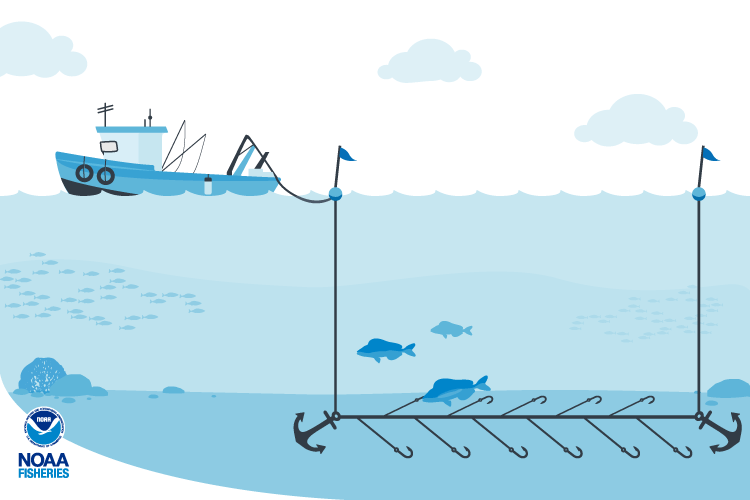
Above is a diagram of a Halibut long line. You can see 1) the buoys (floats) so the fisherman knows the beginning and end of the line, 2) the line extending down onto and along the bottom, 3) the anchors to hold it all down, 4) the hooks which run along the bottom. This is one “skate” which means the length of it is 1,800 linear feet. The boat above will tie up to 25 skates together and how they do it without making a tangled mess is beyond me.
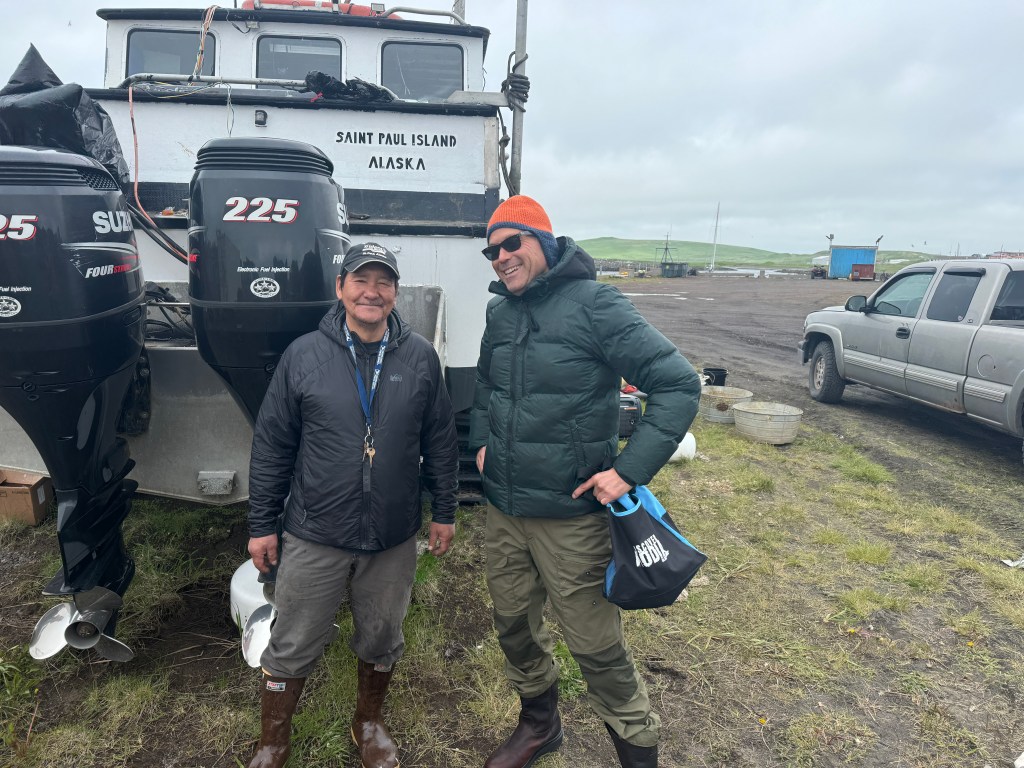
Without walking too far, we met Richard, a long-time island resident – I am guessing a native of the island. Still working on his boat trying to get it into the water and not too concerned that the Halibut season may pass him by. As a native, he is also allocated 40,000 pounds of Halibut this season and he seems pretty confidant that he will get it all. Richard informs us that there will be a seal-kill tomorrow and that Randall and I would be welcome to come along (but with very strict rules like no photos, no touching a seal etc.).
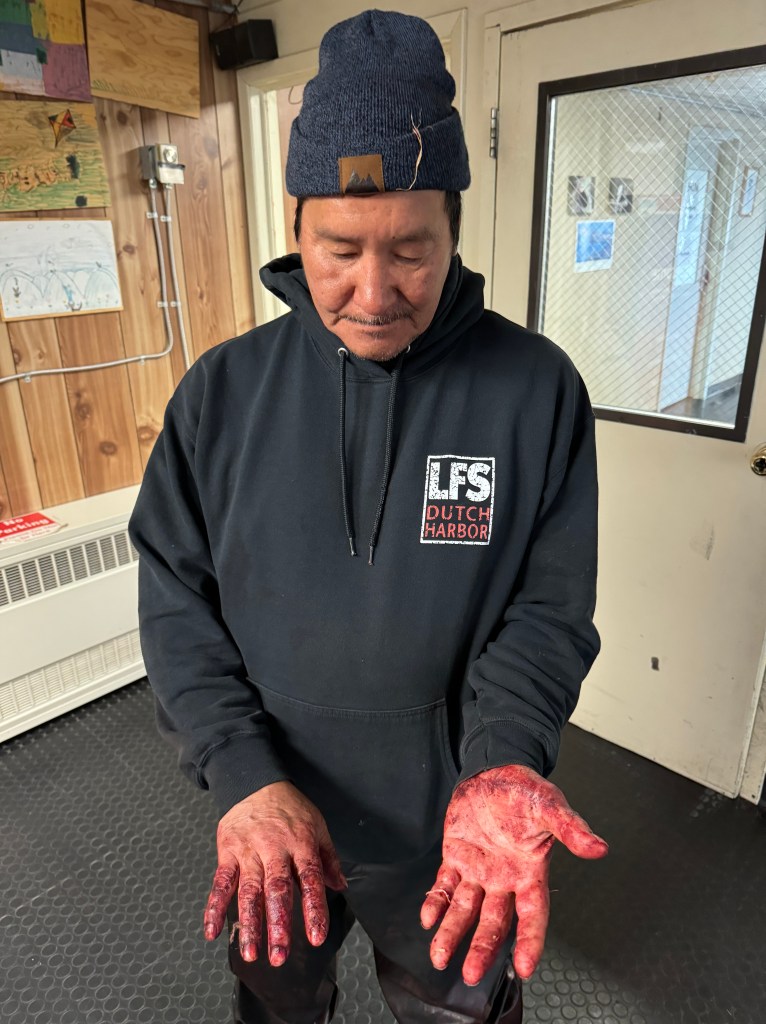
We run into Richard the following day. Just back from the kill, he jokingly sticks his hand out for me to shake (which I do – but I sanitize quickly thereafter!!) He chides Randall and I for not coming, but to be honest, I am not sorry I missed it, even though they gather, club, and skin the seals in the old way. Visitors are sometimes invited to share in the seal feast that can be on the beach or in a home or meeting hall. If I am a pescatarian, am I allowed to eat seal?
The native population is allowed to harvest a certain number of seals each year (subsistence). On this day they took 26 and they will be allocated throughout the village. Elders and corporation higher-ups get first pick. We learn that they club exclusively younger males (take that boys!) No females and no beachmasters (alpha males).
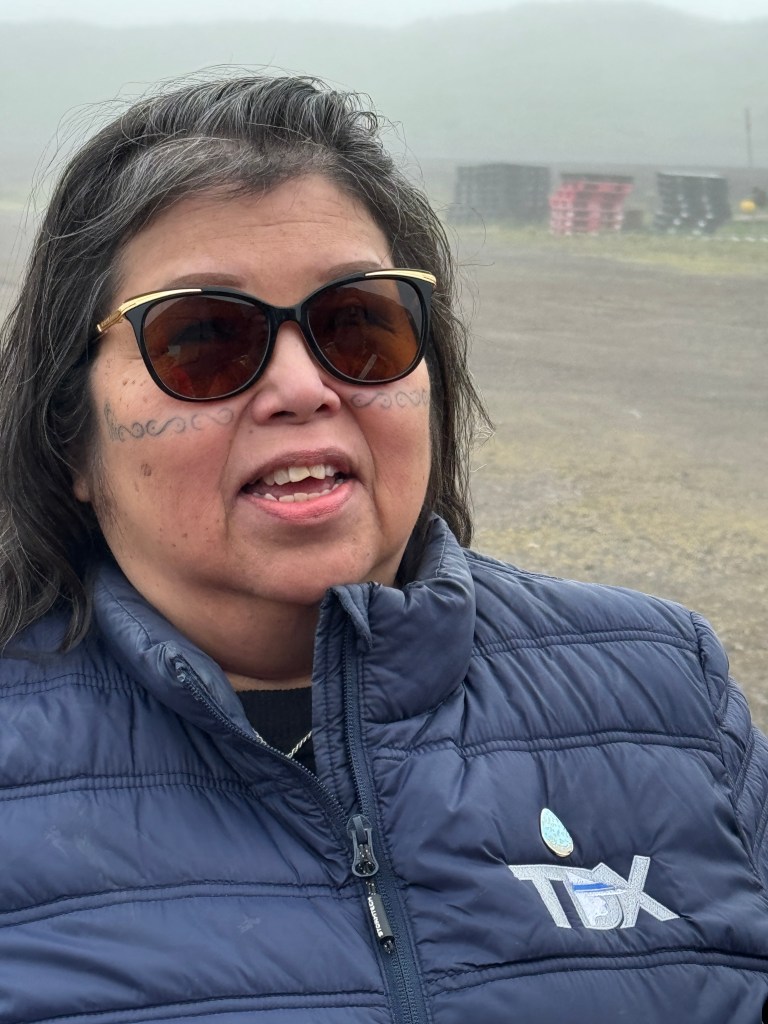
Barbara, who manages the rooming house on the island, took an immediate interest in Mōli. Not a lot goes on on St. Paul,, so anything new is exciting. Barbara really hoped we had a dog with us as dogs are not allowed on the island – visitors can keep them on their boat. A few years back a boat pulled in with a golden lab on board. The island is still talking about it. Notice the traditional tattoo markings below Barbara’s eyeglasses.
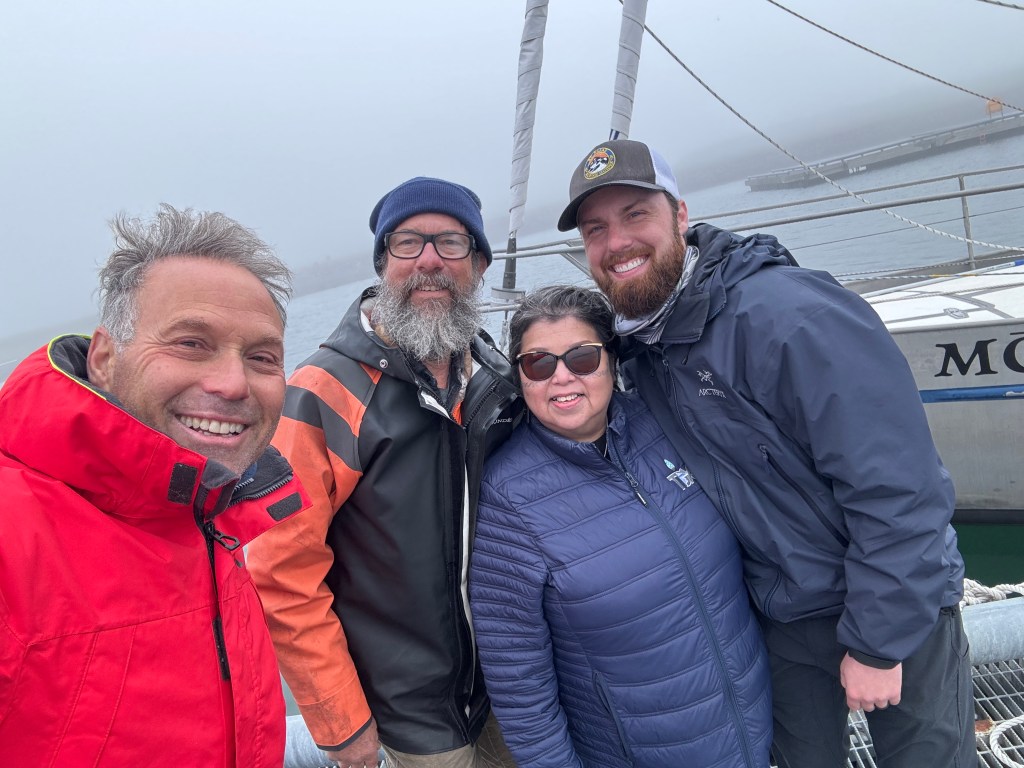
Barbara wanted to join the fun, so we gave her a tour of Mōli. Next to Barbara is our guide, Sulli.
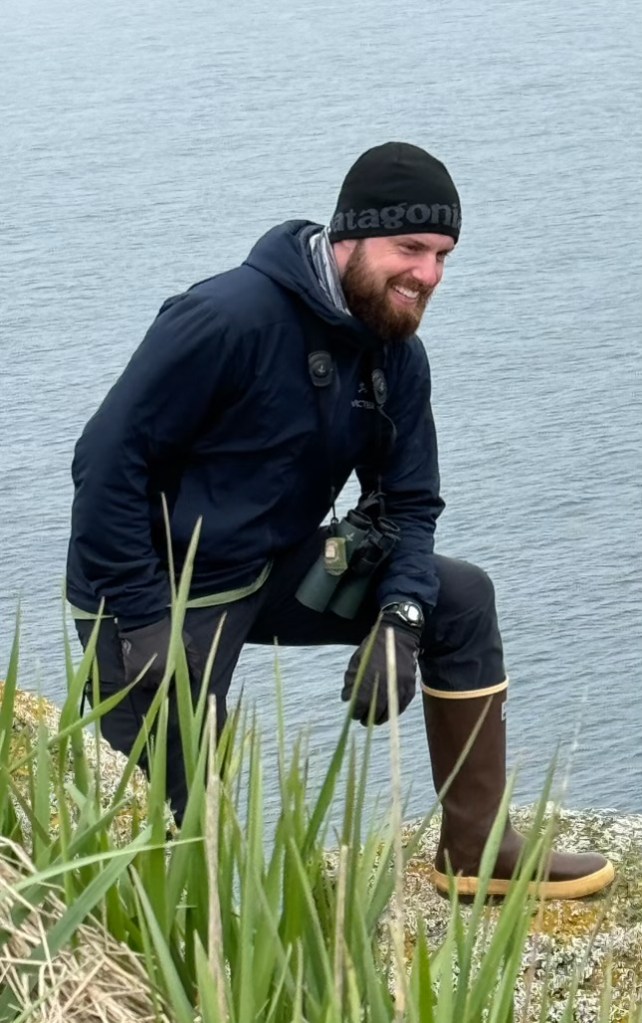
While we could have simply walked around much of the island and been able to see a wide array of flora and fauna, we were fortunate that resident wildlife expert and birder extraordinaire Sulli Gibson was available to guide us for the day. Raised near Chicago, he has spent the last five birding seasons on St. Paul with his off season in Anchorage.
Sulli is actually employed full time by TDX (Tanadgusix Corporation) which is a shareholder owned Aleut Alaska Native village corporation. The corporation was formed in 1971 under the Alaska Native Settlement Claims Act. The Unangax, like much of the alaskan natives, chose to be governed by their own native corporations rather than operate as a sovereign nation like most of the native Americans in the lower 48. This seems to be a recipe for success as the island natives thrive with this ownership structure.
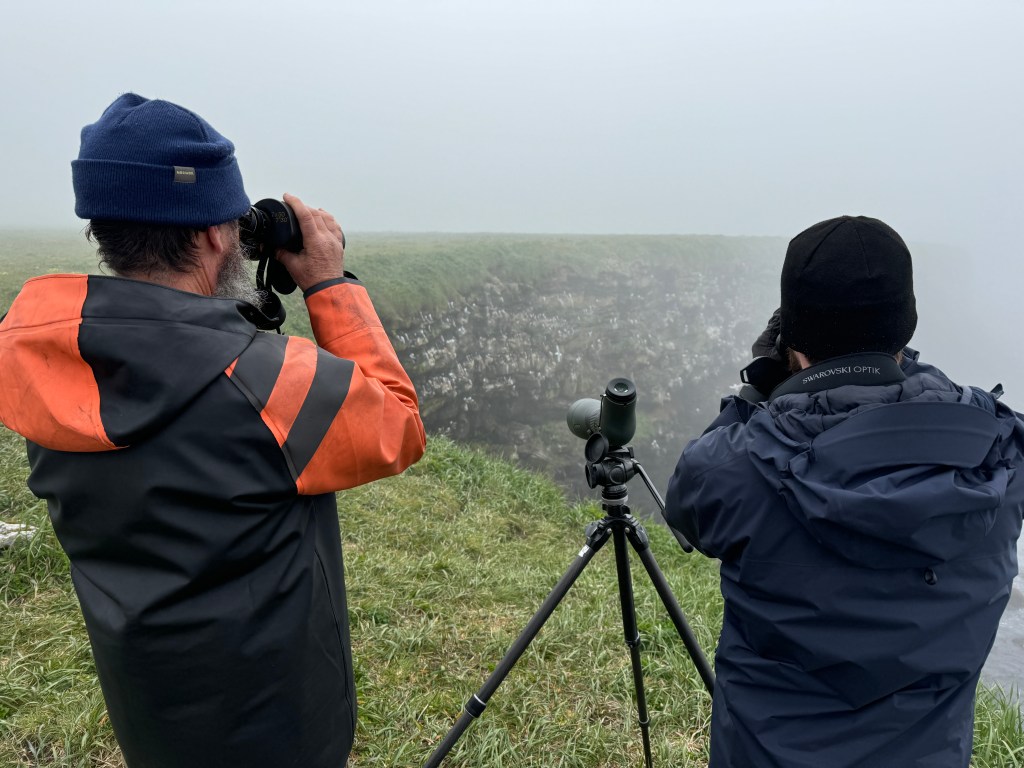
We hopped in Sulli’s van, and within a matter of minutes, he took us to one of the primer birding spots in the world. What follows below is an amalgamation of several spots that Sulli took us to where a novice birder like myself can get unbelievably close to an amazing variety of birds without disturbing them.

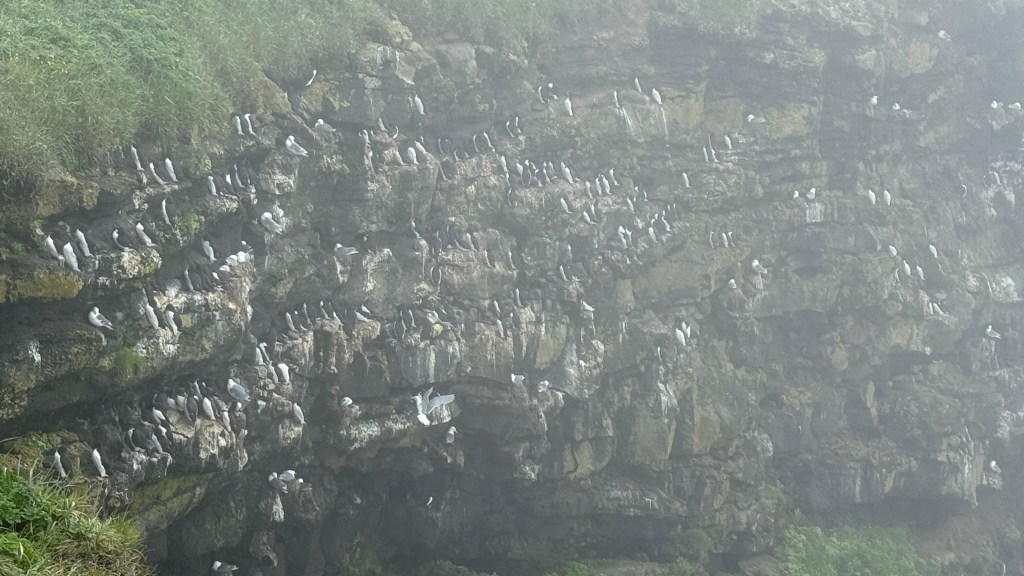
From this vantage point, I can see close up the wall of a cliff that it teaming with thousands of birds. You can see the birder in me beginning to come out!
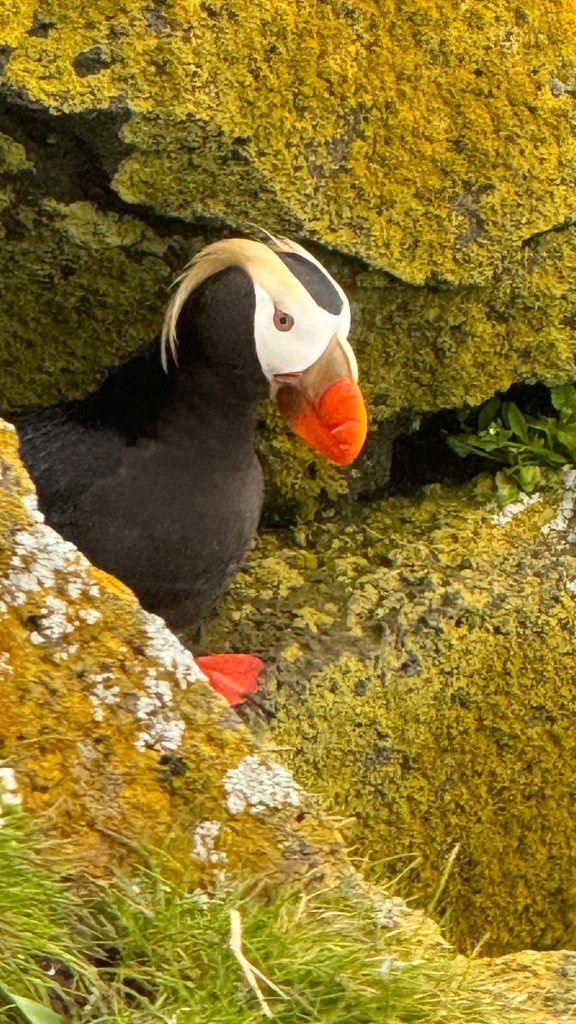
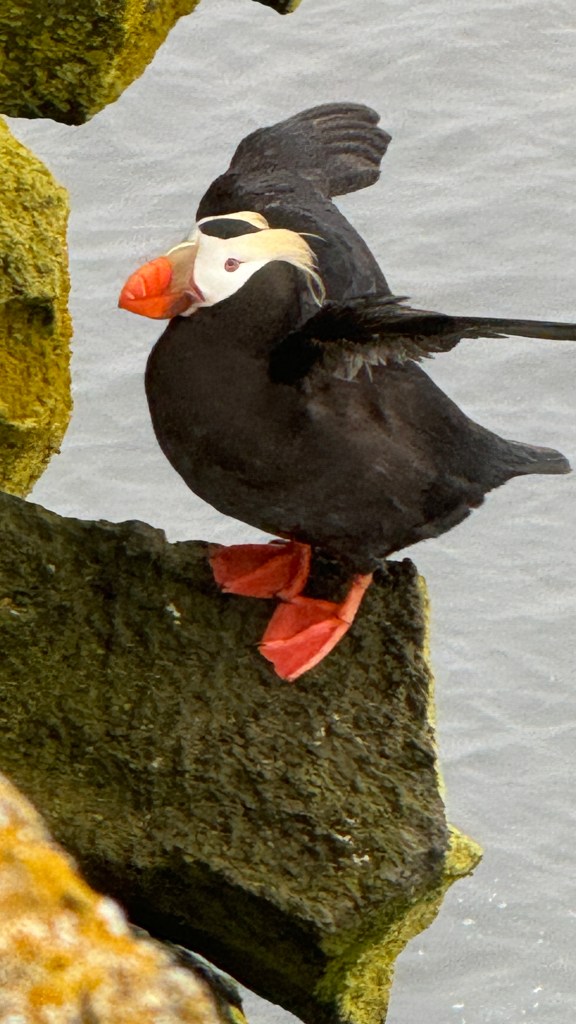
Above are Tufted Puffins which are actually uncommon in open ocean islands.
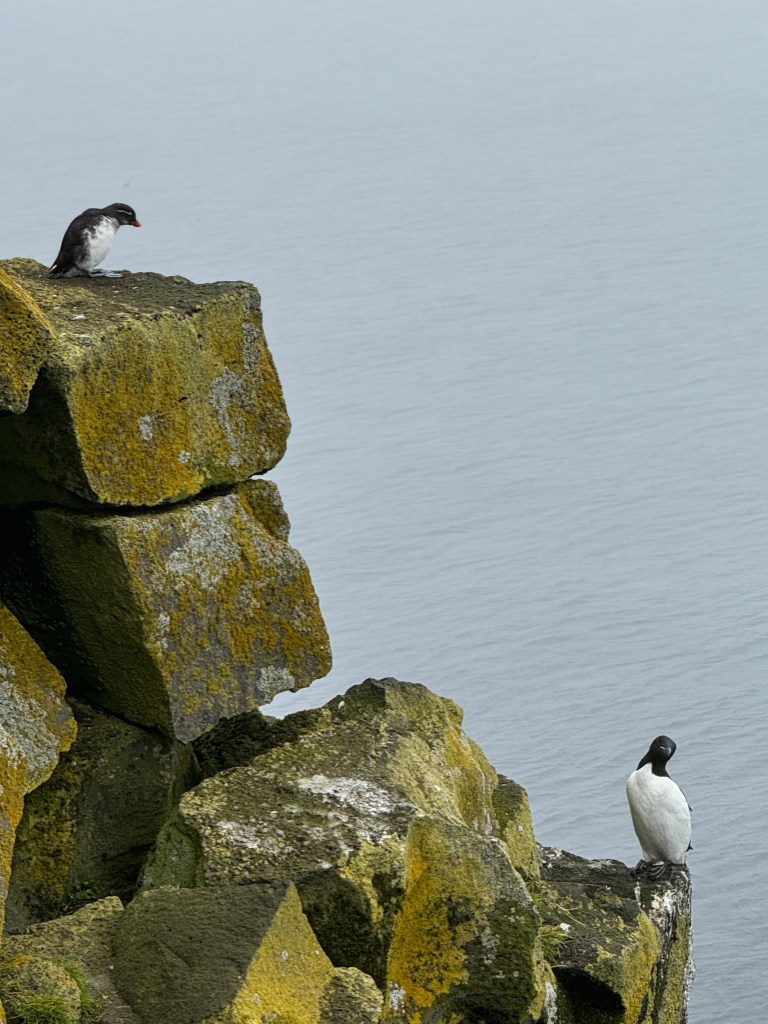
Above: A Least Auklet checking out a Thick-billed Murre
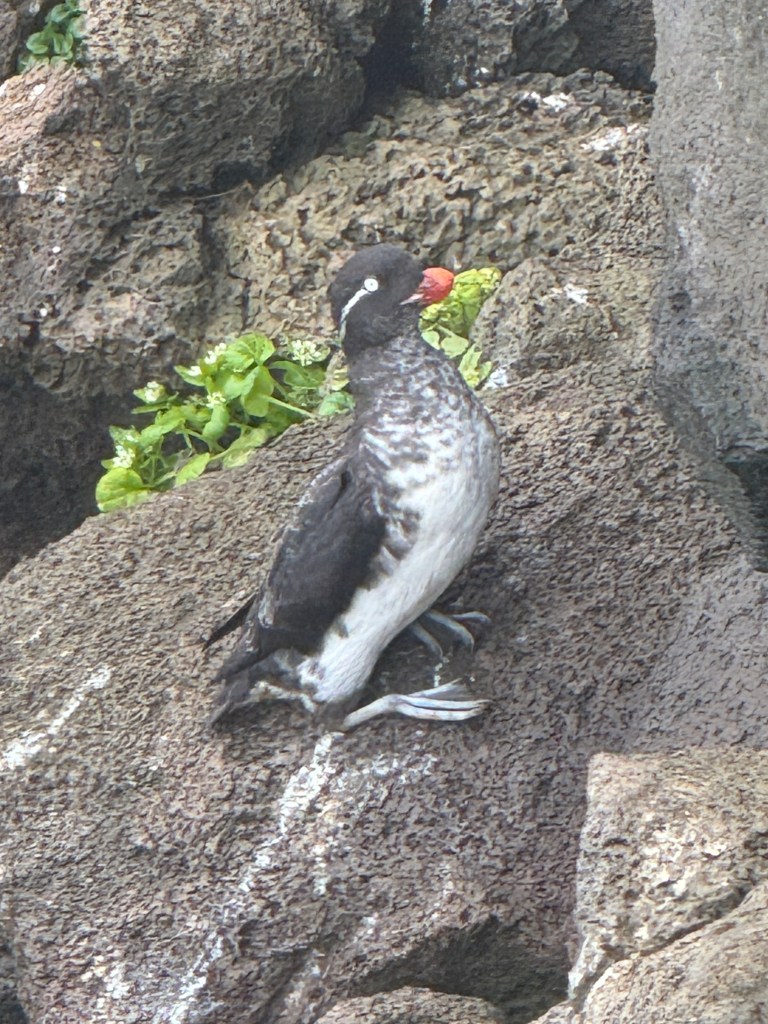
Above: Least Auklet
Horned Puffin just hanging out.
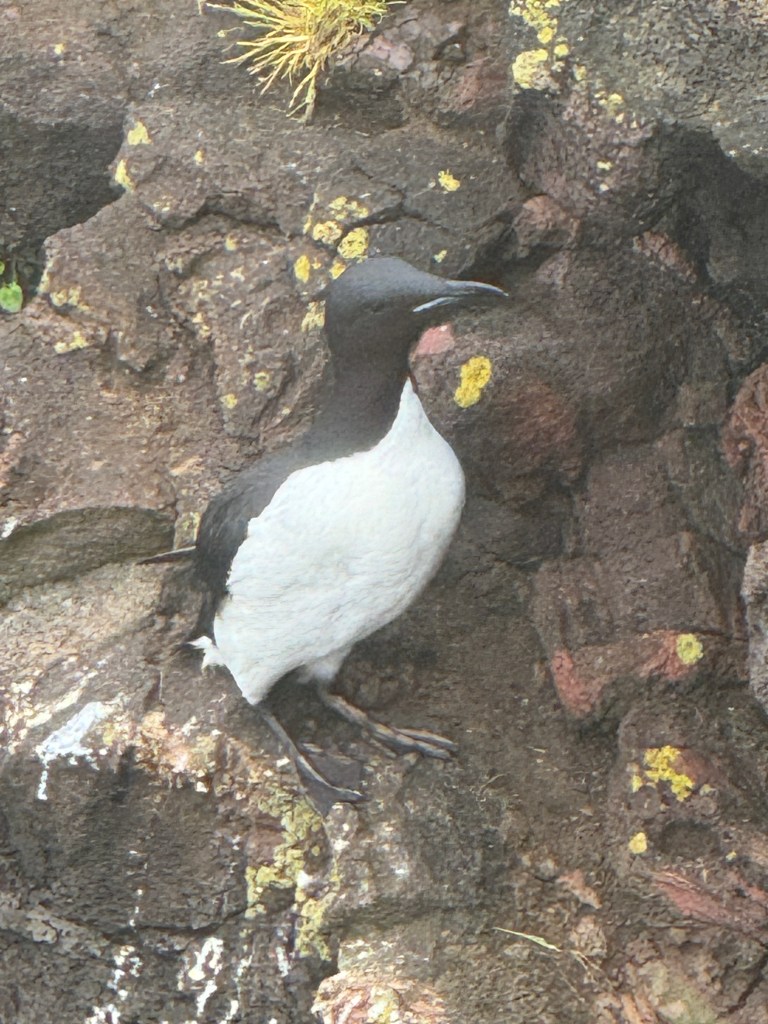
Above: Thick Billed Murre
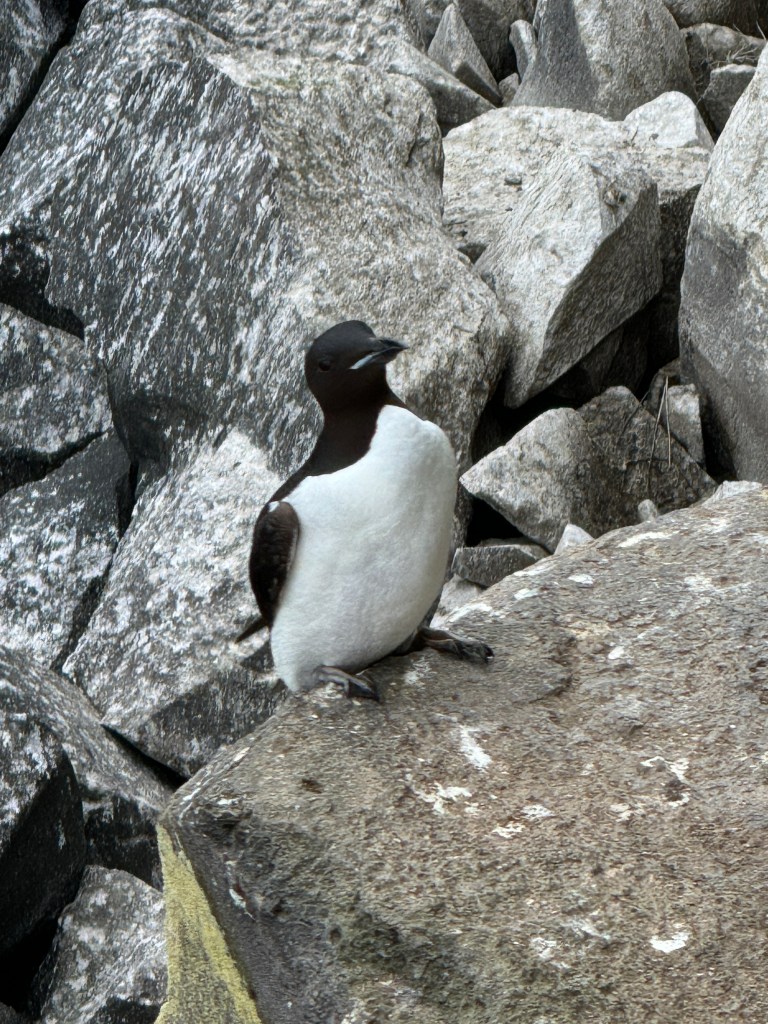
Above: Thick Billed Murre
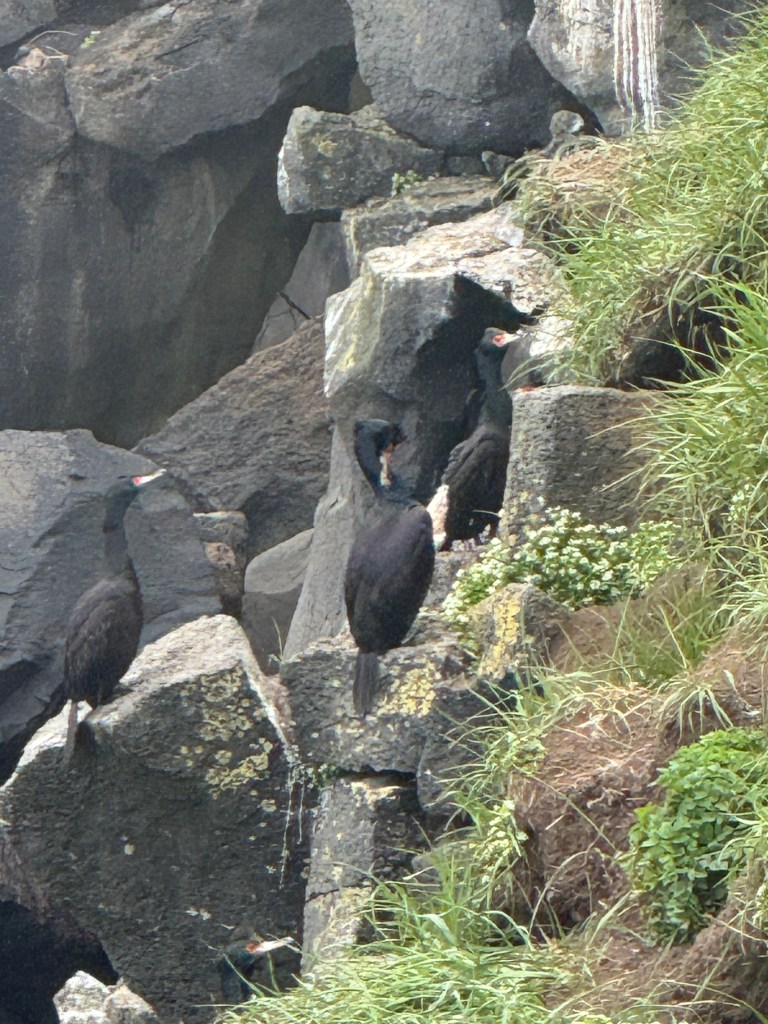
Above: Red Faced Cormorant’s
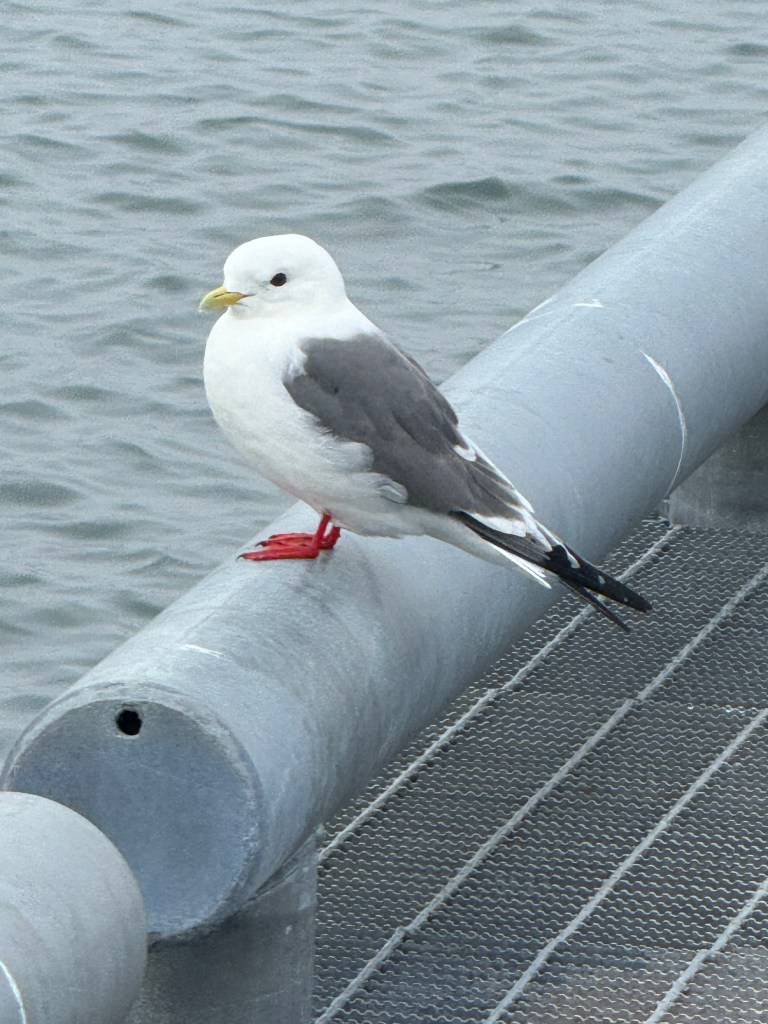
Above: Red Legged Kittiwake – this sub-species only breeds on St. Paul



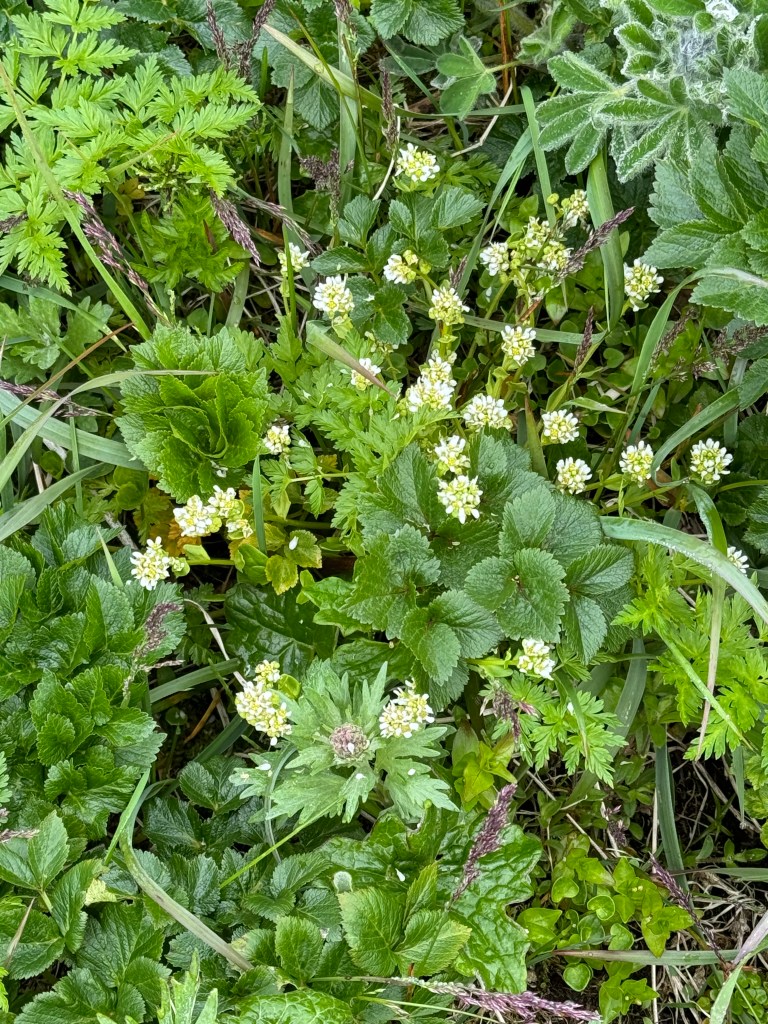
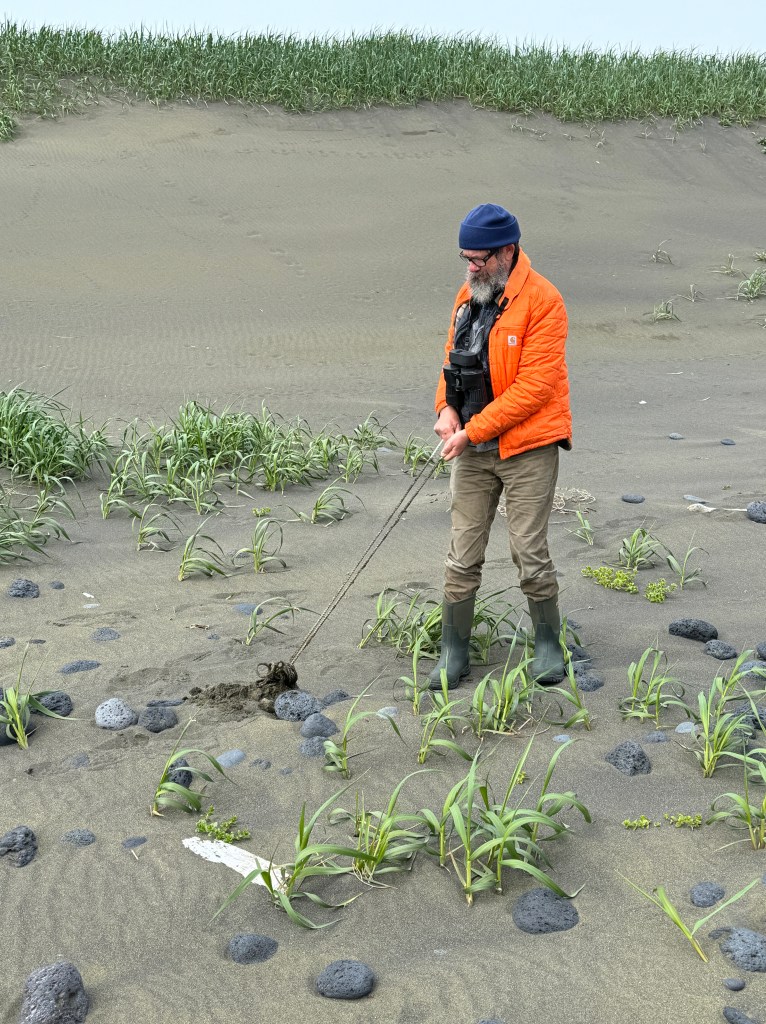
We also made time for a little beach combing. Here Randall tries (unsucessfully) to pull up an unidentified sand monster.
NORTHERN FUR SEAL
While St. George Island was the first Pribilof island to be “discovered” by the fur traders in the late 1700’s, St. Paul island, a mere 45 miles from St. George, has by far the most Northern Fur Seals in the World (400,000 +). Anyone that lives in the San Francisco Bay Area shares a certain connection with these Pribilof Fur Seals. Our Farallon Islands ( 25 miles from the Golden Gate Bridge) host a Fur Seal colony that is on their commute route.
As a pelagic species, Fur Seals spend almost all of their time in the open ocean coming to the shore only to breed or when sick. They roam the ocean and have a territory that extends from the Pribilof’s to Japan to Central California with colonies on the Channel Islands off Santa Barbara and one on the Farallon Islands.
In the Pribilof’s, the mating season begins in late May or early June as the males arrive first to stake out their territories on the beach. The females then arrive in June and within a few days, find or select their beachmaster and then give birth to the pups they have been carrying for the past nine months. Shortly after giving birth, they begin the mating cycle, and then after that they begin their commute to the feeding grounds in Alaska, Japan or California. No rest for the weary.
The females have a delayed pregnancy cycle. Mating occurs in June, as does birth – so how can this be if gestation is only nine months? This can happen because the females have a delayed sperm implantation system. This allows them to mate in June while hanging with their beachmaster, get pregnant in September while they are somewhere in the world feeding (definitely not hanging with the males then), and then give birth the next June when they return to their same beach. Pretty nifty. Interestingly, males do not leave their territory (even to go into the water to feed) for the entirety of the three month mating and birthing season because they know the second they leave, another male will happily step right in and take over their harem.
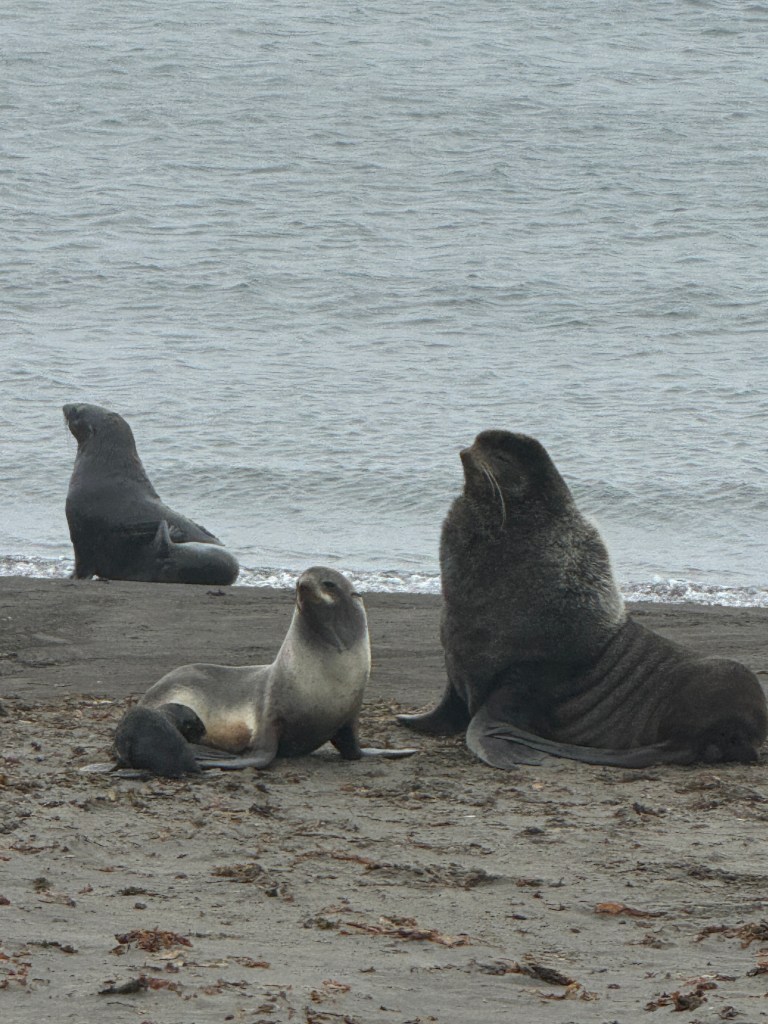
Fur Seals are extremly sexually dimorphic mammals with the males often two to five times the size of the females.
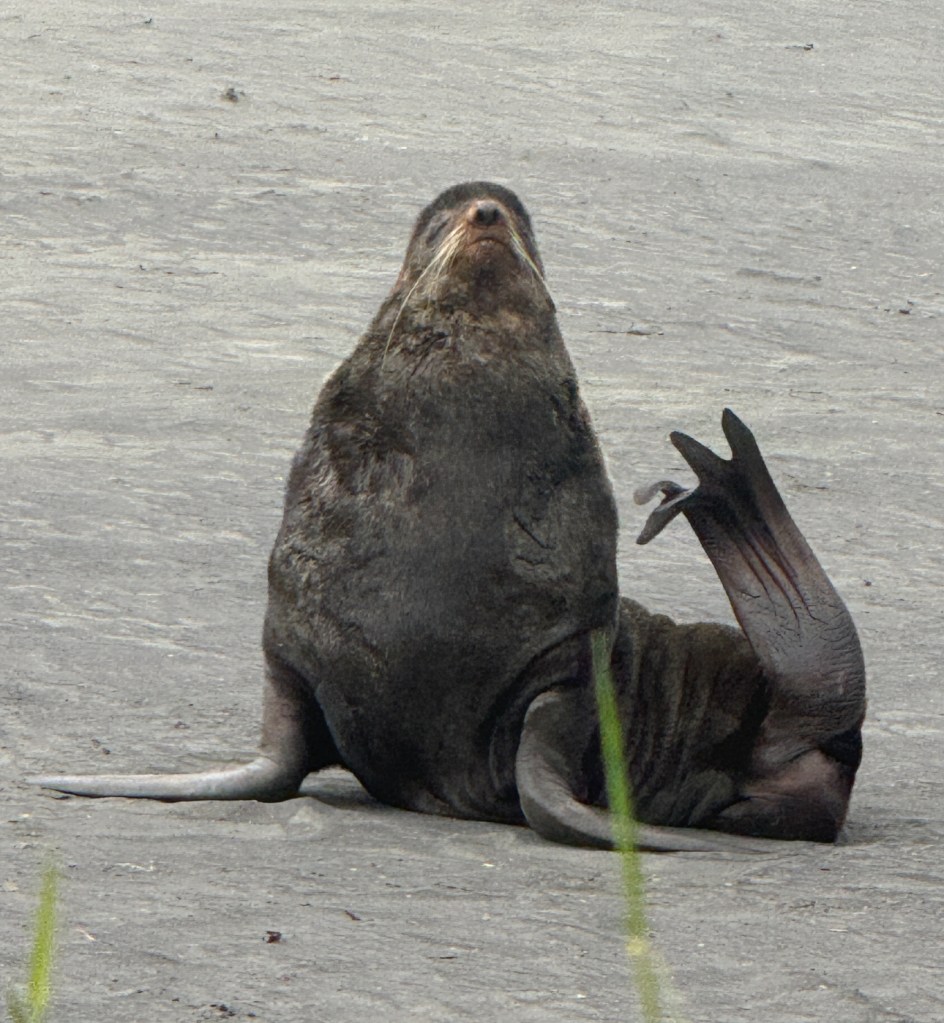
Fur Seals are more closely related to sea lions and share with them their external ears, relatively long and muscular fore flippers and the ability to walk on all fours. In their distant genealogy, there is actually a little bear in them and that is not hard to see. Their rear flippers are fairly dextrous and have what could be considered “fingernails” at the tip of two or three of their “fingers”. They can often be seen scratching themselves with their rear flipper.
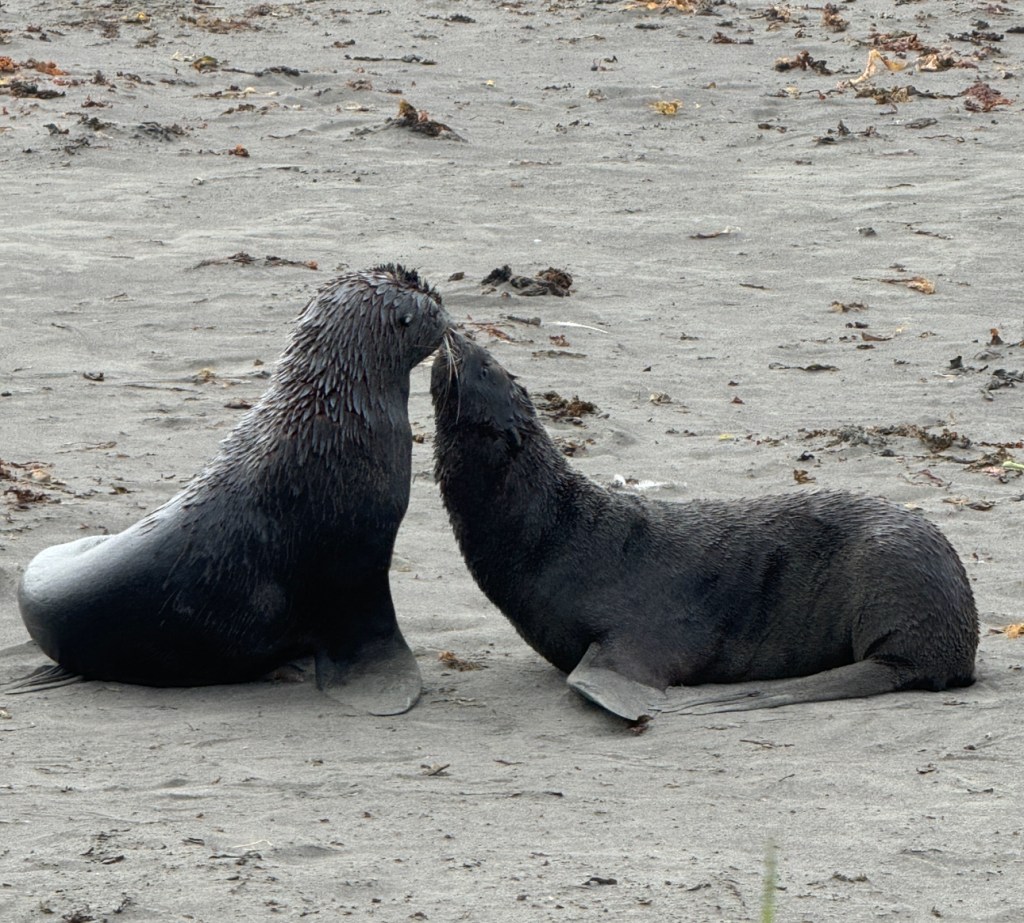
Fur Seals are fairly communicative with each other. The males make a a deep clucking sound, reminiscent of Elephant Seals. The males are constantly jousting with each other – it can be quick and with no contact, or it can result is a deep bite wound which contributes to the shorter life span of the males. As you will see in some of the videos below, the males spend a great deal of time physically “kissing” the females in their harem. I am not really sure it is a kiss, but could be a quick sniff, or their equivalent of a “high-five”.
Above is a fairly typical non-contact joust between two males.
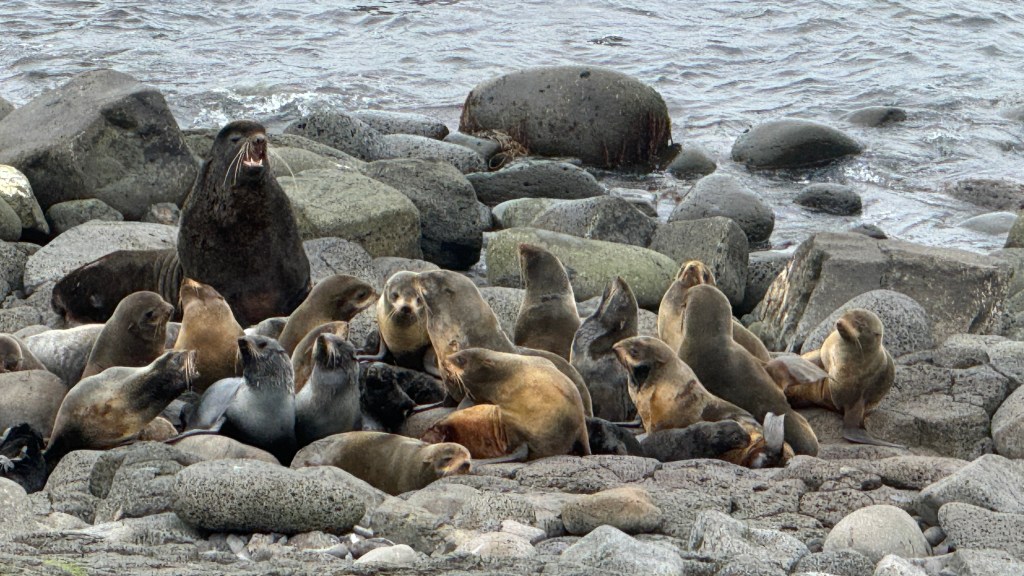
Above is a fairly typical arrangement of the beachmaster with his harem.
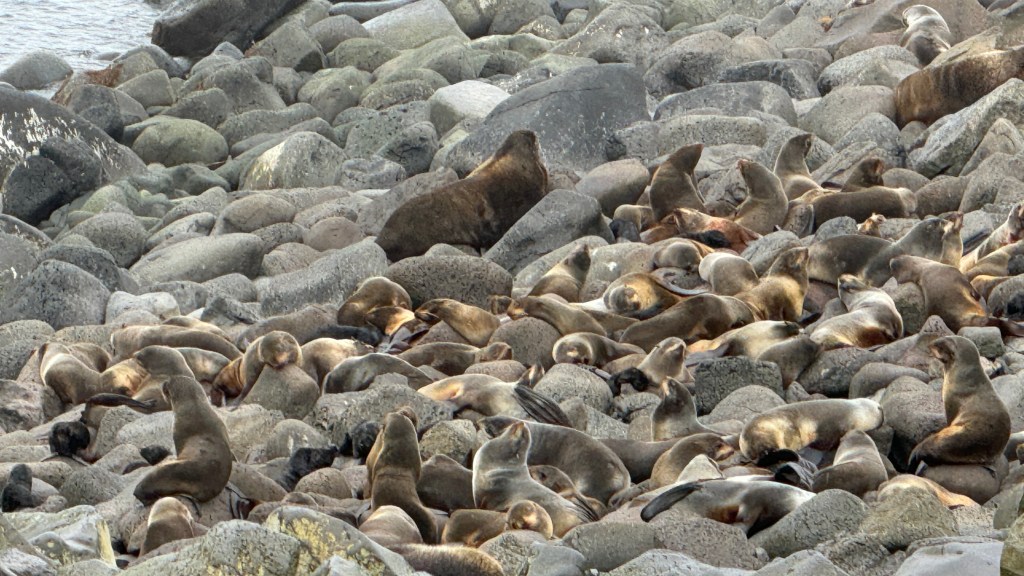
Above is one of the larger harems that I saw.
Above: I found it fascinating that the females of this colony put all of their babies together for a spell. Kind of like day care. Females suckle their newborn pups for five to six days and then go to sea to forage. This cycle continues as they nurse less and forage more until it is time to wean.
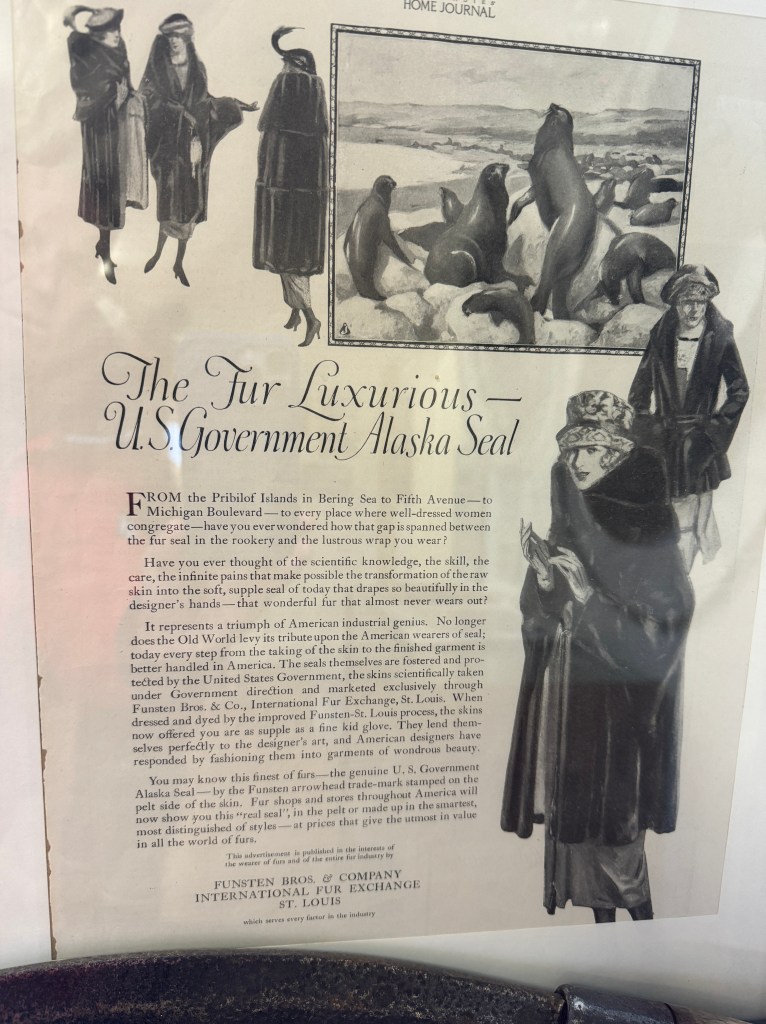
In my previous blog, I wrote about how our government actually took over the fur trade. In the museum on St. Paul, they had a copy of the above poster that brags about the triumph of “American industrial genius”, (not sure how one could attach that to the mass killing and near extinction of Fur Seals and virtual enslavement of the local population). The poster goes on to promote the peace of mind you can get knowing the good ol’ U.S. of A is producing the high quality fur of your coat.
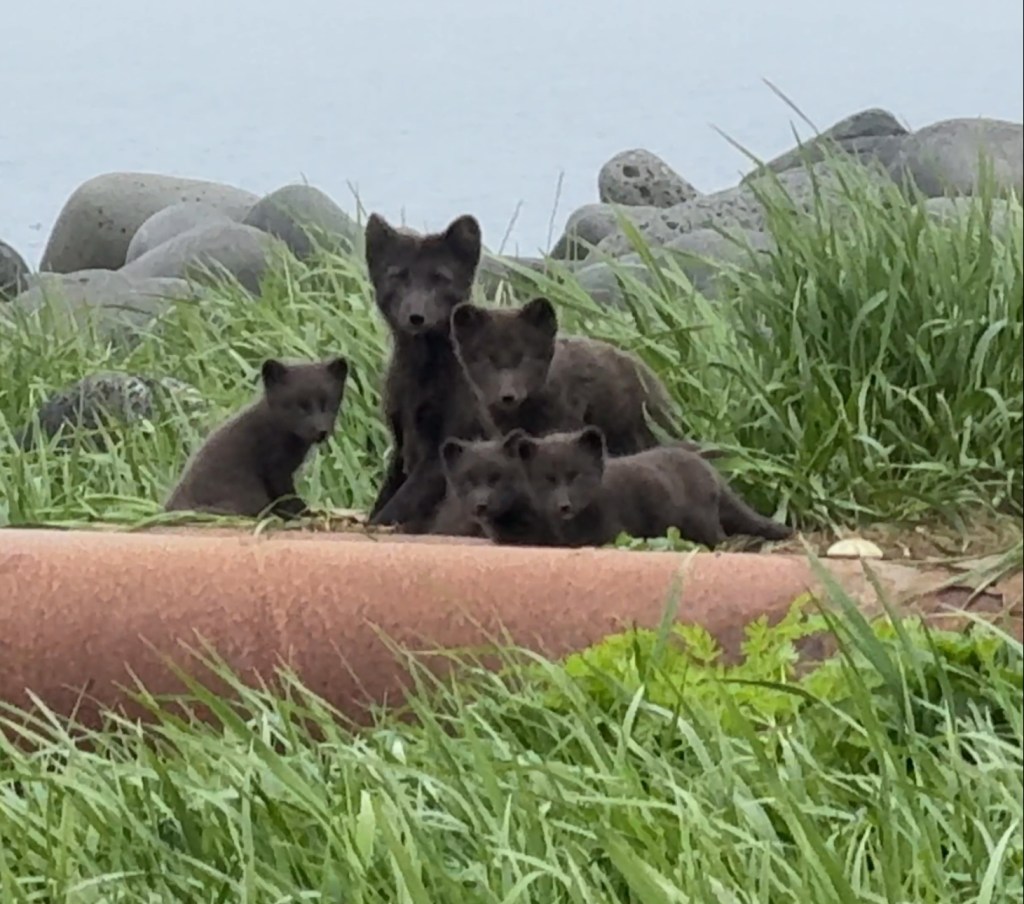
This family of Blue Morph Fox is a sub-species of the Arctic Fox. These guys are well adapted to living in cold environments. While most do not live past their first year, some can survive until their 11th year. What I found so interesting about this group is that they eat sea food almost exclusively. We saw them foraging on dead fish, roaming the beach at low tide looking for food, and even munching on an urchin.

We spent our last evening having dinner onboard Mōli with Richard. Then we went to the rooming house and took a shower (very nice!) and then off to the beer bar run by the corporation, attached to their version of City Hall. here we are outside saying goodby to Sulli and his crew of fellow guides Luis (from Chile) and Mariah (from Florida).

Well, it is time for us to slip lines and head to Nome. But first I went to say goodby to our most hospitable Harbormaster, Alexander. Randall and I fell in love with Alexander’s quintessential good nature, sense of humor and the best smile in the world.


 Harmon and Randall's Voyage...
Leave a reply to Beth Singer Cancel reply