To my knowledge, there are eight vessels making a west-to-east transit of the Northwest Passage this year, and this out of a total fleet of around 25. The foregoing is circumspect because there is no official body to whom one would declare his arctic intentions; thus, interested parties must build a list from first hand encounters, hearsay, or the compilations of others. As to the latter, the man with his ear closest to the ground on this topic is Victor Wejer, the ice guide of many a north-bound yacht, and the count of 25 is his.

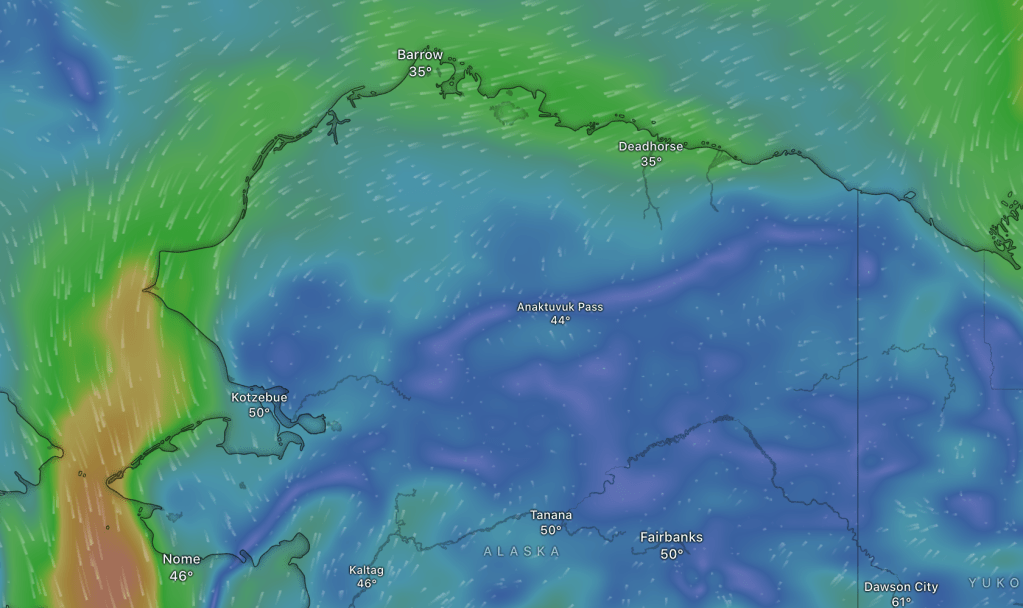
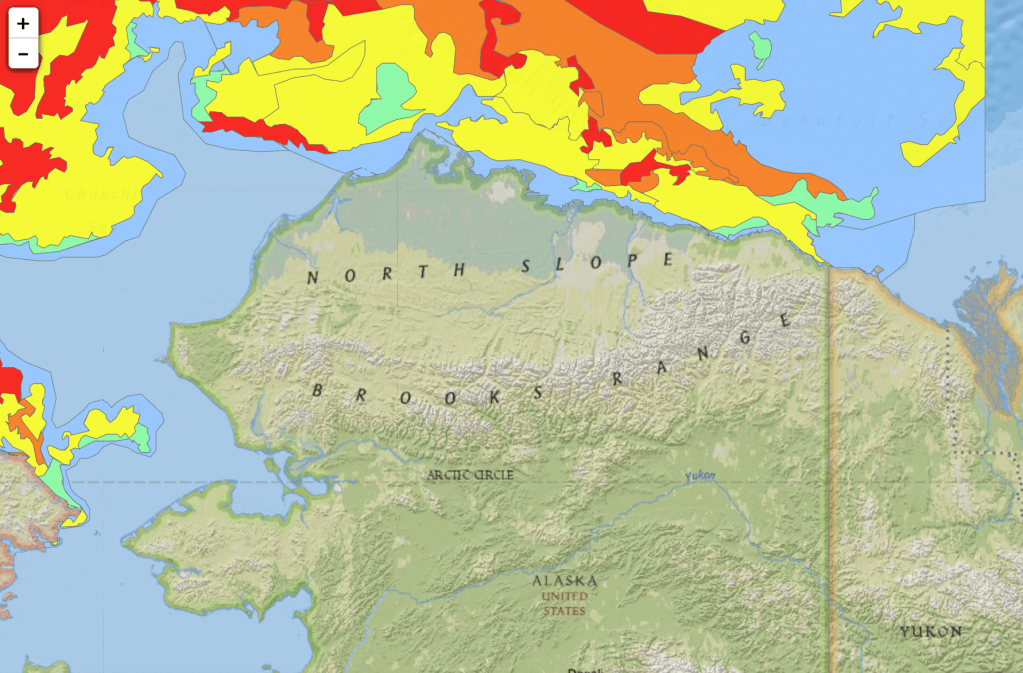
The north-to-south disposition of the eastbound fleet is as follows:
1. Lumi (Finland)
- Garcia Nouanni, aluminum cutter, 45 feet.
- Johu and Sohvi plus two crew added in Nome.
- Website.
- Tracker.
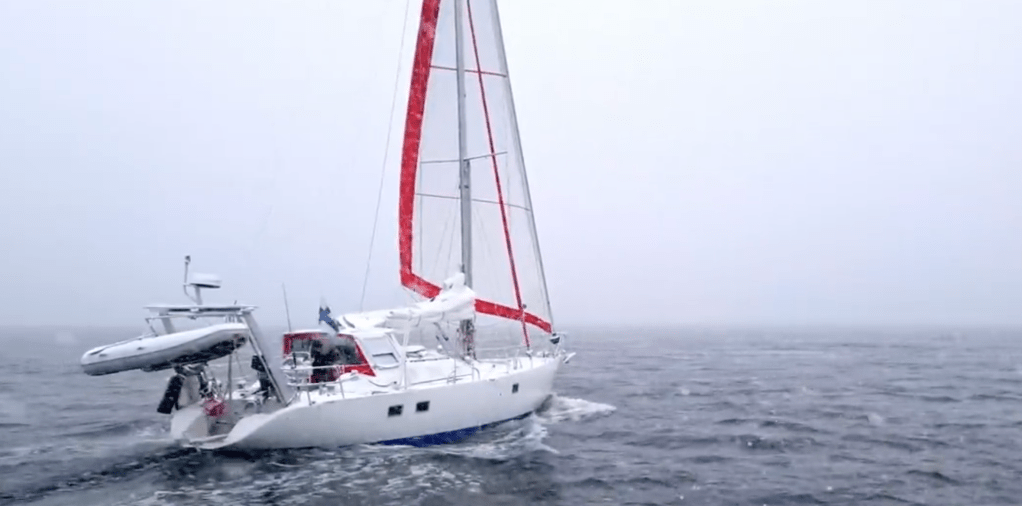
2. Que Sera (Switzerland)
- Custom aluminum cutter, 45 feet.
- Émilien, skipper, Marion and Megan, mates plus artists, frequent crew changes.
- Website.
- Tracker.
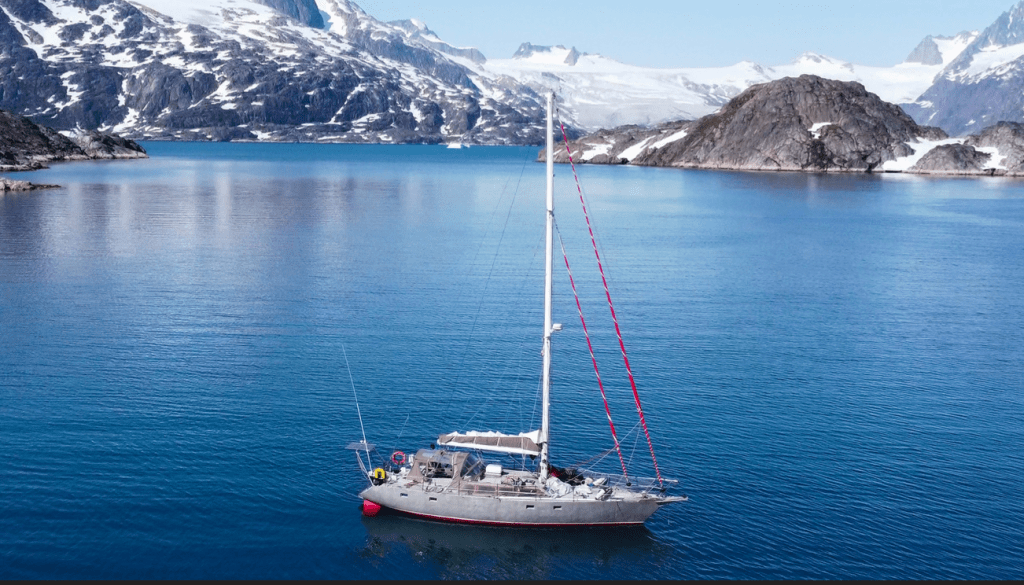
Lumi and Que Sera departed Nome within hours of each other on July 20 and arrived at Point Barrow’s Elson Lagoon in company five days later. Those of us who remained in port watched with envy as they carried a lively southerly the entirety of the 550 miles. Our envy had two sources, that sailing is more fun than motoring and that sailing reduces to nought one’s fuel consumption. The anchorage off the community of Barrow is an open roadstead and Elson Lagoon is miles from town, so it is an inconvenient fueling station. For planning purposes, the first convenient fuel after Nome is the Canadian hamlet of Tuktoyaktuk (generally referred to as Tuk), making a leg of around 1,100 miles that stretches the fuel capacity of most small vessels.
So, Lumi and Que Sera are fortunate to have made the first leap fuel-free (did I mention our envy?). That said, they may now be wind and ice bound in Elson for some time as weather has shifted northeast (with snow) and may push the ice that has loosened from the main pack back to shore. The Alaskan north coast is excessively shallow and almost devoid of protected anchorages, so departing Barrow before a way to Tuk declares itself carries some risks not experienced when transiting from the east. Still, these vessels are well positioned when the weather shifts back to favorable.
3. Libertaire (France)
- Damien steel cutter, 46 feet.
- Damien and Perrine plus three children.
- Website/Tracker: none.
On the day following the departure of Lumi and Que Sera, Libertaire departed Nome. The word is they made Point Hope before the wind turned. Point Hope extends well out in to the Bering, offering protection from northerlies on its south side and from southerlies on its north side but no protection is to be had from westerlies. The Coast Pilot says, “the bottom is hard mud and only fair holding ground.” A village is accessible from the south beach.
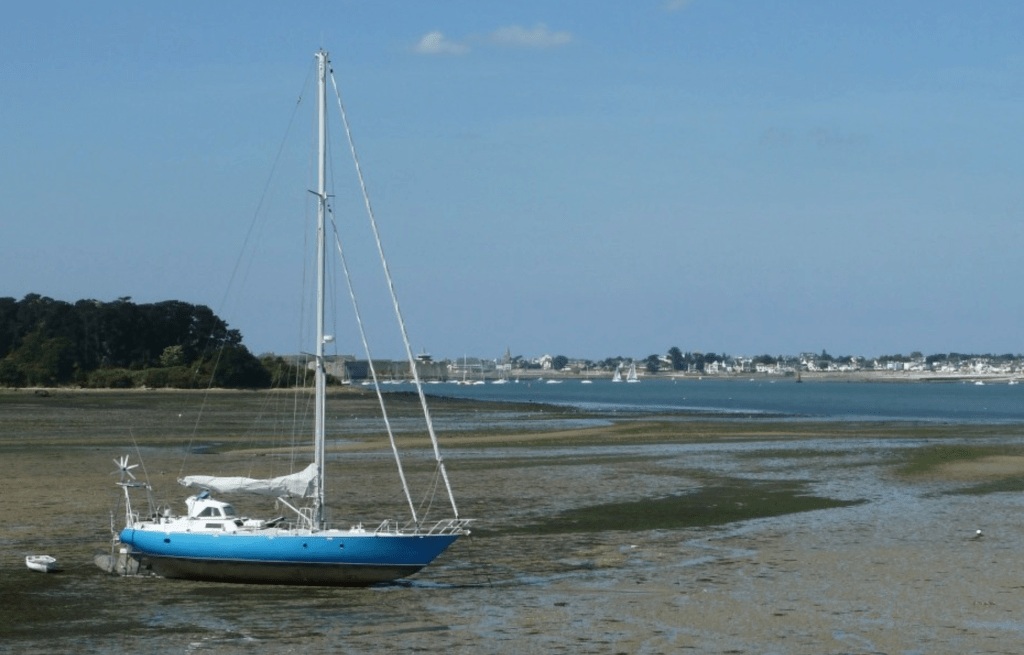
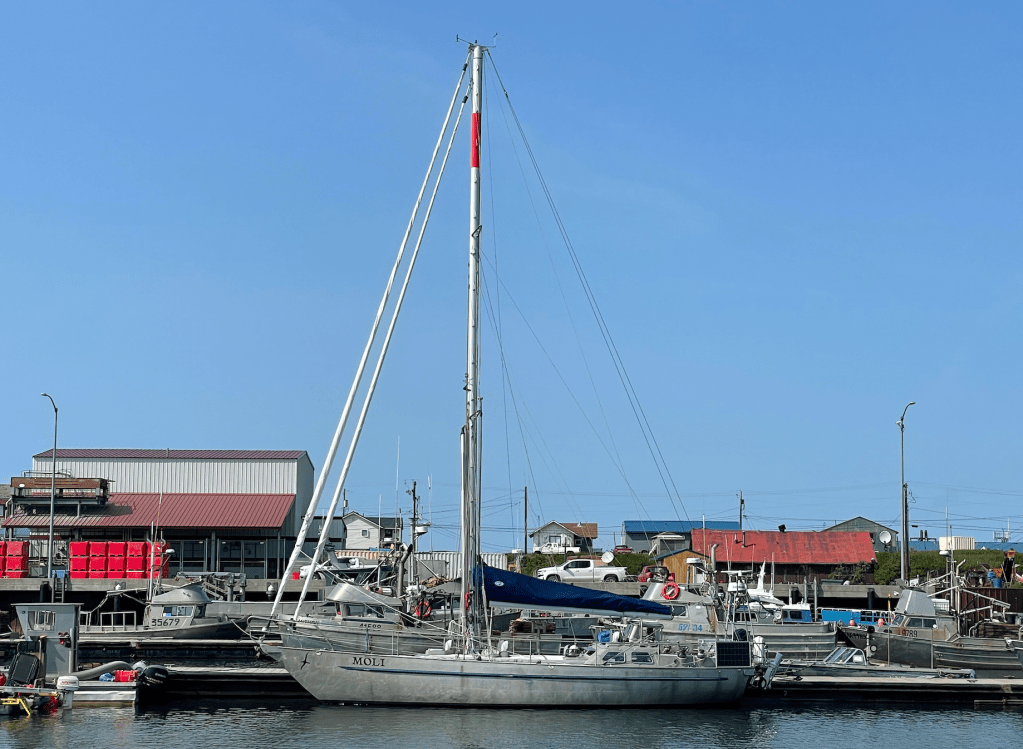
4. Moli (US)
- Dubbel and Jesse aluminum sloop, 44 feet.
- Crew of two whom you know.
- Website/Tracker: this site.
5. Pinocchio (Quebec, Canada)
- Custom steel ketch, 45 feet.
- Marcus and Johanne plus six (6!) children and one (1) lovely dog named Brume. It should be noted that when this couple embarked down they Saint Lawrence in 2016, they had seven children aboard. One has since disembarked due top marriage.
- Website.
- Tracker: none.
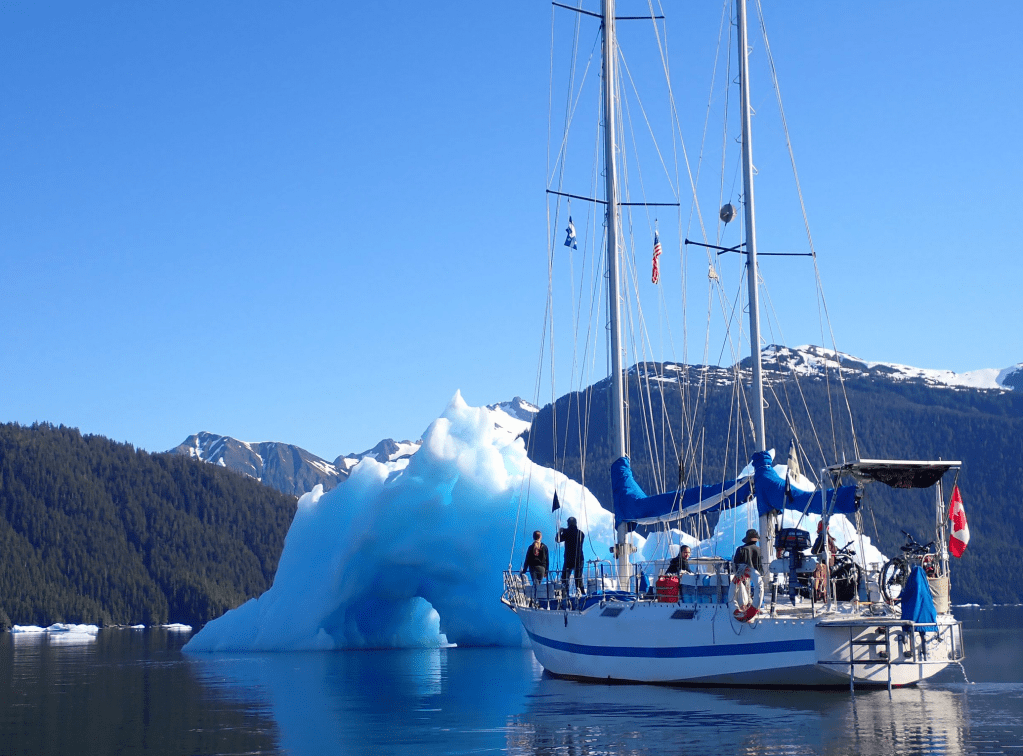
Moli and Pinocchio departed on the evening of the 23rd and motored overnight in flat calm for Port Clarence. After a week in Nome, we wished for new vistas but had missed our weather window for Barrow. Port Clarence, at only 100 miles north, we could make before the northerlies set in. The long sweeping crescent of the bay suggests ample protection, though its extent is hard to gauge from the chart. By way of indication, when we arrived, there were three tug and barge combinations inside and anchored along different shores. From the position of one, you needed binoculars to see the other two. For smaller vessels, better all-weather protection can be had in Grantley Harbor, where the town of Teller sits atop the sandy beach to the south. Here depths are from 17 feet to aground. Further fun can be had by transitioning up the deep Tuksuk Channel and into the shallow, sweet water of the Imuruk Basin, which is where Moli swings at anchor in 9 feet as I type.
6. Noorderzon (Netherlands)
- Damen designed tug launched in 1995; later converted into a yacht.
- Estelle Blet, Skipper.
- More here.
- Wetsite/Tracker: none
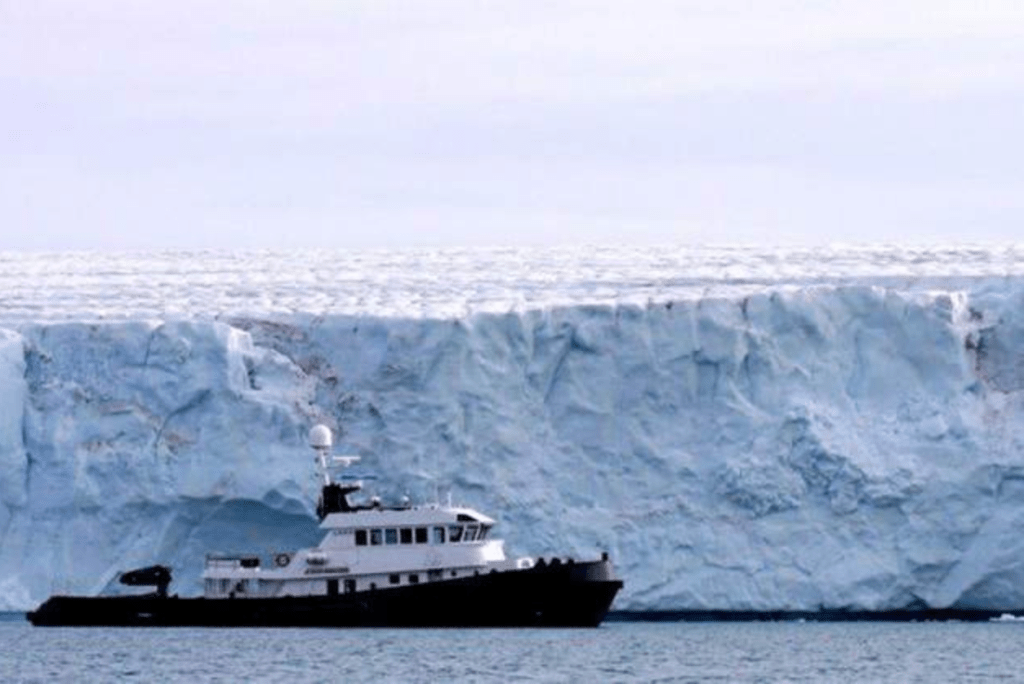
Moli and Noorderzon have a declared desire to meet but have been thwarted in both Dutch and Nome. In Dutch, fog hid her mooring, so though we knew of her, we thought she had departed, and then she arrived Nome the day after Moli arrived in Port Clarence. So, for the time being, it’s email only with the skipper, Estelle Blet.
There are many things to be impressed with in this fine vessel, but the one that caught my eye: “…the yacht has a range of up to 6,000 nautical miles from her 76,000 litre fuel tanks.” The entirety of the Northwest Passage course is generally considered to be about 5,000 nautical miles.
7. Dawgbark
Open 60 race boat, 60 feet.
- Flag unknown.
- Location unknown.
- Website/Tracker unknown.
Last report was that this vessel had departed Sand Point for Dutch Harbor.
8. SuperTramp (Sweden)
- Ovni aluminum sloop, 33 feet
- Website unknown.
- Tracker unknown.
Last report states this vessel is en route from Hawaii.
Miscellany:
-Every boat of the eight save Dawgbark is either steel or aluminum.
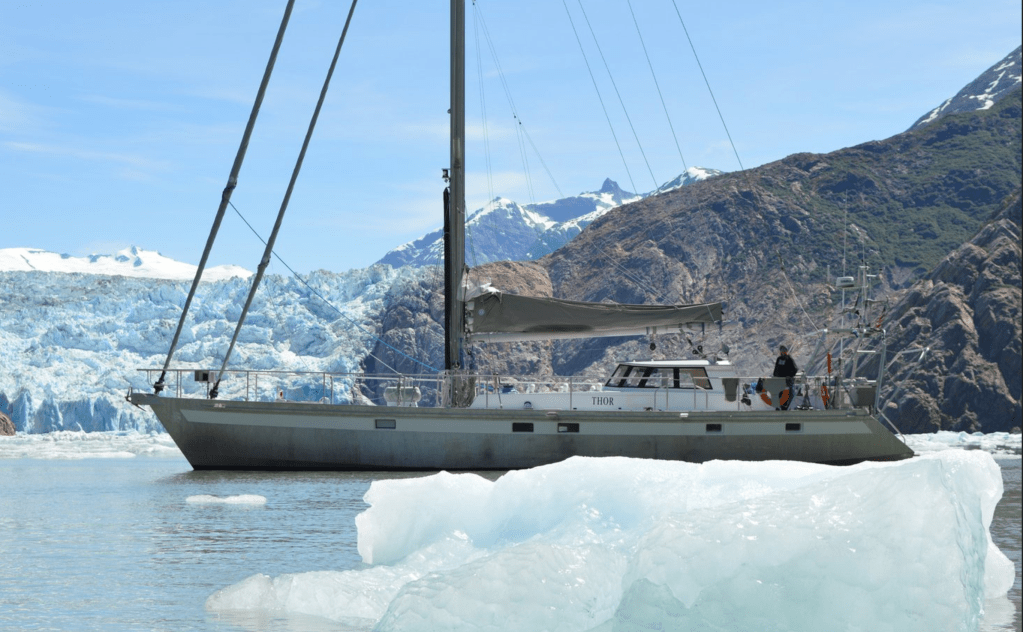
-Moli is the only US flagged eastbound Northwest Passage vessel this year. When the customs officer jumped aboard in Nome after visiting the other three, it took some time to convince him we were not foreign as clearly, “only foreigners go this way”. In the larger fleet, there are only two other US flagged vessels (Thor and Migration).
-I am particularly interested to meet Seabelle, who experienced engine troubles along the north coast last year, was towed up the Makenzie River to the hamlet of Inuvik, where she overwintered and made successful repairs. She has since launched and is, according to reports, making way for Alaska.
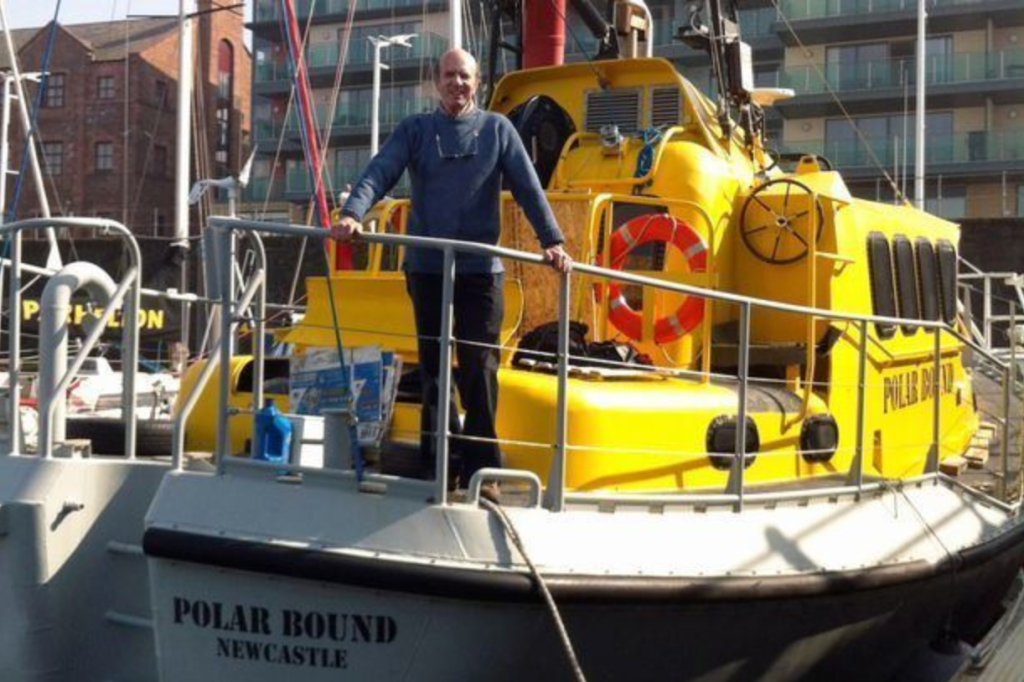
-There is a rumor that Polar Bound is on the route this year. Among ocean sailors, David Cowper is a legend, having something on the order of nine (a record with several rooms to spare) northwest passages under his belt, all of which came after several record-setting non-stop, solo circumnavigations in both sail and power vessels.
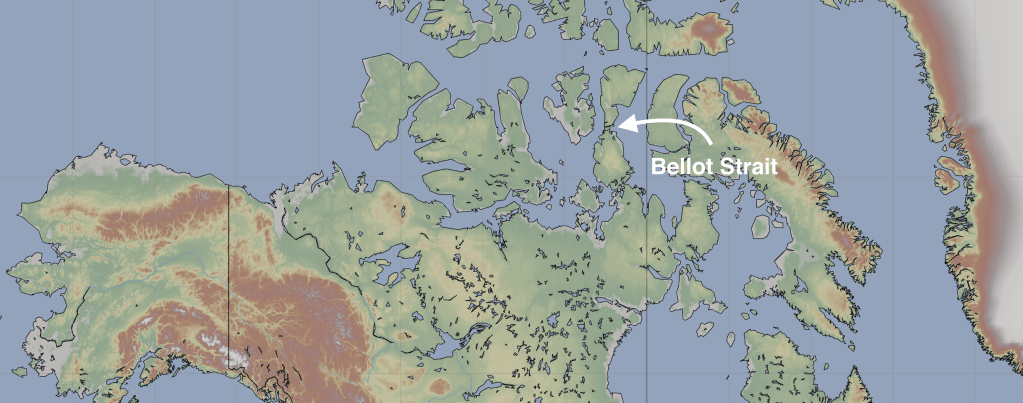
-Yachts approaching each other on a Northwest Passage from either side of the continent do not tend to meet in the middle. The north Alaskan coast is a straight shot and throws up few obstacles save ice whereas the Canadian approach requires negotiating an entire archipelago. Thus it is not uncommon for eastbound and westbound meetings to occur near Bellot Strait. It will be interesting to see if this holds true this year.


 Harmon and Randall's Voyage...
Leave a reply to Harmon Shragge Cancel reply