Leg 2
Blog 11
July 31, 2024
Alaska is a state of astonishing beauty, few residents (734K), and a curiously high number of mega-projects. We can’t travel more than a hundred miles before we see yet another. To name a few that we have run across in our short time: 1) Major expansion of Joint Base Elmendorf-Richardson in Anchorage (marriage of Army and Air Force); 2) Port of Nome Modification Project (adding deep water capability sub-artic); 3) The lookout for a new, arctic-accessible Coast Guard Station (closest is Homer); 4) All of these huge wind energy projects for tiny villages (no comment on if they actually function); 5) and now to this list we can add the Graphite One Mine, maybe 20 miles from Teller/Brevig Mission. https://dnr.alaska.gov/mlw/mining/large-mines/graphite-one/#:~:text=Project%20Description&text=It%20is%20the%20highest%20grade,9%2C583%20hectares%20(23%2C680%20acres).
Recall last blog where in Teller, Randall and I observed a non-native getting out of a motorboat with a tripod and Pelican cases. It did not take a lot of research to figure out that he is likely associated with both the largest and ONLY potential graphite mine in the U.S. The Graphite One (Strip) Mine will potentially dig a hole one mile long, one-half mile wide, and who knows how deep within just a few miles of where Randall and I anchored Mōli. The purpose is to extract 22.5 million tonnes of ore.
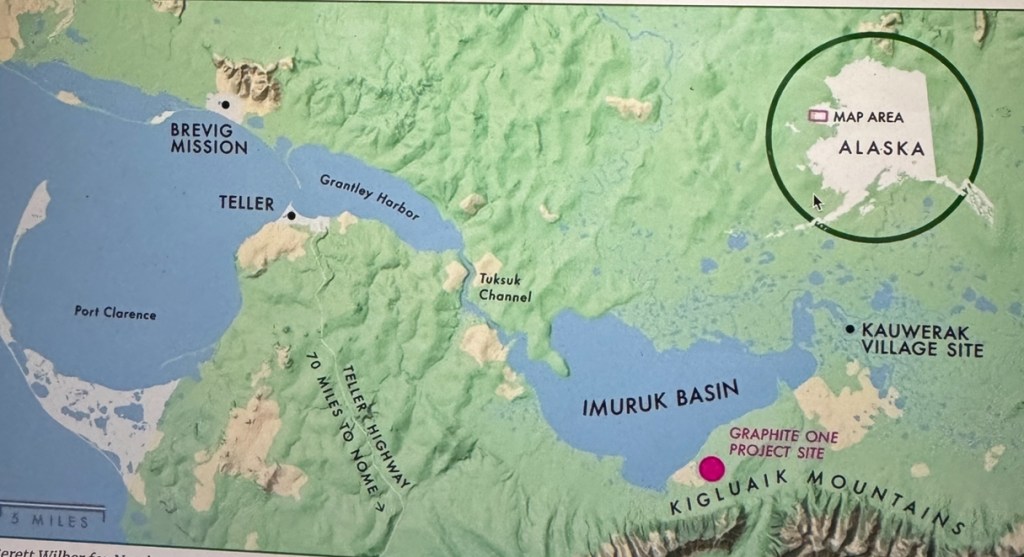
Presently, there are no graphite mines in the U.S. This means that our supply of pencil “lead” which is actually graphite is in strategically short supply. To be fair, graphite is also a critical component in electric car batteries as discussed in this article: https://www.ktoo.org/2023/09/26/tesla-needs-graphite-alaska-has-plenty-but-mining-it-raises-fears-in-nearby-villages/
All well and good, but why is it that the Department of Defense (DOD) put in $37.5 million into this project? Well, soldiers need batteries too I guess… https://www.defense.gov/News/Releases/Release/Article/3459556/dod-enters-agreement-to-expand-capabilities-for-domestic-graphite-mining-and-pr/
So let’s get this straight. The Inflation Reduction Act aka “we the people” gave the $37.5 million to the DOD, which gave it to a private company – Graphite One – who is in the process of lobbying (and paying out $’s) to umpteen Native Tribes and Corporations and attempting to secure more than 100 permits that could allow them to begin environmental destruction (roads, dams, mining camps, heavy equipment) of this remote and beautiful land as early as 2029. Gee, all Randall and I really wanted to do was just anchor in peace for a couple of days. So much for that.
Just interesting to me that on the one hand the Biden administration as of last April restricted new oil and gas leasing on 13 million acres of a federal petroleum reserve in Alaska to “help protect wildlife such as caribou and polar bears as the Arctic continues to warm”. https://apnews.com/article/alaska-drilling-petroleum-reserve-biden-1dd8c07d2ed6e902ee6ac6298e2eaade But on the other hand, the same administration is permitting widespread environmental degradation in this region. So the message here is pick your poison. Drive a Tesla or a gas guzzler – either way, Alaska is going to pay the price.
Meanwhile, I did have the opportunity to pay a visit to Brevig Mission https://kawerak.org/our-region/brevig-mission/ which is the third village in the area. We needed to top off our fuel before we begin heading further north. Brevig is a town of 388 Kauwerak Eskimos, which got its name in the late 1800 by a Norwegian Lutheran Minister who took up there.
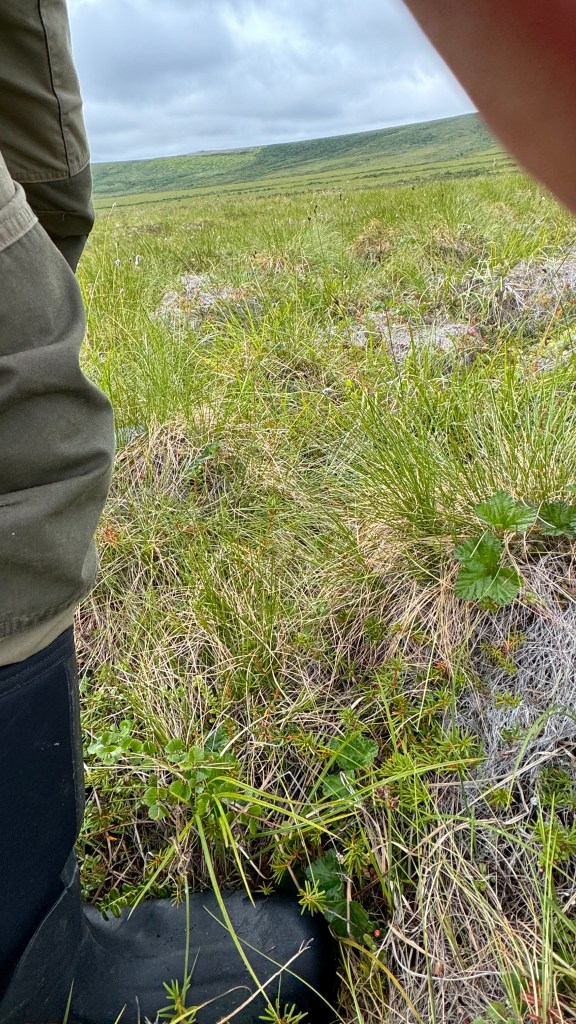
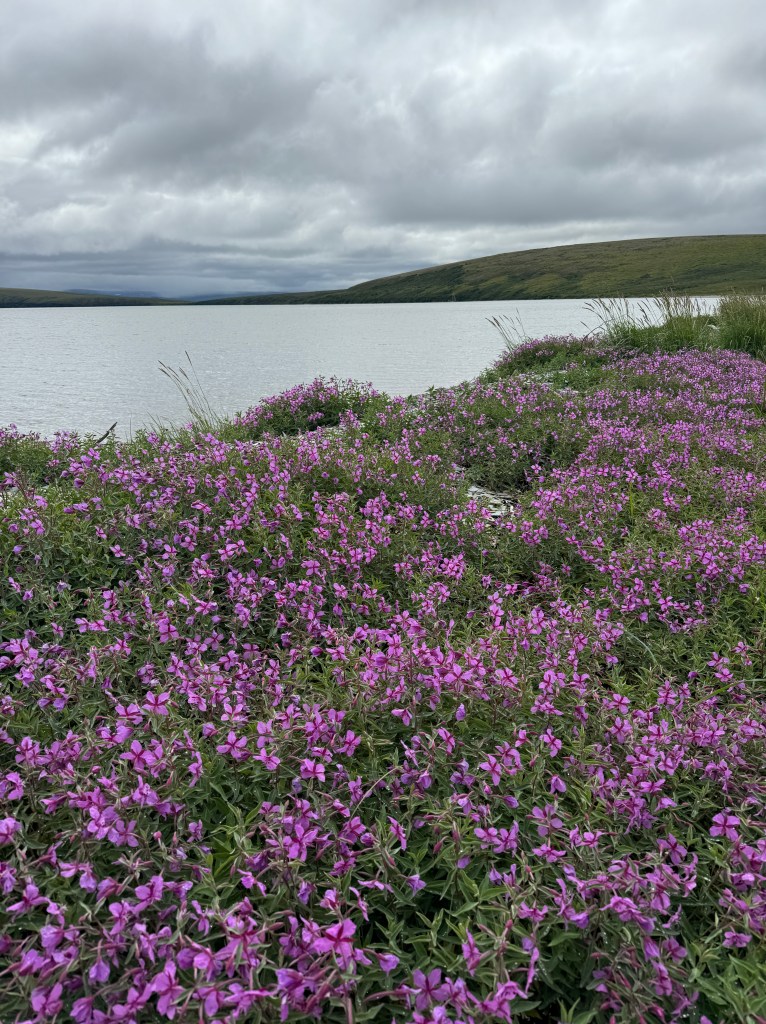
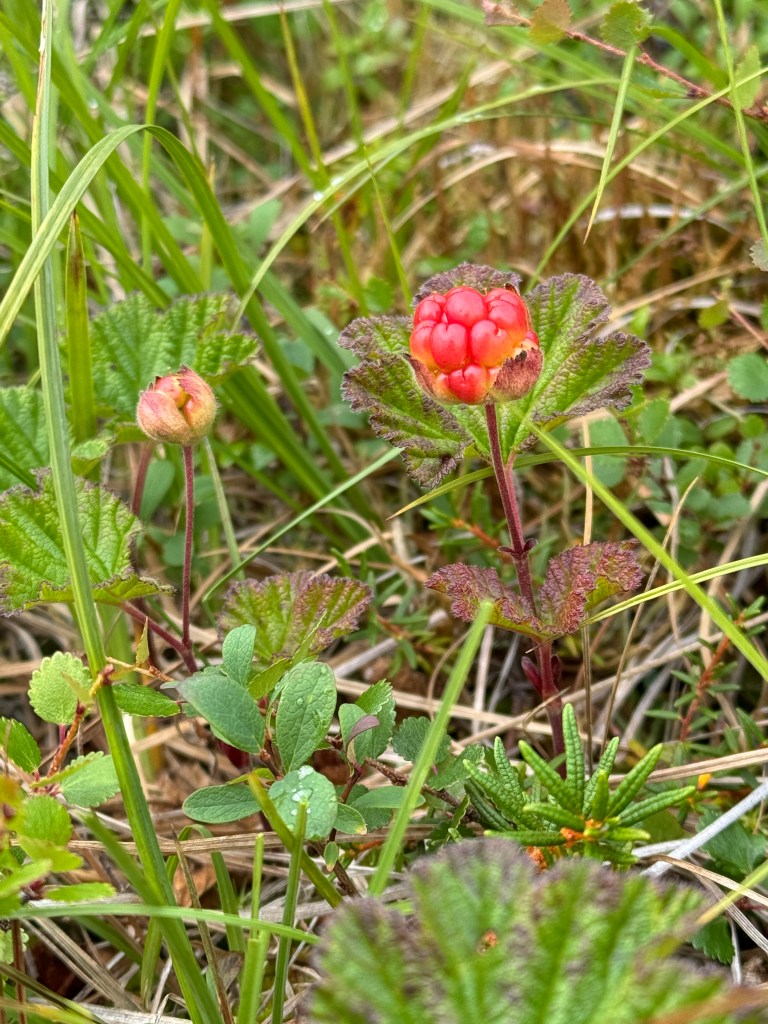
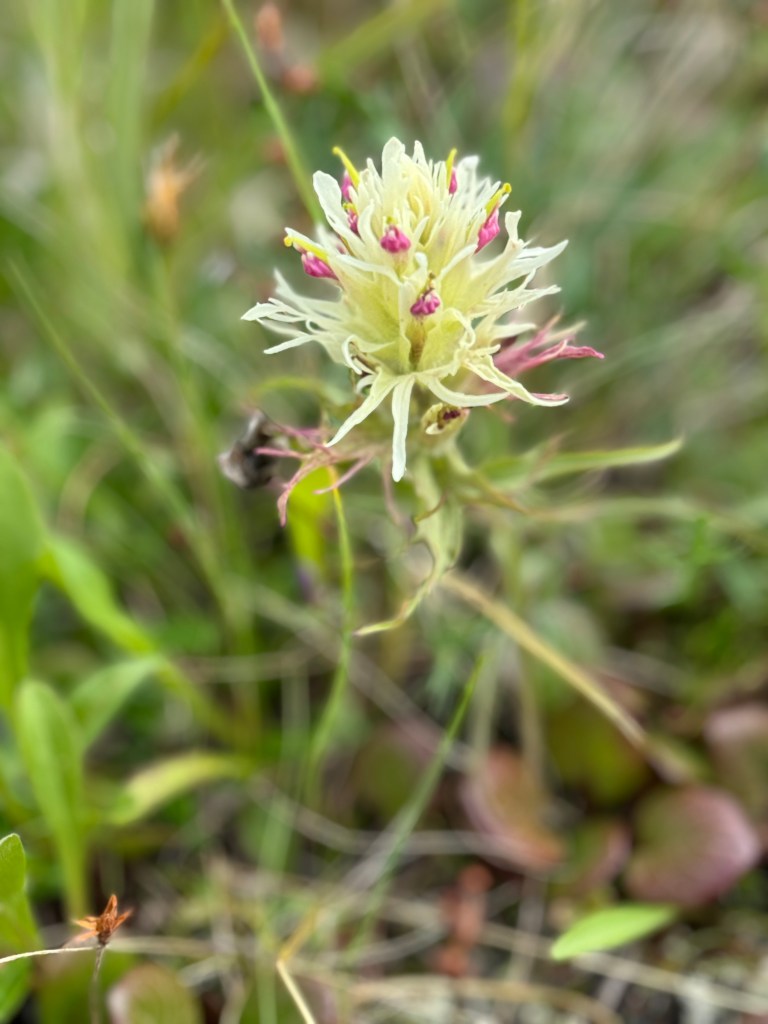
Above are four pictures of the arctic tundra outside of Brevig Mission.
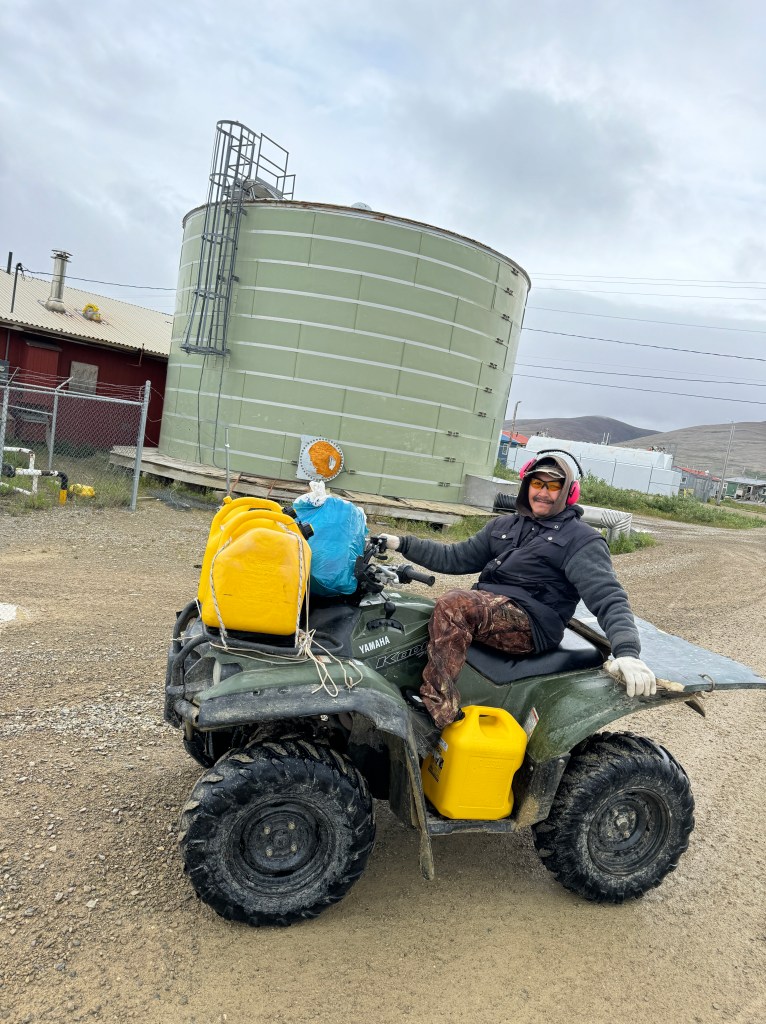
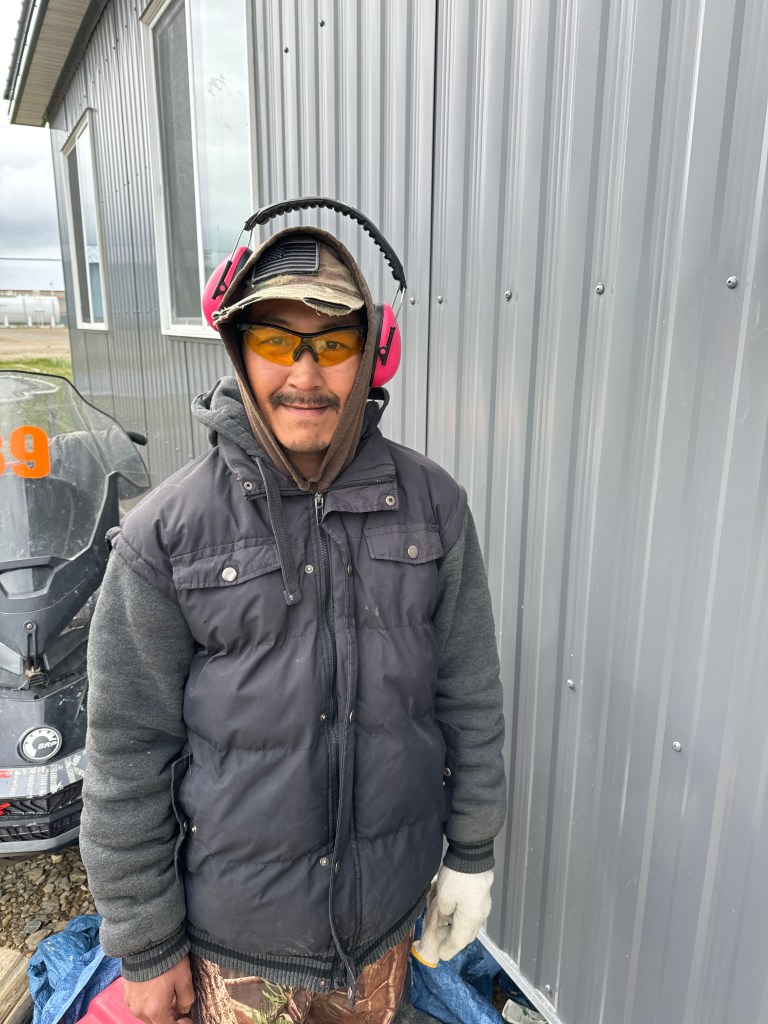
Above is Nathan. Born in Brevig, he has 4 children and works at the water purification system in town. I called the Native store and asked if they knew anyone who would be able to meet me on the beach (after Randall dropped me off from the boat) and take me into town. Soon I got a call from Nathan whose “woman” is the one at the store I spoke to.
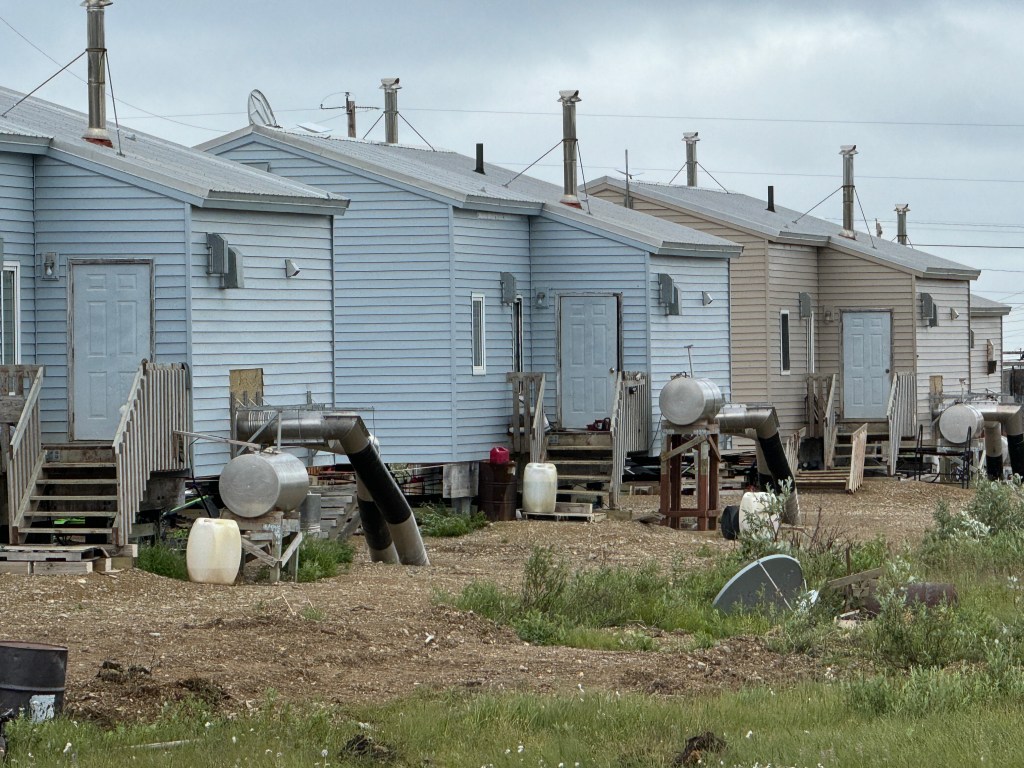
I noticed right way that Brevig, just a few miles from Teller, is a more modern, active and cleaner. Plus the townspeople are considerably friendlier. Nathan explained that Brevig is “dry” (no alcohol), while Teller is “wet” and that accounts for the difference.


This is the church in town, but Nathan does not know the denomination. The old one burned down 15 years ago. Outside is the remnants of a musk ox. Nathan could not explain why is outside the church.
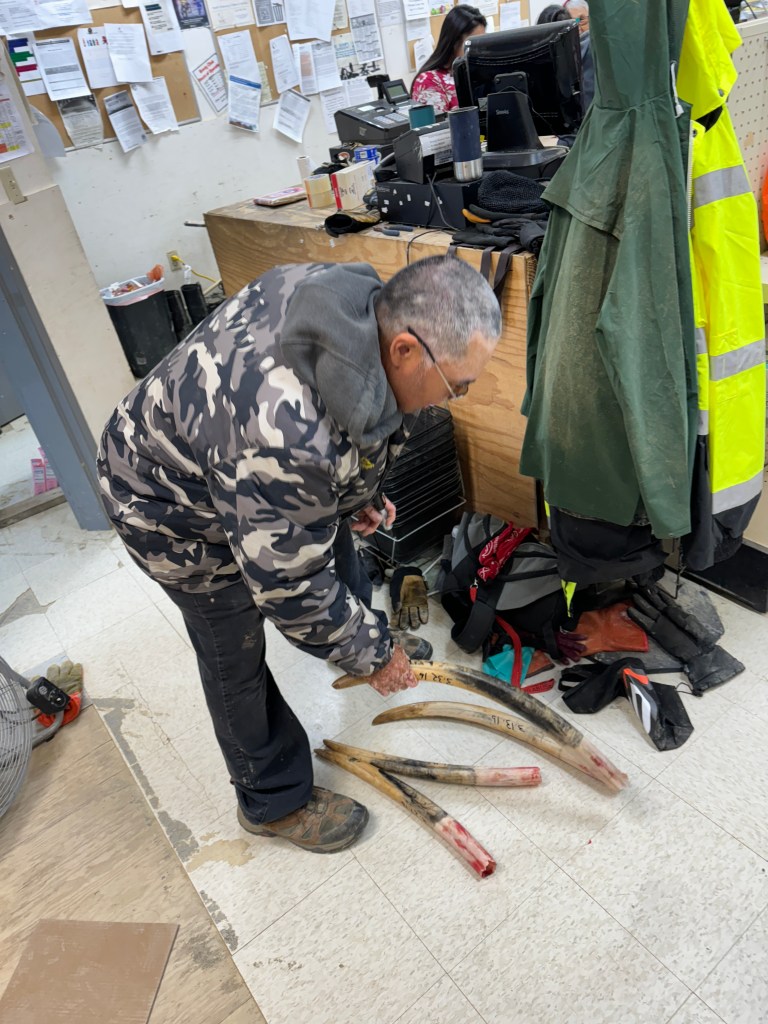
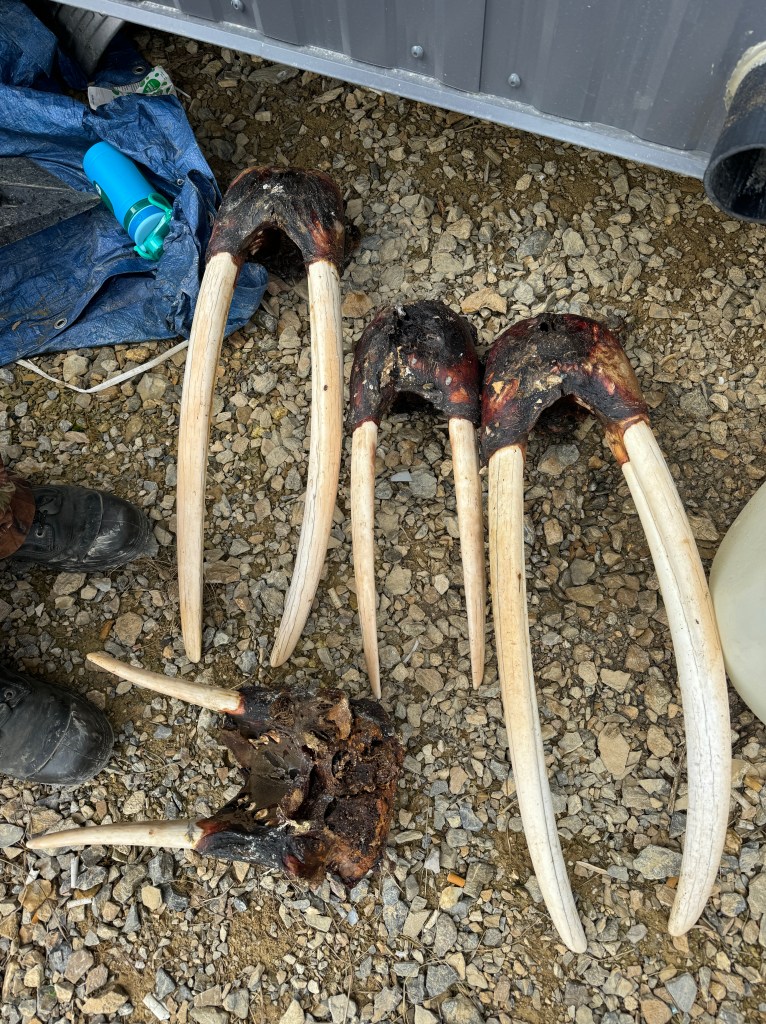
As you can see, there is plenty of ivory in town. The Eskimo’s are allocated five walrus per boat during the fall hunting season. They prefer to eat the younger ones, but the older ones have better (bigger) tusks. Above is Nathan’s father-in-law bringing in his tusks to the Native Store for weighing which is the first step to making them legal. Second step is getting a tag and registering them. Third step is to cut them up so artists can carve them, or having the artist carve the tusk. Walrus ivory is legal in the U.S. The picture on the right are Nathan’s tusks that he hunted (with rifle) with his children.
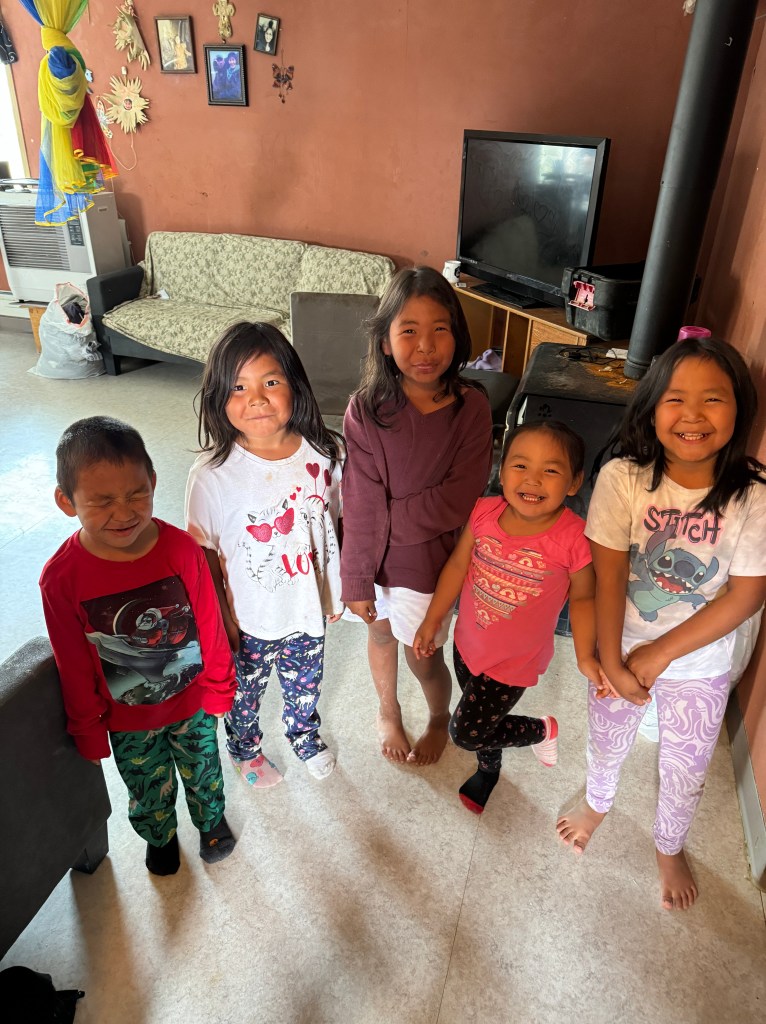
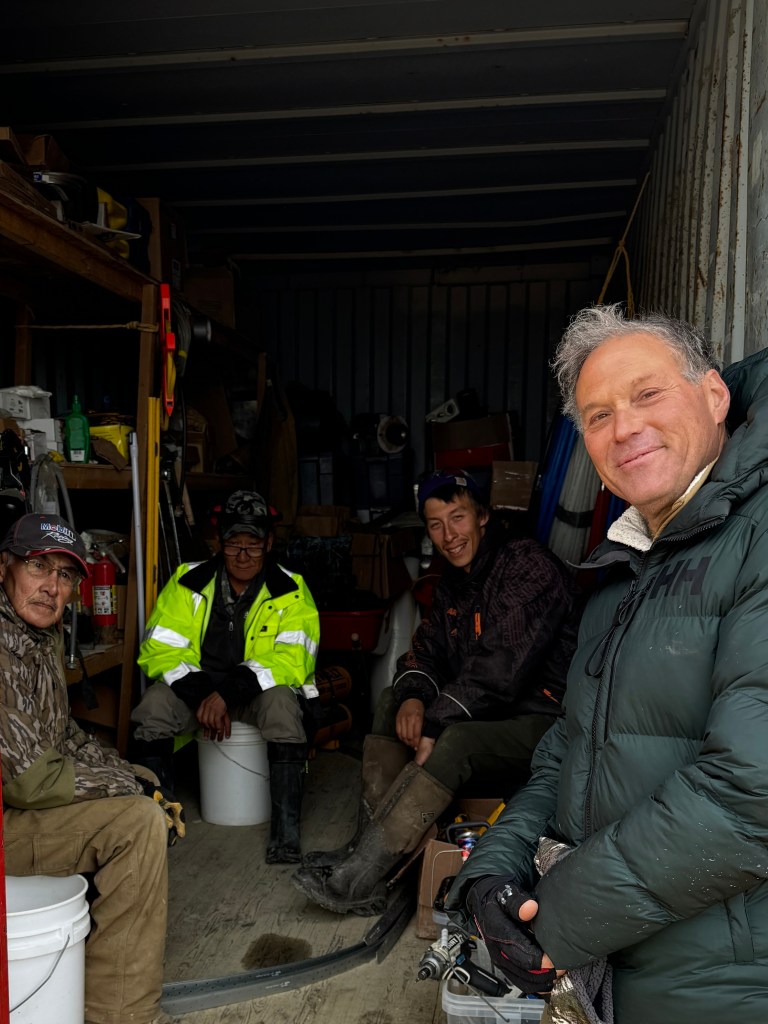
Well, time to go, but not before saying goodby to some of Nathan’s extended family on the left, and some of Nathan’s construction worker friends on the right (who asked me for some “California buds”. Even in a dry town, pot is still legal!
In my discussions with Nathan, he let me know that Brevig Mission is against the Graphite One strip mine. “It will hurt the land and the streams and that is where we get our food”.
So there you have it. In Alaska, like much of California, it is boom or bust. Clearly the natives get little of the bounty in the boom times, but pay the price for the environmental degradation in the form of reduced access to their land and wildlife stock. It is clear to me that most of the natives I met are happy and content to live a subsistence style life as long as they get health care and their children have the option to join their life or perhaps seek a modern one somewhere else in Alaska or the lower 48.


 Harmon and Randall's Voyage...
Leave a reply to Harmon Shragge Cancel reply