Hello and WELCOME BACK to all of our faithful Aroundtheamericas Blog followers! It has been a long time and I hope you are all well. I am ready to start up on Leg 3 of this adventure and am honored to have you on board.
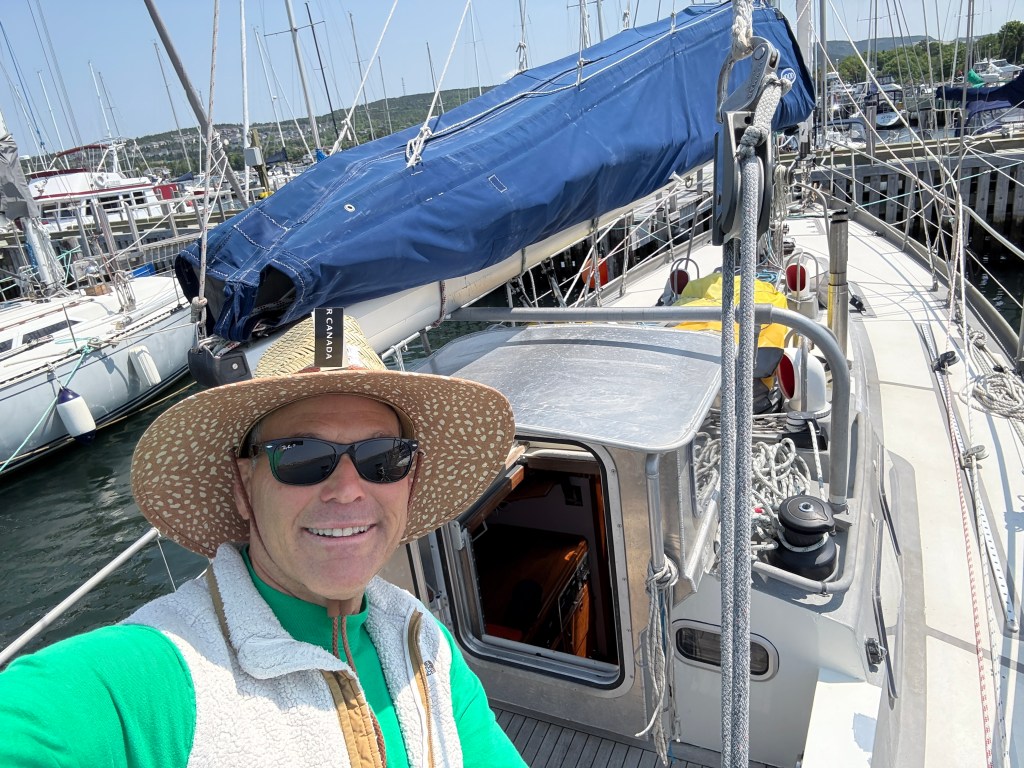
Above is my happy moment returning to Mōli earlier this week. We had made landfall in St. John’s Newfoundland September 21, 2024 after a life changing journey through the Northwest Passage. In Newfoundland, you let your boat overwinter IN the water at your peril due to harsh winter conditions. Randall took her out of the water October 1 last year and came back to nurse her mid-winter 2025 (after driving his RV from SF to St. John’s). And here we are now in mid-June getting ready to go on Leg 3, Newfoundland to Uruguay.
I was so focused on returning to our journey all year. I could hardly think of anything else. Newfoundland, Newfoundland, Newfoundland. At last the moment came when it was time to go and I arrived at SFO to check in to my flight. The Air Canada ticket agent looked at me, looked at my ticket to St. John’s which had the airport abreviation YYT, and she said, “Where is that?” I double-checked to make sure I was at the Air Canada counter and I said to her, “Why are you are asking me, it’s your country??!! She said, “I have never had a passenger go there”. Gee, I thought to myself, I thought EVERYBODY on a sailing adventure went to Newfoundland. Well, apparently not.
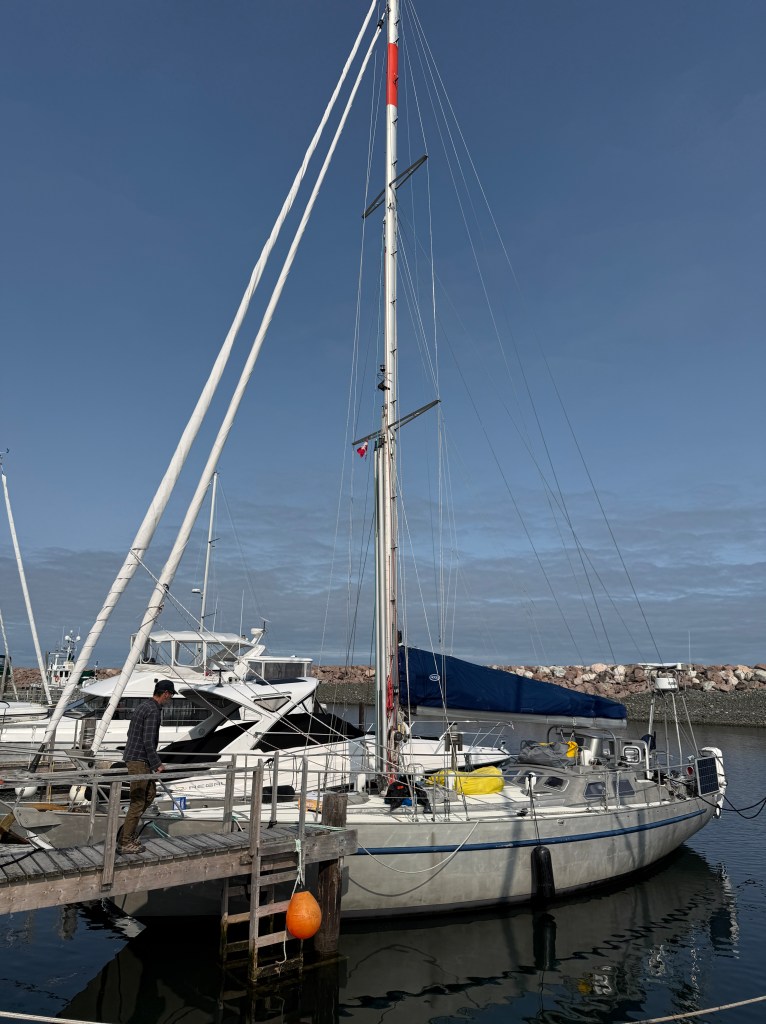
Ahhhhh….here is Mōli, sitting in her slip. She tries to fit in and look like all of those other boats. Except she is different. She looks different, she acts different. Mōli has been around the America’s two times +++ and with any luck, she is on her way to number three. There are some hearty sailors and some hearty boats docked here, but I am thinking that Mōli has seen a little more ice, a couple more waves and has just a few more nautical miles under her keel than the average boat, well …… anywhere.
By the time I arrived, Randall had done the heavy lifting (literally). Pulled her out of the water last fall after we arrived, and put her back in last March so she could survive the harsh Newfoundland winter intact. Due to the high winds and freezing rain, her mast had to be removed (and reinstalled). The batteries were replaced, the bottom painted, new Racor fuel filters installed and a new (well, pretty much rebuilt auto-pilot) attached to name just a few of the improvements.
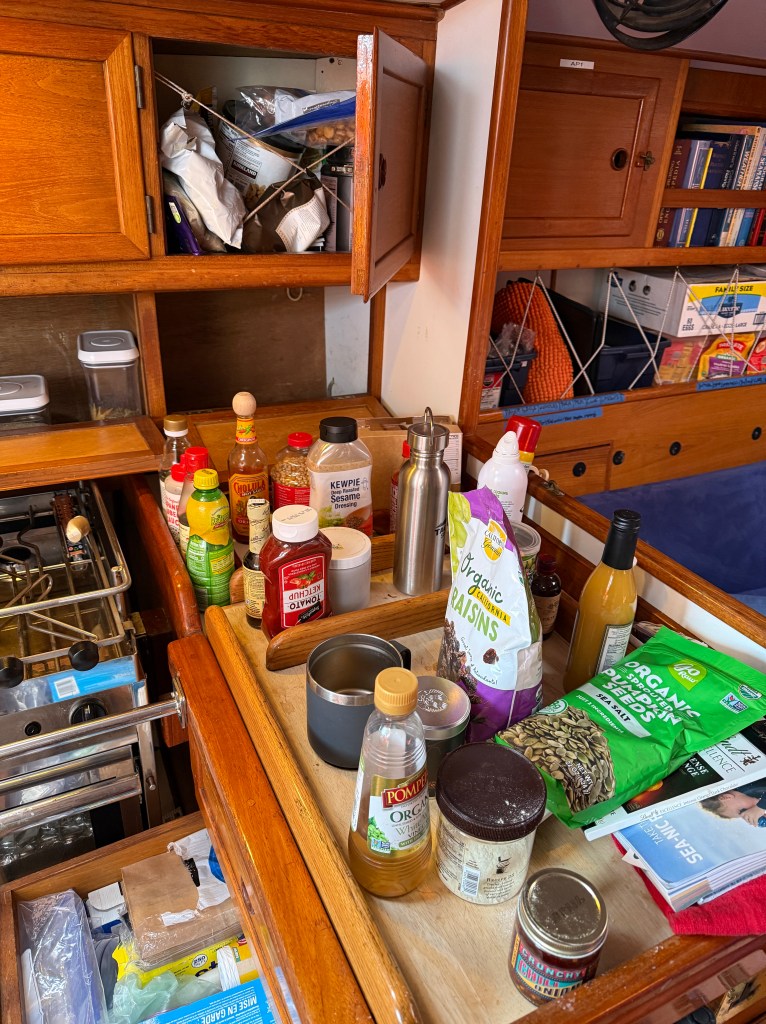
My job as soon as I arrived was to take a food inventory with Randall so we could provision the boat for our 10 week journey from St. John’s to Uruguay with island stops on the way. We unloaded the cabinets, salvaged all of the food that we considered “fresh” (less than two-years old), threw away a ton of food that had gone bad, plus a mountain of food that was still good, but we decided that we would never eat it (I.e. couscous, bags of Cliff Bars, and six jars of jam (we kept five others). Then we went shopping for new provisions at Costco, Walmart, and the local supermarket.
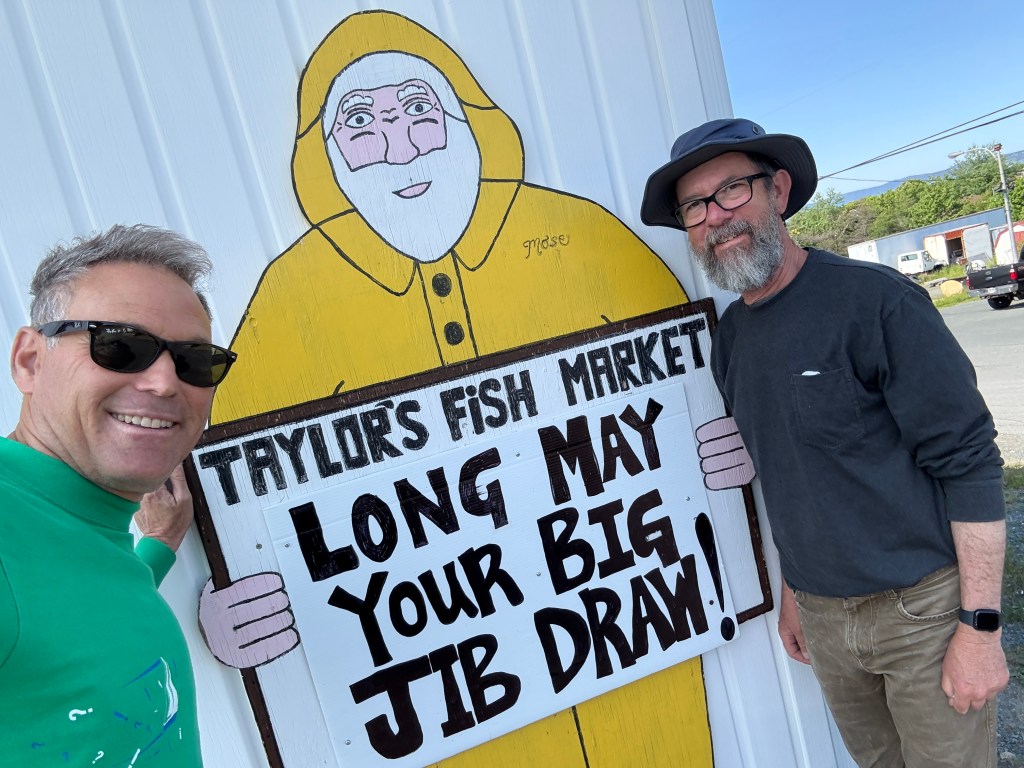
Much of the fun in doing our provisioning is discovering the local markets. This sign out front of Taylor’s Fish, Fruit and Vegetable Market was a dead give-a-way. We had to go shopping there.
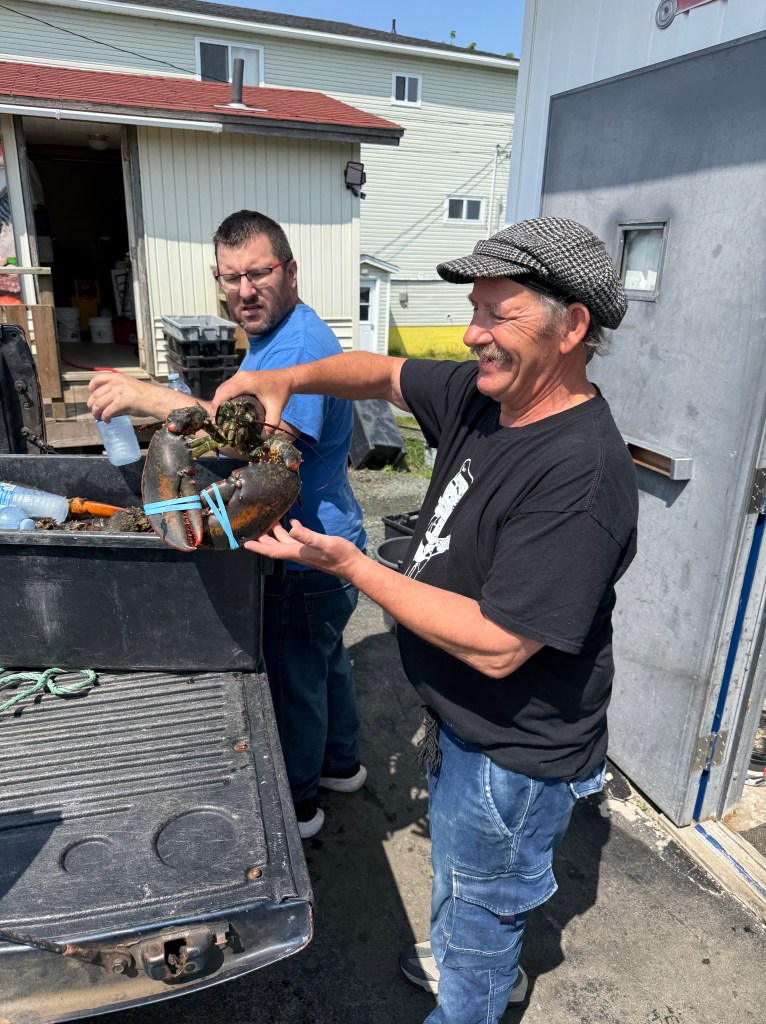
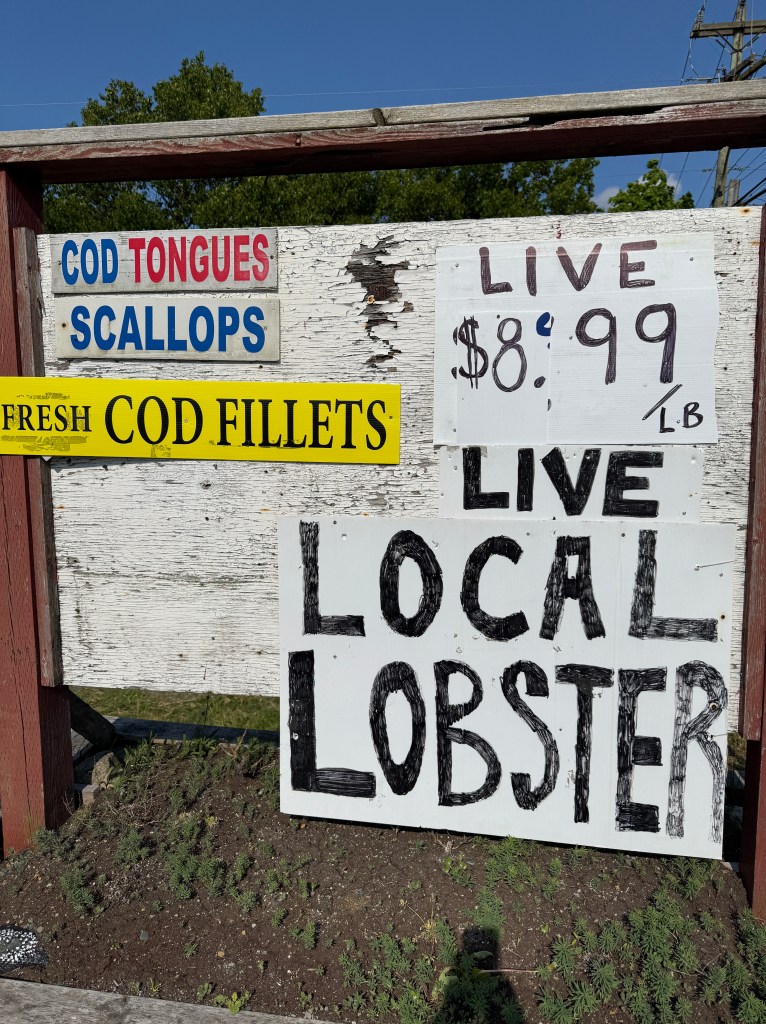
Remember, St. John’s is a hop, skip and a jump from the Grand Banks https://fitzhenrylaneonline.org/historical_material/?section=Grand+Bank%2C+Newfoundland%2C+Canada, one of the most productive fishing spots in the world. And this store had it all – Cod Tongues and Cheeks and Lobster. These fisherman were bringing in five pound live lobsters they had just caught, for sale at $8.99 a pound (Canadian!)
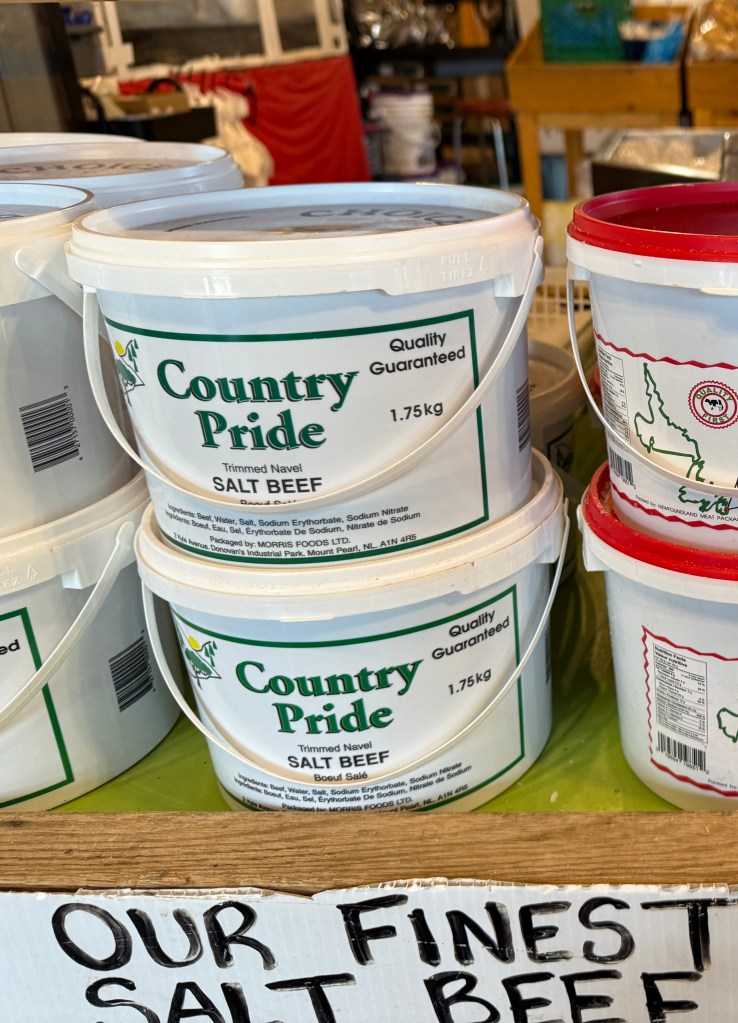
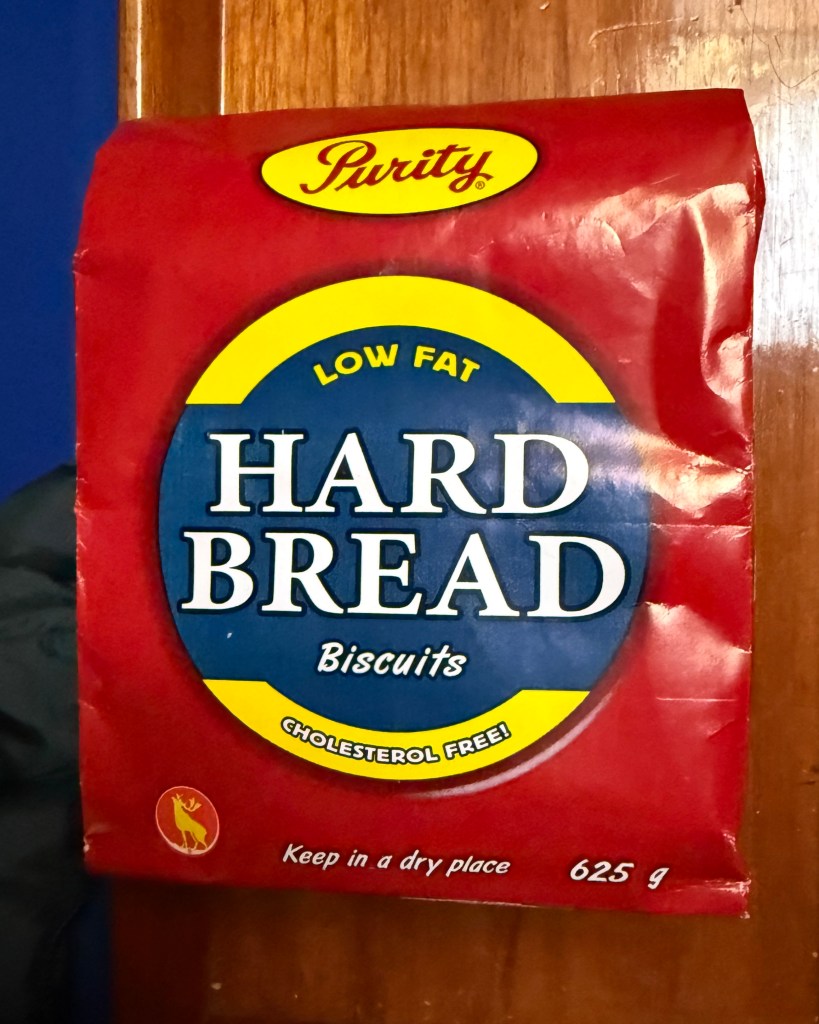
Taylor’s sells old-world maritime staples including Salt Beef and Hard Tack. These two foods provisioned much of the nautical world from the 1600’s until the advent of refrigeration. Not sure why they are still in production but tradition dictates it so, and I guess that someone still dines on these “delicacies”.
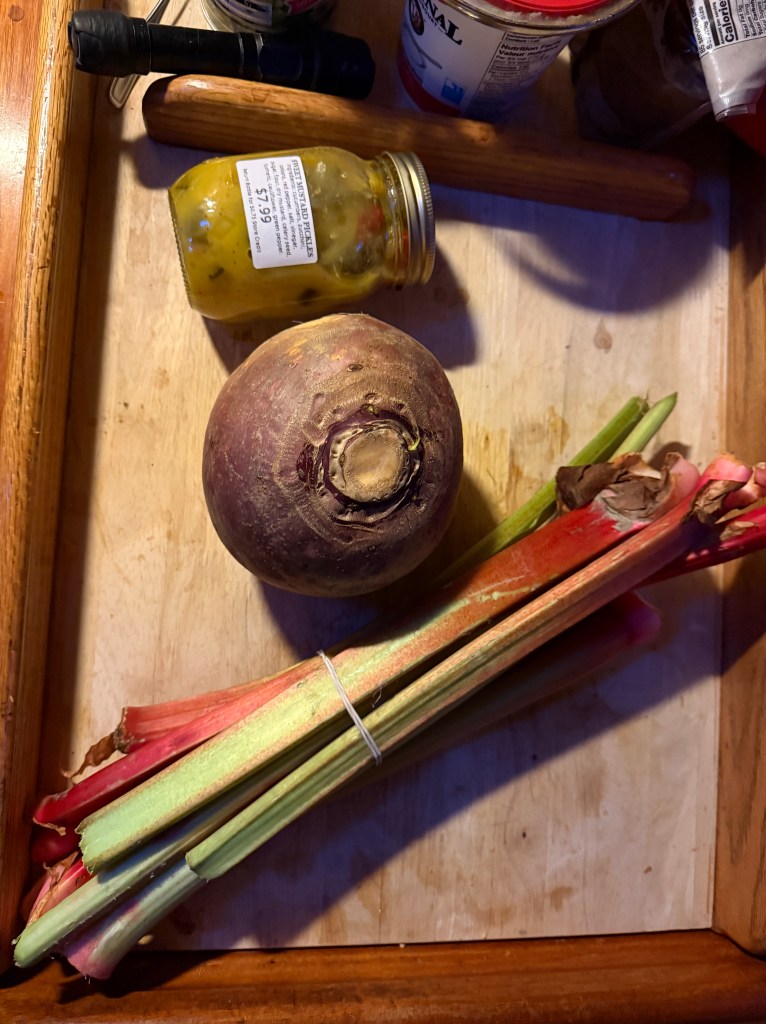

Taylor’s also sold local produce. I was attracted to the rhubarb, rutabaga and the mustard pickles. I reached out to several friend and family for a rhubarb recipe. Johanna, Randalls wife, gave me the simplest and most traditional – a cup or two of chopped rhubarb, the juice of one orange, a little bit of water, and just enough sugar as to be not-too sweet. Done in 30 minutes. Great on yogurt or toast.
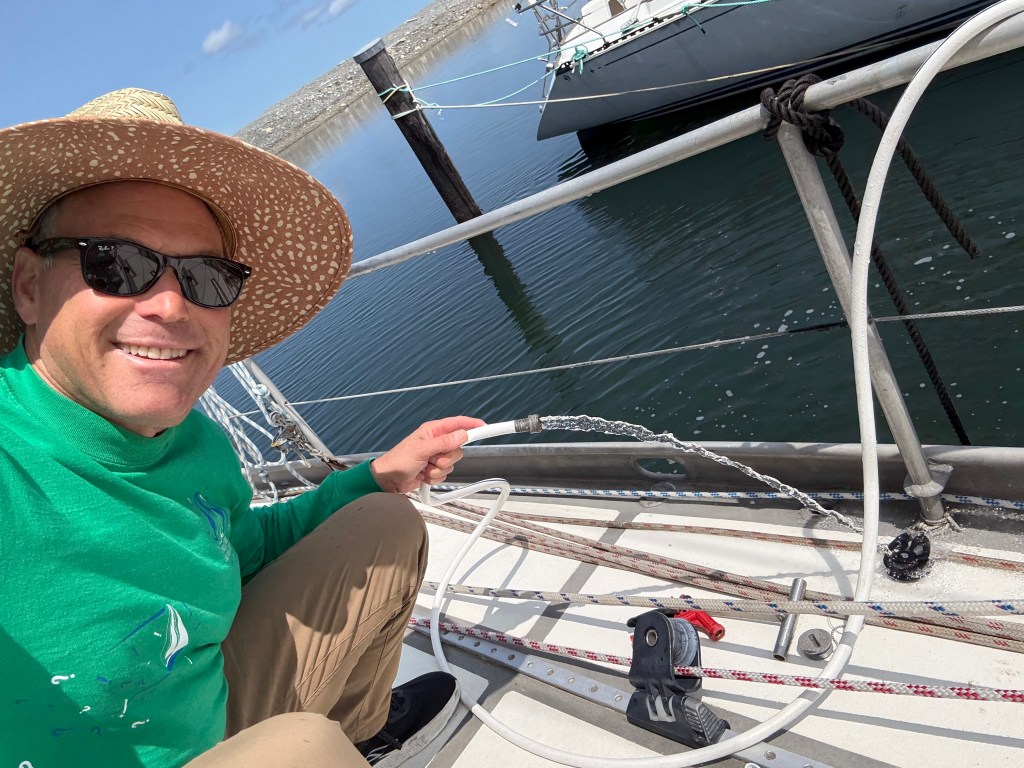
After we filled our food stocks, it was time to take care of Moli’s needs – namely fuel and water. Above, I am washing the deck near the water intake to get it ready to receive the hose to replenish our 200 gallons of fresh water.
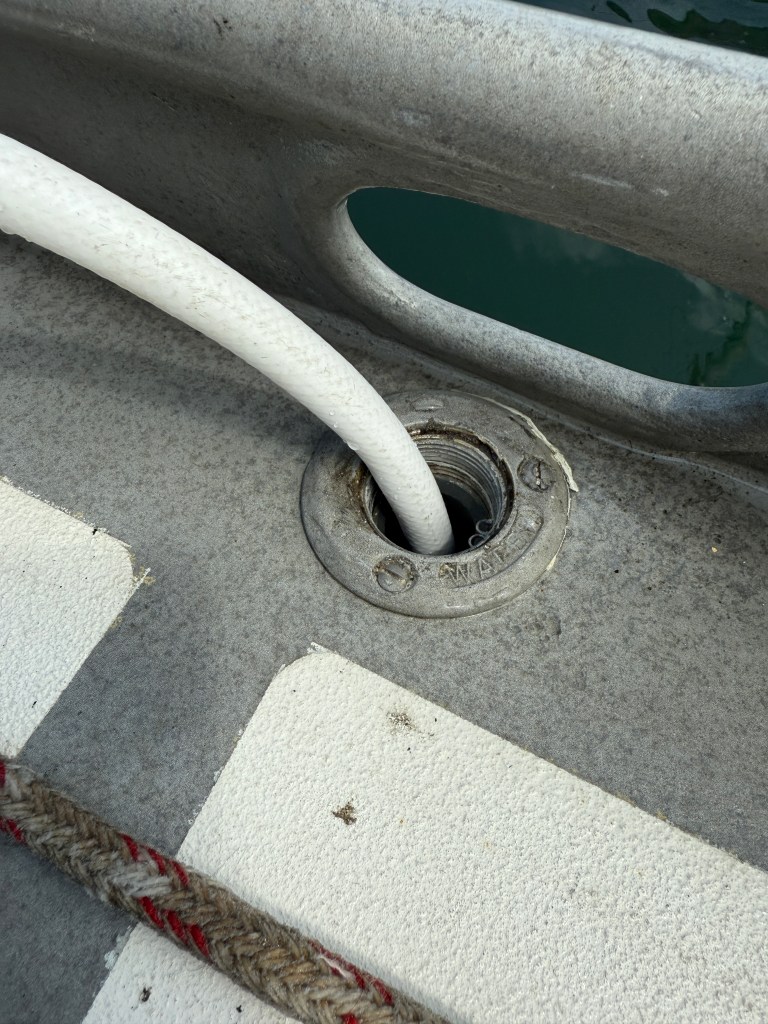
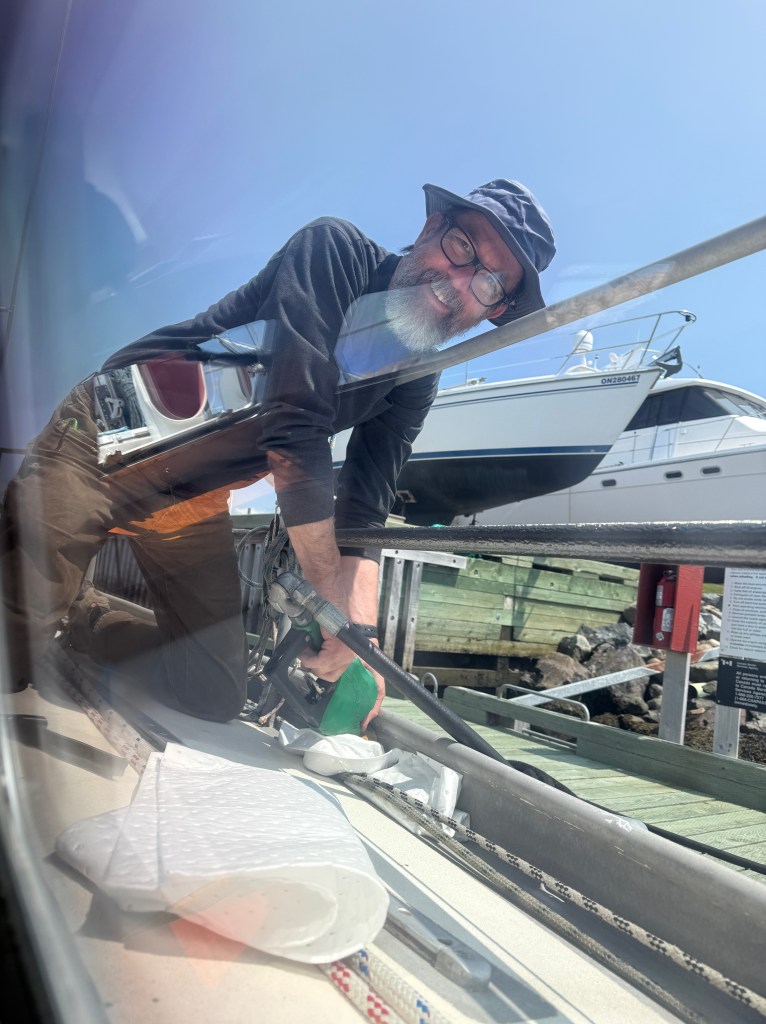
Above Left: Here is the (clean) hose filling one of Moli’s two water tanks. Above Right: I am watching Randall filling up one of our two diesel tanks (also 100 gallons each).
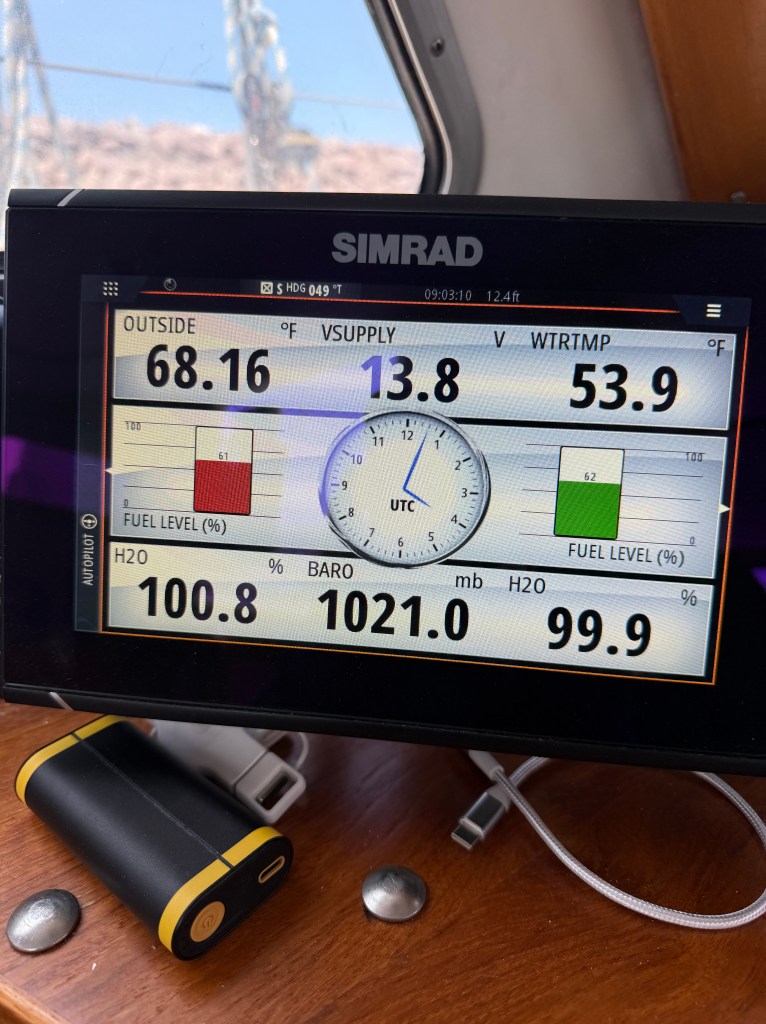
My job is to call out the fuel level in each tank so that Randall will not overfill. Problem is the electronic gauge lags the actual filling level so we inevitably end up with a little bit of diesel spilling out which is a big fuel-dock NONO.
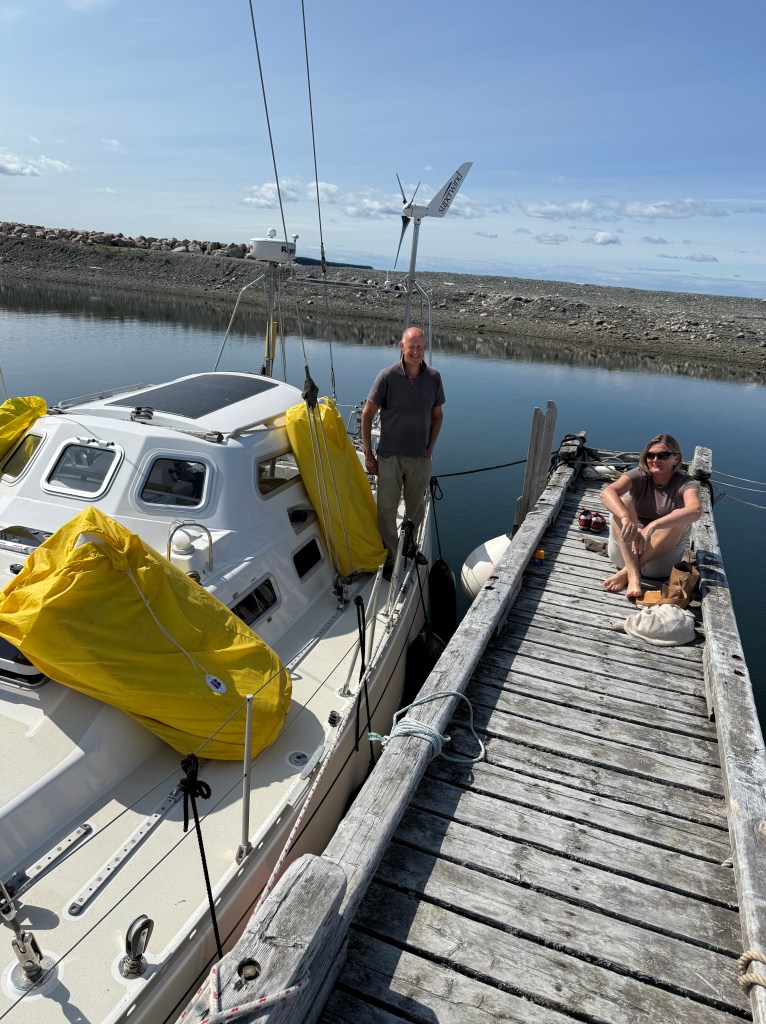
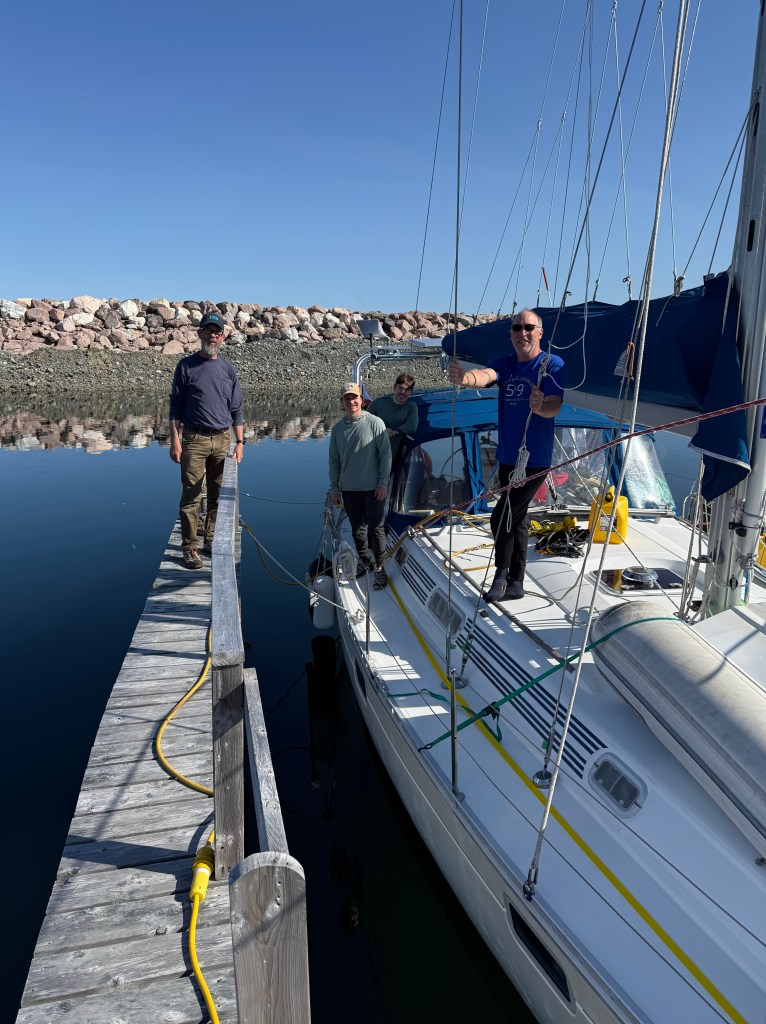
Now that we acquired our food and fuel, we took a moment to say “Hi” and “Bye” to our marina friends. Upper Left: Hugh and his wife came in from Lancashire England last year. Hugh and a crew that does not include his wife will head north to the West Coast of Greenland for the summer and then return to England. Upper Right: Your “average” Canadian family from Ontario region sailed their Beneteau from Lake Huron (one of the Great Lakes) inland and up to St. John’s last year. Their boat is named “Bricolanto” which is an amalgam of their four first names (father, mother and two sons). The father and the two sons will sail the boat to the Azores without the mother (are we detecting a pattern?) But she will fly there to meet them.
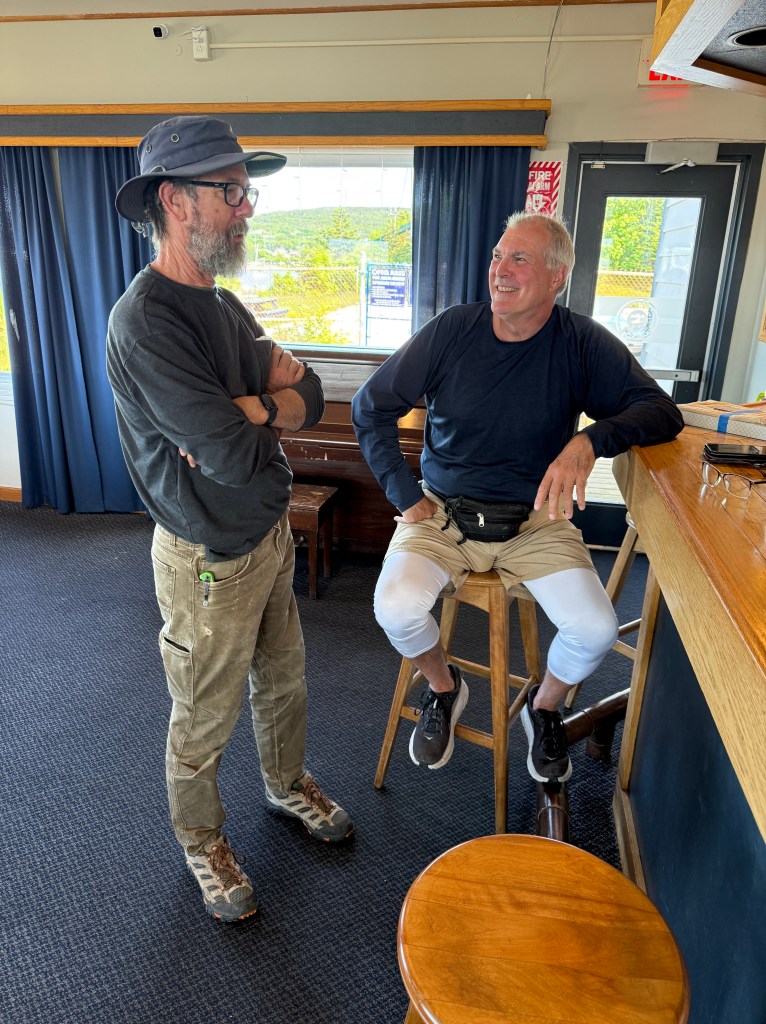
Upper Left: Randall attracts, meets and makes interesting “dock buddies” Jim Wyse was of great help, and is one of the world’s foremost experts in the Antikythera Stone which is known as the world’s first analog computer and navigation mechanism https://en.wikipedia.org/wiki/Antikythera_mechanism. Upper Right: Randall talks to Greg Horner, an Ocean Cruising Club “Port Officer” whose job is to meet and greet wayward sailors as they come in and out of port. Greg met Randall and I as we arrived in St. John’s last year, quite early in the morning as I recall, with hot coffee!!
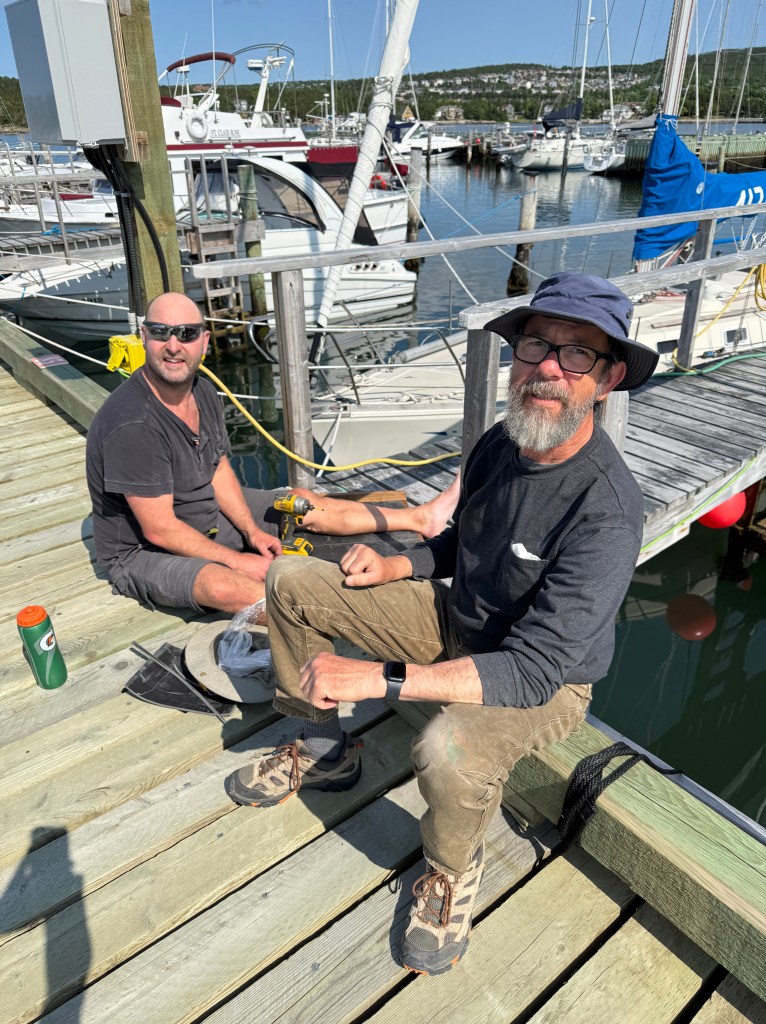

Upper Left: Matt, is one of those invaluable guys who works on boats in the yard. No project is too big or too small. Randall advises “Don’t ask the guy’s who sail the boats for help, ask the guys who fix them”. Upper Right: Max has been abound the block (or the dock) many times. Here he is telling Randall the story of the RMS Carpathia and her skipper Arthur Rostron – the real hero of the Titanic wreck who rescued 700 shortly after the collision with the ice berg. https://titanicfacts.net/carpathia/ Come to think of it, we are passing directly over the Titanic as we make our way east.
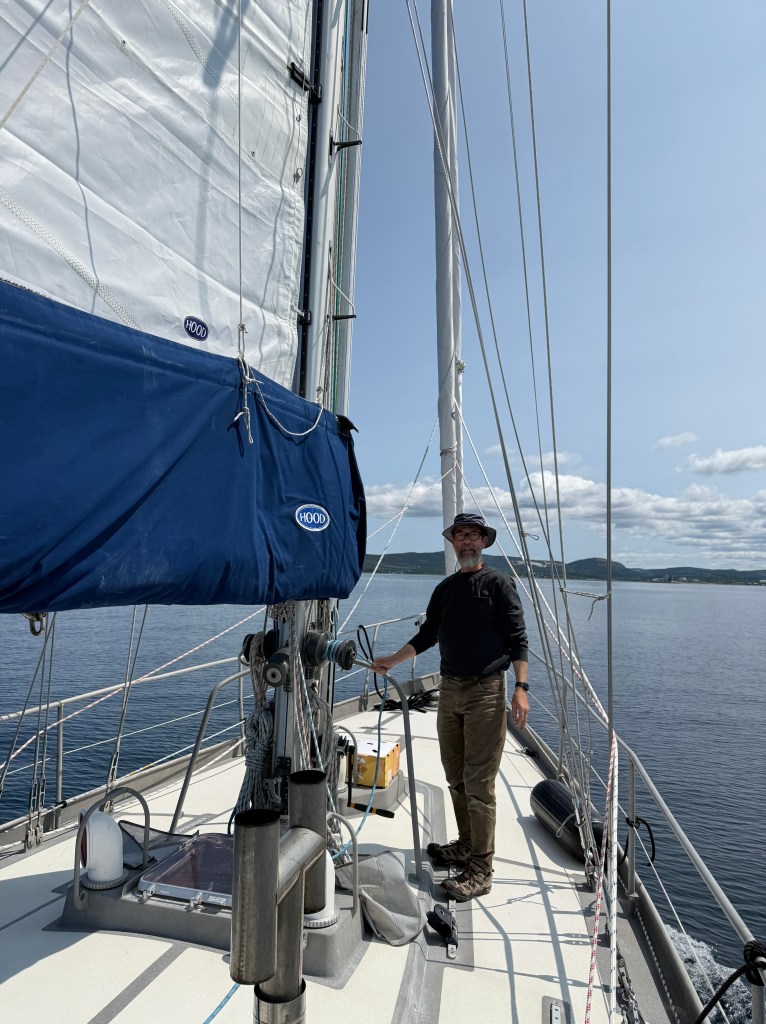
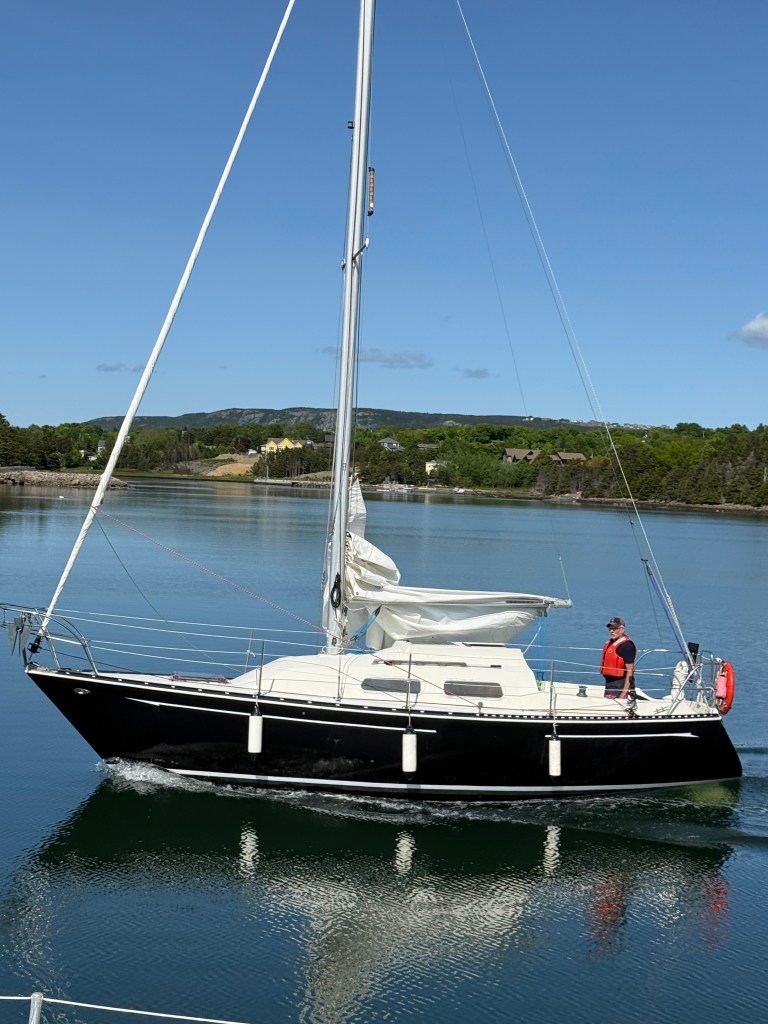
One last spin around the bay to “shake her down”. She sails beautifully.
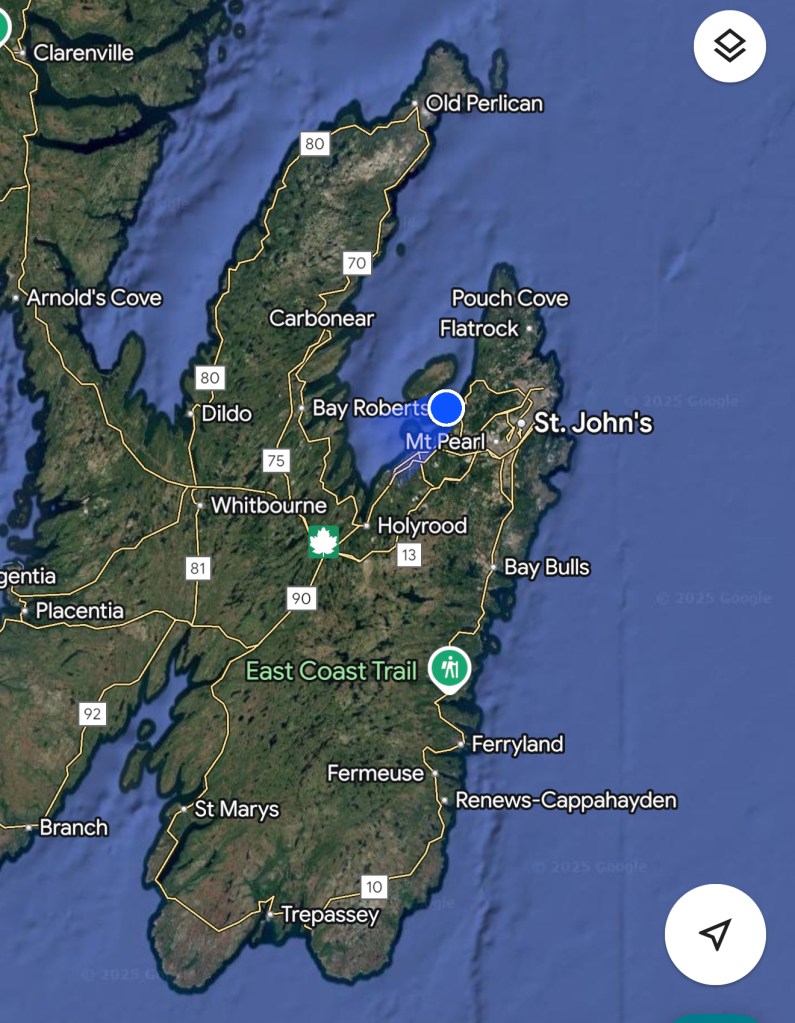
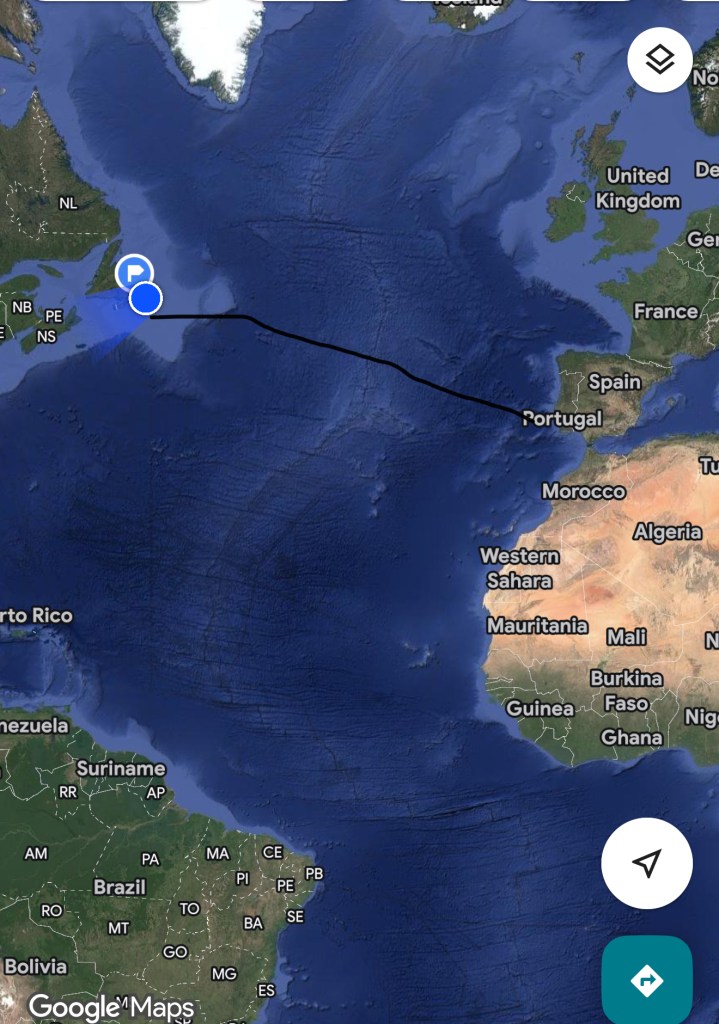
So as we get ready to leave, take a look at where we are. Upper Left: We are in port at St. Johns. Upper Right is my hand drawn line as we head to the Azore Islands almost 1,000 miles off the coast of Portugal.
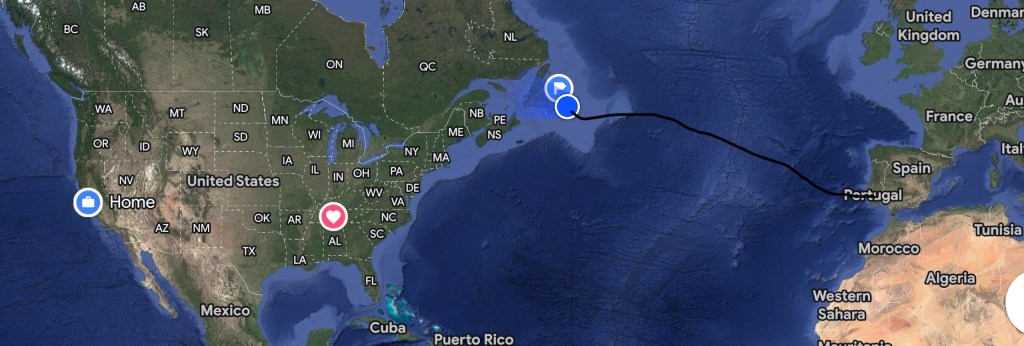
I hope the above map puts this trip into perspective. Sorry it does not show the Northwest Passage.
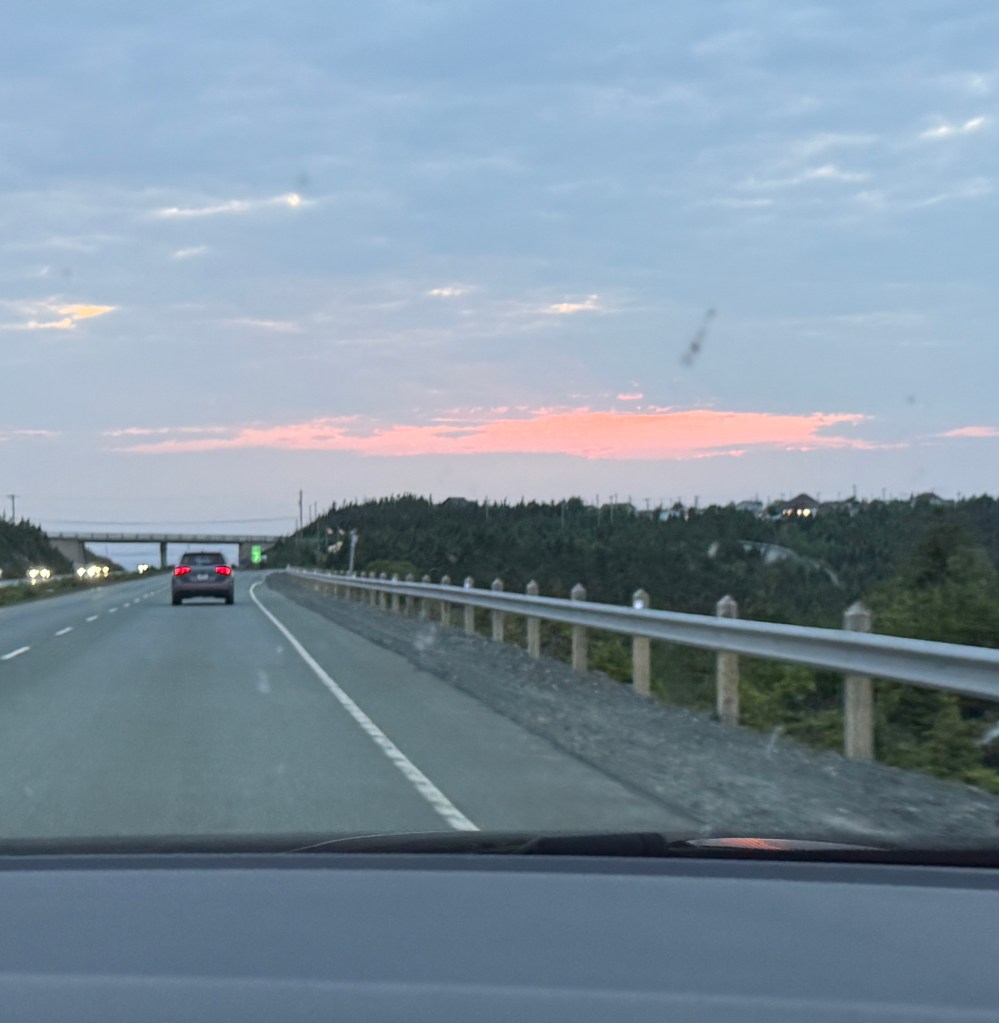
Could not help but notice the color of the sky the night before we left….

Well, we have slipped lines and are on our way…

Above is Greg Horner and his cohorts saying goodby and wildly waving the Canadian flag as we sail to our North Atlantic crossing. Thank you Greg!


 Harmon and Randall's Voyage...
Leave a reply to The Amplify Lab Cancel reply