Leg 3, Blog 9, July 27, 2026
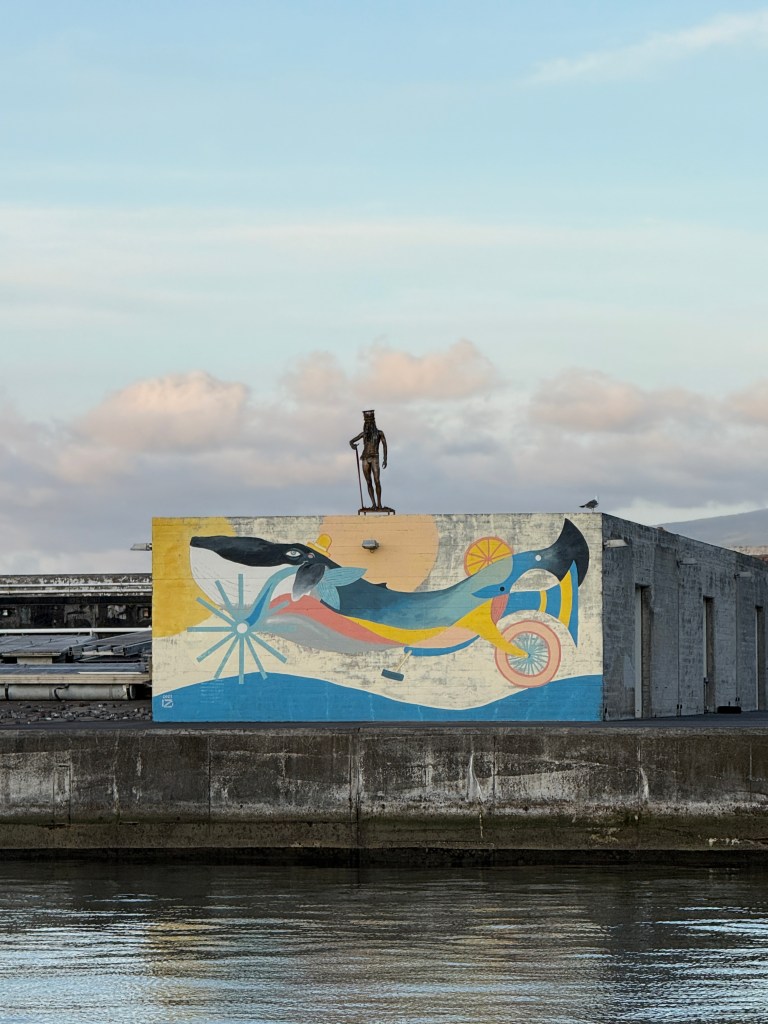
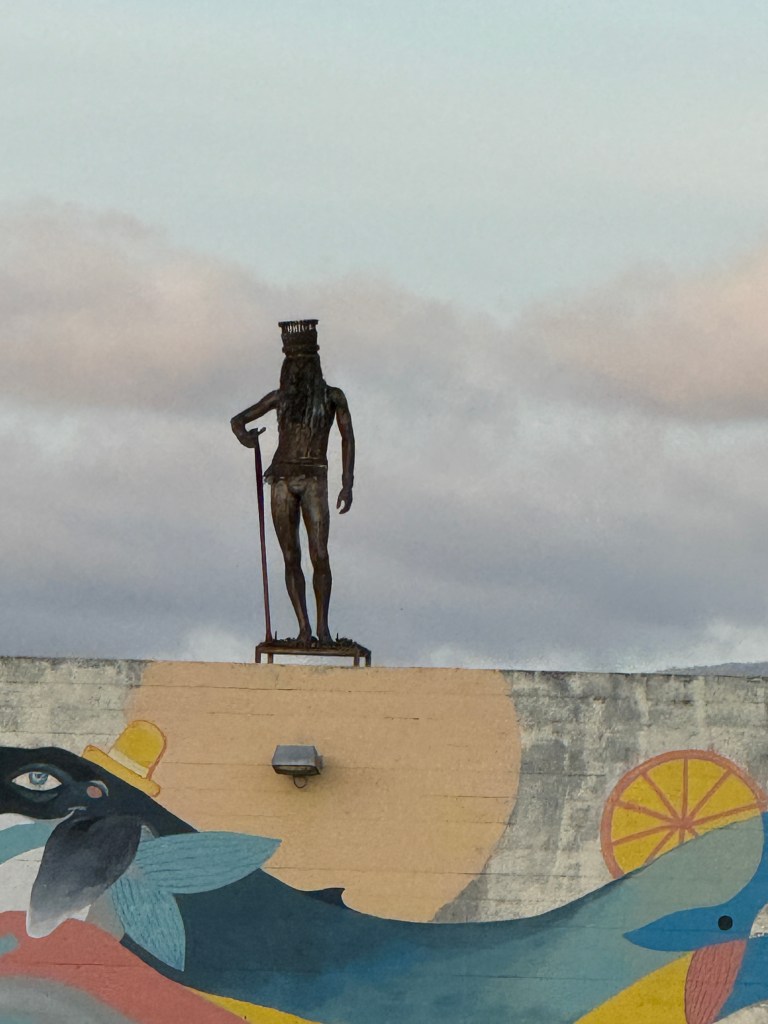
Horta, on the island of Faial is not the largest city in the Azore chain (nor is Faial the largest island). What distinguishes this town is that it is a primary stop for yachts crossing the Atlantic. This is not a port for the megayachts or jet-setters. You see an abundance of small to mid-size boats from France and elsewhere who pull into the harbor and, well, just hang out on their boats. This is not a young crowd. They are not doing the town, not hitting the highlife. Closest I could compare this too is our population of people who travel the states in their motorhomes. Except this is much nicer than your average Walmart parking lot.
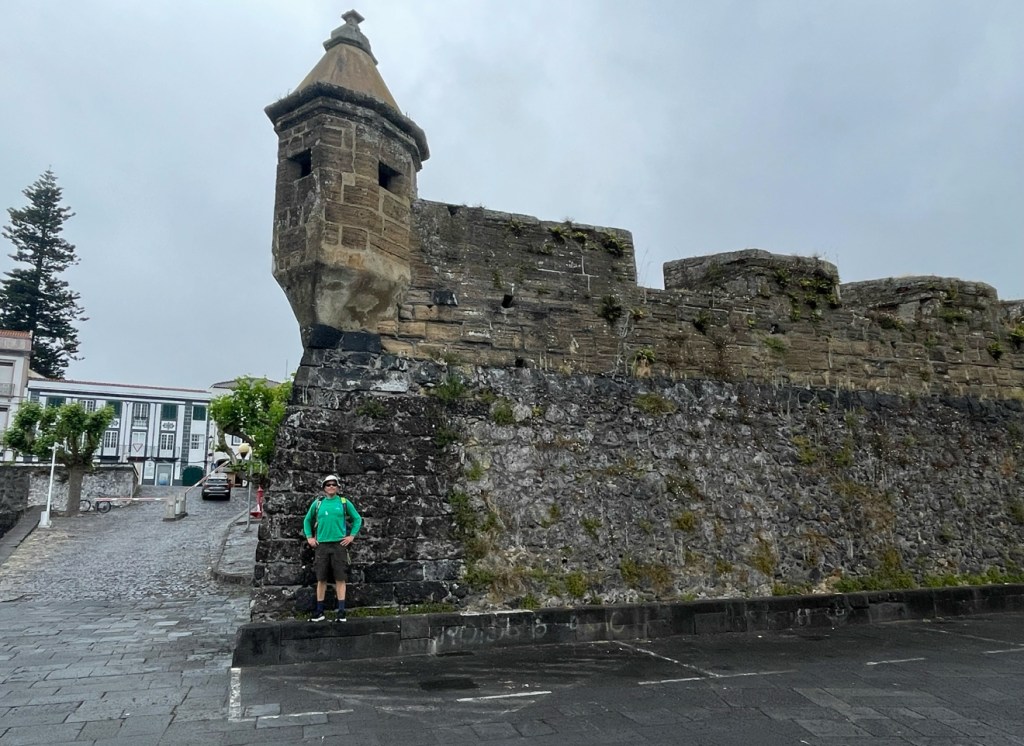
Horta’s settlement began in the 15th century with Flemish and Portuguese settlers. The bay of Horta became a favored stopover for ships traveling between the Americas, Europe, Africa and the Caribbean, starting in the 16th century. This led to increased trade and also attracted pirates and privateers. Above I am standing in front of the original anti-pirate fortification.
A guide we met mentioned that it might have been possible that there was a native culture prior to the settlement of Portuguese (perhaps from cultures emanating from the Cape Verde or Canary islands). This theory is not proven, but is accepted that the Norse (aka vikings) arrived some 700 years prior to the first Portuguese. They obviously left long ago as there is little Danish or Swedish spoken on the island! https://www.eurekalert.org/news-releases/930573#:~:text=According%20to%20these%20models%2C%20and,earliest%20settlers%20of%20the%20Azores.
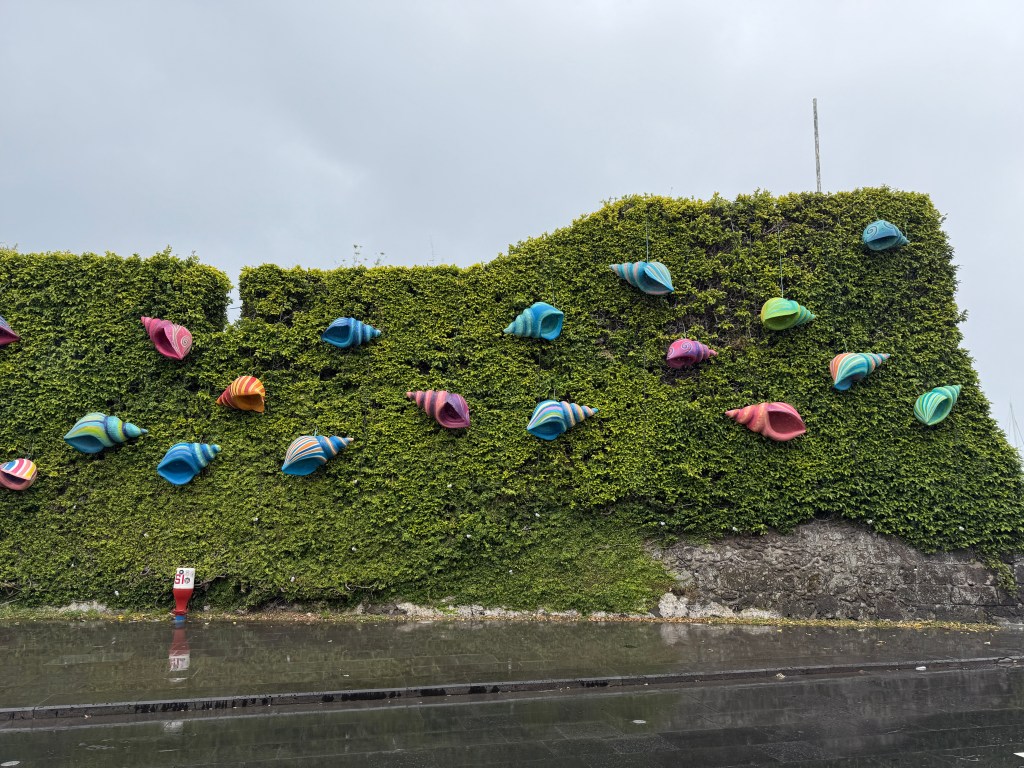
Horta continued to modernize and in the 19th century flourished as a whaling port and a crucial stop for transatlantic shipping. https://azores.com/azores/islands/faial/history
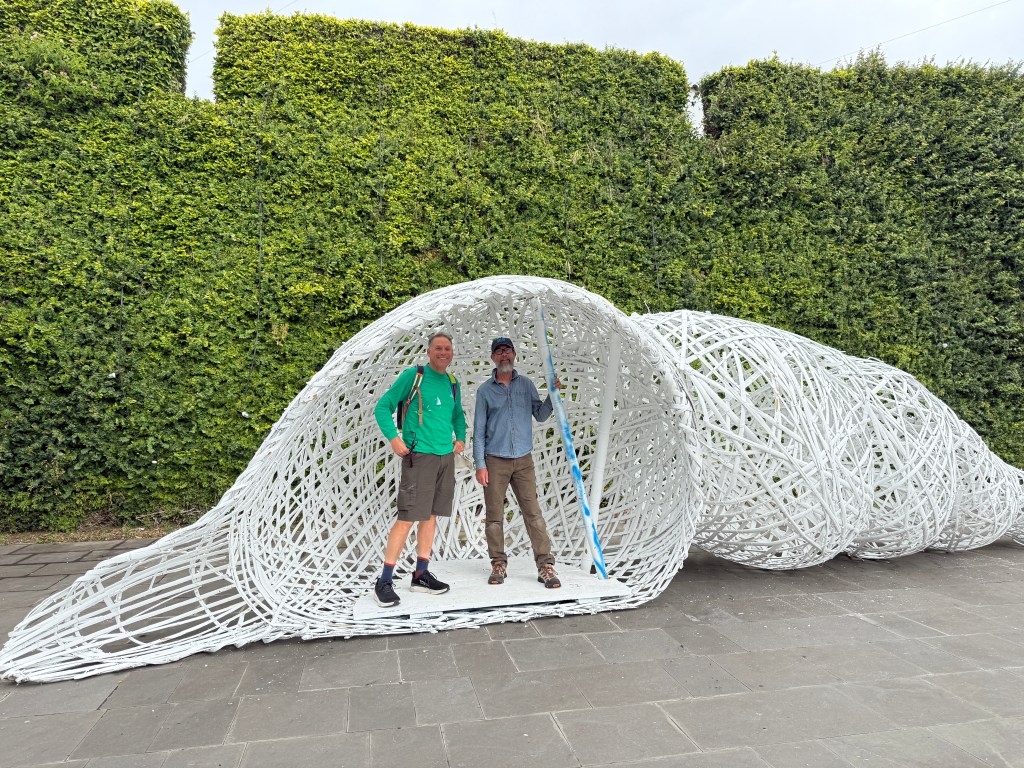
Horta’s importance in global communication began with the arrival of the first submarine telegraph cable in 1893. By 1928, Horta boasted 15 cables between Europe and North America. Western Union set up a major headquarters here during this period and Horta turned quite cosmopolitan with the multicultural staff that Western Union brought (German, French, American).
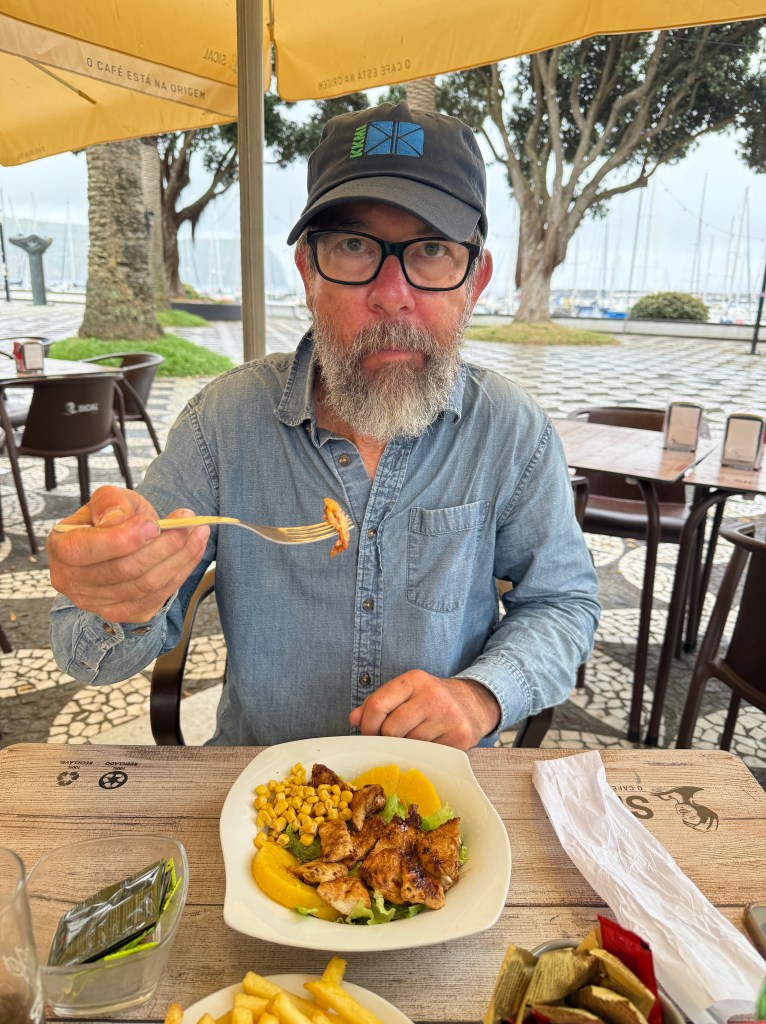
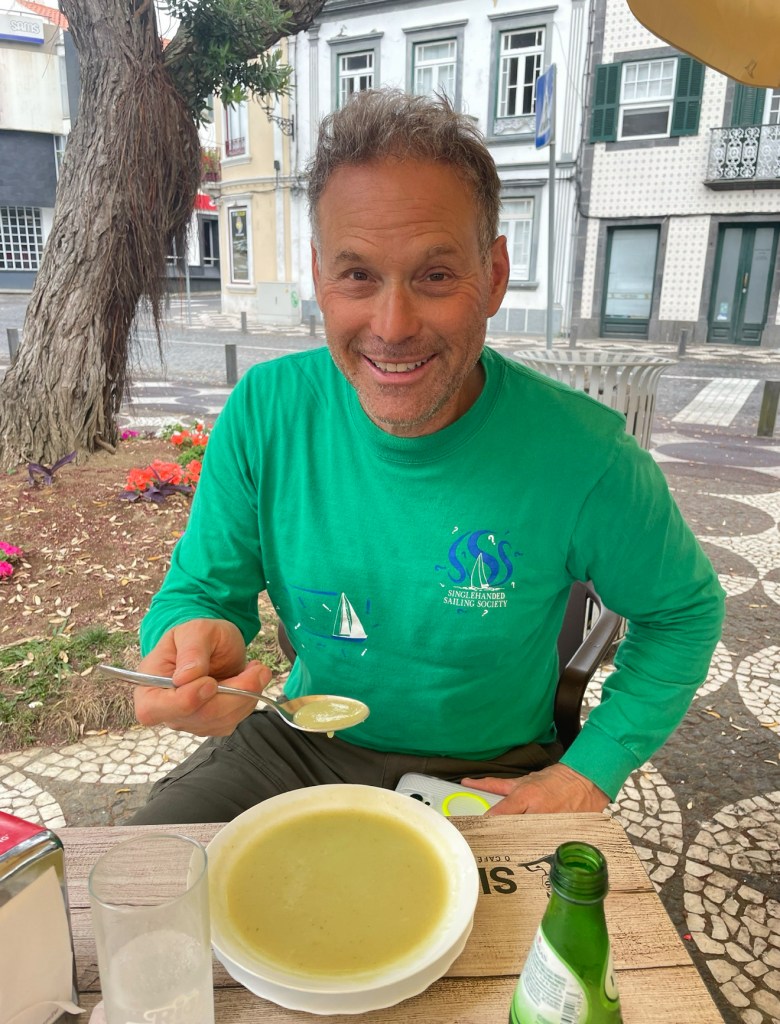
In 1939, Pan American launched a new epoch for global travel with the first transatlantic flight with paying customers to cross the Atlantic. The flight left Port Washington on Long Island with 22 paying passengers on the “Dixie Clipper” https://metroairportnews.com/pan-americans-dixie-clipper-makes-first-regular-trans-atlantic-passenger-service-to-europe/ It stopped in Horta, Lisbon and then in Marseilles. The stopovers often took several days to wait out the weather, so Pan Am owned and operated a big hotel.

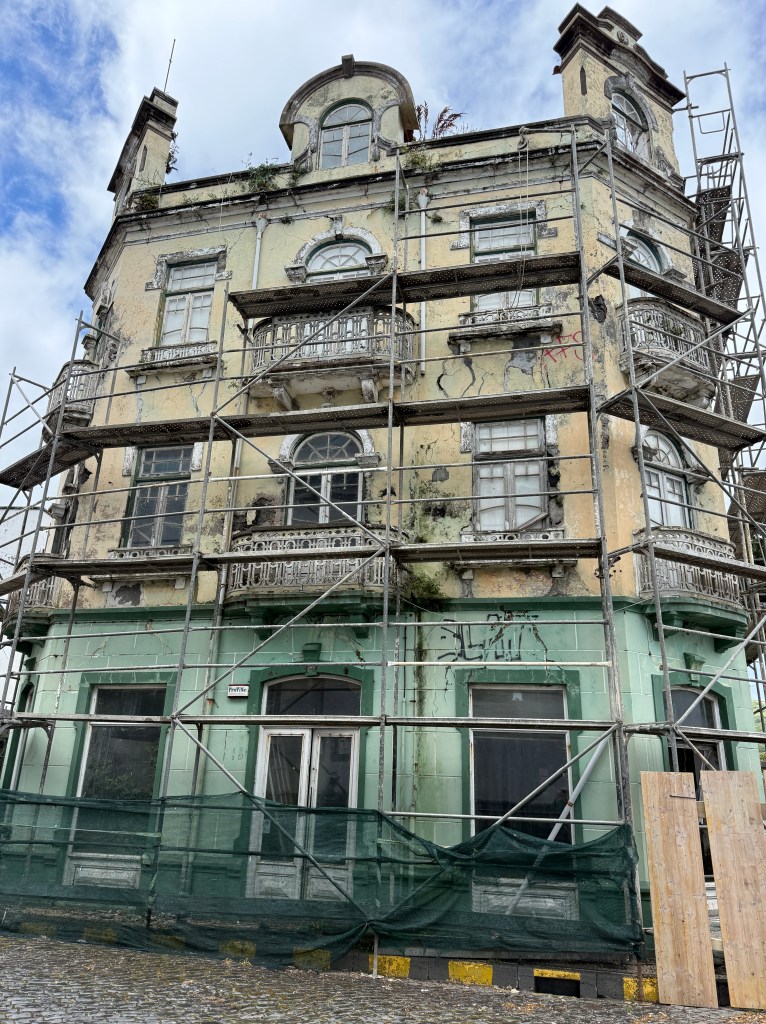
Much of the towns architecture (modern at the time) was as a direct result of both Pan Am and Western Union. Sad to report that there have been several mass migrations out of Horta that have contributed to a decline in population and a related lack of occupancy for a good portion of the commercial downtown. In 1957, the Capelinhos volcano erupted, dramatically altering Faial’s landscape. The eruption was so horrific that the US passed the Azores Refugee Act of 1958 which allowed 2,000 volcanic refugees to emigrate to the US and Canada. The population of Faial today is 15,000 versus 25,000 in 1957.

They love their trees, but those that remain (meaning were not cut down for shipbuilding or construction) are typically non-native. In this park, Randall and I stop to admire this beautiful Dragon Tree, which is actually a native of the Canary Islands (the national symbol of Tenerife). The bark and leaves produce a resin called “dragon’s blood” which has been used as dye.
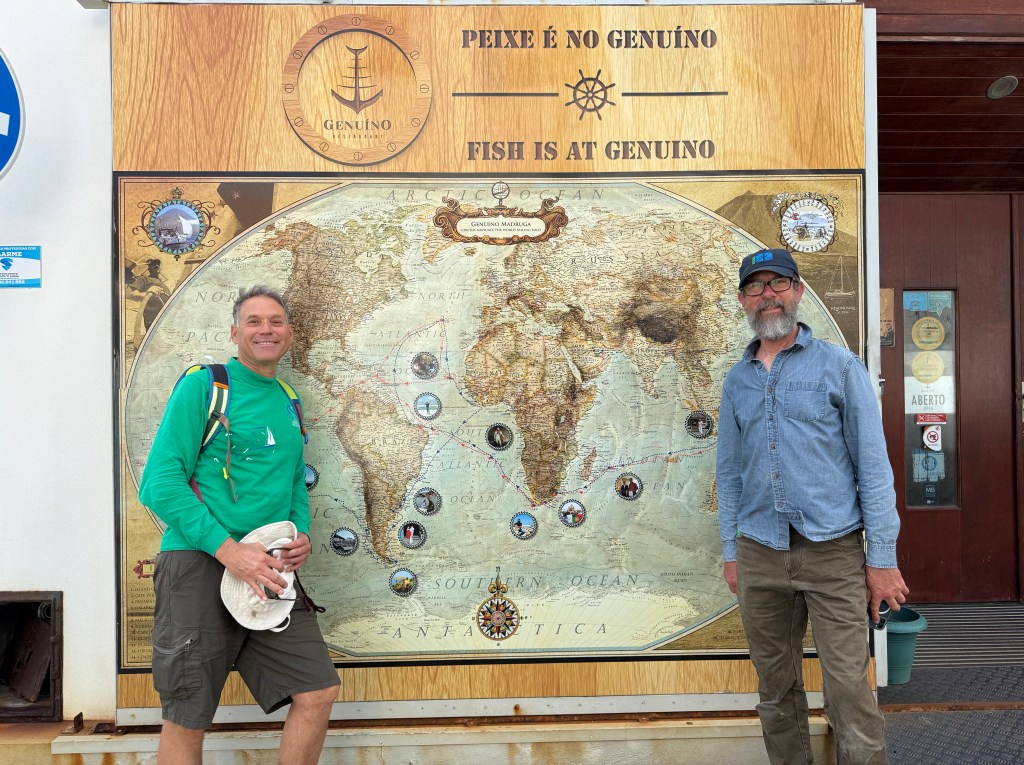
Horta also has a rich history of local’s that performed their own feats of oceanic adventure. Front and center is the fish restaurant “Genuino’s” named after the proprietor who was a former fisherman that decided to sail around the world around 1980 and then open a restaurant to house all of his memorabilia, and accolades. Not a bad way to get all of my souvenirs out of my bedroom, living room and garage! https://azoresgetaways.com/en-us/destination/azores/islands/faial/faial-genuino

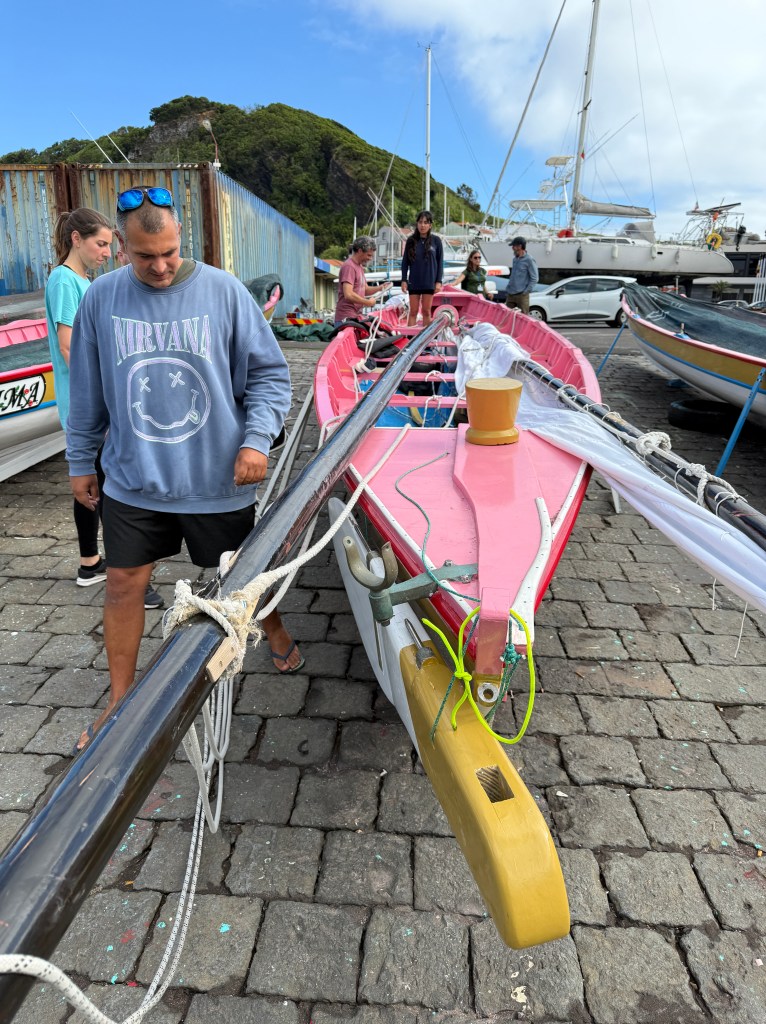
Horta maintains a strong connection to their past whaling days which ended in 1984. While there are many different species of whales in the waters around the Azores, the prized catch was the Sperm Whale which had bountiful amounts of the prized export, whale oil or “spermaceti” which was in demand as industrial lubricant through WWII (and for lighting years before that).
The whaling industry took an ingenious turn when the local’s figured out that traditional whaling boats, designed for long journey’s and high seas, were not necessary. Someone figured out that if they sent a spotter to the top of one of their mountains (I.e., volcano’s), they would signal (fireworks) where the whale was, and they the local’s would dispatch one of the above longboats that would be propelled by oars or wind. Above left: you can see the notch for the leg of the harpoonist so he could remain stable in rough seas. Above right: You can see the wooden bollard that was used to wrap the line that held the whale. Once they captured and killed the whale, small motorized boats would then come out and tow all back to the processing facility.
While no longer used for whaling, the local’s use the traditional whale boat to race, paddle or sail in and around the islands.
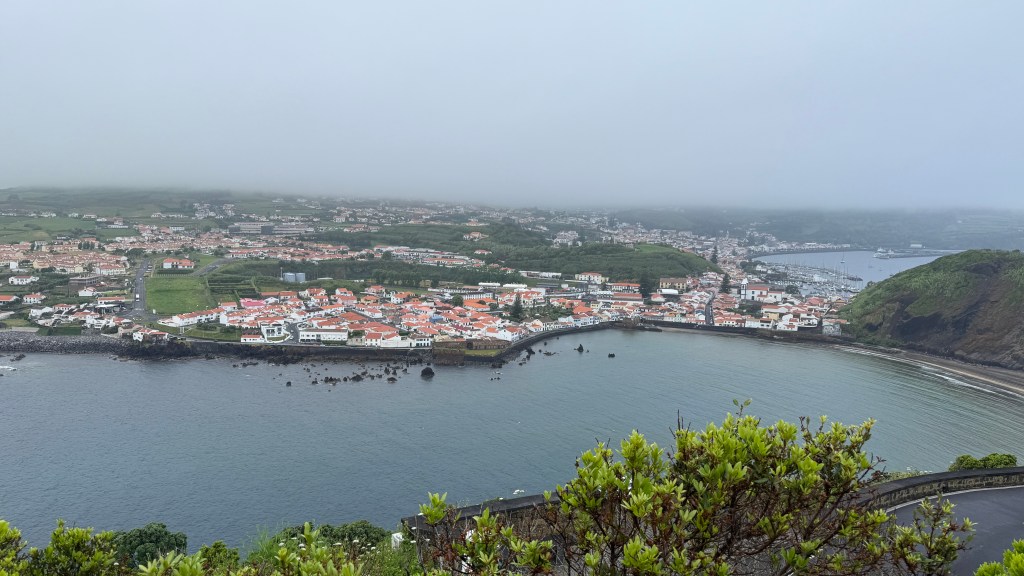
Randall and I took a tour of Faial Island. Here in the foreground, we can see the first harbor Horta used when the island was first colonized. This bay, due to its entrance and small size, proved vulnerable to pirates, so they moved the harbor to the other side where it is today.
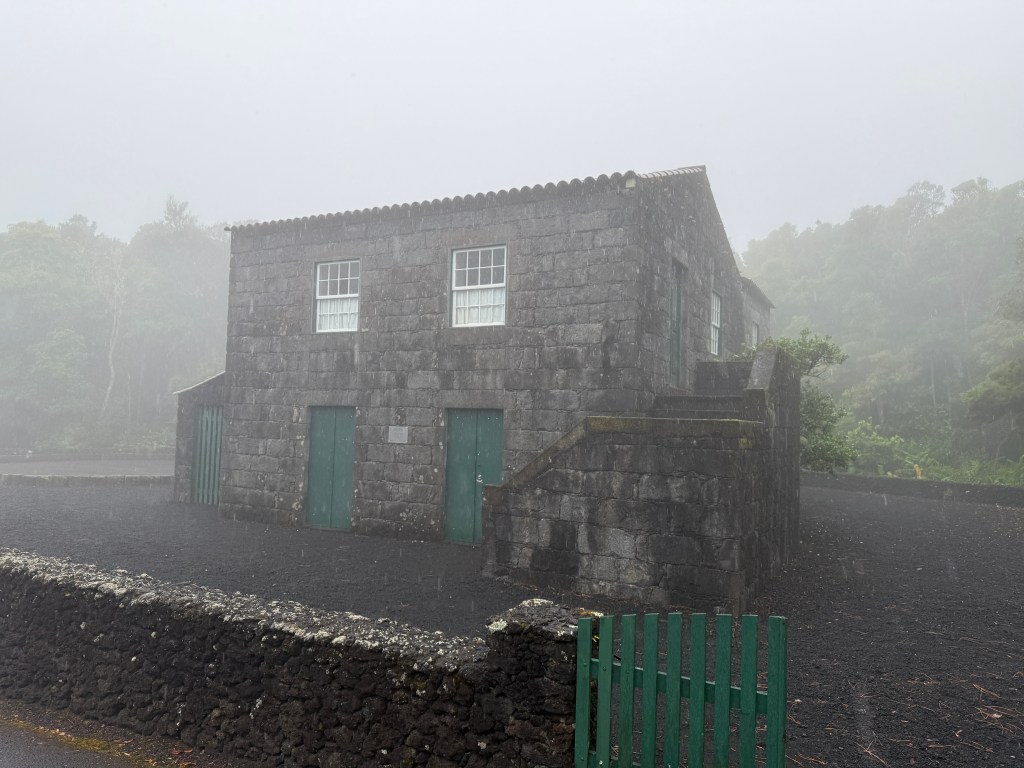
Above is a typical country house build of basalt (volcanic) stone dating back to the early 1900’s. The owners lived upstairs and the livestock lived downstairs. In the back was a cistern, outhouse, basalt pigpen, and cleared area for socializing and processing grains.
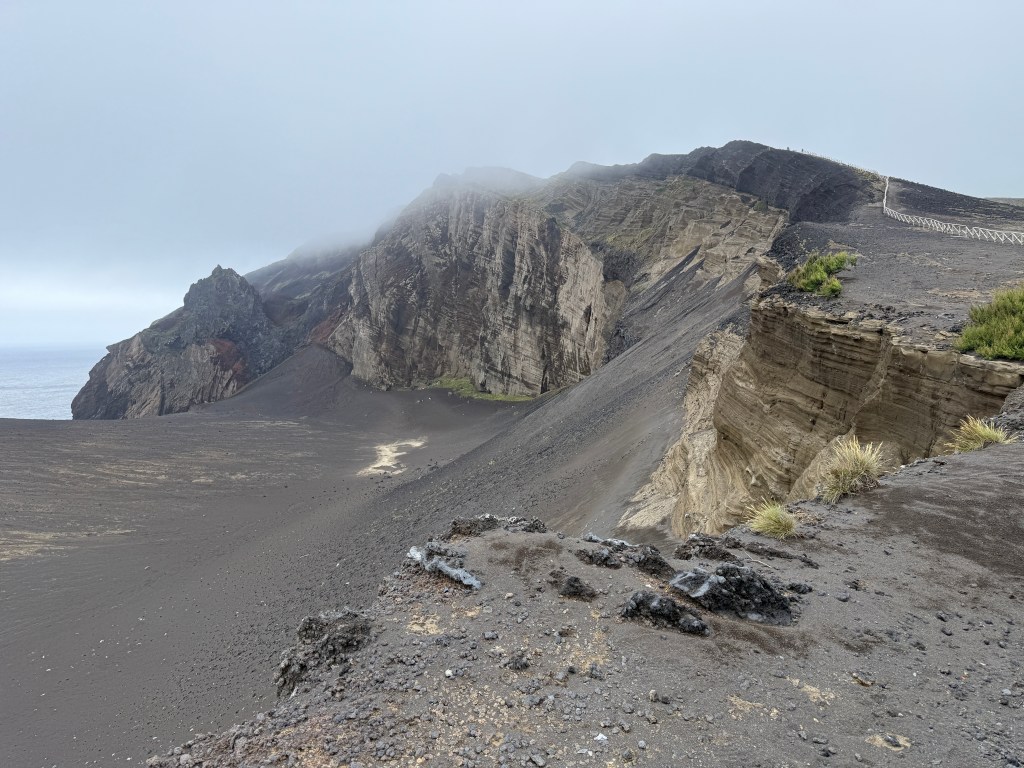
On the side of the island opposite to Horta, lies the volcano that erupted in 1957, known as the Capelinhos Eruption. It wiped out a whaling village and as discussed earlier in this blog, caused a whole generation to flee the island and expanded the island by many acres. On site is one of the best, most complete museums on volcanic activity and history anywhere. We spent a couple of hours learning about volcanoes in general as well as why and how the Azores were formed (they are at the center of three tectonic plates). https://parquesnaturais.azores.gov.pt/en/parques/3/centro/12
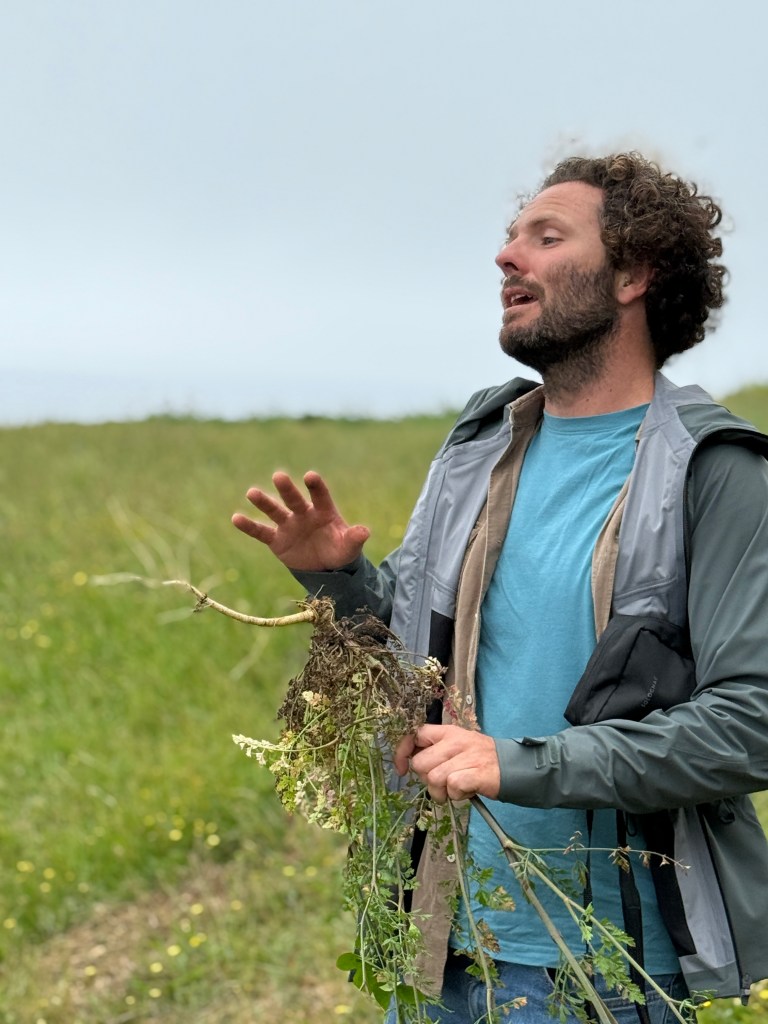
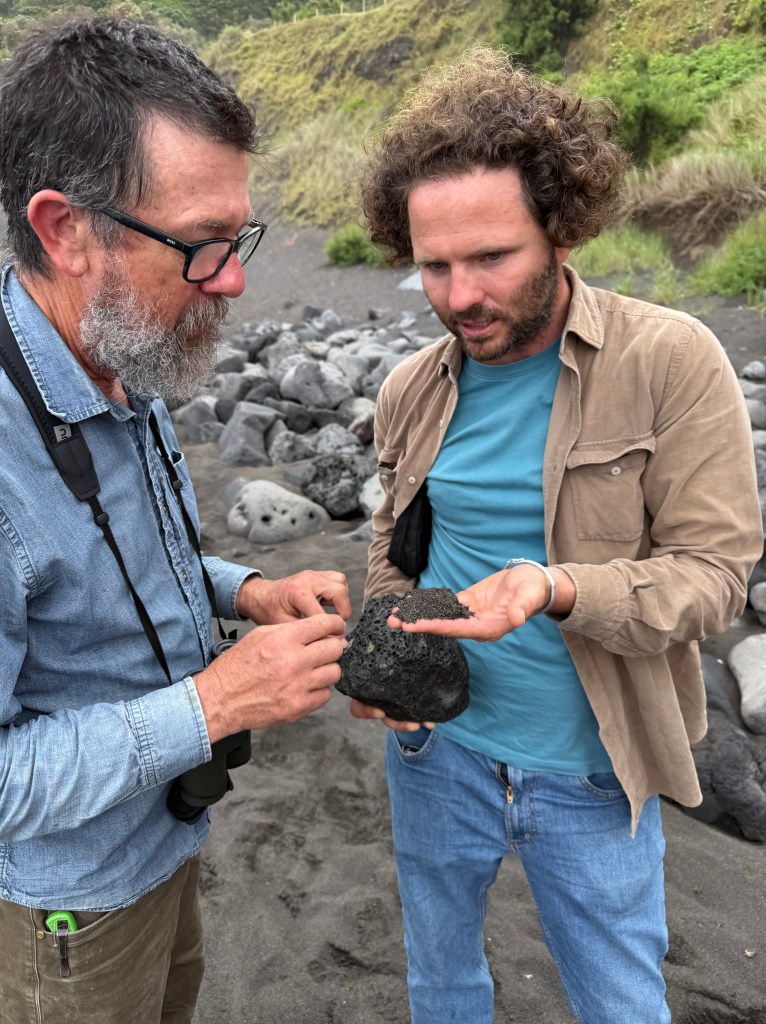
With our guide Fred, we learned about the local edible flora. Above left is a wild carrot. Above right is Randall discussing the volcanic sand.
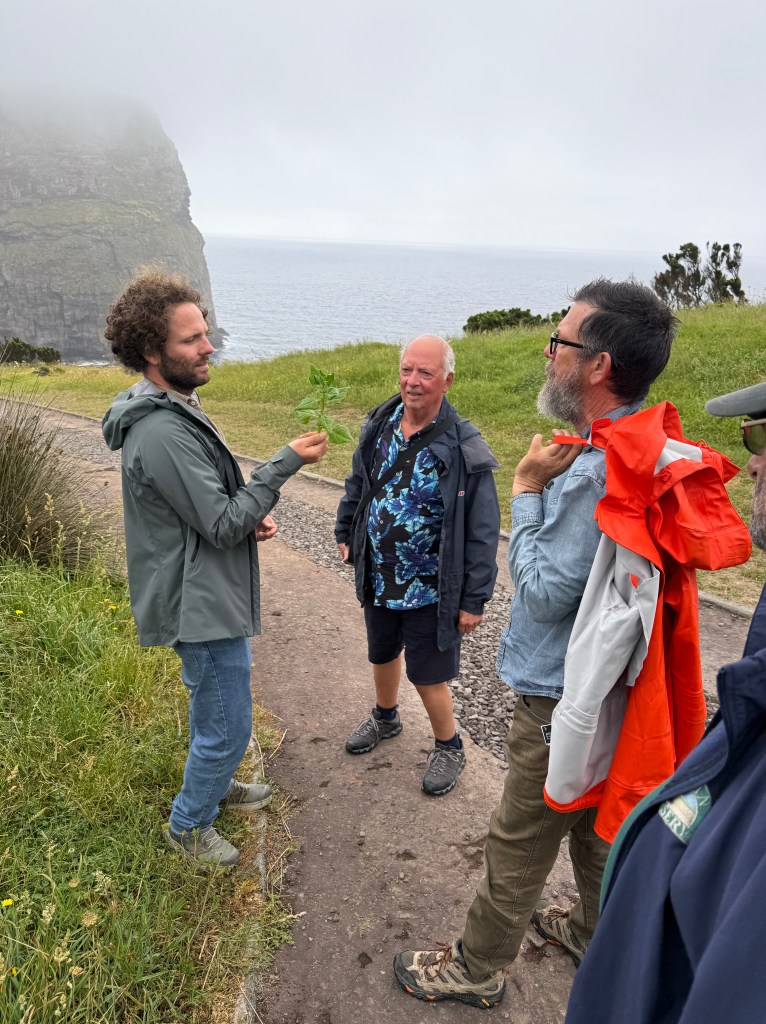
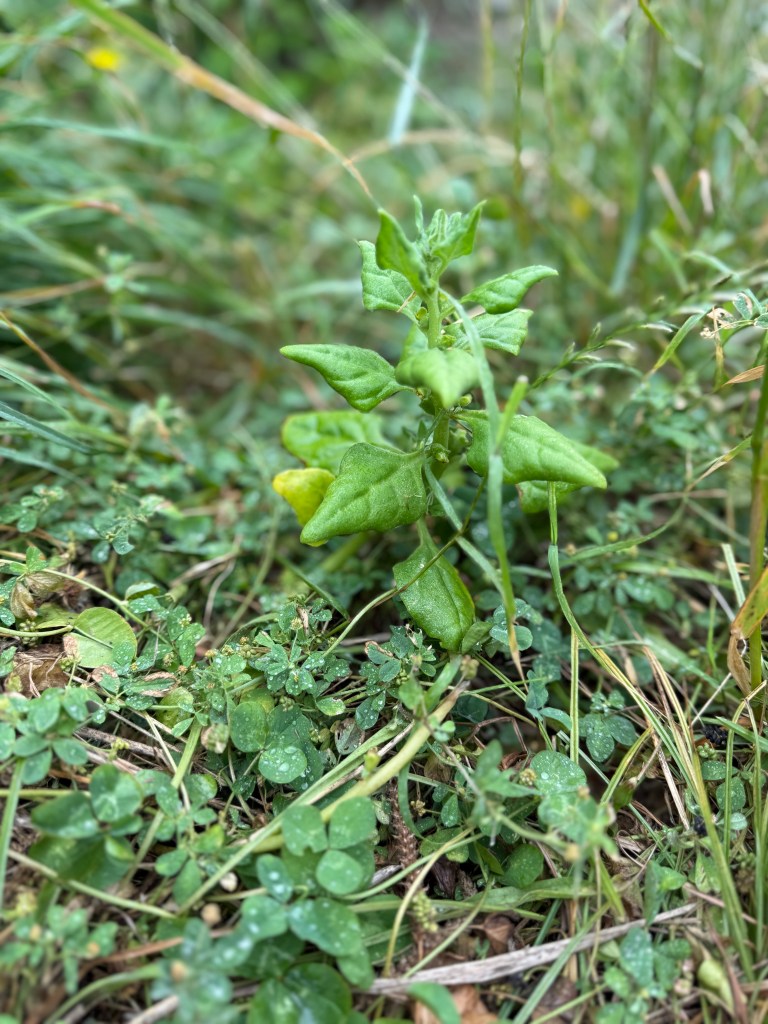
Above is Fred showing us the New Zealand wild spinach. Tastes great!
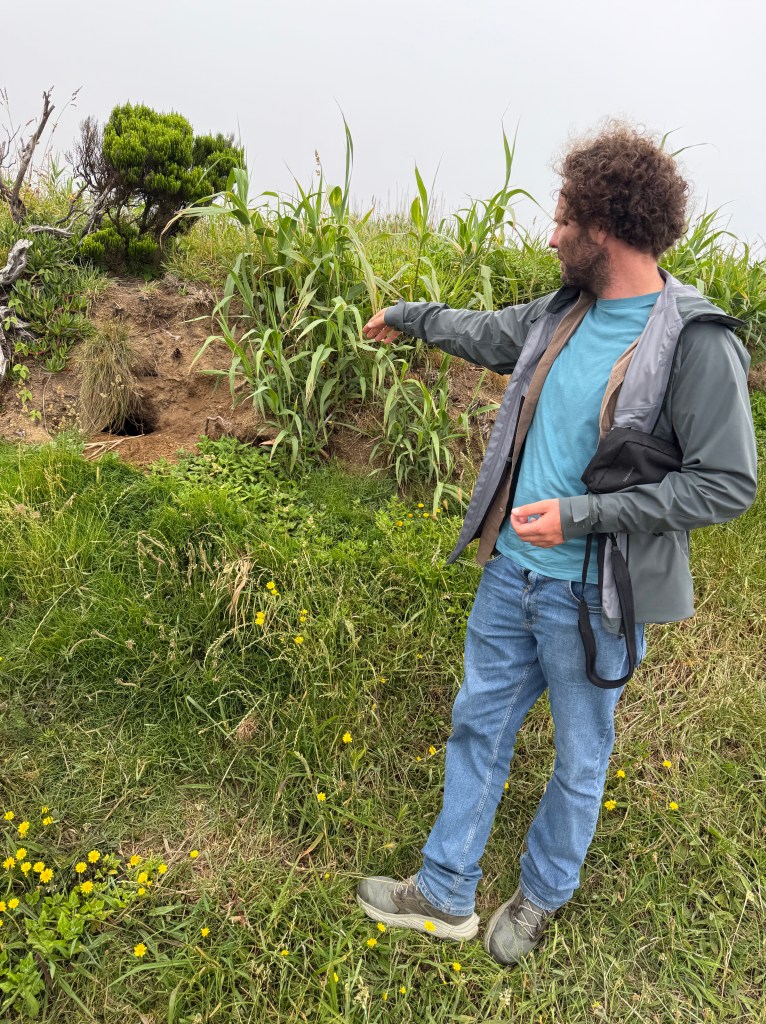
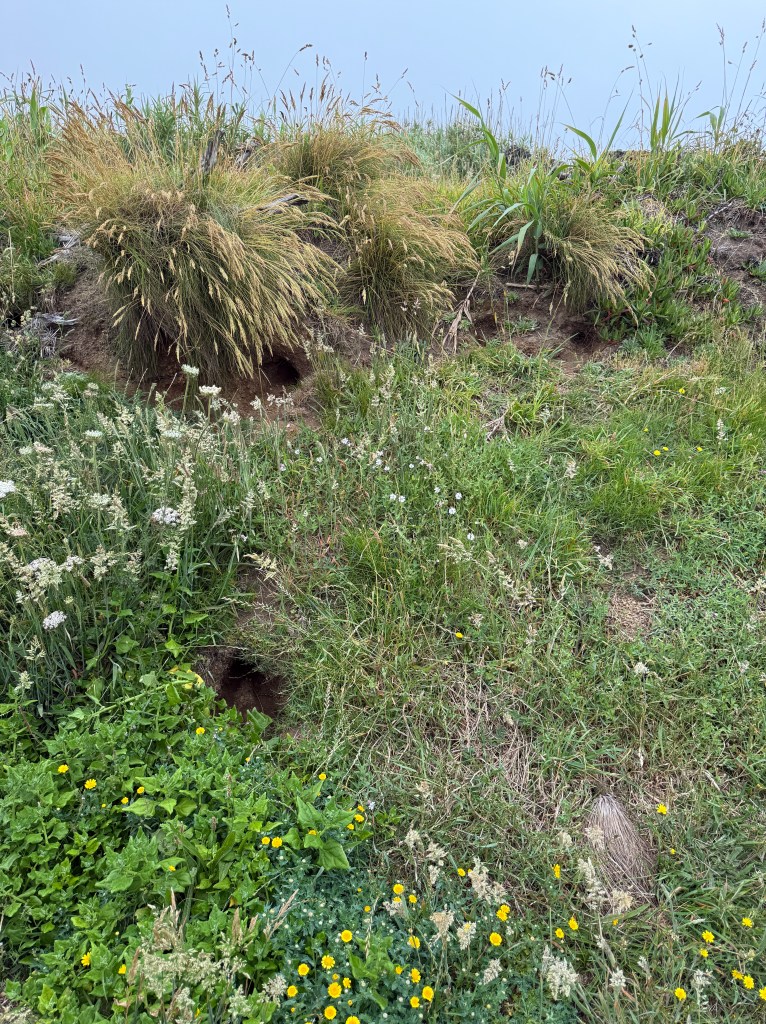
While we arrived too early to see them, the Cory’s Shearwater make their home on this part of the island. They pair for life, and nest on the rocks, or dig holes in the earth.

Winding down our day, Fred pays us a visit on Mōli with faithful companion, Guanche (which are the indigenous inhabitants of the Canary Islands). Randall, of course, so happy to have a four legged friend aboard.
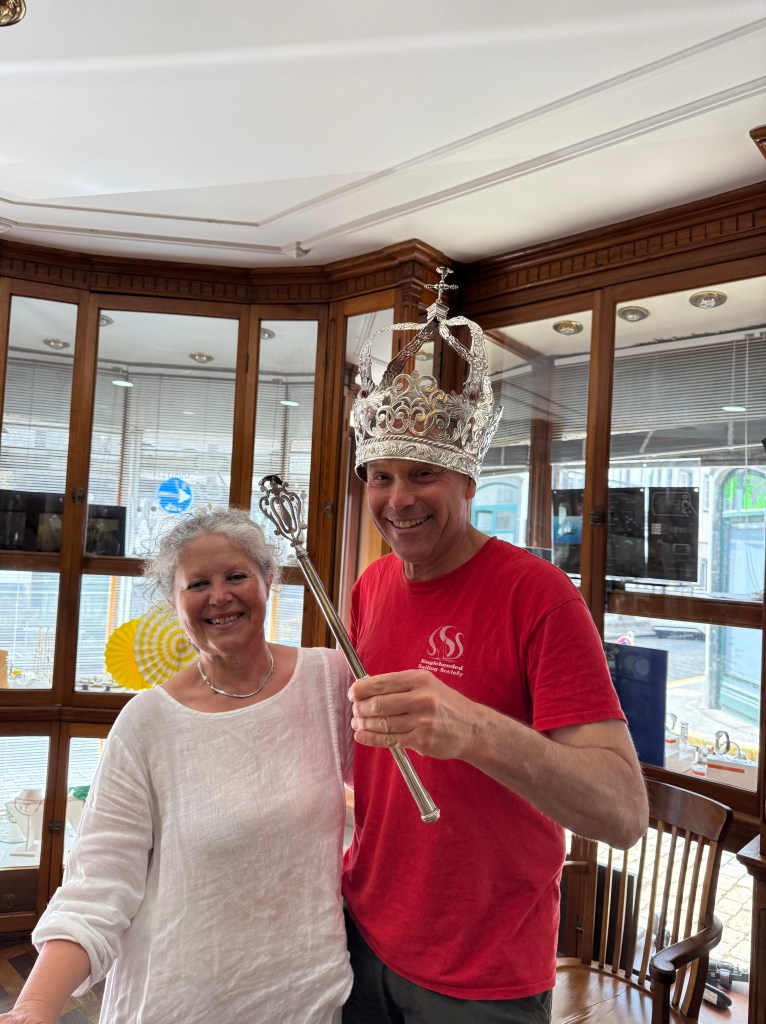
Above Right: The jewelry shop proprietress was happy to have me try on the crown of the Holy Ghost Society. This organization, has a long and proud history in the Azores. Part benevolent, part mysterious, this quasi religious group puts on proud feasts for all citizens of the island on the third Sunday following Easter. They boast that this is the one day that both rich and poor sit next to each other and enjoy a meal (plus a lot of wine). https://www.exploreterceiraisland.com/en/roteiro/under-the-influence-of-the-holy-spirit/
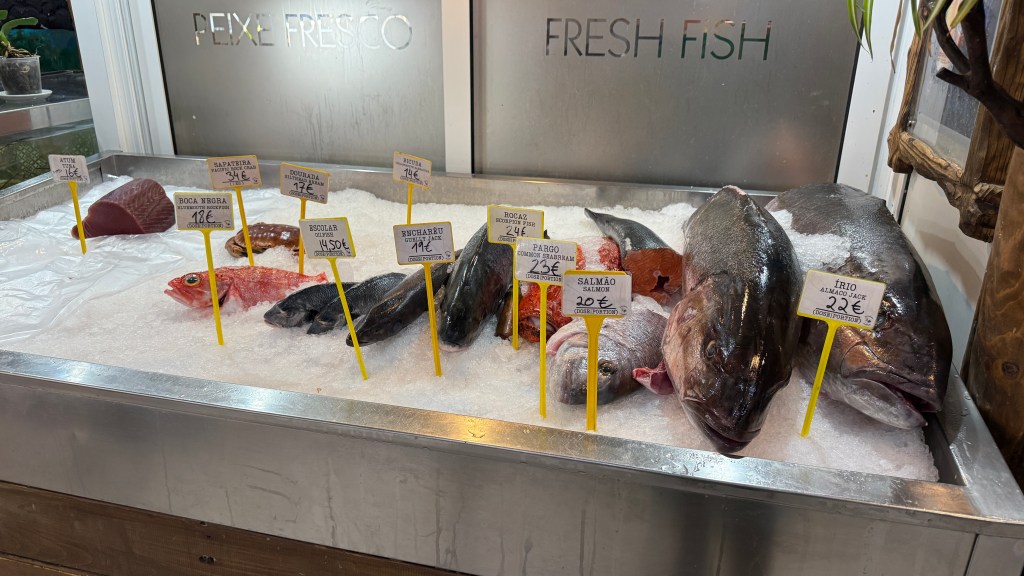
As you might imagine, the availability of fresh seafood is incredible. The above selection is from our favorite restaurant “Atletico”. It took me 20 minutes to decide on what’s fish was “right” for me. The kind waitress explained to me that the Almo Jack (towards the right) was firm and flavorful, very “masculine”, while the Pargo (in the middle) was lighter and more “feminine”. She strongly suggested that I choose the “masculine” fish. Being the metrosexual that I am, however, I profusely apologized and chose the Pargo, at which point she gave me a terse smile and went to the kitchen to report her disappointment.

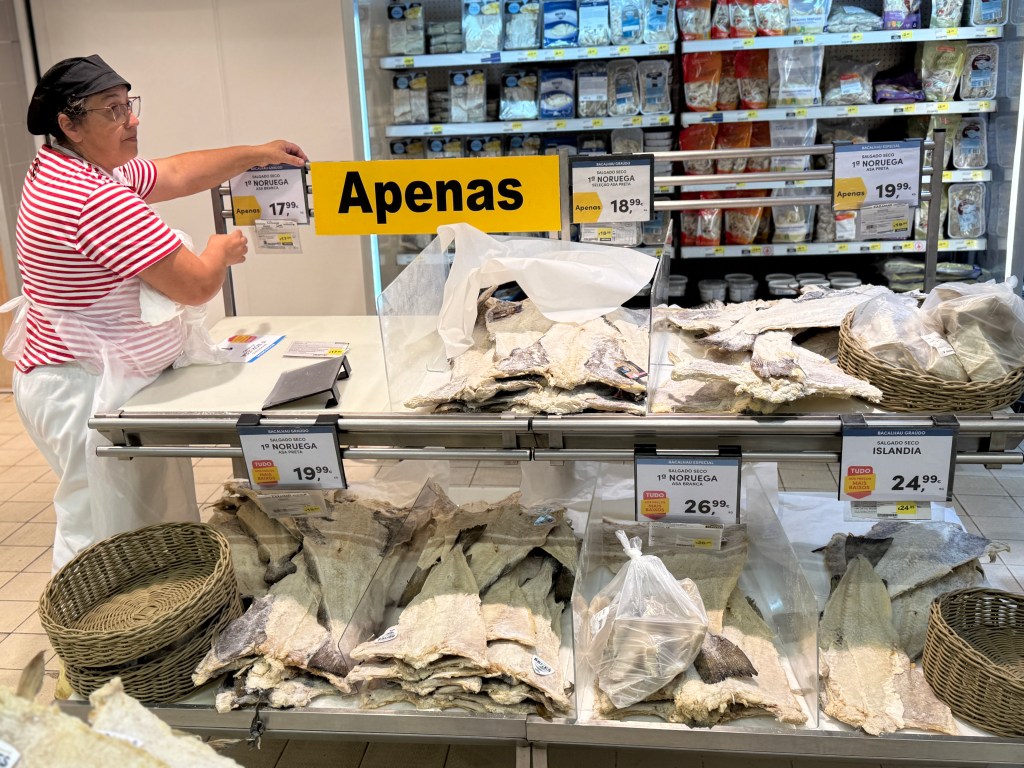
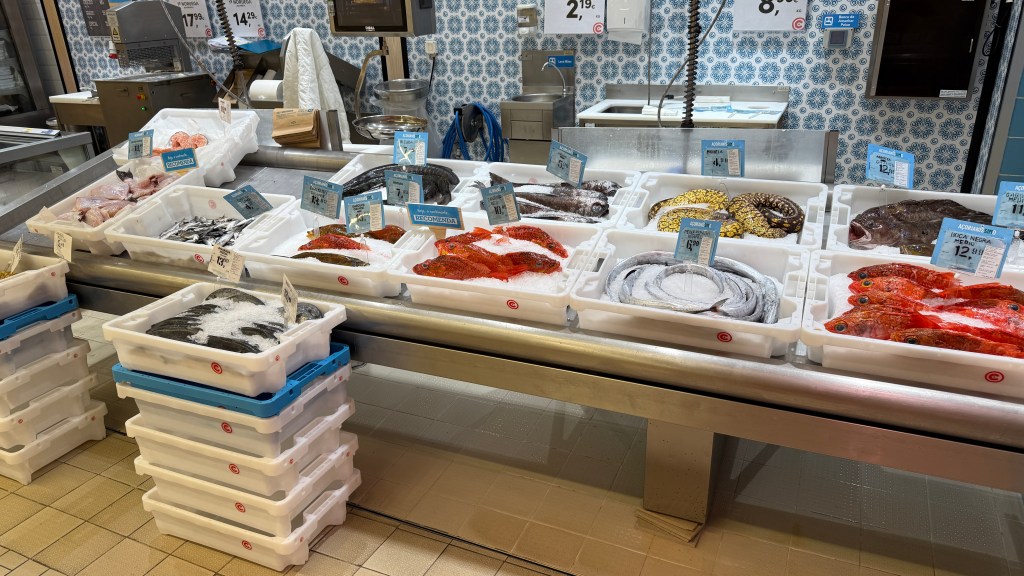
The above three photographs show the incredible availability of fresh, frozen AND dried fish available at the one and only supermarket the island.

Well, I have gone on too long and we have now set sail from Horta on our way to Madeira. Here are some clouds as we make our way.
Happy Birthday to my father on June 28 who would have been 101 today!


 Harmon and Randall's Voyage...
Leave a reply to Harmon Shragge Cancel reply