Leg 3, Blog 13, July 9, 2025

Following the small European village feel of Horta, Madeira, and its main city Funchal, seemed almost cosmopolitan and quite touristy to boot (lots of British, German and Swedish). Madeira means “wood” in Portuguese, and the island used to be covered with trees many years ago until they cut them all down for fuel and to clear the land for sugarcane production (rum over trees any day in my opinion). The island was discovered buy the Portuguese in the early 1400’s. https://visitmadeira.com/en/what-to-do/culture-passionates/history/ and they claim that there were no indigenous people on the island at that time. I almost believed them until our guide told me that at some point in the past they “relocated” the local seals to another nearby island where they claimed the seals would lead “happier lives”.
Christopher Columbus, when he had a day job, made it to Madeira in 1478 (pre-Americas) to buy sugar for a Genoese firm. He made himself available to the local women and ended up marrying the daughter of the governor of Porto Santo (the island they sent all of the “happy” seals to). Recognizing the devout Catholic population of the island, Pope John Paul II made a visit to Madeira in 1991. Unlike Columbus, I am guessing the Pope flew in rather than crossed the ocean from Vatican City.
When Randall and I pulled into Maderia, we did not quite get the warm welcome that Columbus or the Pope received. After six days at sea, we pulled into the main harbor Marina do Funchal. A harbor-master type unceremoniously gave us the stink-eye and asked us in his best Portuguese what exactly we thought we were doing pulling into the (admittedly small) marina. “We made a reservation” Randall answered. To which the man answered in his best English that they are full for the summer and they do not have our reservation. “We made it on your website” offered Randall. To which the man answered that the website does not work, has never worked so we best go out, as in right now, and anchor in the bay or try the other marina 17 miles up the coast. Alrightythen. As my daughter and her boyfriend were waiting for us on shore and watched our aborted entry in some dismay and confusion, we anchored in the bay, pulled out the dingy and inflated it and made landfall.
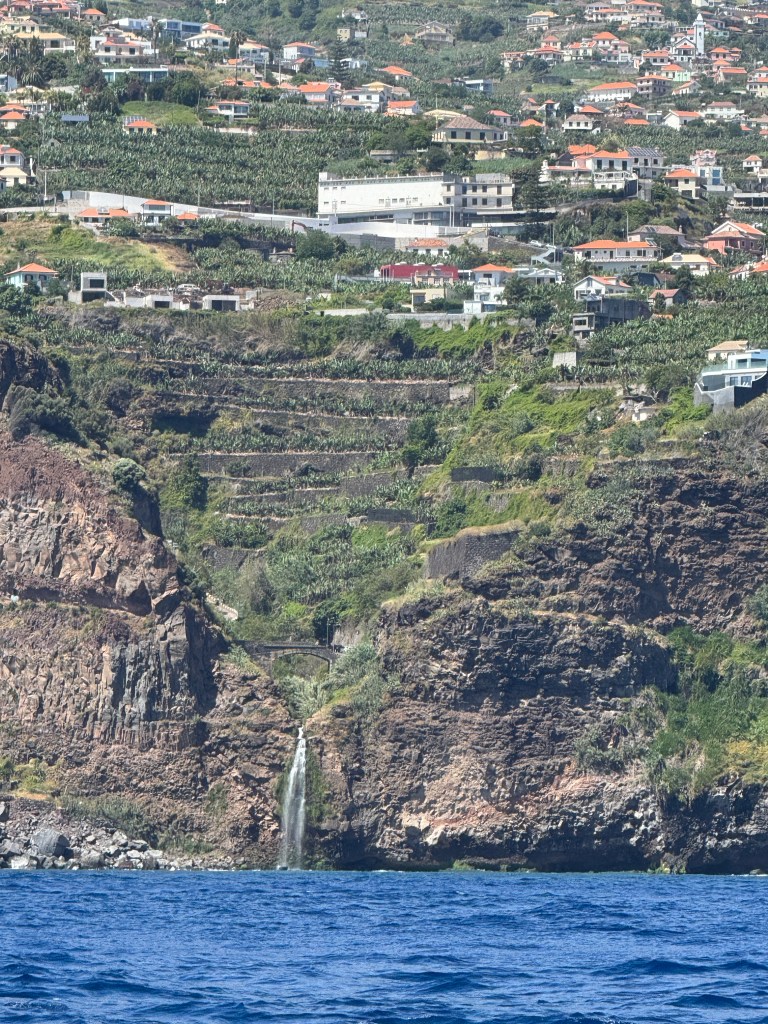
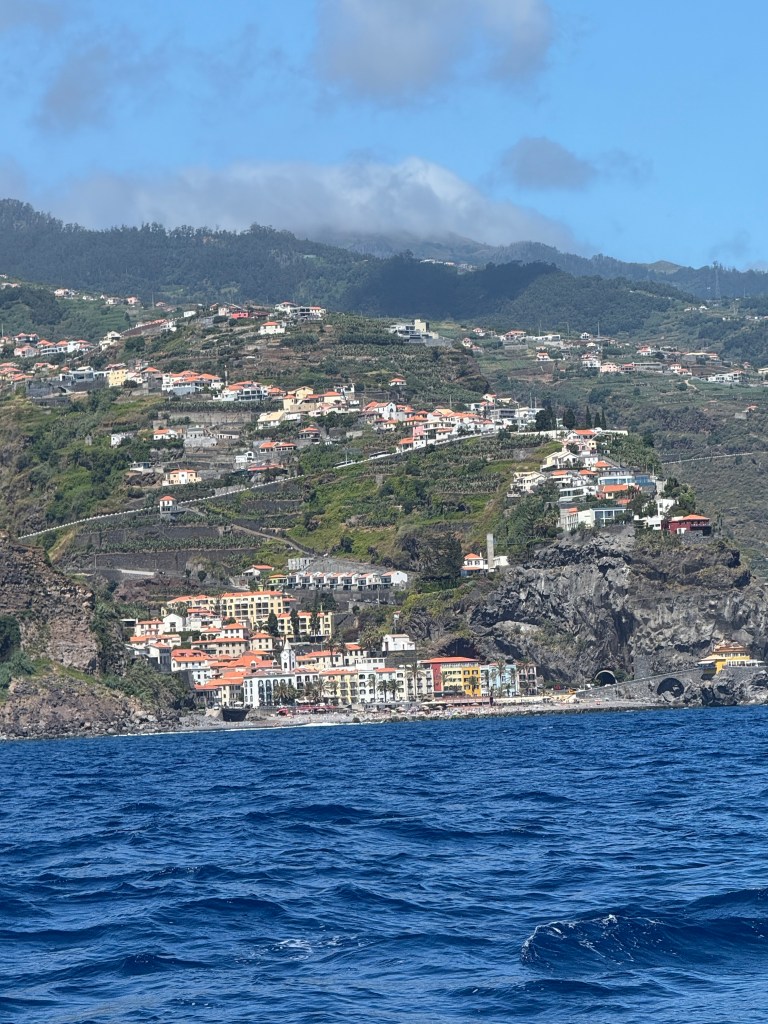
If you thought San Francisco was hilly, we ain’t nothing compared to Funchal (population 105,000). While San Francisco boasts lots of hills, Funchal and Madeira are built on hills and cliffs. Not really a whole lot of flat ground on the island.
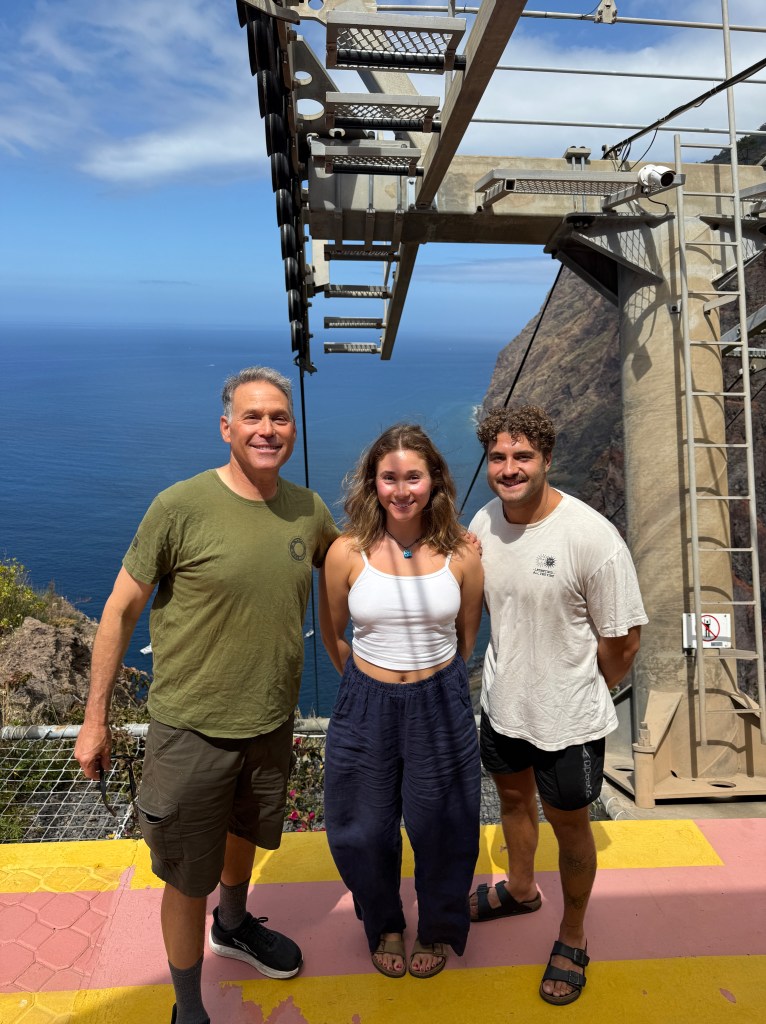
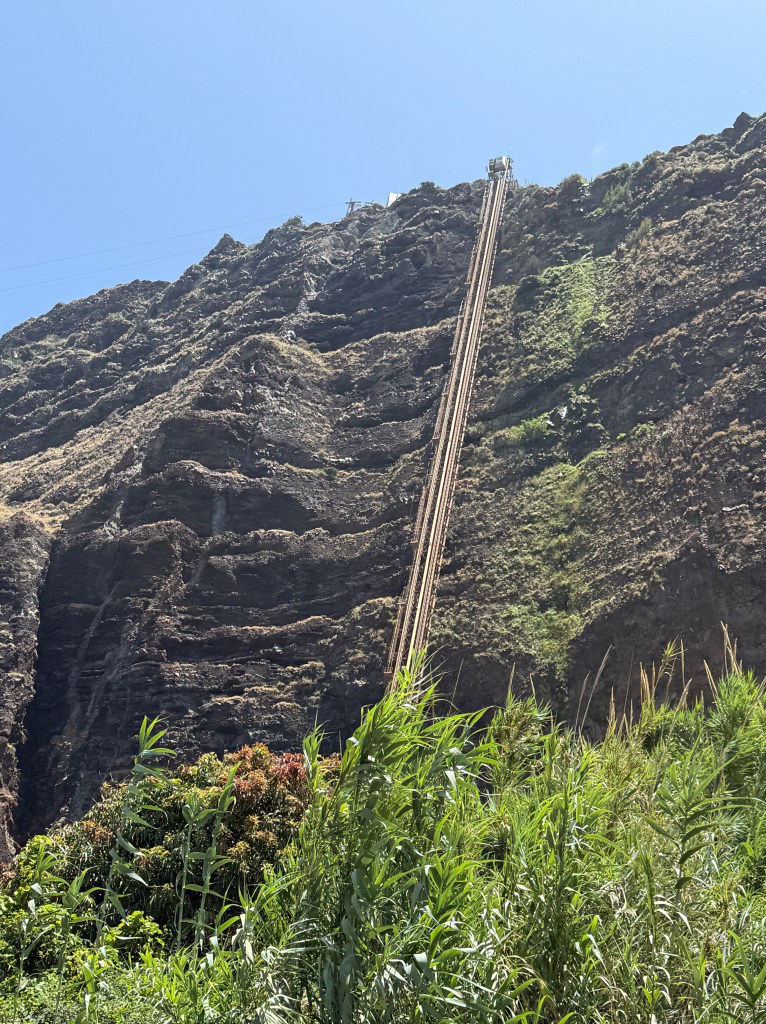
While we have cable cars in San Francisco, Madierins have a series of gondolas that not only move you around the city, but go down to beaches and tiny communities that are not reachable by automobile. If you thought San Francisco cable cars had steep tracks, again, Madeira wins hands down. Above Left: Daughter Ingrid and boyfriend Mark stand at the gondola. Above Right: An older funicular or cogwheel railway that is no longer operable since they installed the newer gondola.

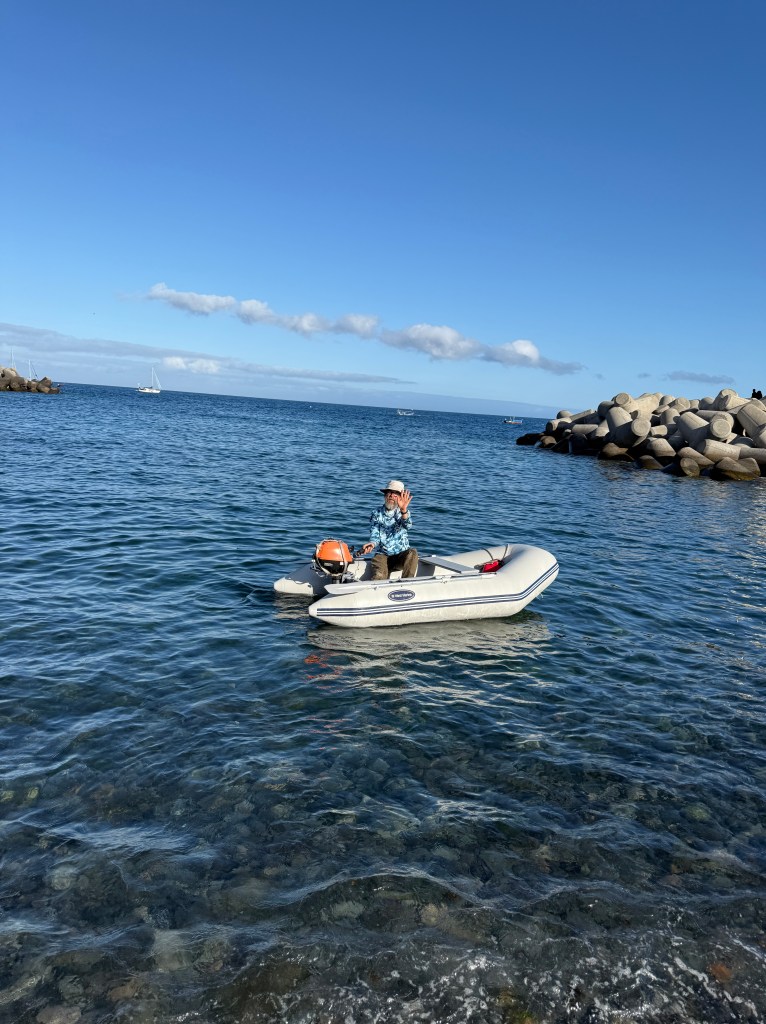
The Madeiran’s love their coast line. They also love to swim in the ocean (72 degrees F). Above Left: As there is almost no beach around, they make do with rocks and swim platforms. Above Right: Randall dropping me off at the island in the rockiest beach I have ever seen.
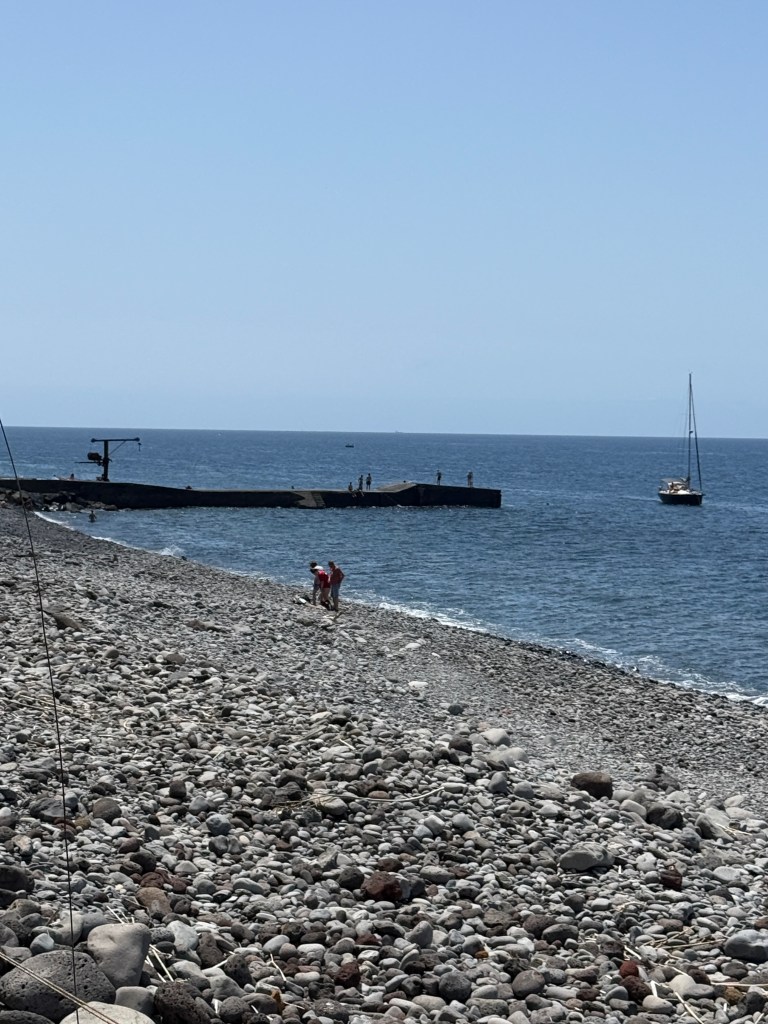
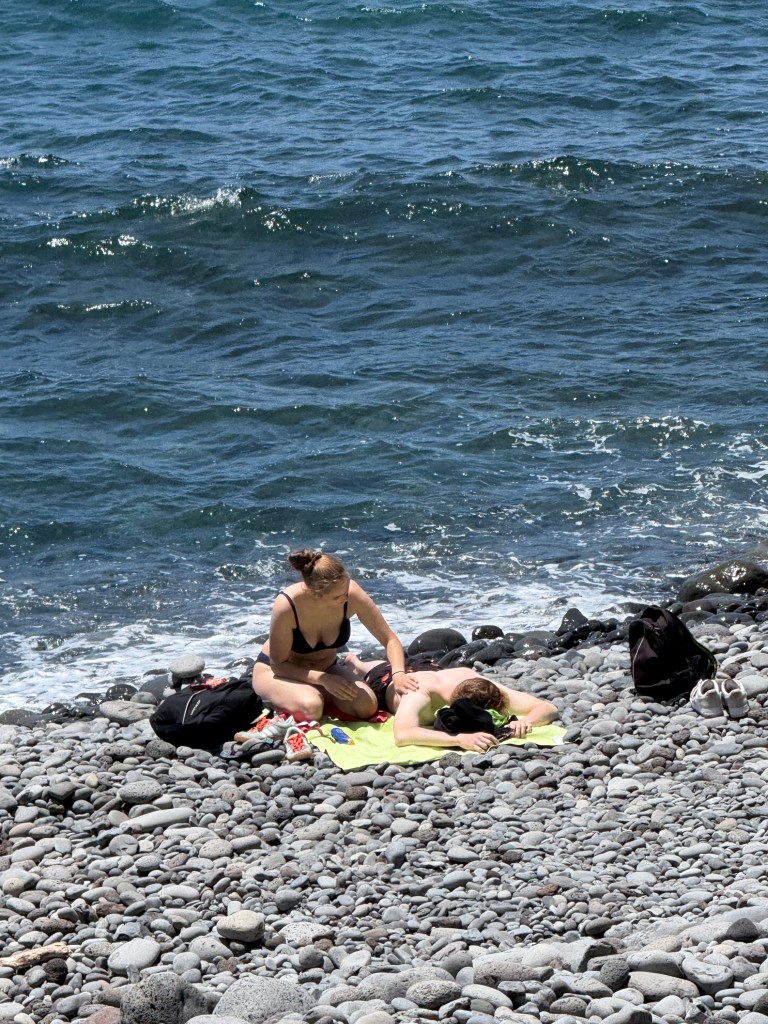
I do not mean to dwell on this, but there is just no sand in sight. The benefit is that you do not get sand into the potato salad, but relaxing on the rocks is a different experience as I am sure you can see.
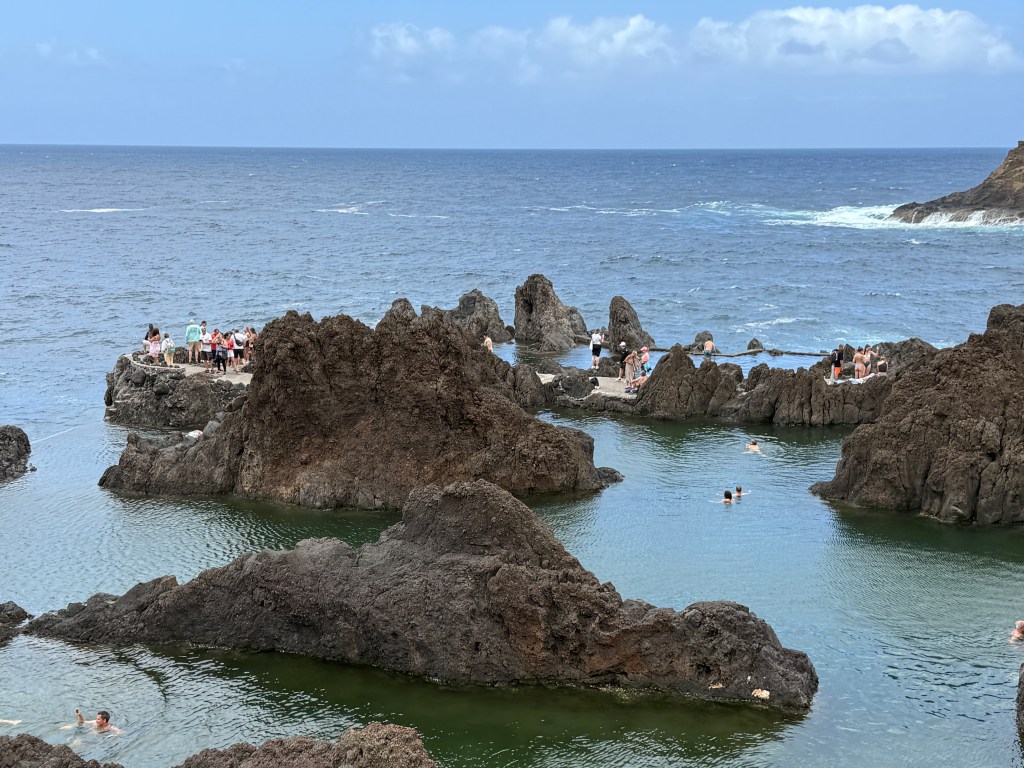
There are some benefits of a rocky coastline sans sand. Madeira has three sets of seawater “pools” that are adjacent to the ocean, but provide protection, beauty and a central spot that islanders can gather and swim. Above is Porta Moniz Natural Pools. Even on a relatively cool day, people are socializing and swimming.
Madeira is famous for its Bolo do Caco bread. It is round and plain and made of whole wheat flour with some sweat potato. It is baked soft (not crusty), then split in half. It is considered a staple and served (or available) at any lunch or dinner with a generous amount of garlic butter with parsley brushed on both sides of the split bread. Above is one of many shops that make and serve the bread all day long (how can you not love an island that serves garlic bread 24/7?) https://blog.madeira.best/madeira-bolo-do-caco-origin-and-recipe

Above: A store in downtown Funchal that sells ONLY tinned fish. Yes, it is now confirmed. I am falling in love with this island.
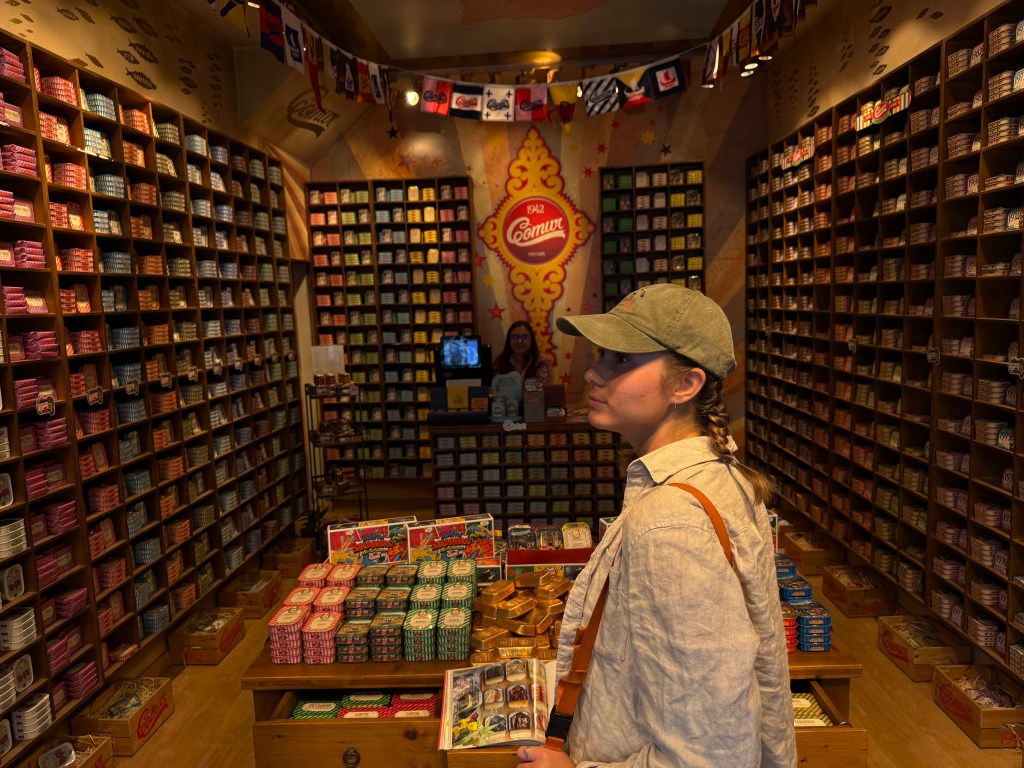
Above: My daughter Ingrid was a little overwhelmed deciding on what type of mackerel, sardine, octopus and tuna she should buy. Clearly my wife and I did not prepare her for this moment. Is it going to be oil or water, smoked, salted, tomato, mustard, or garlic? To be sure, she took one of everything. They will send the fish to your door, so do not hold back!! https://portuguesesardine.com/en?srsltid=AfmBOopER0_j1IDz-29QzGfl9–JWE7-R46o6P8mXWFIZIeXD7dW1y1N
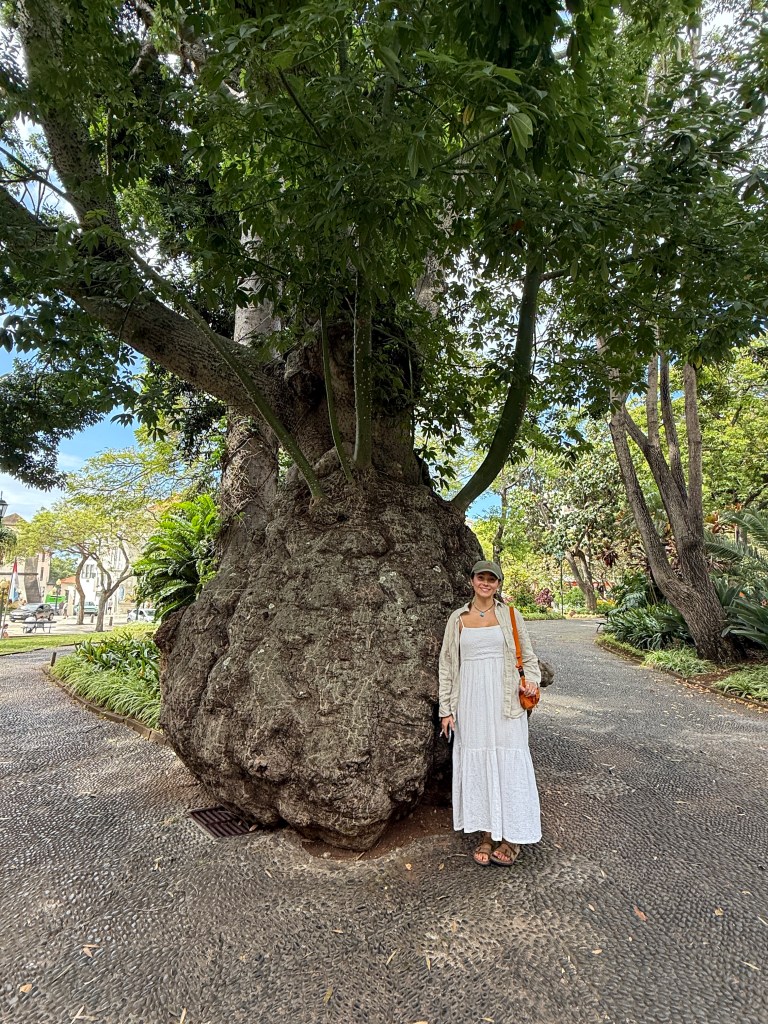
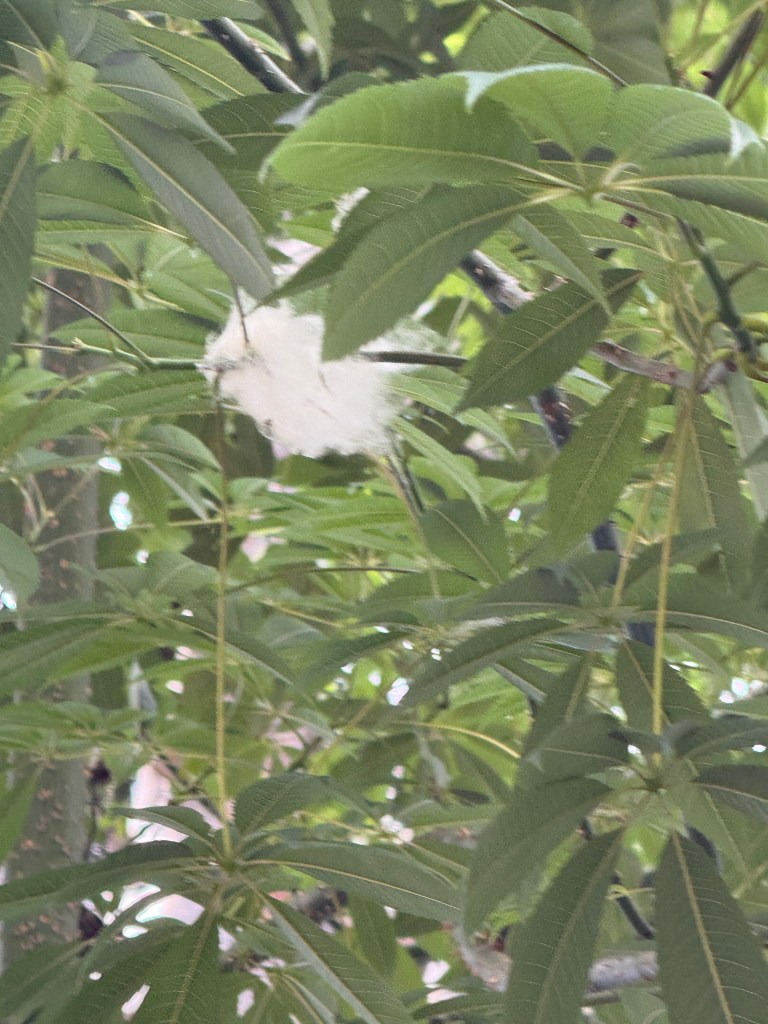
While Madeira deforested herself long ago, they still have some unique and beautiful trees. Above: Ingrid stands infront of the “cotton tree of Madeira” otherwise known as the Silk Floss Tree. These trees are known for their large, thorny trunks, and the fluffy, cotton-like fibers produced in their seed pods.
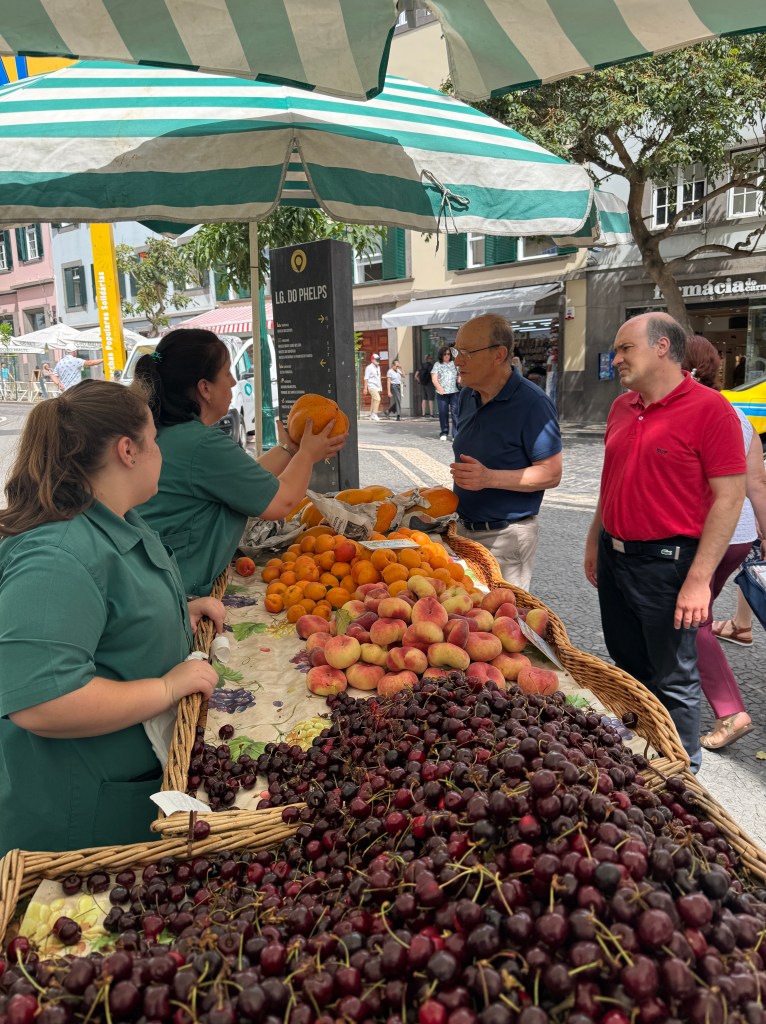

A lovely feature of Funchal is the plethora of fruit stands. The fruit is fresh, the prices reasonable and all of the locals are buying everything in site. This particular stand featured three types of cherries, peaches and enormous papayas. Not all of the fruit is local, but no-one seems to mind.
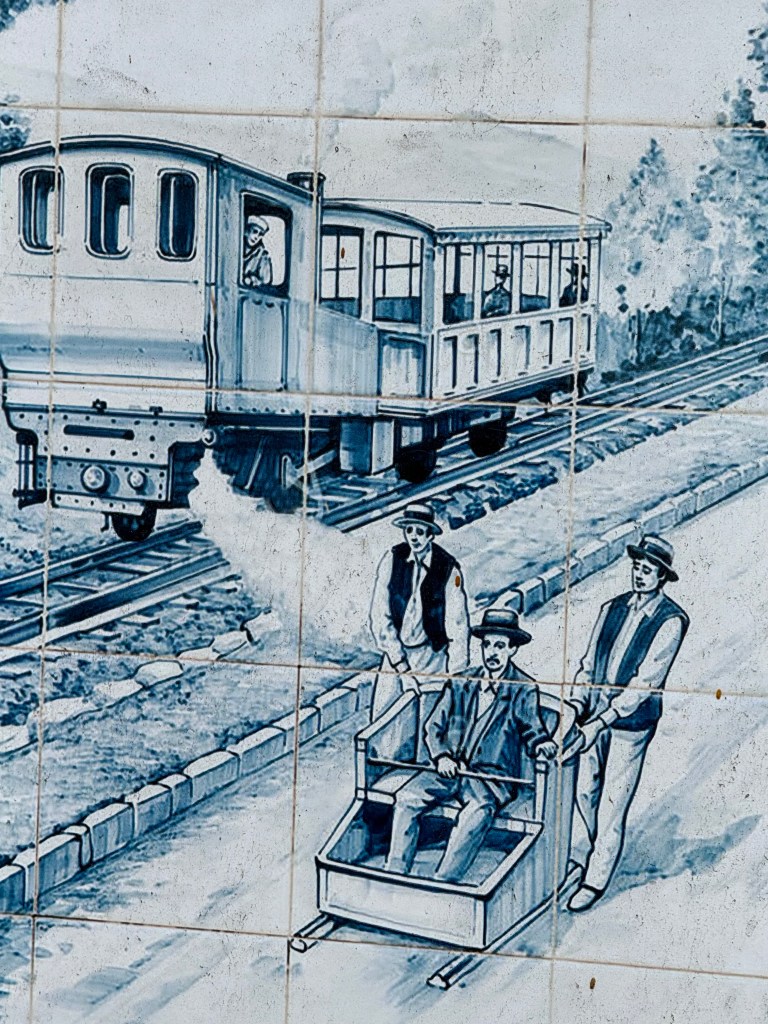
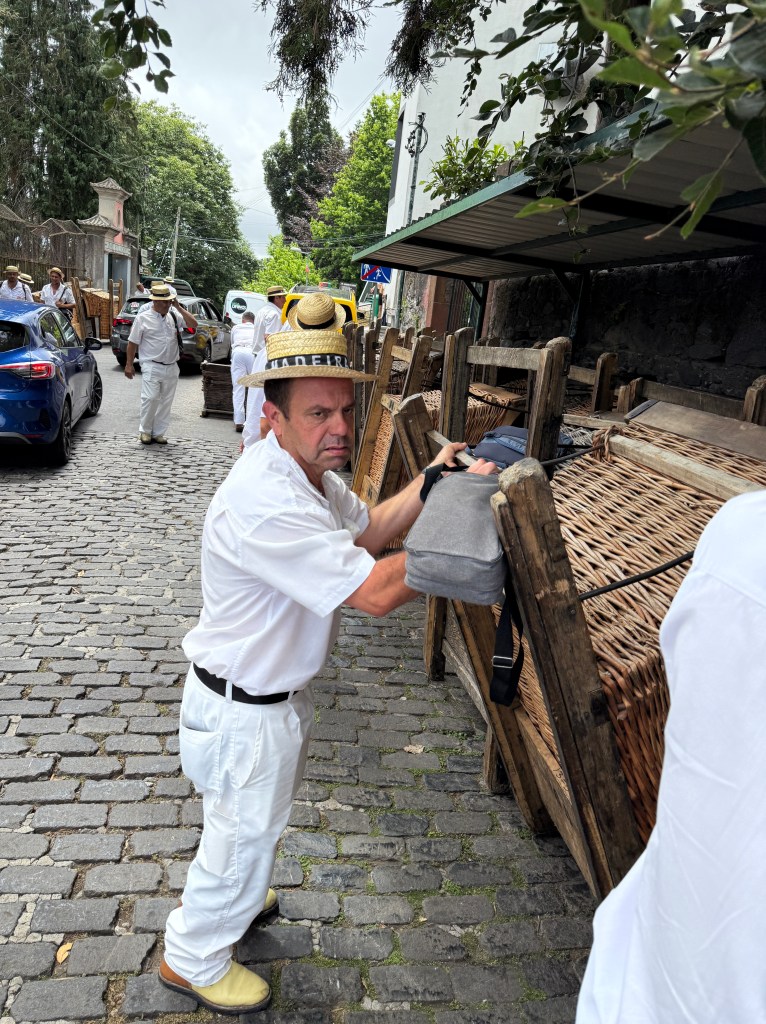
The Monte Toboggans or Sledges are a working tradition in Madeira since the mid 1800’s. Originally used to ferry people and freight (mostly agricultural) from the upper hills of the island to the lowlands of Funchal, they are made of wicker and mounted on two wooden runners, and each one is operated and controlled by two very mature and experienced Carreiros. This tradition has now passed from industrial and agricultural necessity to what is now a popular tourist attraction.
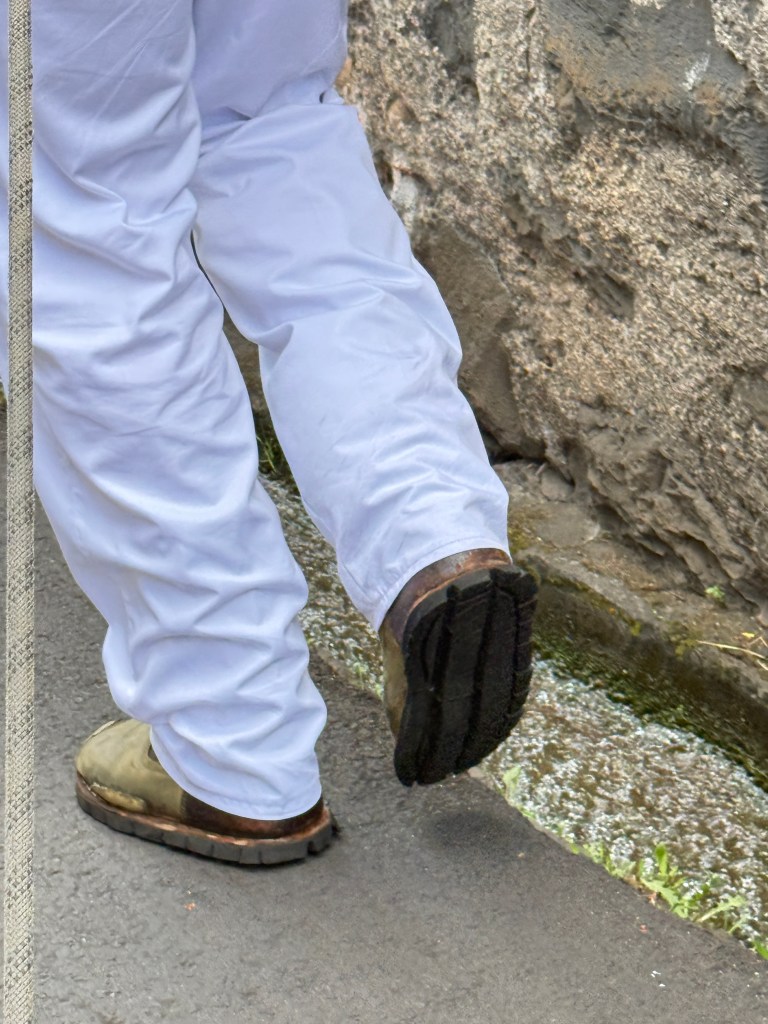
The Toboggans are powered by two sledge drivers called “Carreiros”, dressed in white and wearing the typical hats known as “Straw boaters”, also they use rubber soled boots, so that they are able to stop the sledge when necessary by making use of their boots as brakes.
Here is a quick video of the Carreiros getting ready to lock and load. Their serious demeanor remind me of some combination of a San Francisco cablecar conductor and a Spanish matador .
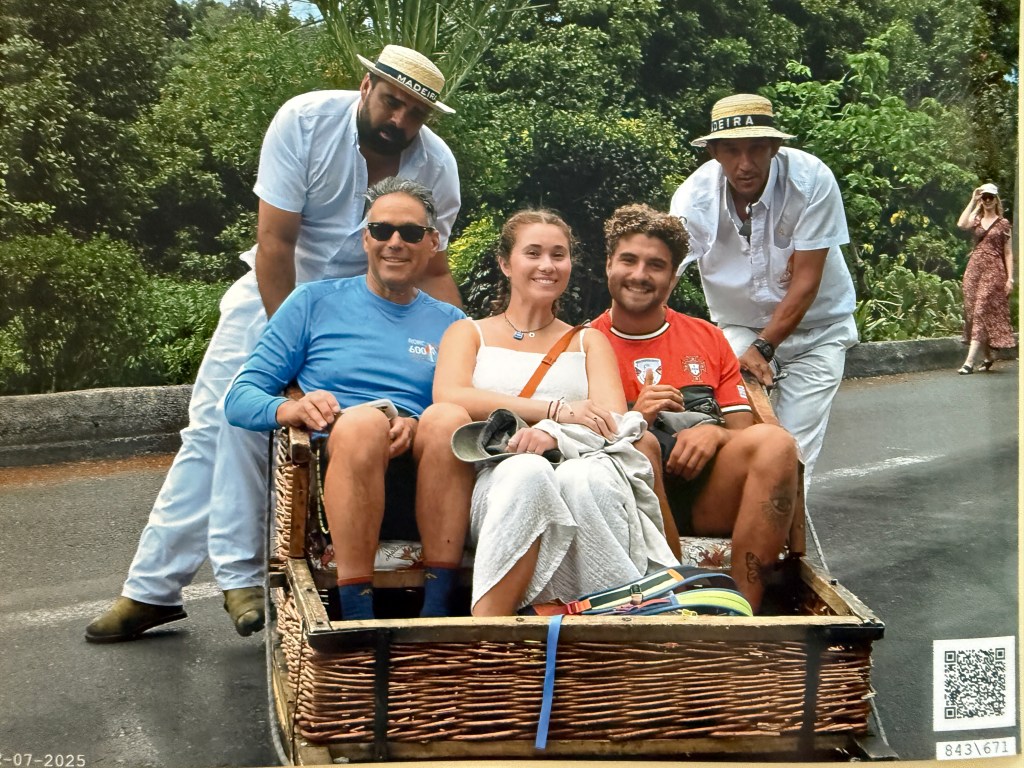
Here we are enjoying our ride which lasted about four minutes. Time enough so someone could take our picture, have it developed, pick us out from a plethora of finishing riders and sold to us at the end of our ride all for 10 Euros. I would normally call that American ingenuity, but in Madeira, I give them all the credit.
Hey slow down guys, we are not a load of bananas!
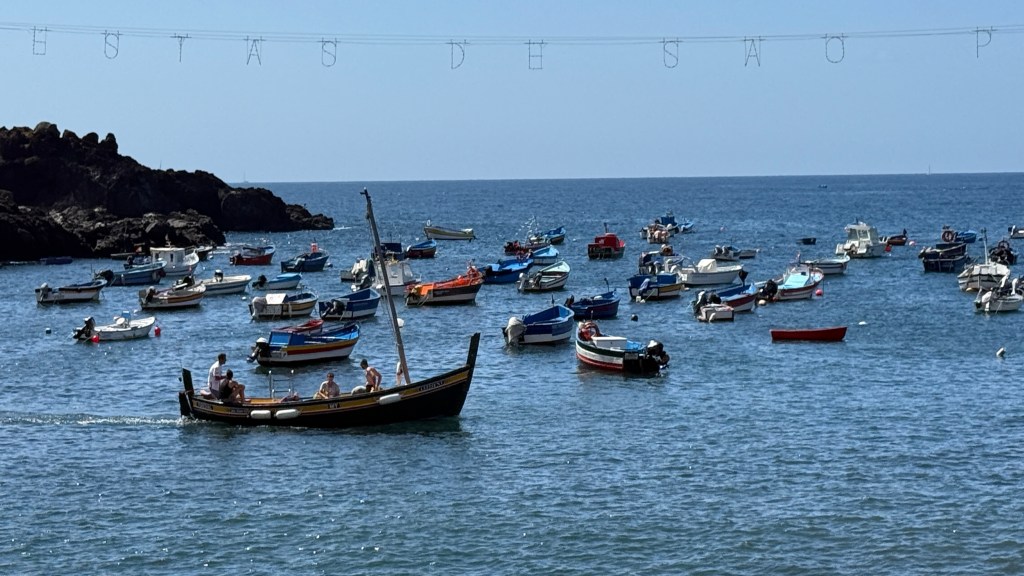
We took a tour of the west side of the island and stopped in the idyllic fishing village of Câmara de Lobos (wolves). There are still plenty of old fashioned fisherman, but one or two tourists as well.
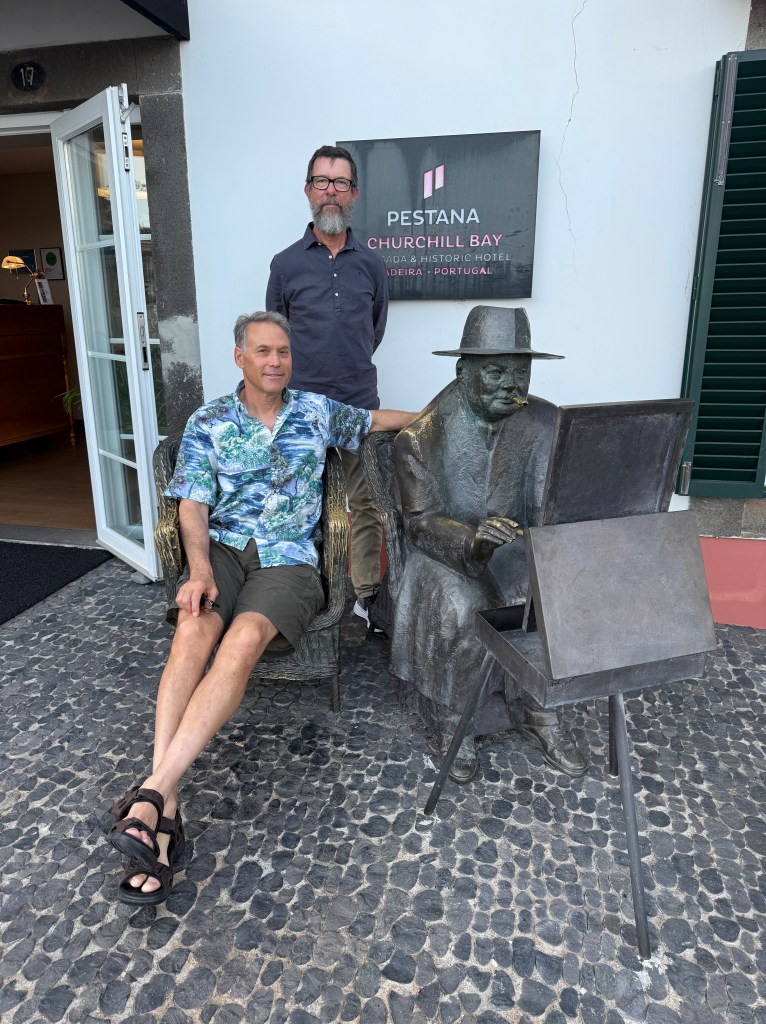
In 1950, Winston Churchill, along with his wife Clementine Hozier, visited this town to promote the reopening of Reid’s Palace Hotel (now Pistana Churchill Bay). Post WWII, Churchill made his “living” writing and painting (and making public appearances.) BTW, Portugal was “neutral” during WWII.
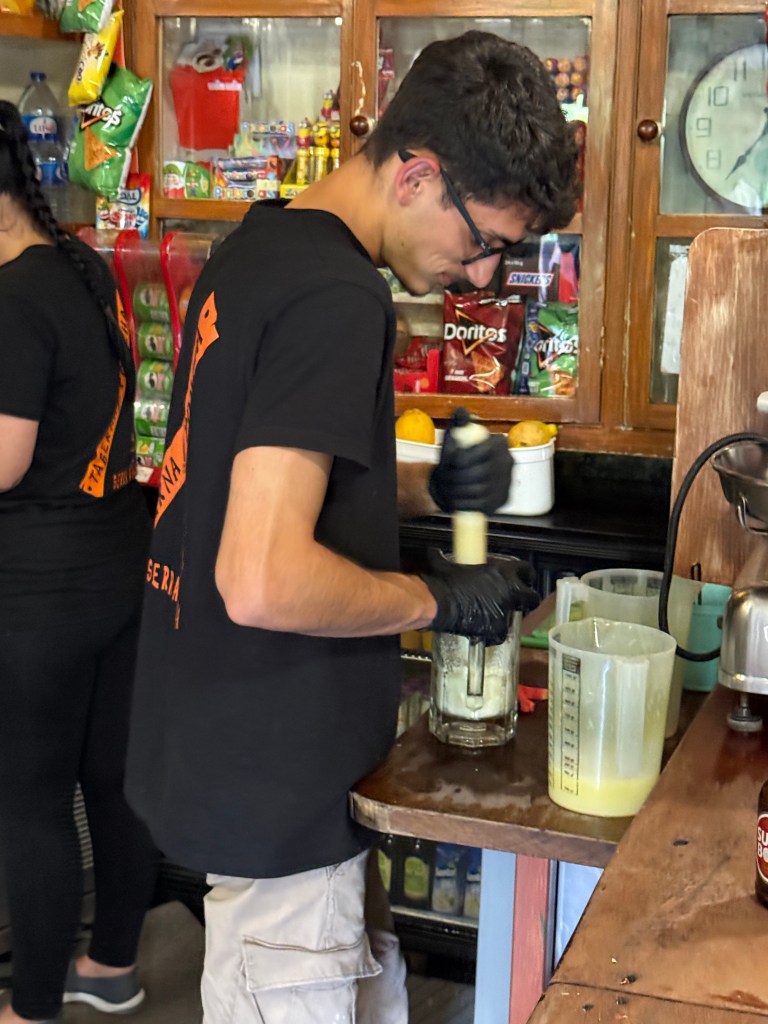
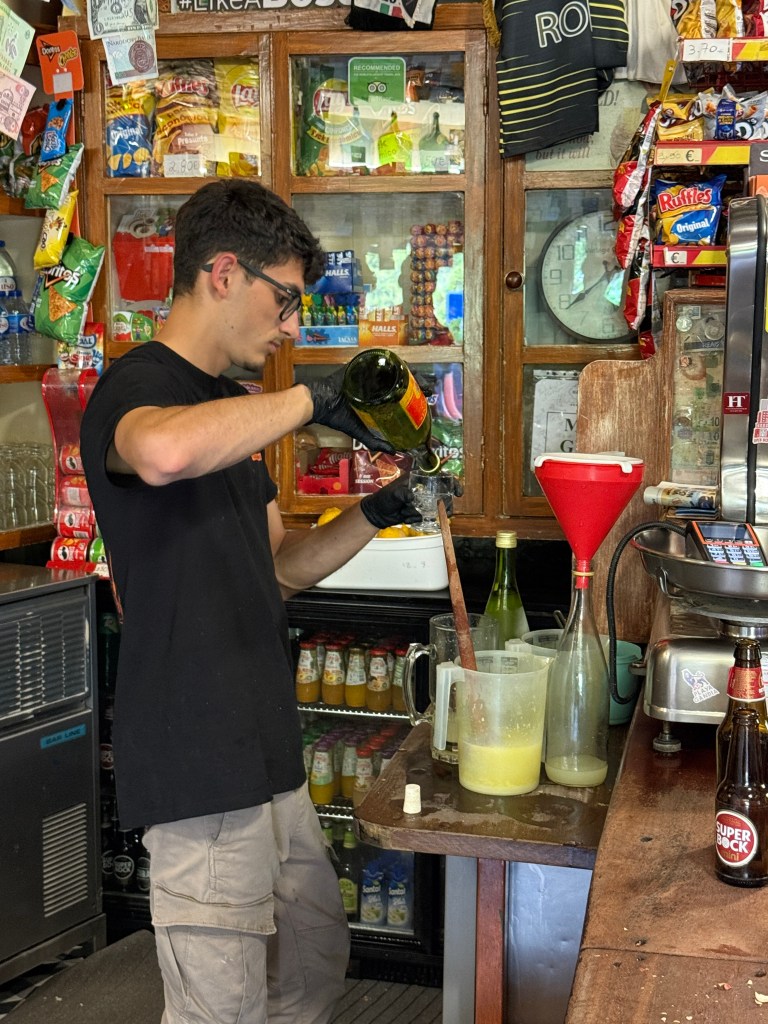
The national drink of Madeira is called the Poncha to which they are quite proud. It is a potent combination of local island rum – actually they call it aguardiente de cana (distilled alcohol from sugar cane), honey, various local fruit juices (think passion, lemon and lime) and cane sugar. Translated, Poncha means “puncture”.
A Poncha is a drink of the people, and the ideal place to consume one is at your local Poncha venue. Not fair to call it a “dive bar”, but there are no “high-class” Poncha joints in town and if there were, you would not want to be caught drinking one there.
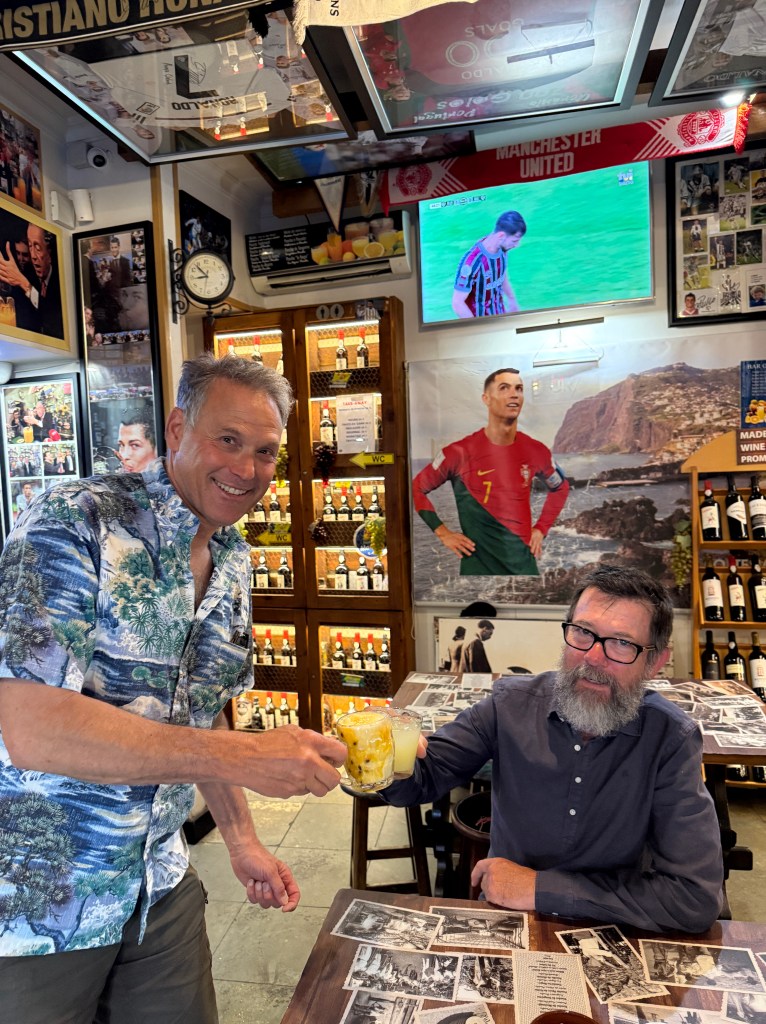
Some variation of the local lore is that if you drink one Poncha you will be happy, drink two and you will be wise, and if you drink three, you will be speaking Portuguese. Let’s just say that Randall’s accent is indistinguishable from a local. Above Randall’s shoulder is the soccer star “Ronaldo”. Born in Funchal, he is widely regarded as one of the greatest players of all time.

The baked goods in Madiera are wonderful, as one might expect. I was quite surprised to wander into the oldest bakery in Funchal and discover that they make “Marie biscoitos” otherwise known as Marie cookies (a simple tea biscuit). Now I understand that what I am about to say will only mean something to the five or six Swedish people reading this blog (my family). But it is well known that Sweden invented the Marie biscuit (relatives of my wife’s family). I could not get the bakery patrons in Funchal to admit that, but I did buy 1/2 kilo of freshly made Marie biscoitos and Randall and I are enjoying them!
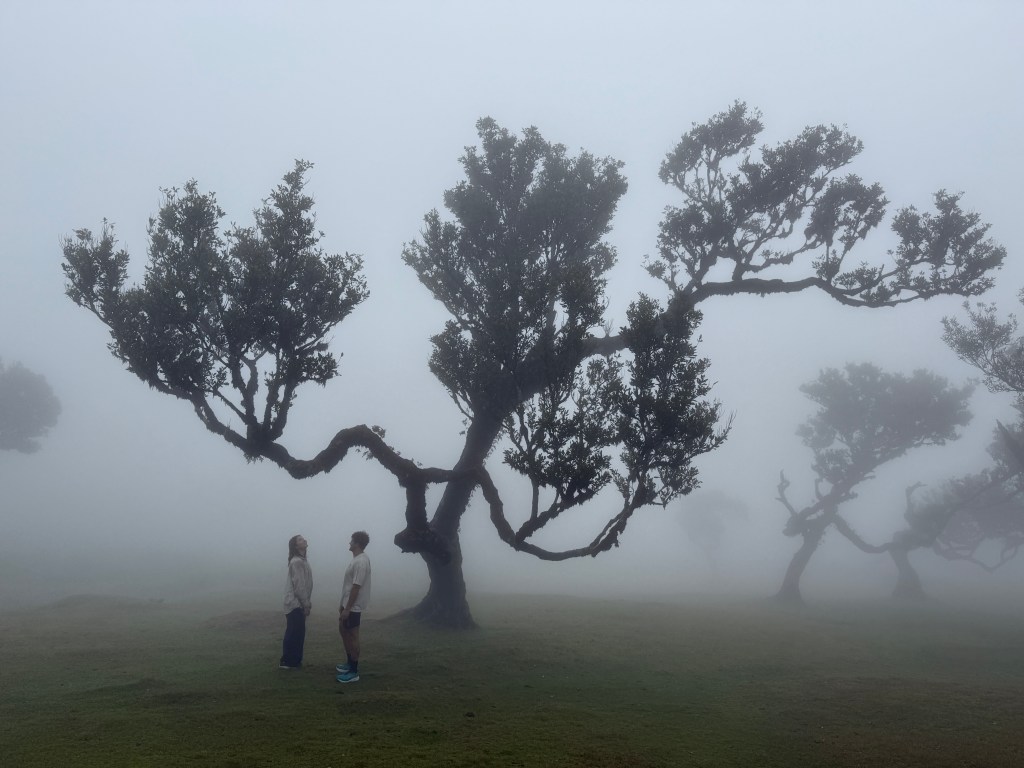
Madeira is also famous for their Parque Florestal do Fanal. This area, with its mystical atmosphere created by moss-covered trees was used as the Jedi landing site in several Star Wars movies. We hit it on a perfect day – foggy, rainy, windy and wet and cold!
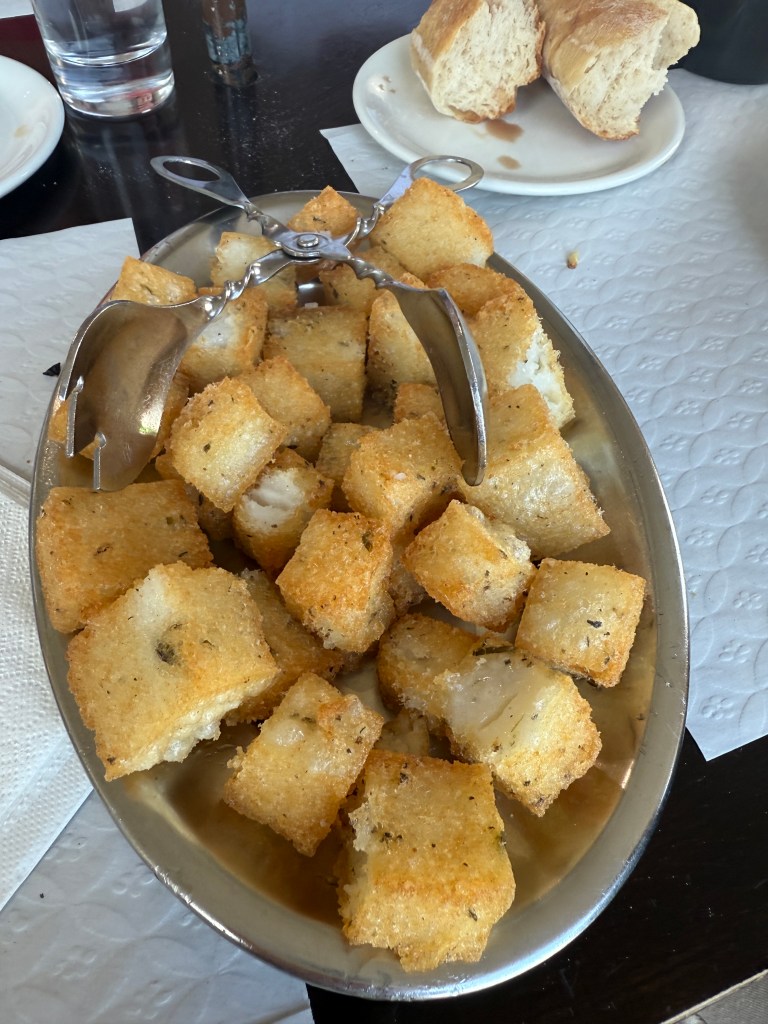
Our favorite dish here is Milho Frito – fried cornmeal. It is a typical Madeira side dish made of cornmeal, finely sliced collard greens, water, garlic and olive oil that is cooked slowly. It is then cut into cubes and fried.
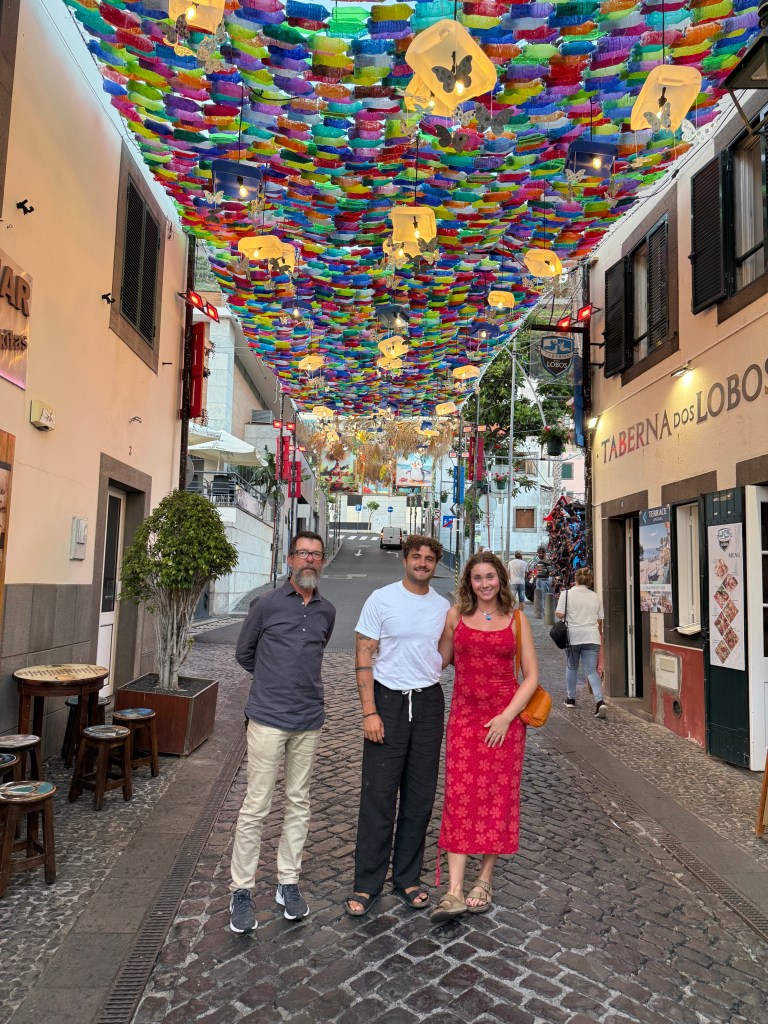
We wandered back to Câmara de Lobos to enjoy the night life – we arrived way to early to be cool!
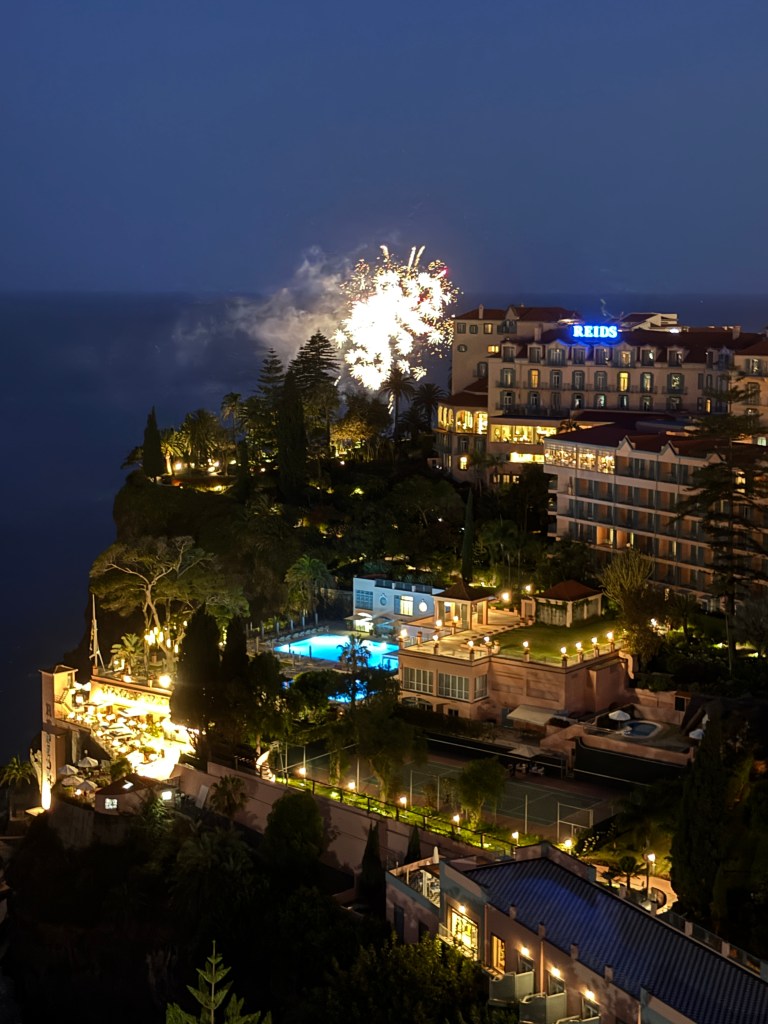
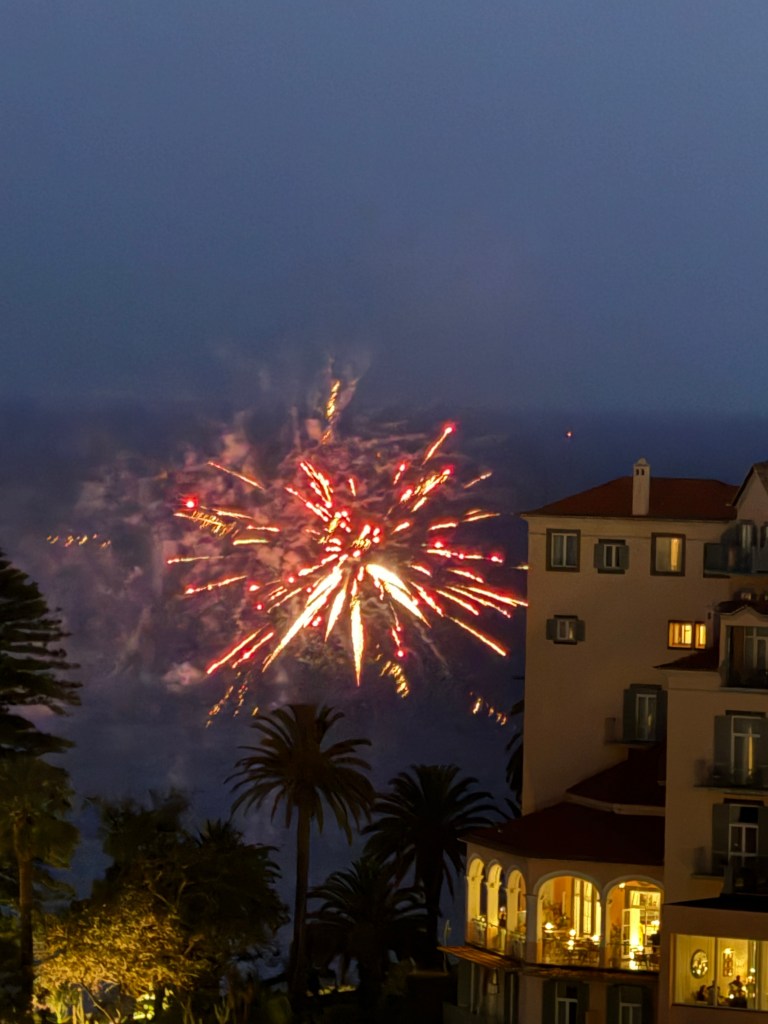
I am pleased to report that the 4th of July was celebrated by one very patriotic hotel in Funchal. Happy 249th America!!
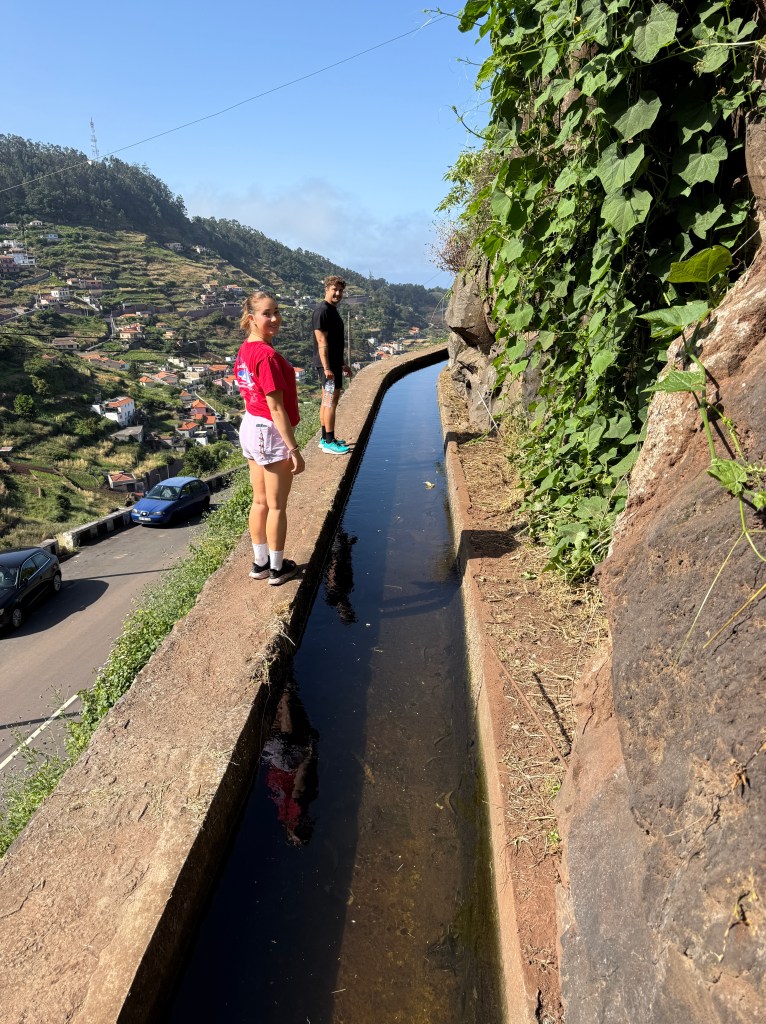
The Levadas of Madeira (from the Portuguese verb “levar” – to carry) are a system of channels or aqueducts many kilometres in length, mostly bordering mountains but also going through them, with several stretches over rugged rocks, to bring water from the mountains to the populated areas. Historically they provided water for drinking and agriculture, but now they are used exclusively for agriculture (with just a wee bit of hydro generation thrown in).
While not quite as picturesque as the Roman aqueducts of Europe, this system was developed shortly after the island was colonized. One can hike for miles over gently meandering trails adjacent to the Levadas. https://whc.unesco.org/en/tentativelists/6230/

Madeira was an early adopter of Atlantic aquaculture and they now harvest 900 tons of fish every year. The fish they mostly harvest is called “Dorada”, but not the one we know as Mahi-Mahi. To make this confusing, Mahi-Mahi is sport fished, along with Marlin and Yellow Tail less than one mile off shore. But the Dorada that is farmed is also called a Gilthead Sea Bream (it weighs less than one pound). TMI??
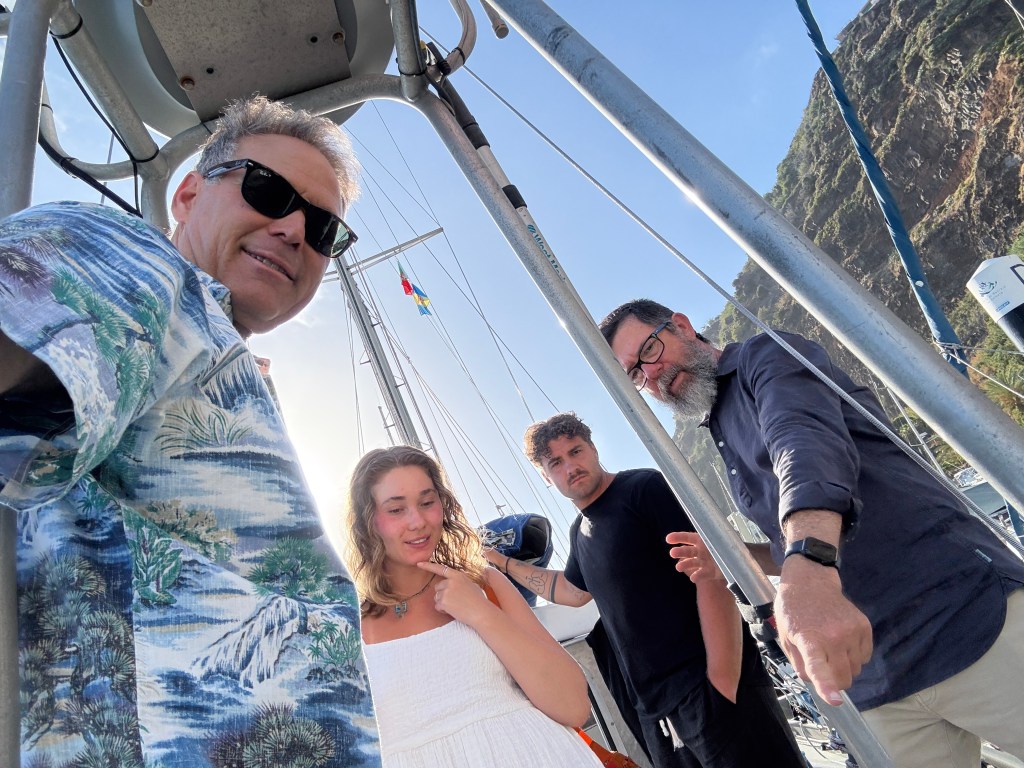
Well, the time has come to leave the island. The night before we leave, Randall invites my daughter Ingrid and her boyfriend Marc for a tour of Mōli.
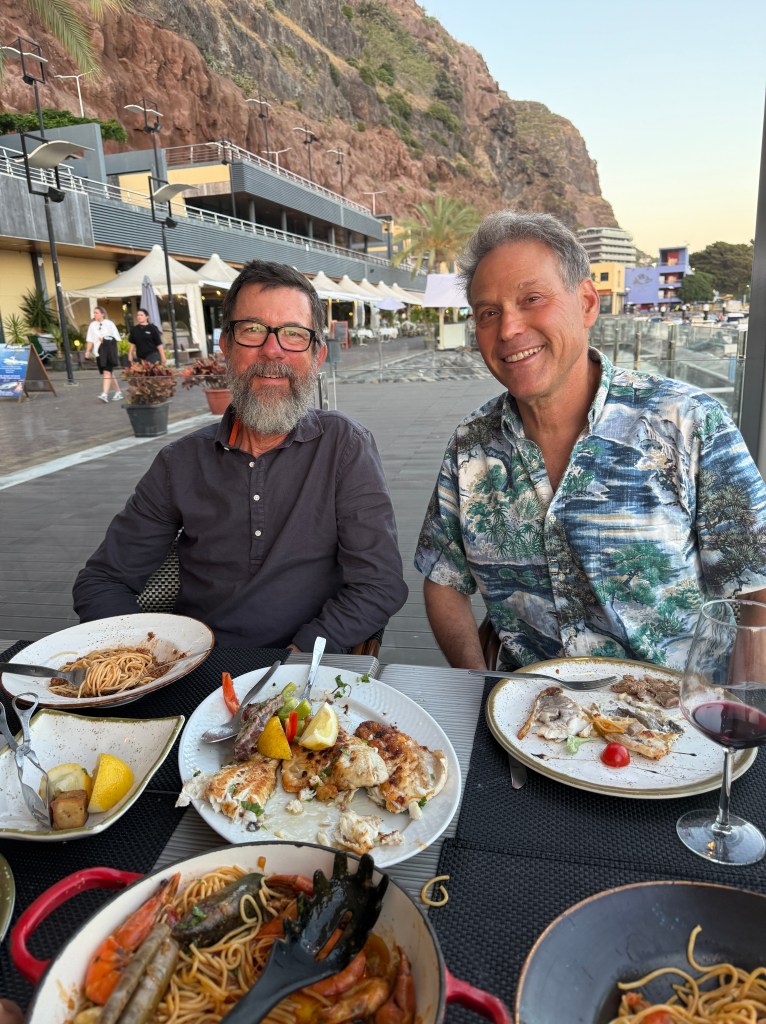
Here we are at our final meal right outside Marina Calheta – the marina 17 miles up the coast from where we first landed. Yes, the one to which we were “redirected”. As fate would have it, Marina Calheta was a wonderful, beautiful, restful AND friendly location. A modern, up and coming location out of the hustle and bustle of Funchal with delicious restaurants and gelato. I would return here anytime.


 Harmon and Randall's Voyage...
Leave a reply to Harmon Shragge Cancel reply