Madeira Cape Verde Leg
Day 4
Thursday, July 10
Noon Position: 23 25.2N 19 02.5W
Course/Speed: SW 6.5
Wind: NExN 14
Sail: Both headsails poled out full, wing and wing
Noon Miles: 155
Total Miles: 571
I came on watch at 2am to help Harmon raise sail. Winds had reached a steady 13 from the NE and it was voted by all aboard well past time to make the transition from engine to a more fitting, not to mention quiet, mode of transport. With wind on port quarter, we poled out the jib to port and made the main full to starboard.
The early night had been clear with a slight haze that served to illuminate the sky around the moon in a striking fashion. We both took scads of photos without ever quite capturing how the intensely bright lunar glow made the night feel even darker.
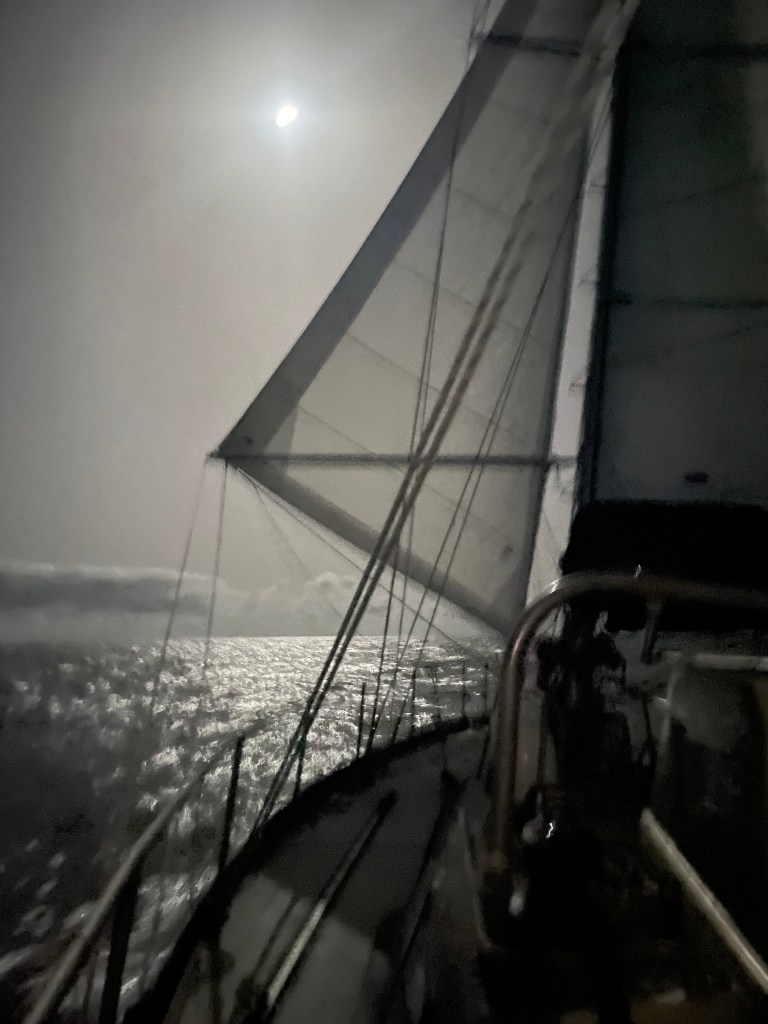
At 4am, a wall of cloud approached from astern whose tips were jagged fingers reaching toward Mo. In a different ocean and season I’d suspect a gale’s approach but here winds went from the low teens to the 20s when the front hit but settled back to high teens once it passed.
From then until now we have been under cooling cloud. Temps in the cabin are mid 70s and the varnish is no longer melting.
Sometime in the night we passed a heard of flying fish. Four were found in the lee scuppers in the morning, one to windward and one had, to its great astonishment, flown into the open head hatch where it lay on the floorboards until discovered by my bare feet in the wee hours.
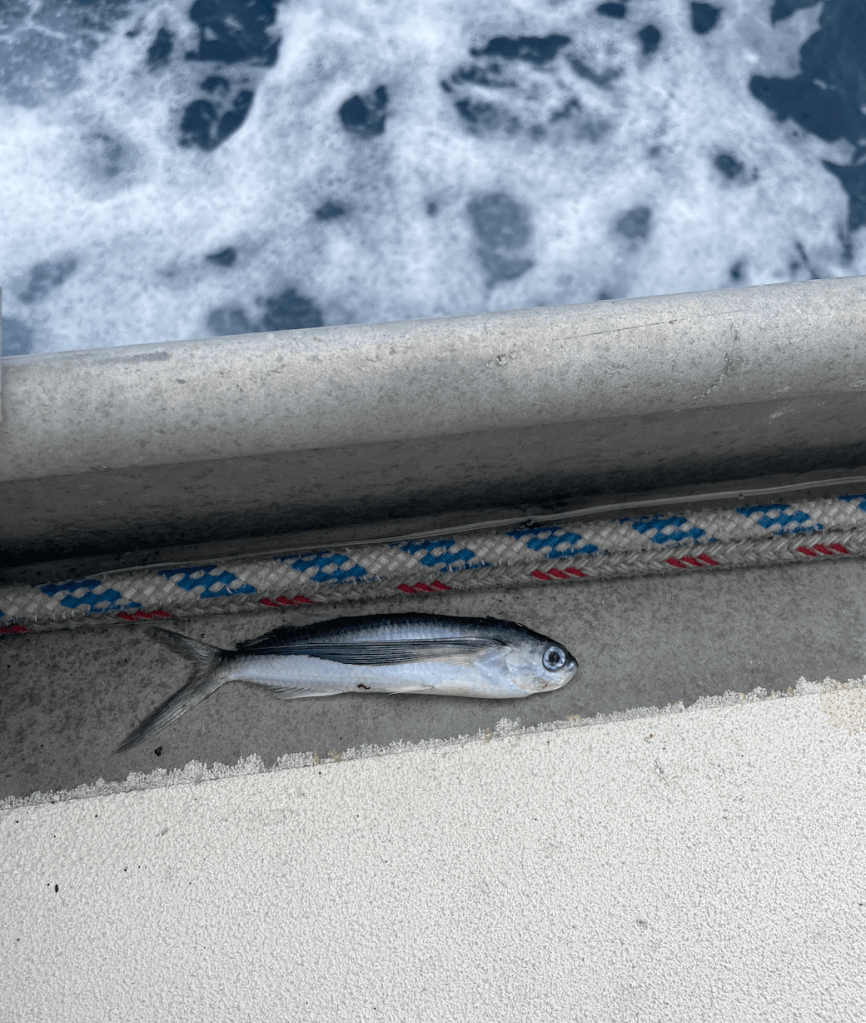
It is interesting to contemplate briefly what it is to be a flying fish. Imagine an entire life lived in the upper strata of an essentially infinite expanse, a room without walls or furniture to hide behind. Her body is an inverted triangle with huge eyes facing downward into the depths from which come all her enemies; once spied, her wings and motormount tail providing a quick escape into that weightless, enemy free zone, the air, until Mo lumbers by and scoops them up like butterflies in a net. Mo’s decks are newly painted and have a skin of what is essentially 80 grit sandpaper, which serves to descale the fishes as they flip and flop and gasp their way into that great ocean in the sky. May the Great Fish above accept his lowly fliers, for they did no wrong.
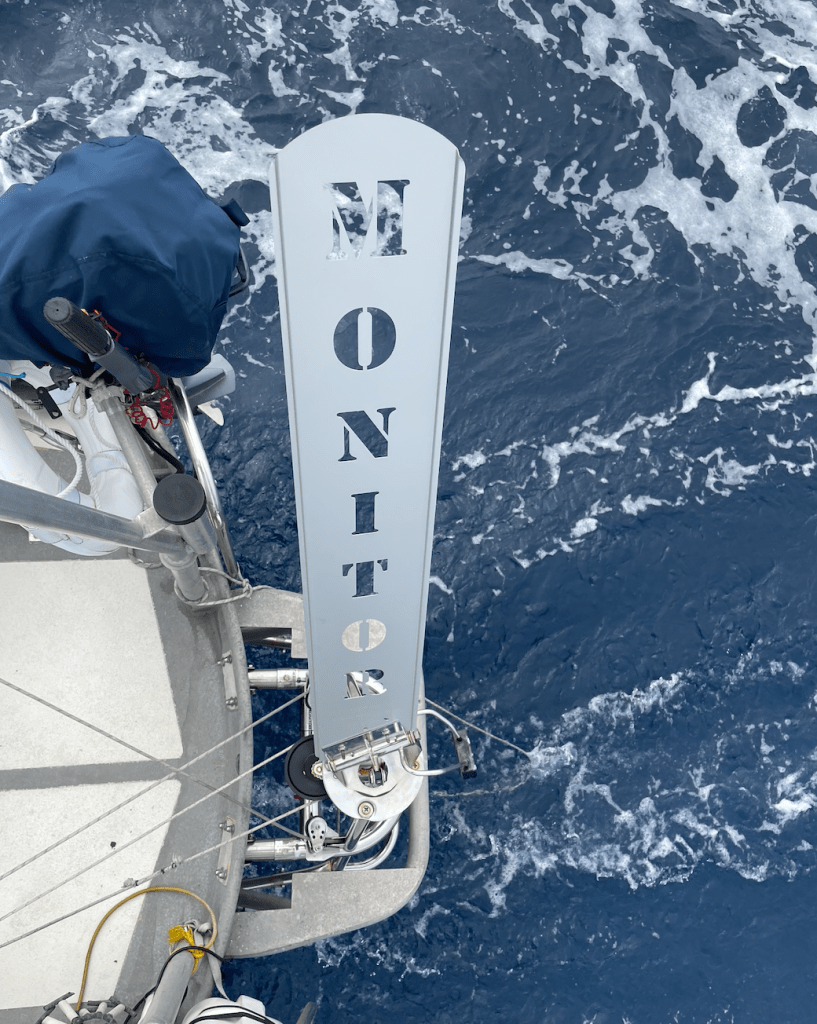
In the afternoon I transitioned us from the autopilot and back to the Monitor windvane (HELLO MONTE!) and immediately felt a sense of relief. I appreciate the ease of the auto as much as the next man, but the windvane feels like the proper mode on a sailing boat, which is, after all, an acoustic instrument. Tuning the rig, hauling and sheeting sails, setting a course for the tiller—these deserve the gentle, pulling accompaniment of a windvane. Because sailing the many strings of a boat is more like playing the violin than a Moog synthesizer.
Thank you to Mike and Suzy at Scanmar for setting us up with the right Monitor gear for this trip.


 Harmon and Randall's Voyage...
Leave a reply to Skip Dubrin Cancel reply