Leg 4, Blog 5, December 2, 2025, Latitude 43

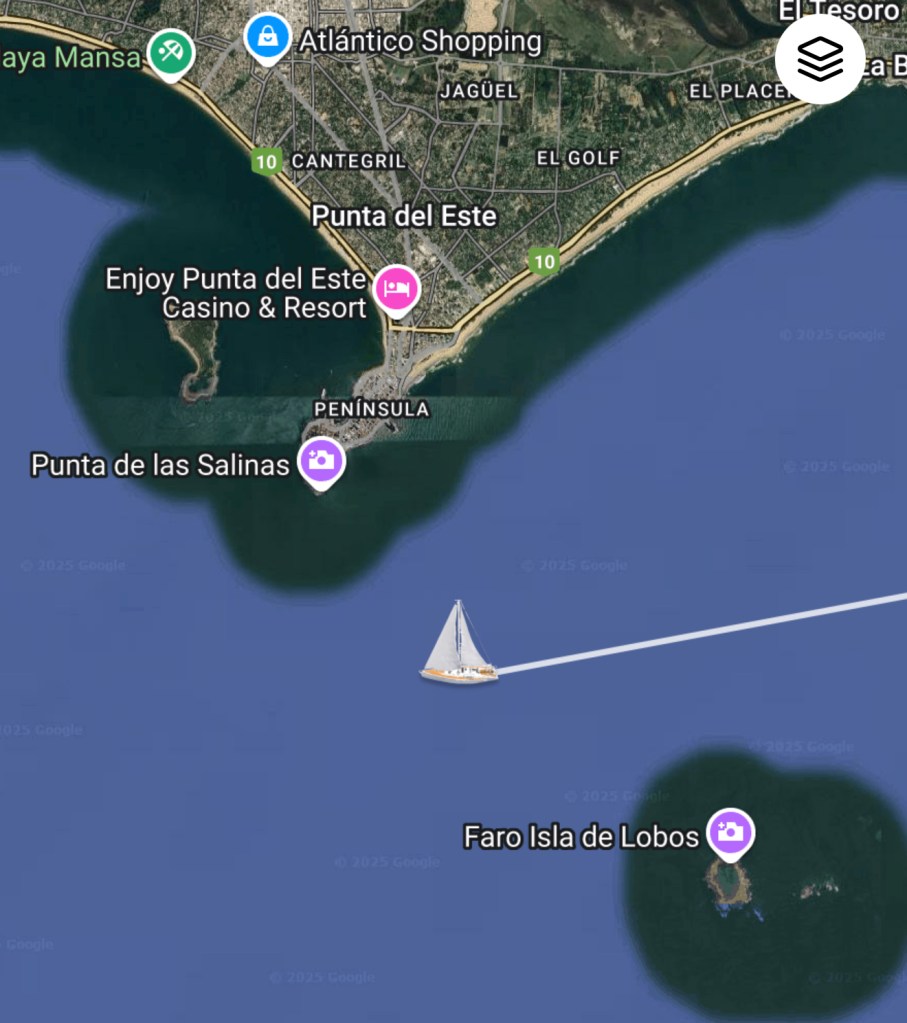
We made our way into Uruguay on the evening of November 24th.

We knew that it was going to be a smooth entry based on the spectacular sunset that evening.
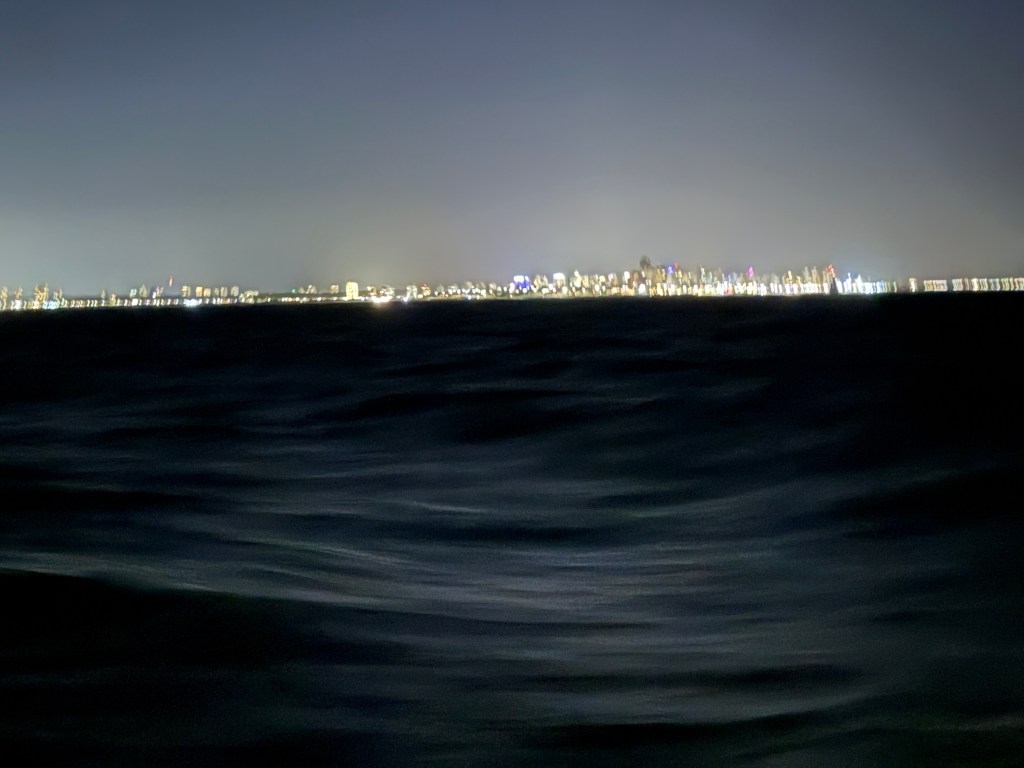
Above: Punta del Este beckons us on this clear night, but a stop in this world famous racing destination was not to be. Back in October 2019 on the Clipper Round the World Race, I joined in the race from Punta del Este to Cape Town. It was a fabulous 18 day trade wind blast of incredibly good racing conditions from start to finish. Punta was dark and quiet as it was off season, but the race crews had a blast there as they took over the part of town dedicated to the racing docks. A lot of damage done at the notorious Moby Dick bar!
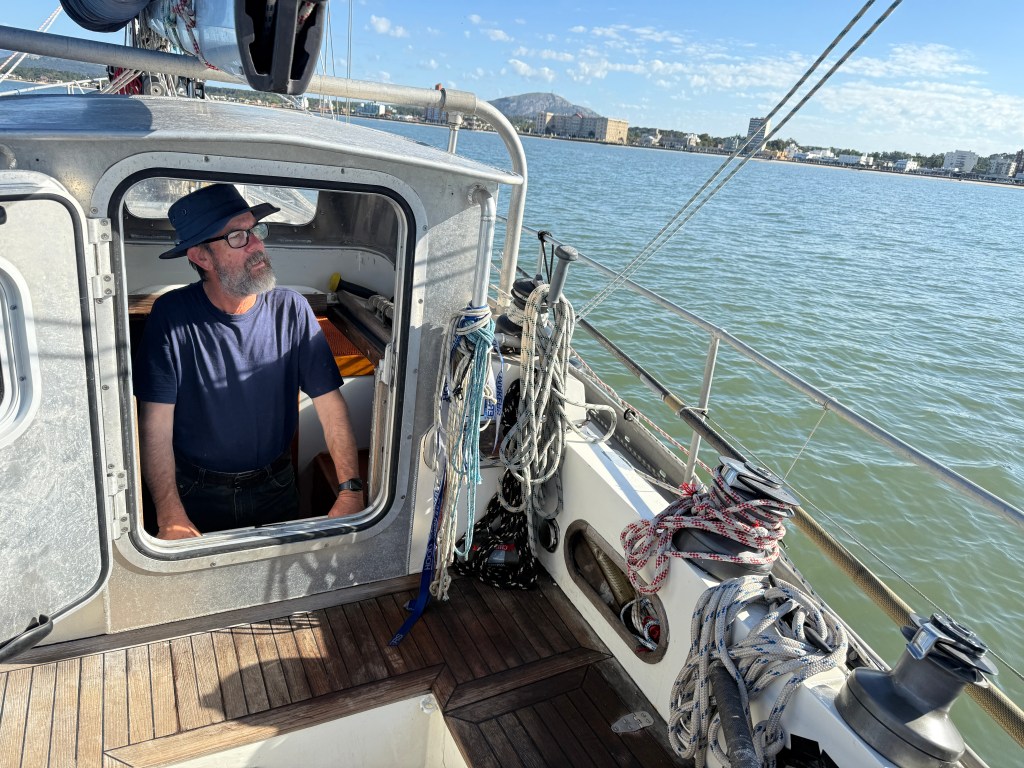
Naturally, we arrived in Piriápolis at about 0200. We anchored outside the harbor until early the next morning when we could make landfall at 0800. Here is Randall after waking up at 0630 and getting ready.
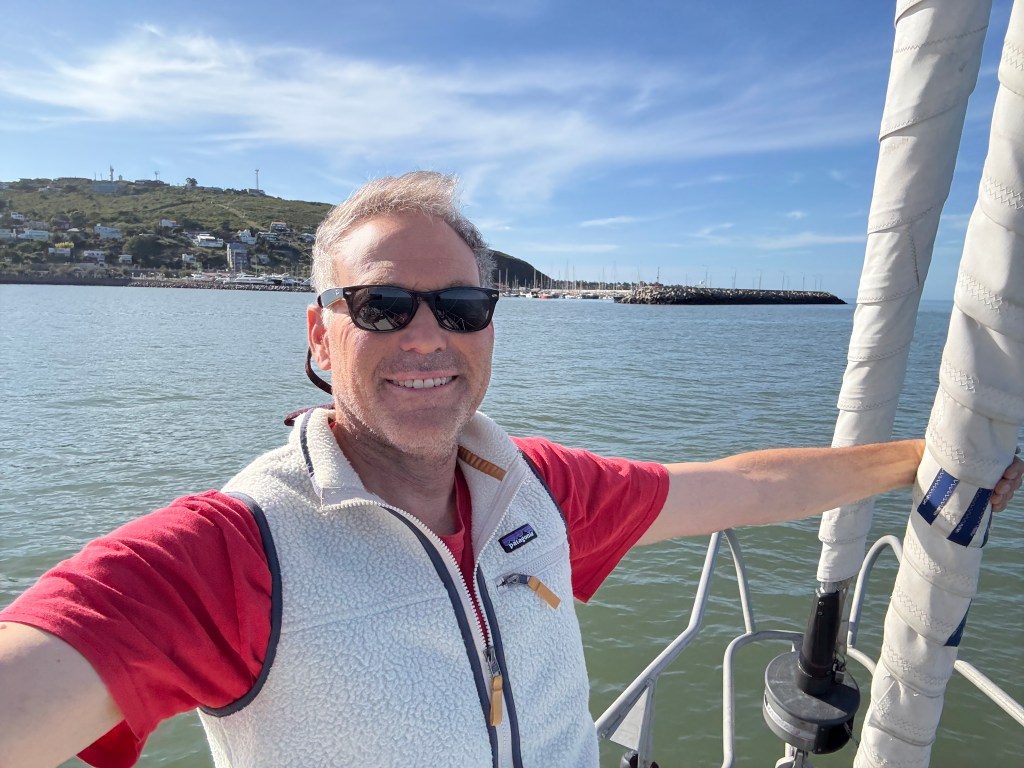
I got up at 0730 to the sound of Randall starting the engine.
A mere 20 miles down the coast, the Piriápolis harbor has none of the glitz and pomp of Punta del Este. But it is favored by cruisers as it has more harbor resources like hauling, repairs, parts etc. All at much more reasonable prices than Punta.
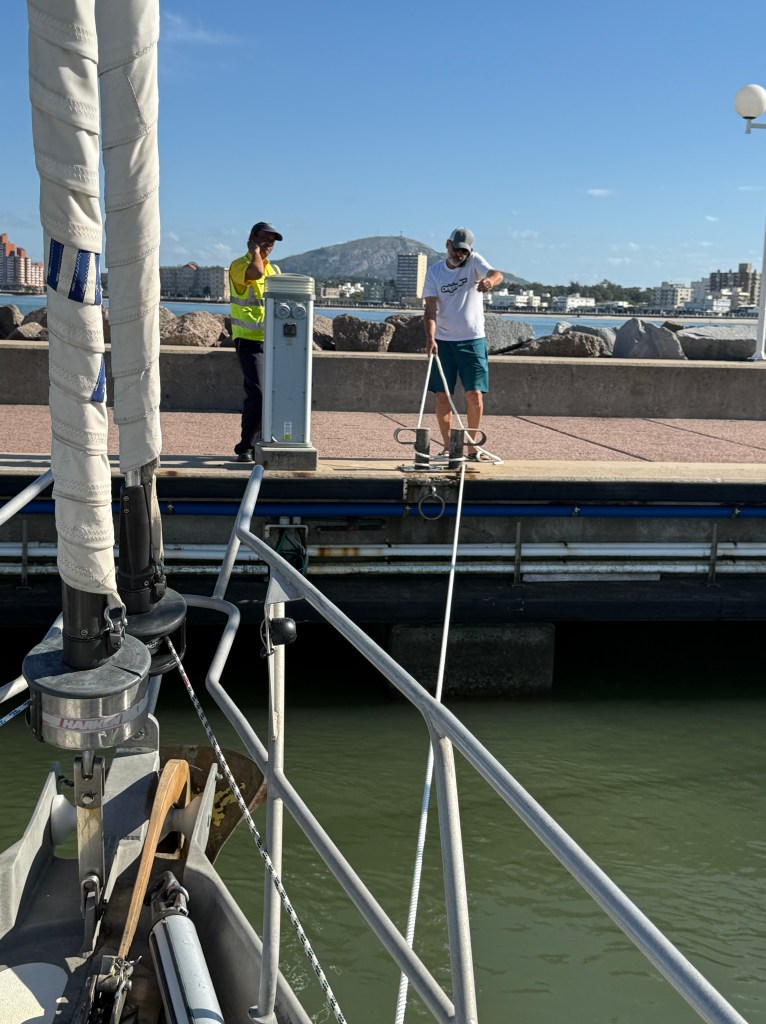
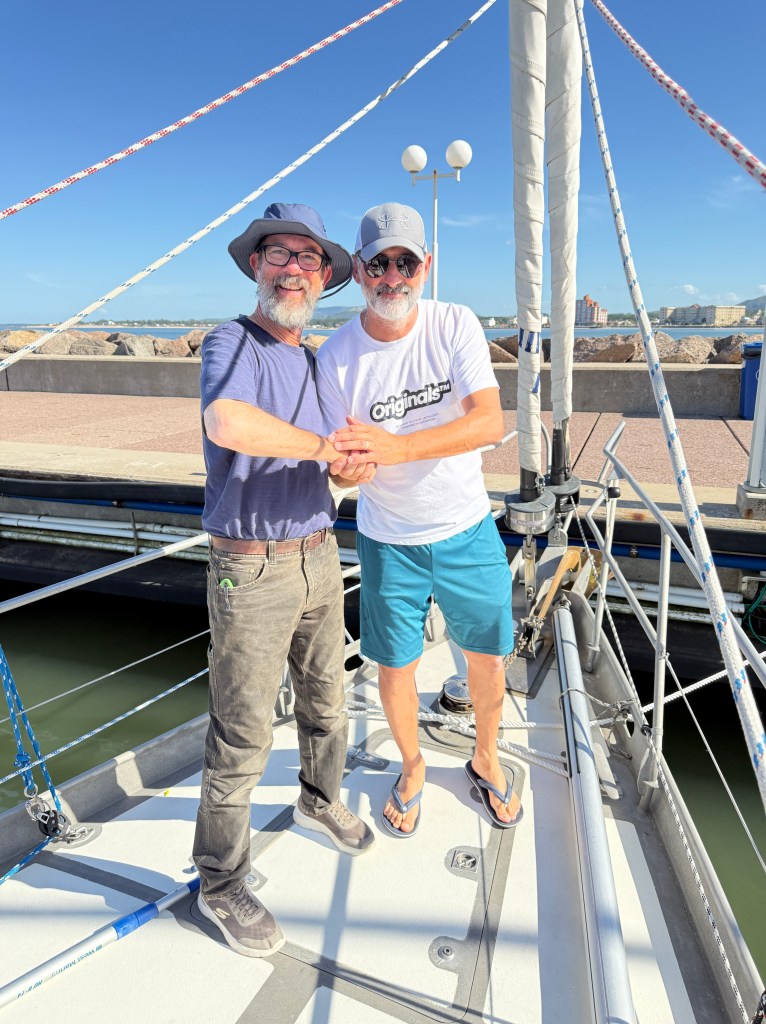
As we pulled in, we were greeted and assisted by Victor (referred to us by Carlos from Rio). That is how these things work. Victor has a Coast Guard (Uruguay) background, and is an unofficial “fixer” of all things nautical. Meaning anything you want or need done to your boat, all roads start with Victor. This is perfect for us, because we need to make some repairs and get Mōli ready for her deep southern journey.
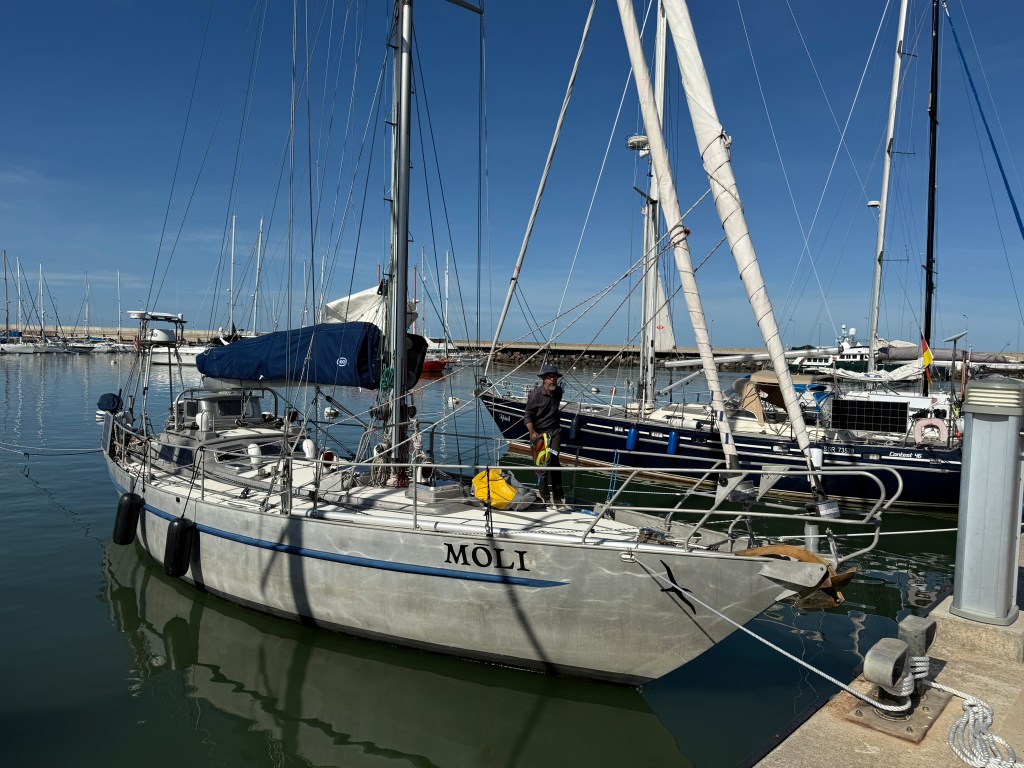
You can see the perfect weather and calm conditions. Above is Randall as he is ready to come off Mōli and begin the customs/check-in/immigration process.
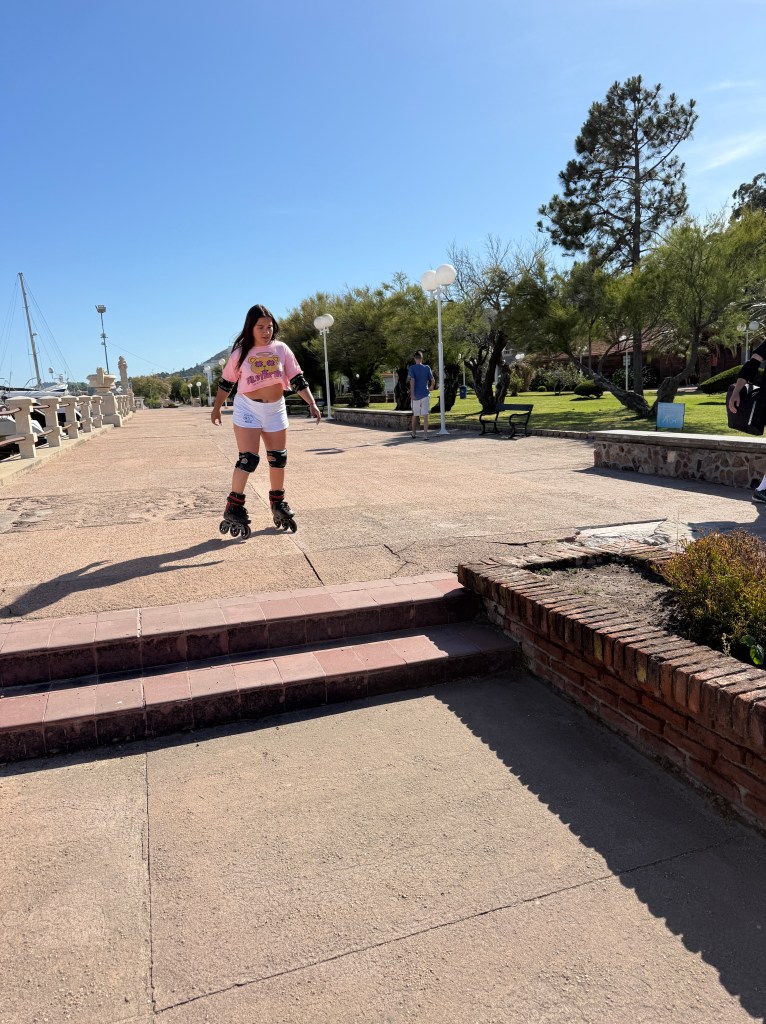
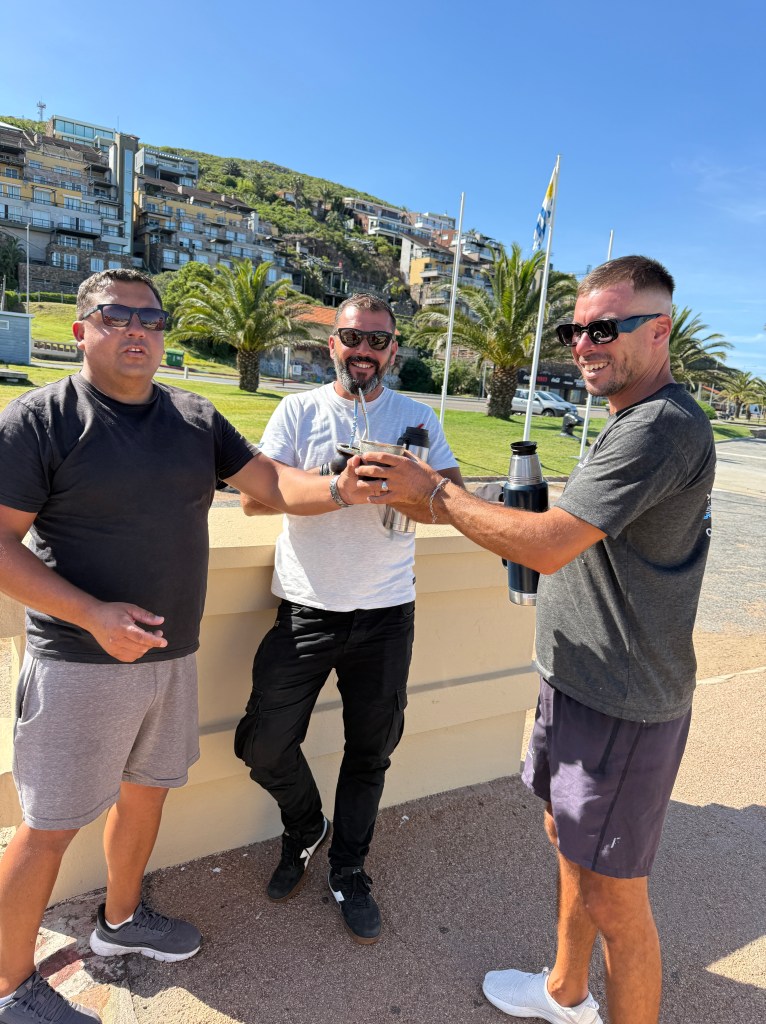
After only nine days on the boat, our legs are wobbly. We delighted in the early morning customs of the local population – roller skating and drinking matte.
The city of Piriápolis was founded in 1890 to be “the beach resort of the future”. I am not sure that the future has arrived here as the town is still quaint, sleepy and quite old fashioned (refreshingly so). It is nestled between Punta del Este (and the larger city of Maldonado) to the east, and Montevideo (the capital city of Uruguay) to the west. Even further west (336 kilometers) is Buenos Aires whose citizens populate Punta del Este in their summer (and buy luxury condo’s there to get their money out of the Argentinian economy).
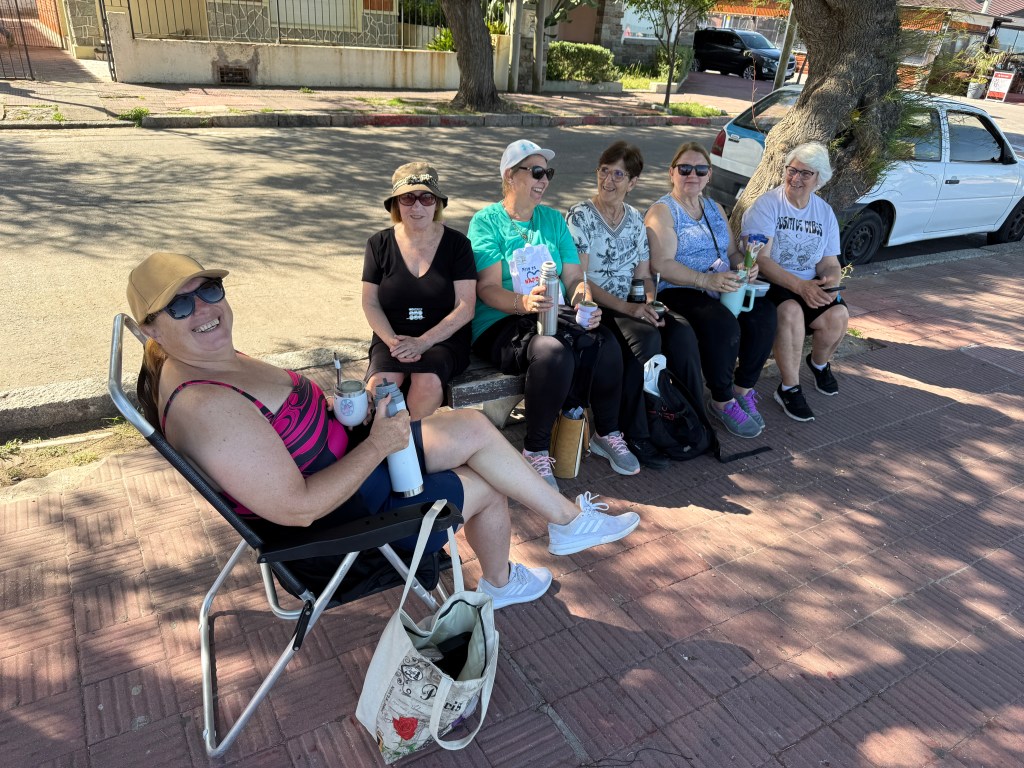
Randall and I could not get over watching the citizens of Piriápolis consume their Matte. Matte is a traditional Paraguayan, Uruguayan, Argentine and Brazilian caffeine-rich infused herbal drink. It is a vital social and cultural ritual that fosters friendship, community and tradition. Despite being a stimulant, many find the ritual of matte to be calming and similar to a meditation or a peaceful break from a busy world.

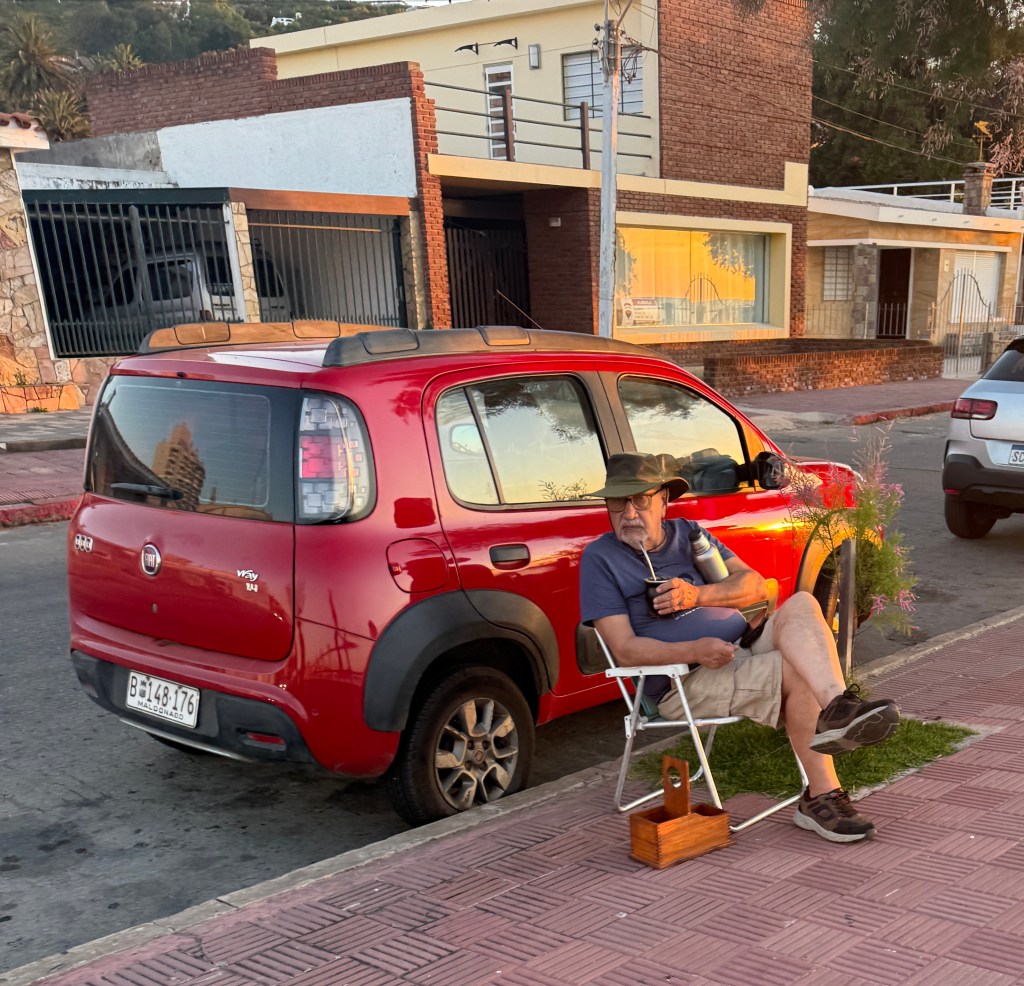
While these above pictures show people relaxing, watching the sunset while sipping their matte, it was even more common to watch what seemed like the majority of the population walk around with their matte “rig” which consisted of a thermos of hot water, a cup filled the tea, a special filter spoon/sipper, and a holding case. We were captivated by the matte crowd and could not take our eyes off of them.
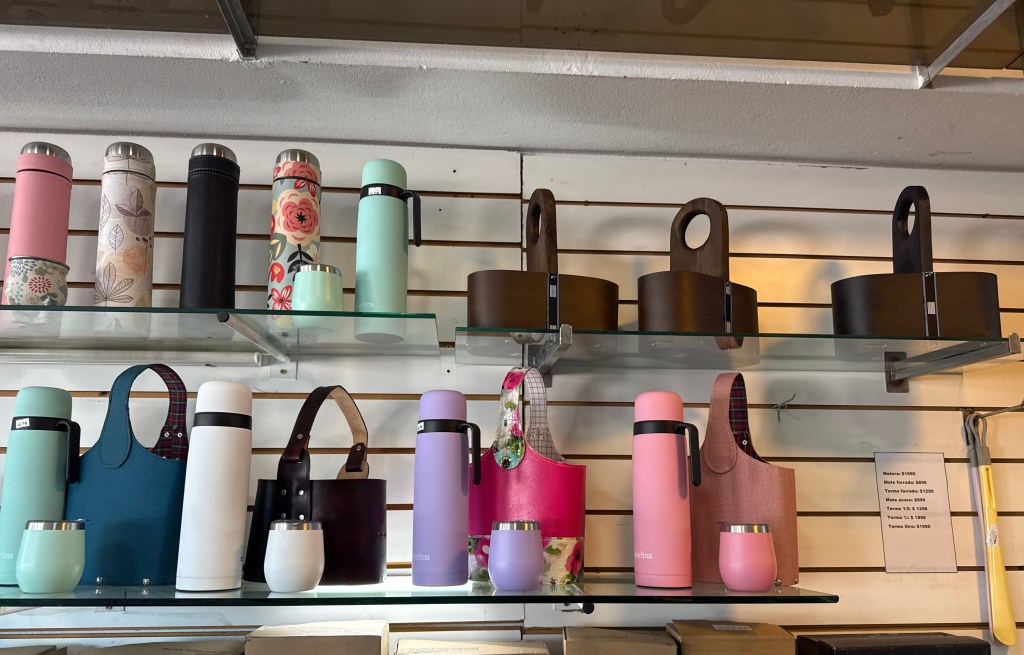
Above: Not your parents matte – It is now possible to purchase young, hip, colorful and artistic matte kits. I asked my middle daughter Ulrika why American kids do not enjoy this tradition? “Because it tastes like grass”. OK….there you have it! Oldest daughter Ingrid, however, opted for the violet thermos and cup and a more traditional black one for her boyfriend Marc.
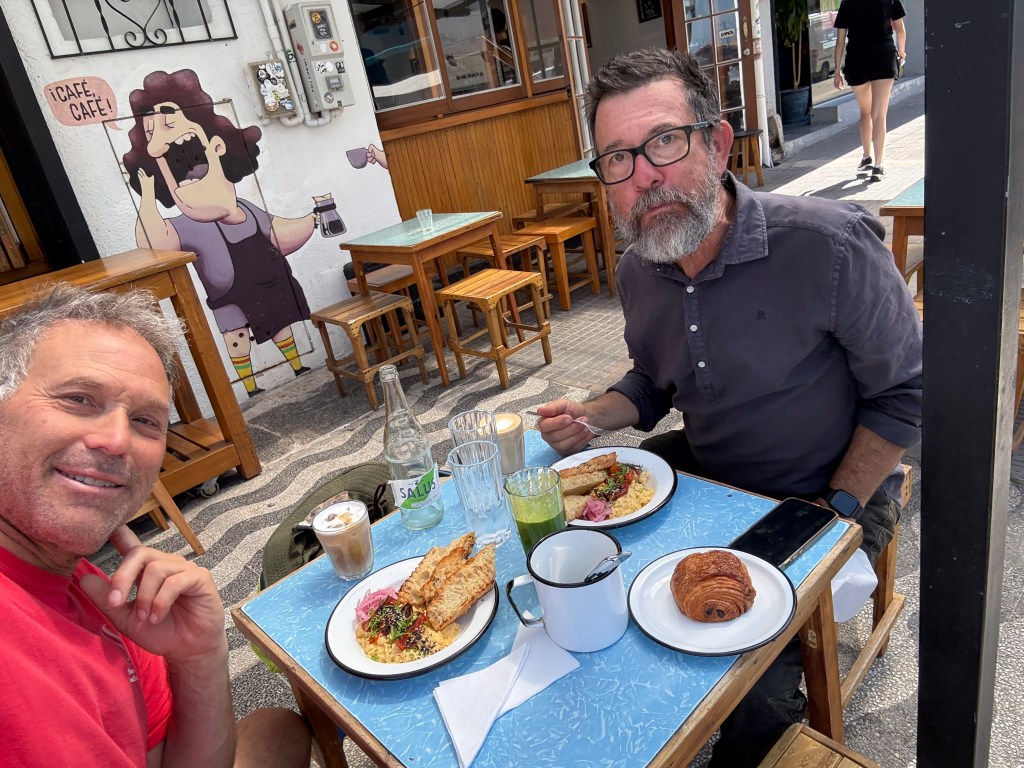
Above: On our first day on land, Randall asked the customs officer where we should eat, and he directed her to Forajda Cafe. We ate there every single day having the same breakfast – scrambled eggs with some treat such as a chocolate croissant or cinnamon bun. We noticed that most residents dispensed with the eggs and went right for the sweet like a breakfast cookie.
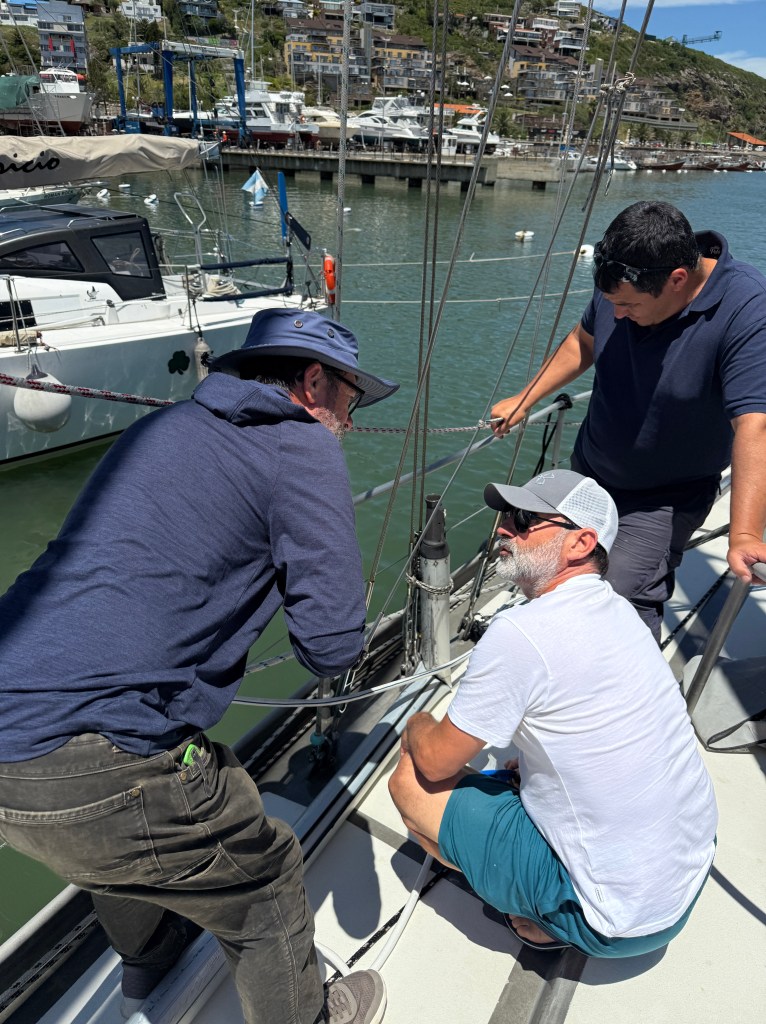
Above: Back on the boat, we got right to work on figuring out if we should replace or repair the bent Genoa pole. No easy answers or solutions here. It is a matter of labor, time and availability of parts.
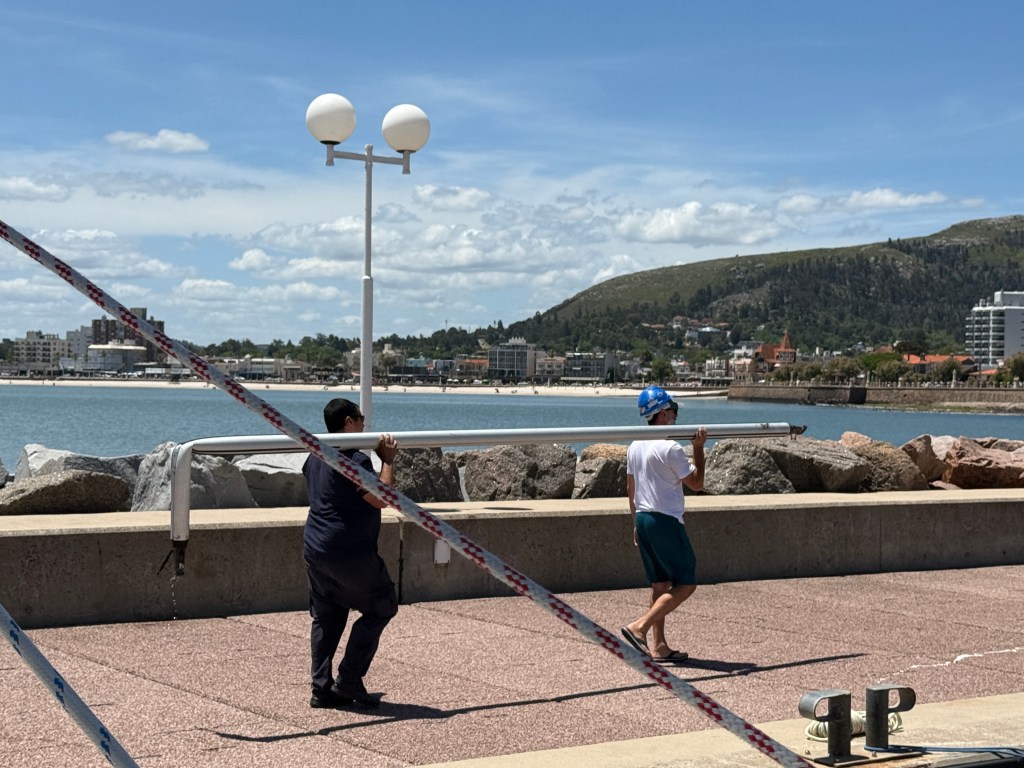
Above: Off the pole goes to the shipyard.
Differing Philosophies of the World and Human Motivation in a Boatyard: The world according to Harmon OR Randall – note – we were both wrong:
It became apparent that there was no easy fix for the Genoa pole. Replacement was next to impossible as it was unlikely that no such spare part existed in the country and importing one would take months and there was no certain way to get it through customs. It became clear that repair was our only option. That would entail some combination of cutting, welding and sleeving. Not a particularly complex operation, it was just a matter of how long it would take to accomplish.
Those of you who know boatyards, know they keep time in a unique manner. A boatyard clock does not have minutes, hours or even days. Boatyards keep time in weeks and months. Tell your boatyard steward that you need a repair completed in a matter of days and they will look at you as if you are an alien from another planet who has just arrived on this earth and you do not know the ways of its’ inhabitants.
Randall and I did not have one or two weeks to wait around for the repair. So I suggested to Randall that he offer our repair steward a “completion bonus” if he could make the repair in a matter of three days. Taking my advice (for once!) Randall made the offer, but reported back to me that the repairman seemed taken aback, perhaps insulted, to be offered something so base as extra money to finish the job in an expedited manner. Randall believed that we made a mistake, a cultural faux pas. I was embarrassed by my crude behavior, and reinvigorated by the altruistic business ethics of the local population.
Fast forward three days when the Genoa pole repair was completed on time and on budget. I was wrong, Randall was right. Or so we thought. When they delivered the repaired pole back to the boat, an electrician (expat from Australia) was on Mōli helping Randall with autopilot repairs. As an aside, he asked Randall how much we had paid for the repair. When Randall told him the amount, his jaw dropped and he immediately said that we had been overcharged and ripped off!
Ok….so that is how it works here. Pretend to be insulted by the offer of extra money and complete the job on time and on budget. Fresh off the boat, we did not know that we had been charged an exorbitant rate (by local standards). Was this wrong? I think not as everyone in this transaction was happy and we all got what we wanted, moral platitudes aside.

Above: Already focused on our next segment, I wasted no time in going to the local supermarket to load up on non-perishable items including paper towels, chips, flour and sweets (for late watch consumption).
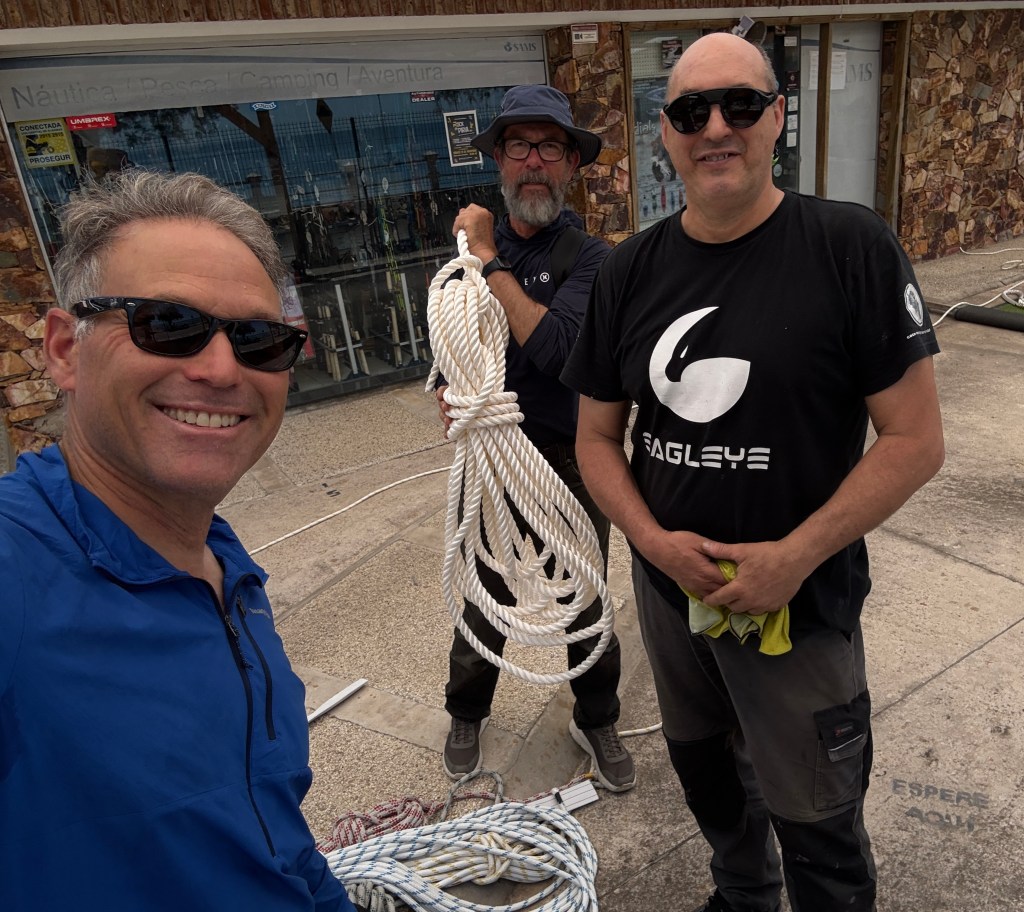
Above: Randall quickly found the local chandlery and its proprietor Alejandro. One unfortunate detail was that the shop was closed for the month of November (vacation just before the December/January high season). As the chandlery was the downstairs of Alejandro’s home, it did not take long to find him, plead our case, and then begin shopping. On the top of Mōli’s list was new lines for the mainsheet, for mooring, and multiple 100 meter lines for anchoring and securing anchorages in the Arctic. Alejandro had spent time in the US (Florida) and was conversant on the problems that we are experiencing in San Francisco with drugs and homelessness.

Above: Not long after we pulled into Piriápolis, who pulls up to us but our “old” friend Lava on his red steel Rus (as is Russian) craft from Moscow (not too many of those). We had last seen Lava in Cabo Verde and he, like us, is making his way south. Randall and I watch as anyone in town with a Russian accent drops by and says “Hello” to Lava.
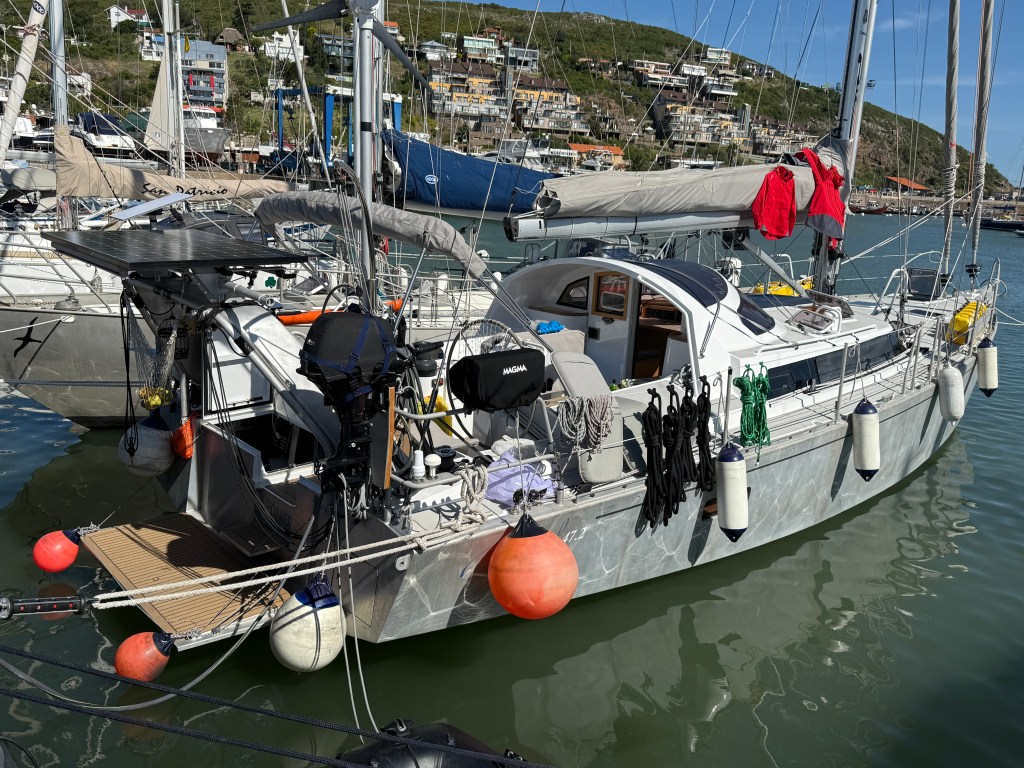
Above and Below: Soon after we pulled into our spot, along comes Jean Marie from Northern Italy and his brand new Borèal 47 which he has been sailing almost alone for the past two years, working his way down from Europe.
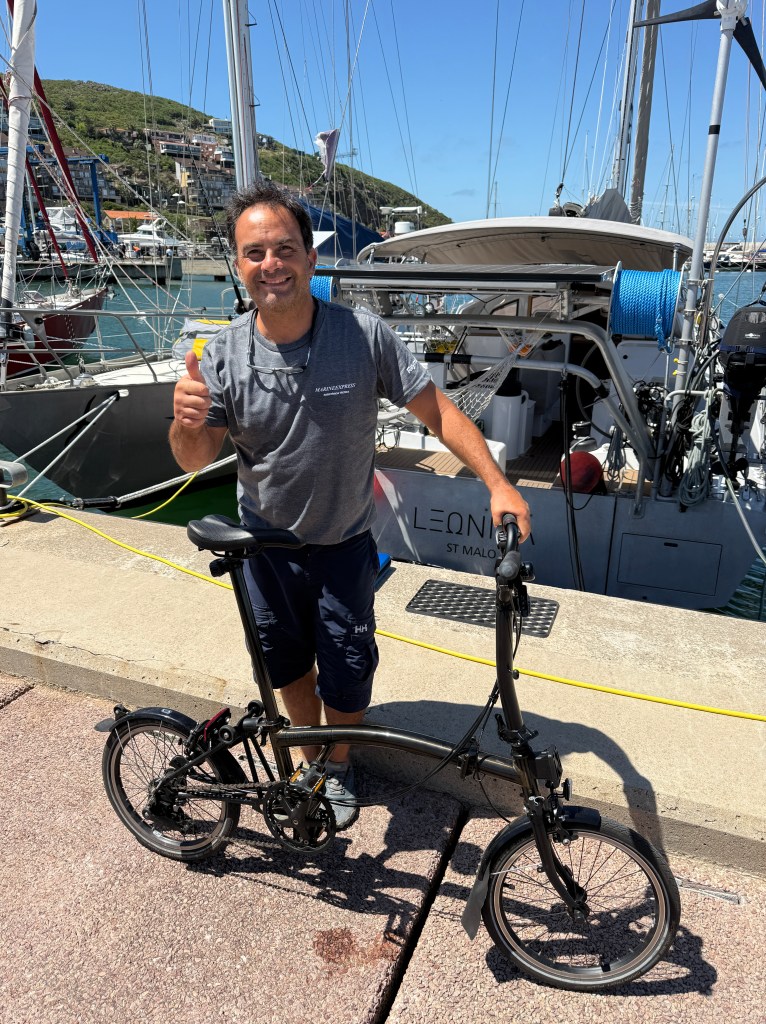
The Boréal is a state-of-the-art aluminum boat that combines all of the rugged safety and functionality features you would need in a high/low latitude boat along with all of the modern comforts of a cursing yacht (including stateroom, modern galley and ample room for several passengers). It’s got it all. In addition, Jean Marie had his wife aboard (admittedly for the first time) along with a cute cat. He had all the gadgets including the super cool Brompton folding bike shown below.
I am just going to admit right now that I was jealous. I know that this was wrong, but I could not help it. Jean Marie had the boat, the wife and the pet. At more than $1 million for the boat, I guess this is how the other half lives. I had fantasies of jumping ship and having my own stateroom and Northern Italian cuisine served to me as we rounded Cape Horn.
But then reality slowly crept in. The cat needed the deck washed every day so the salt would not permeate his paws. Jean Marie’s wife, while certainly pleasant, a good sport and an able bodied shore buddy, did not always let Jean Marie be. There was a constant back and forth between the two, all day and all night. While Randall and I did not speak Italian, it sure sounded a lot like debating, shall we say?
And finally, here is the big one. On Jean Marie’s way to Piriópolis from Brazil, his brand new autopilot failed. Not only was he not able to fix it, but due to the modernity of the Boréal, it is not rigged with a wind vane of any sort (why would a sailor need such an old system?) This necessitated Jean Marie steering singlehanded for three days on his way into port – not fun or safe for that length of time. And once in port, Jean Marie still has no idea of how he will get his autopilot fixed..
Móli, with all of her eccentricities, still beats any boat in the harbor. She takes a licken’ and keeps on ticken’. Fellow sailors look at her and know she is a tough, good and reliable boat. Our secret ingredient, of course, is Randall who can fix any problem as it arises, even our wayward autopilot. And just in case, we do have a wind vane that can take over. So the cliche is apt… “You gotta dance with the one that brung ya”.
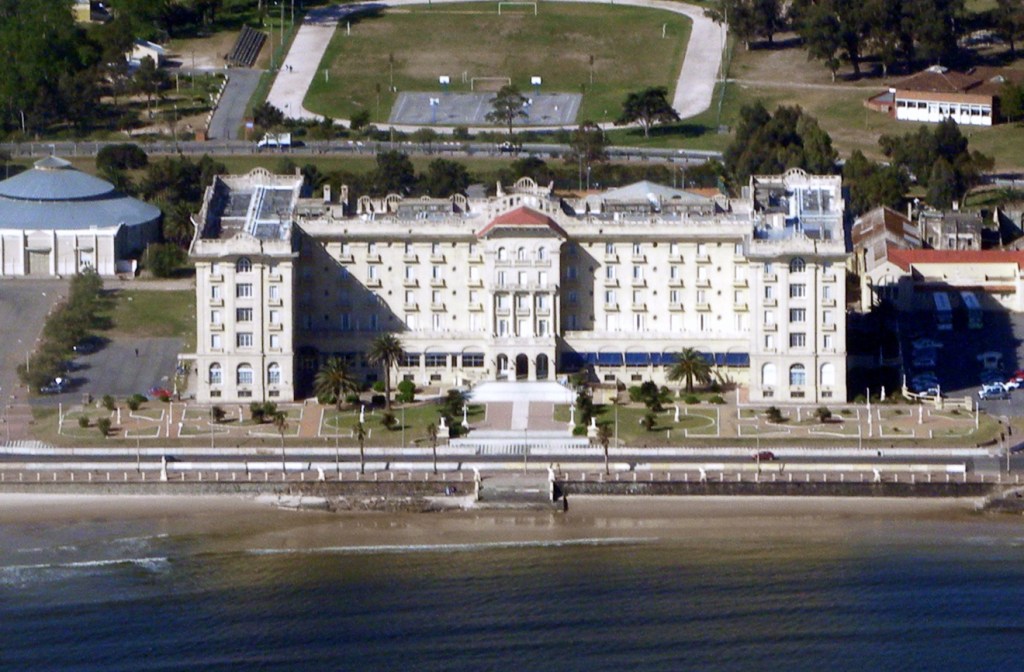
Above and Below: The ARGENTINO HOTEL CASINO AND RESORT in Piriápolis is so big and out of scale with the rest of the town that it defied reason and explanation. At present is dilapidated, but still open to the public.
The hotel was the vision and crowning achievement of city founder Francisco Piria. It was inaugurated on December 24, 1930, and for several years was the largest and most luxurious hotel in South America, built in the image of European Riviera resorts.
Francisco Piria bought vast stretches of land in 1889 with the dream of creating a European-style seaside resort. The Argentino Hotel was his final and grandest project, meant to be the centerpiece of the developing city of Piriápolis. Upon its opening, the hotel had 300 rooms and 56 suites, with a capacity of 1,200 people, making it a prominent global landmark.
In 1942, the Uruguayan state acquired the hotel. It was later declared a National Historic Monument of Uruguay in 1993, and a “Property of Patrimonial Significance” in 2008. The hotel belongs to the Uruguayan state. While it no longer holds the title of South America’s largest hotel and offers a more accessible, family-oriented experience, it retains its historical charm and is a major attraction in Piriápolis even in its run-down state.
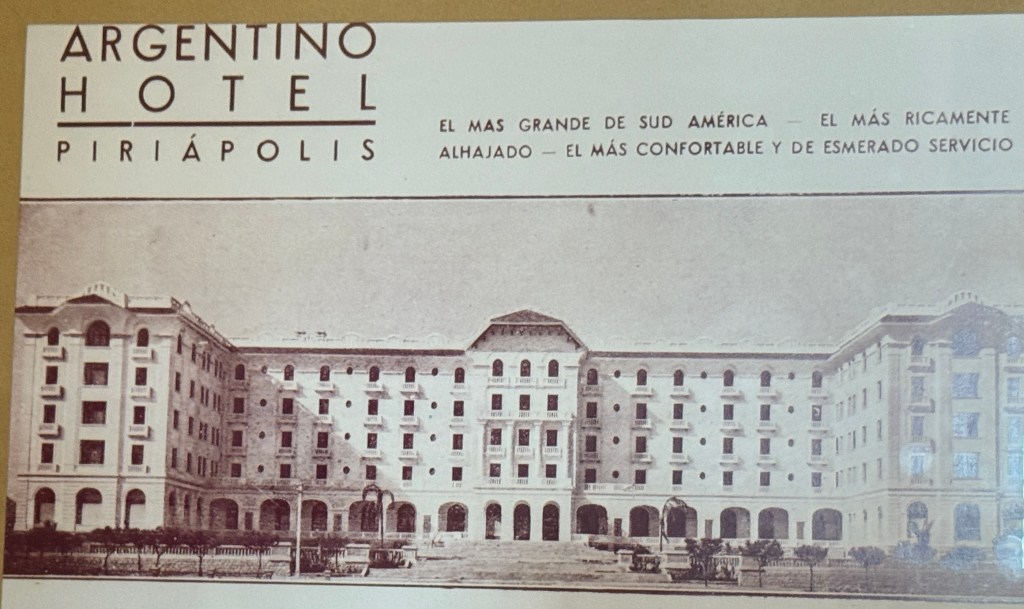
Above: This picture of better times hung on the wall near the reception.
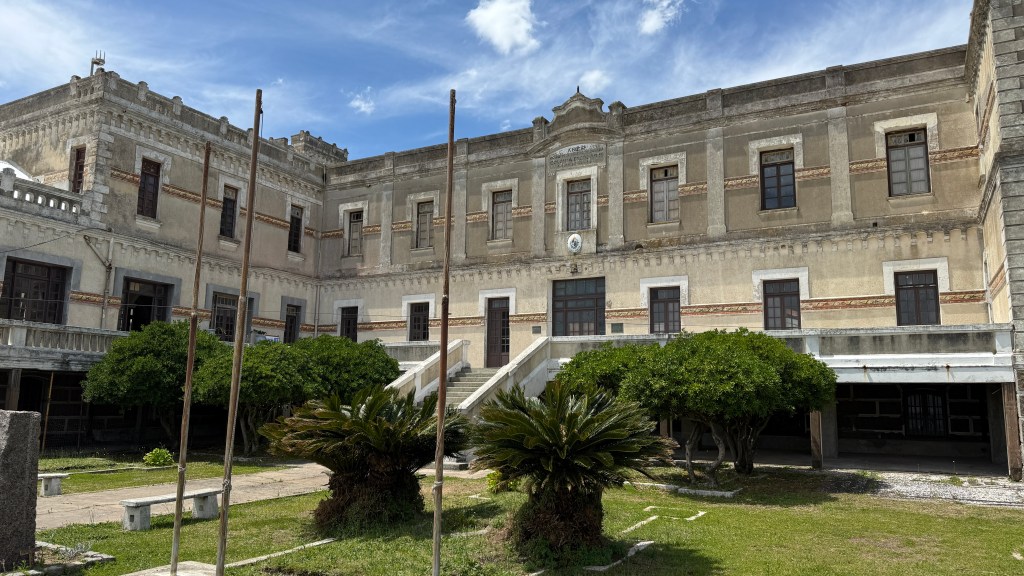
Hard times have come to the hotel, but it still remains open.
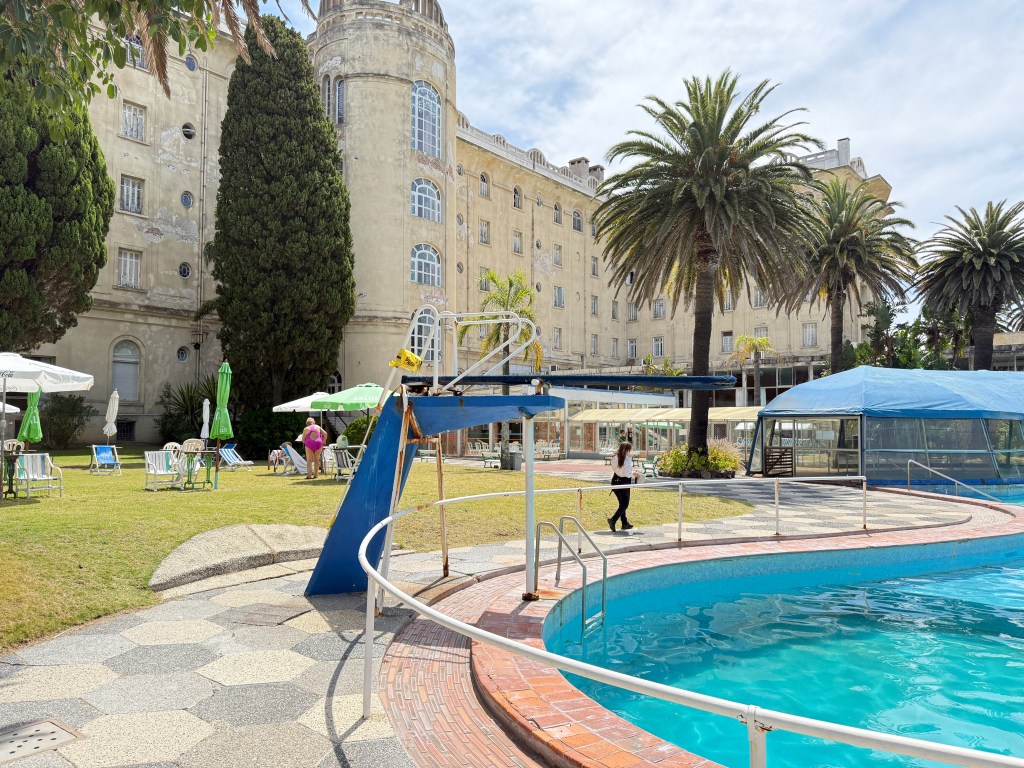
The hotel still has two operating pools, but I would be hesitant to swim in the water.
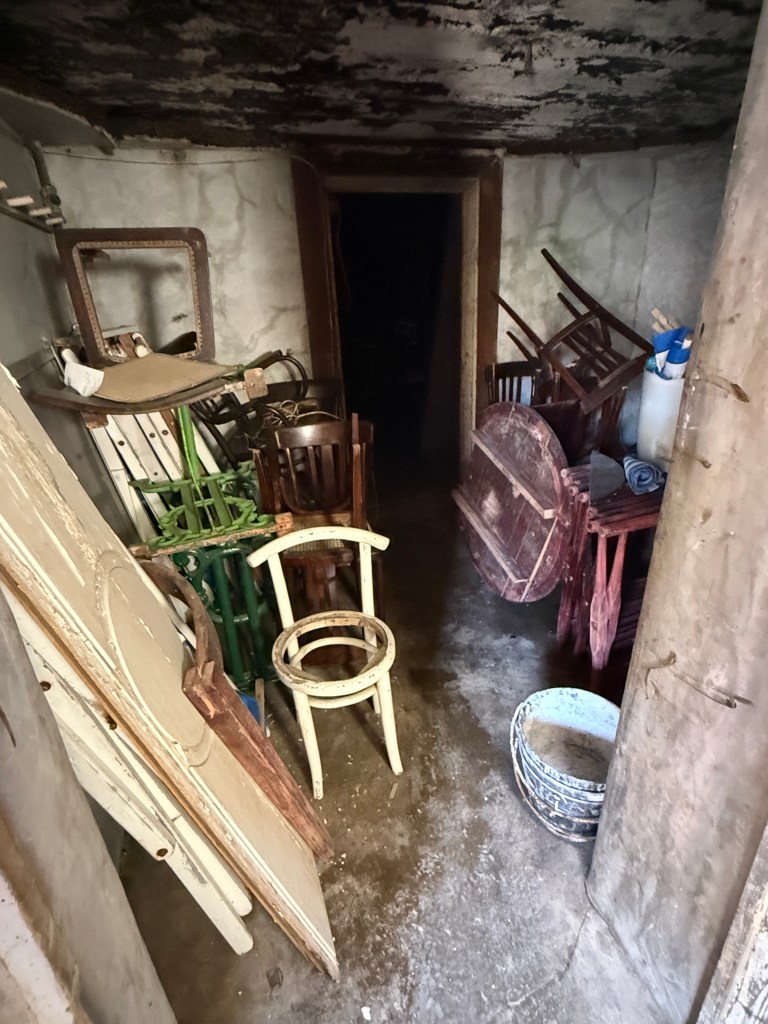
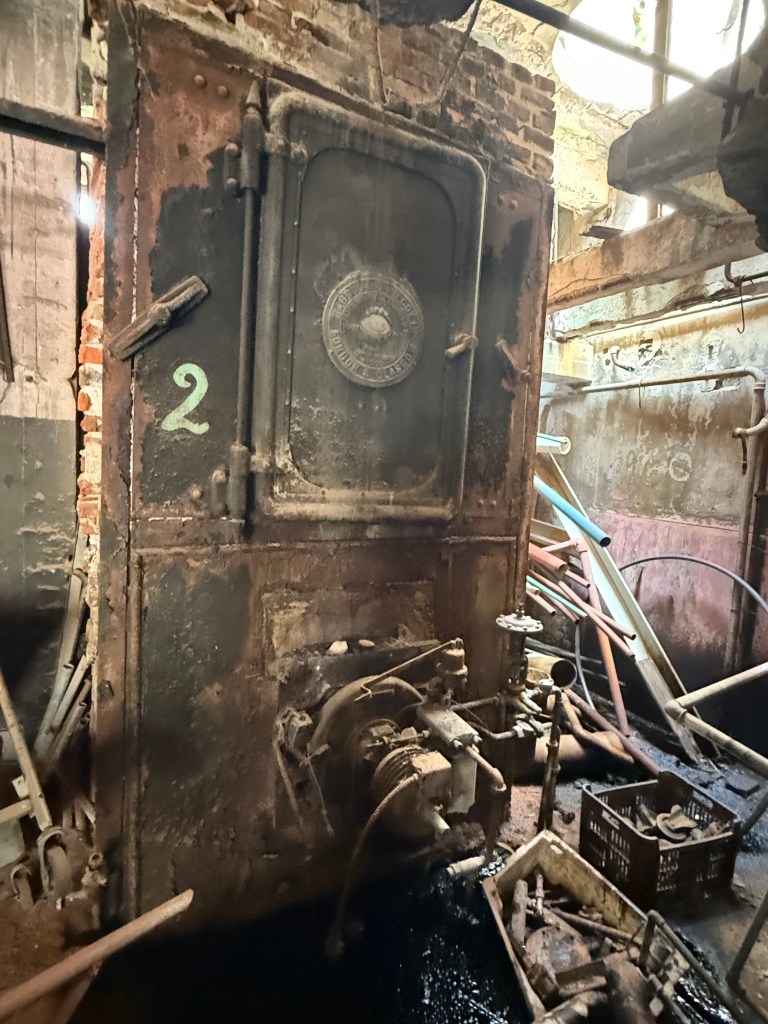
Above is an out-building housing some of the historical equipment like old furniture and what looks like to be an old boiler – long since abandoned.
Above: Street life in Piriápolis is simple, warm and friendly. This impromptu street group just started singing and many passers by joined in.
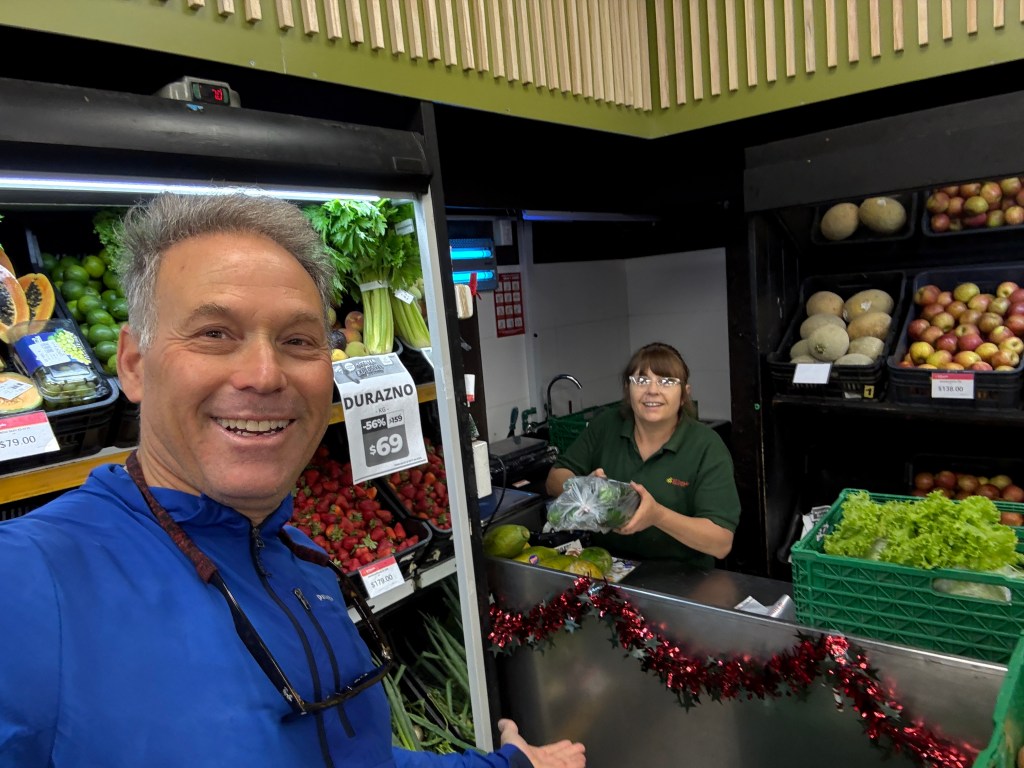
Above: Time to get back to work. As we are leaving soon, I am now purchasing fruits and vegetables for our trip to the Falklands.
q
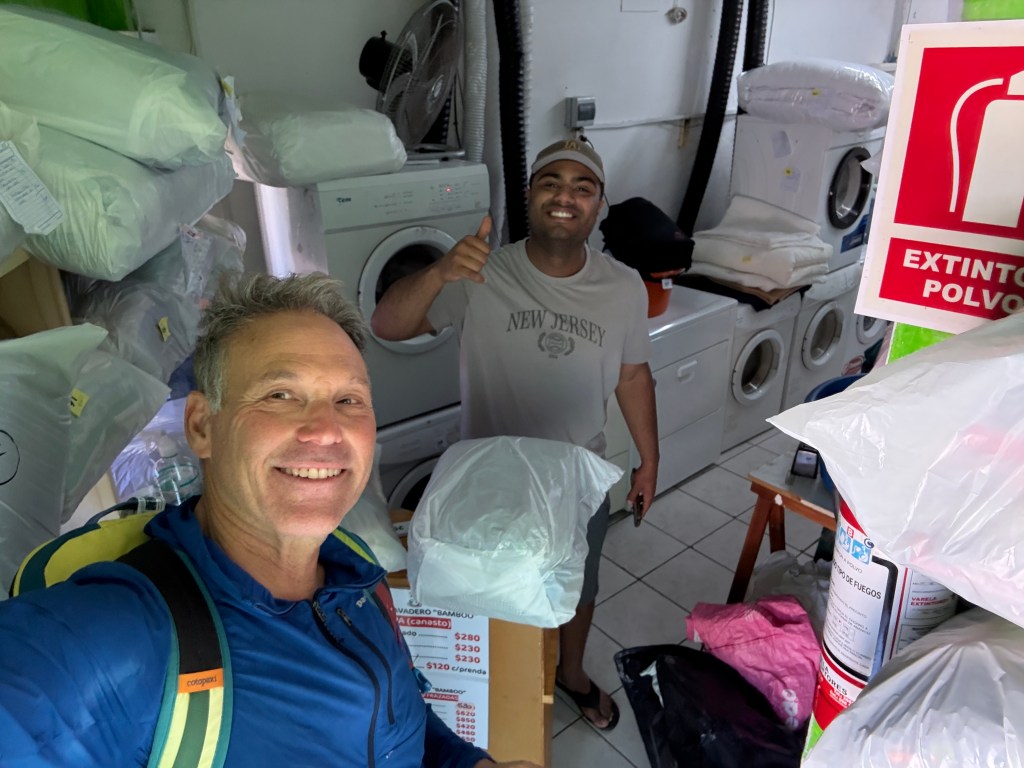
Above: Time to pick up the laundry from the friendly lavandaria. I was asked if it was ok to “perfume” our laundry. Given the way it smelled when I dropped it off, I said “Si!!”

Above: Two days before we leave, we call up the fuel truck for next day delivery. Here we are getting ready to receive the fuel.

As soon as we began fueling, a plethora of other sailboats stormed the fuel truck and took their turn after us. Notice the blue boat on the left, Chava from Vladivostok, complete with father, mother and two daughters. They have been on a sailing adventure for three years now, and plan to return home by rounding the horn and coming up the pacific. I hope they look us up in San Francisco.
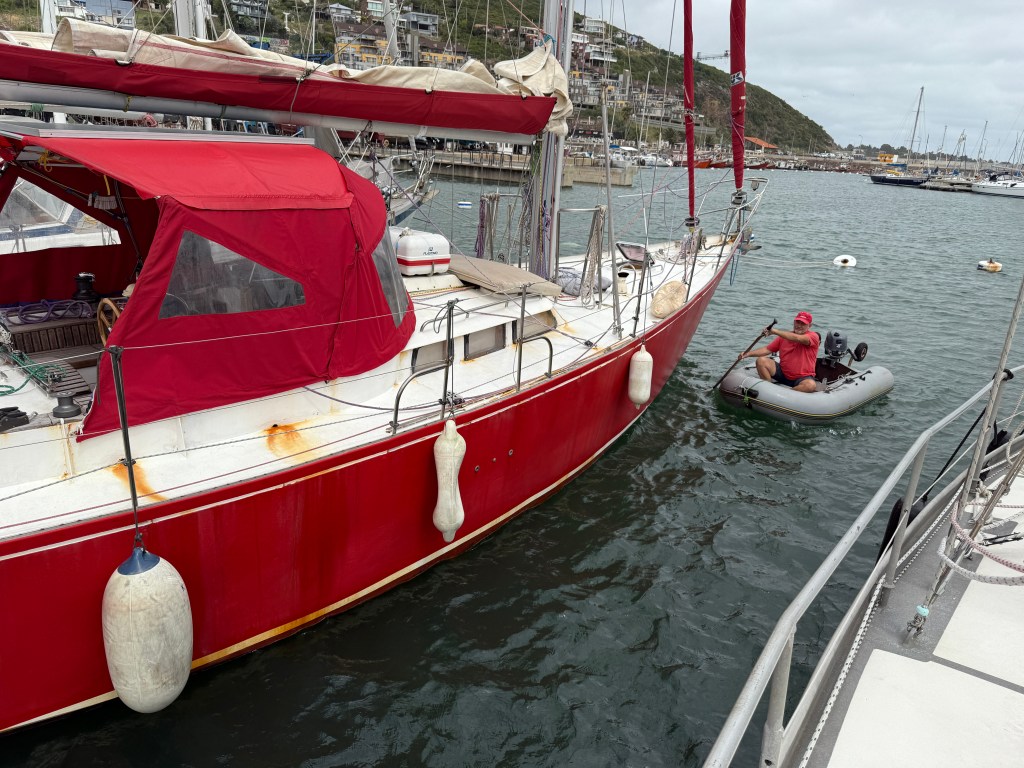
Above: Lava rushed back from the fuel dock to help us tie back into our slot. But his outboard engine failed and he did his fastest paddle over to us.

Above: Friday night I traveled (almost two hours) to Montevideo to spend a wonderful Shabbat with newlywed couple Orev (left) and Rhena (right) who just moved to Montevideo two weeks ago from Austin Texas. We had a simple dinner and then went to Friday night services at Kehila Synagogue located in the Punta Carretas neighborhood. Turns out I had one of the most unusual and enjoyable Jewish experiences of my life.
I was introduced to Orev and Rhena by their mother Natalie who works for the Jewish News of Northern California (I am a longtime board member there). Orev has been transitioning to transgender male over the past two years and Rhena has been transitioning to trans female over the past three to four years. Both felt uncomfortable back home due to the current US political climate and opted for a new start in what they consider to be a trans-friendly environment in Uruguay.
What I got a kick out of was that when we entered the synagogue, it was clear that Kehila was an orthodox congregation which meant that the men and women are separated and sit on opposite sides of the room. Without missing a beat, Rhena sat with the women and Orev and I sat with the men. Later on there was dancing for the men, and the Rabbi and participants didn’t blink an eye as they pulled Orev and me into the dancing chain. At the conclusion of the service, the Rabbi asked Orev and me to give the final extended Kiddish blessing over the wine (which I am sorry to say I botched!)
There was an oneg (snacks and drinks) following the service and the entire congregation was friendly and hospitable. Turns out they thought Orev was my son, but who can blame them! Suffice to say I have never felt more welcome in an orthodox environment and to be honest, I am not sure if we would have had such a welcoming experience at a random orthodox service back home. Following the service, we dropped into a pharmacy to avail ourselves of Uruguay’s legal marijuana (for medicinal use, of course!). Turns out we were too late and all were closed for the evening. With that we said goodby and I made my way back to Piriápolis so I could get up early and join Randall at the boat.
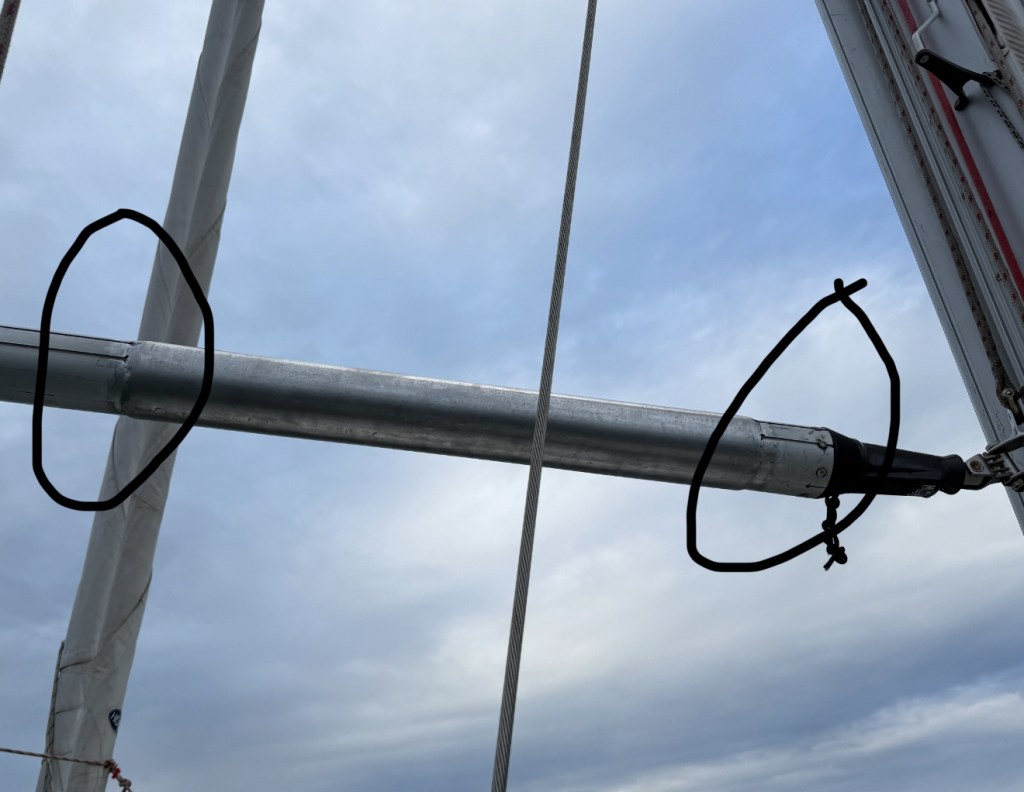
Above: It’s zero hour and we are ready to push off at noon. The Genoa pole is tested and installed. You can see the final job – they bent the pole back and then welded on an aluminum sleeve. Can’t wait to test!
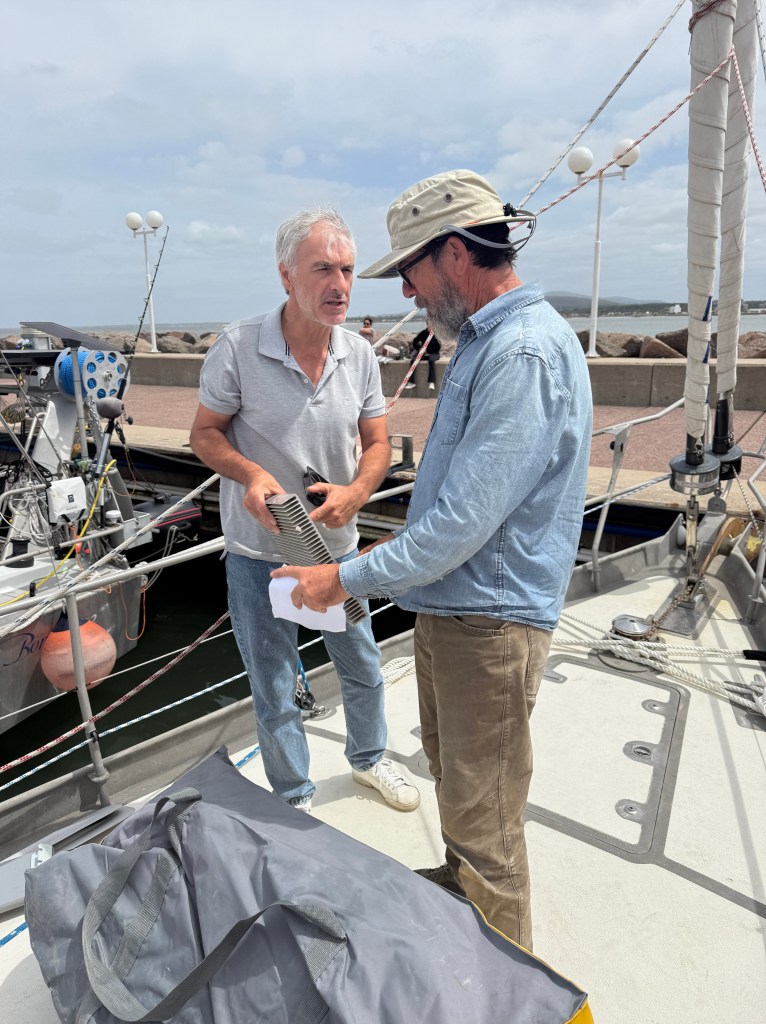
Above: Randall in final discussions with the electrician who spent the prior day chasing down parts for the autopilot. After worrying for days, and checking with local and far away contacts (thank you Mike Scheck and Brian Boshima (sp?), Randall now believes that his newly installed upgraded autopilot is up for the task at hand. No need for further improvements. Anybody taking bets??!!
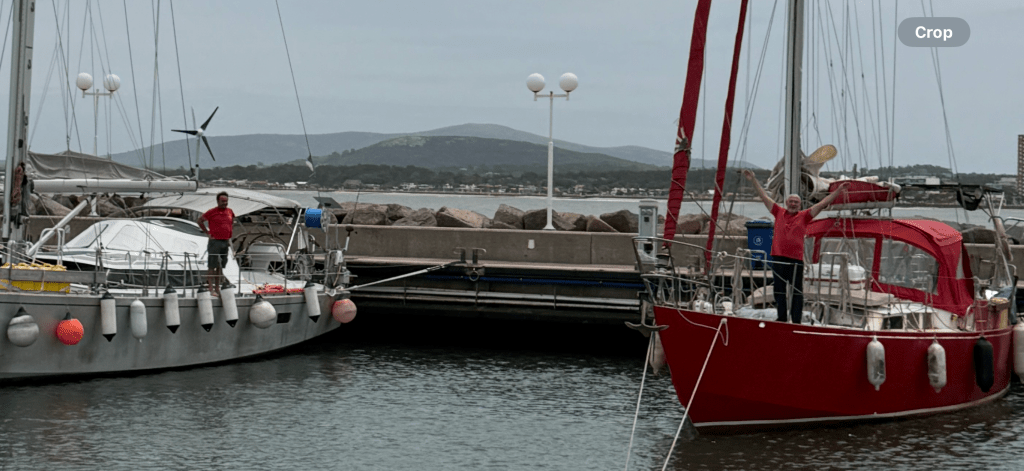
Above: Saturday November 29th we slip lines at noon. Always sad to leave friends. Something tells us we will see both again, perhaps in Puerto Williams?
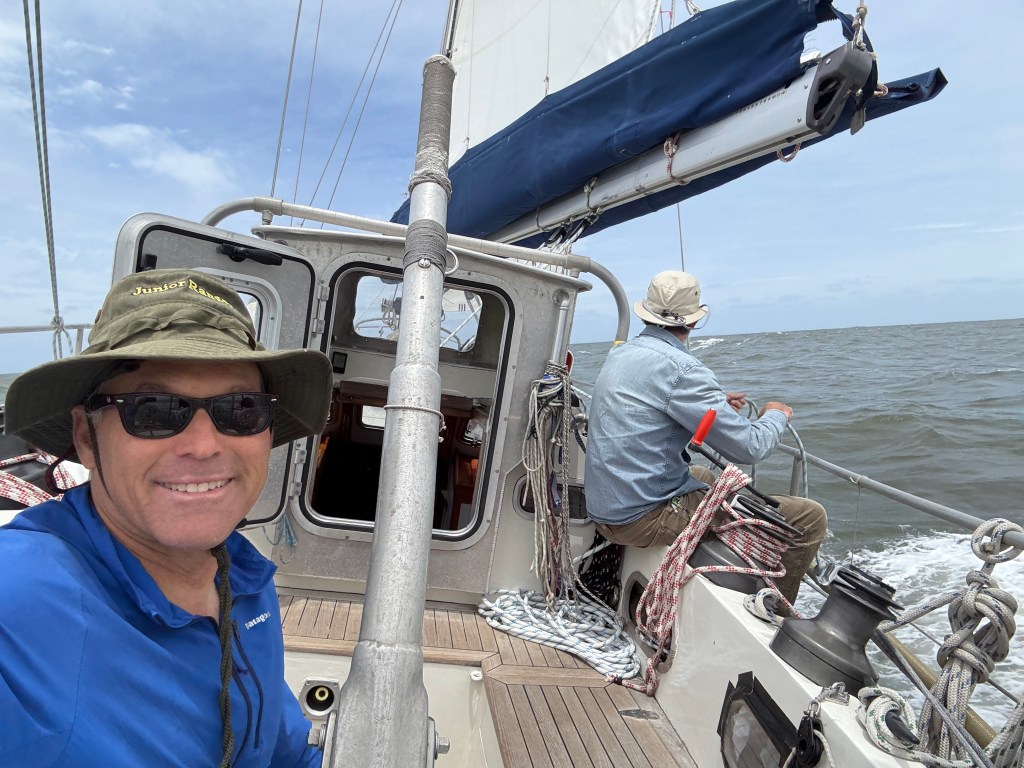
Above: It is nice to be back on track. The weather is warm and the sea is green.
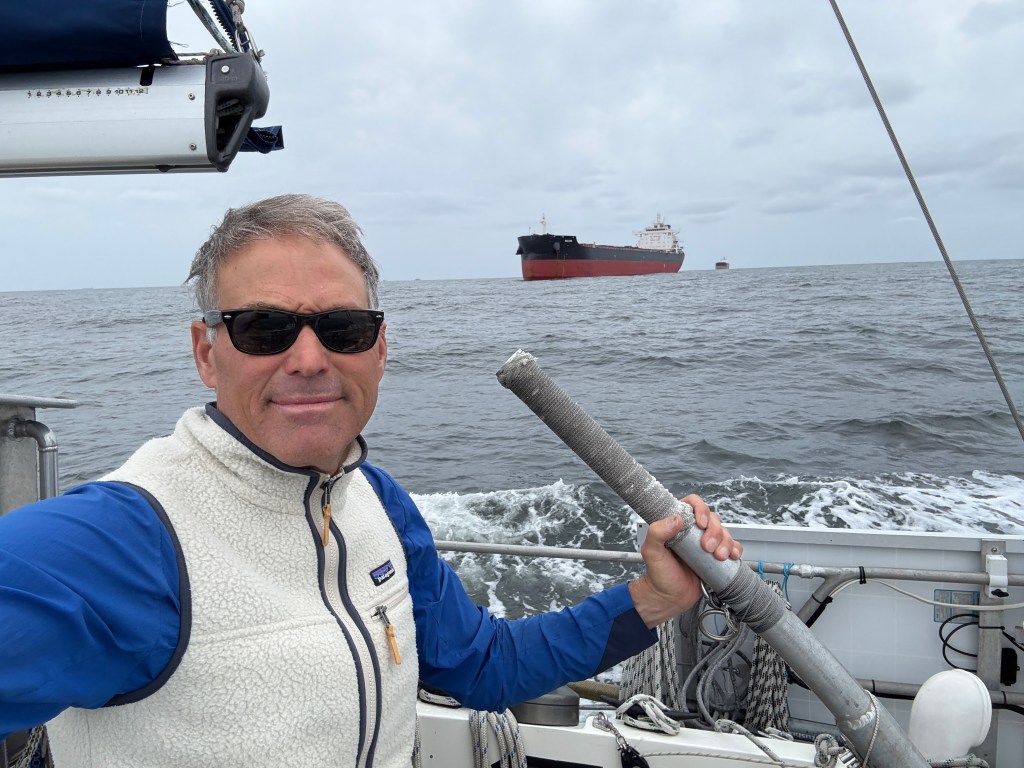
Did not take long to run into a ghost fleet anchored in the delta area almost 100 miles outside of Uruguay.
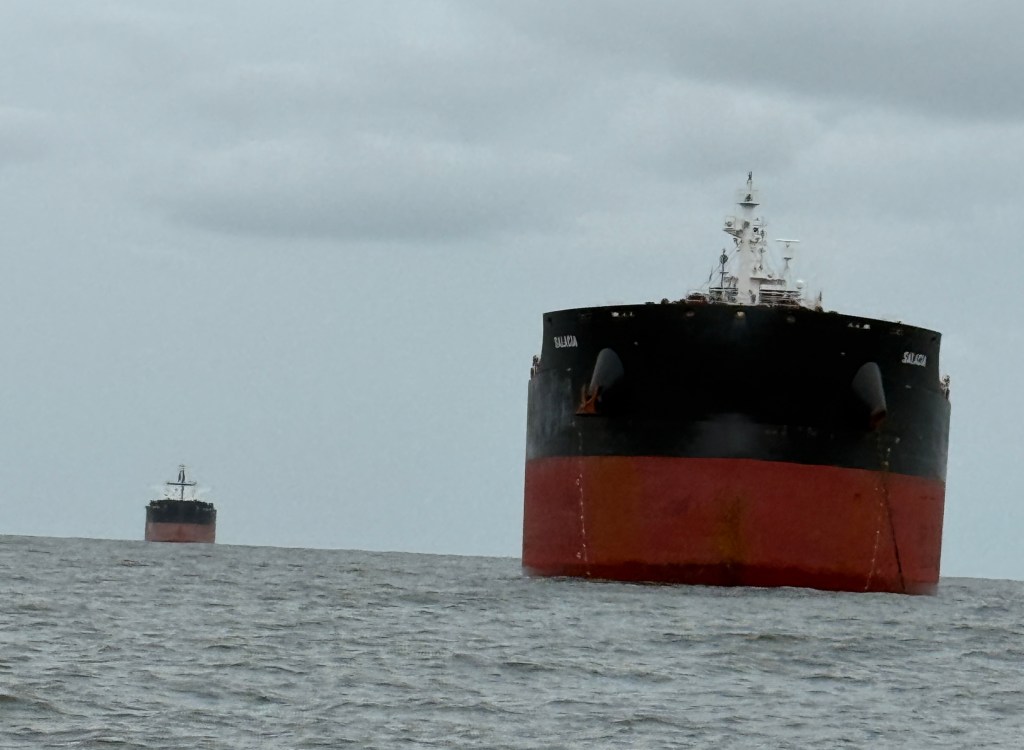
They look menacing, but they are anchored.
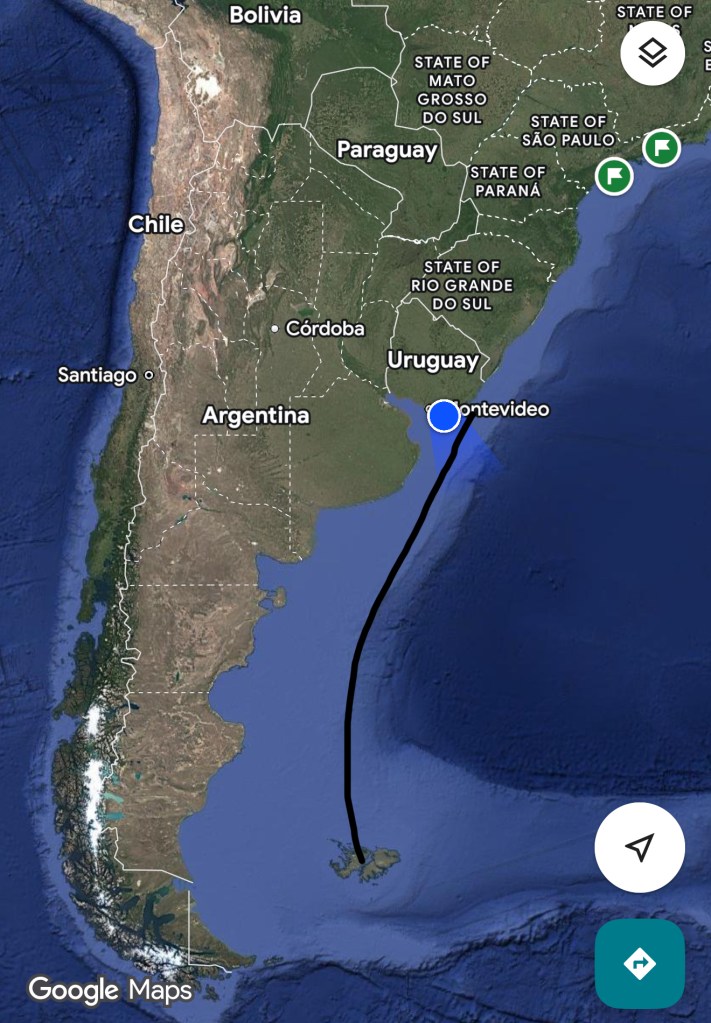
Above: Our plan is to go almost directly south from Piriápolis to Stanley, capital of the Falkland Islands – almost exactly 1,000 nautical miles. This should take us one week if we average a little more than 140 miles per day. As of now, the weather appears to be mild. No storms or heavy weather until our arrival.
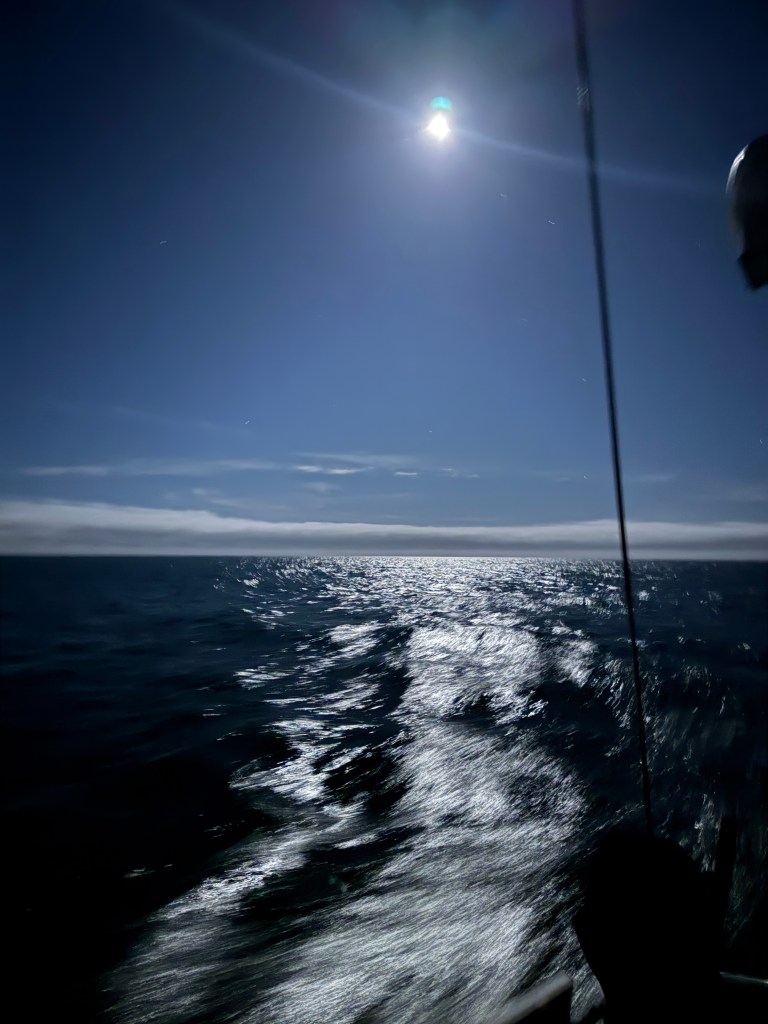
Above: The evening of December 1st. Very clear skies, and still a somewhat pleasant temperature at night in the mid 60’s.
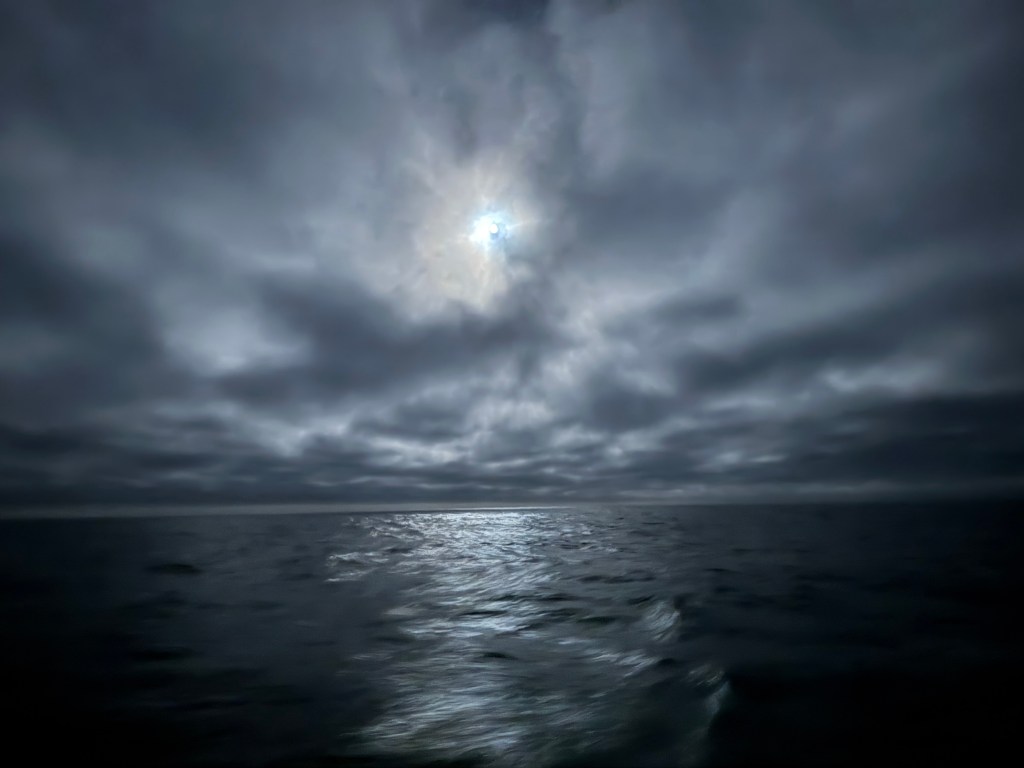
Above: This is the same night one hour later. The clouds have descend and blanket the sky with the moon doing its best to break through.
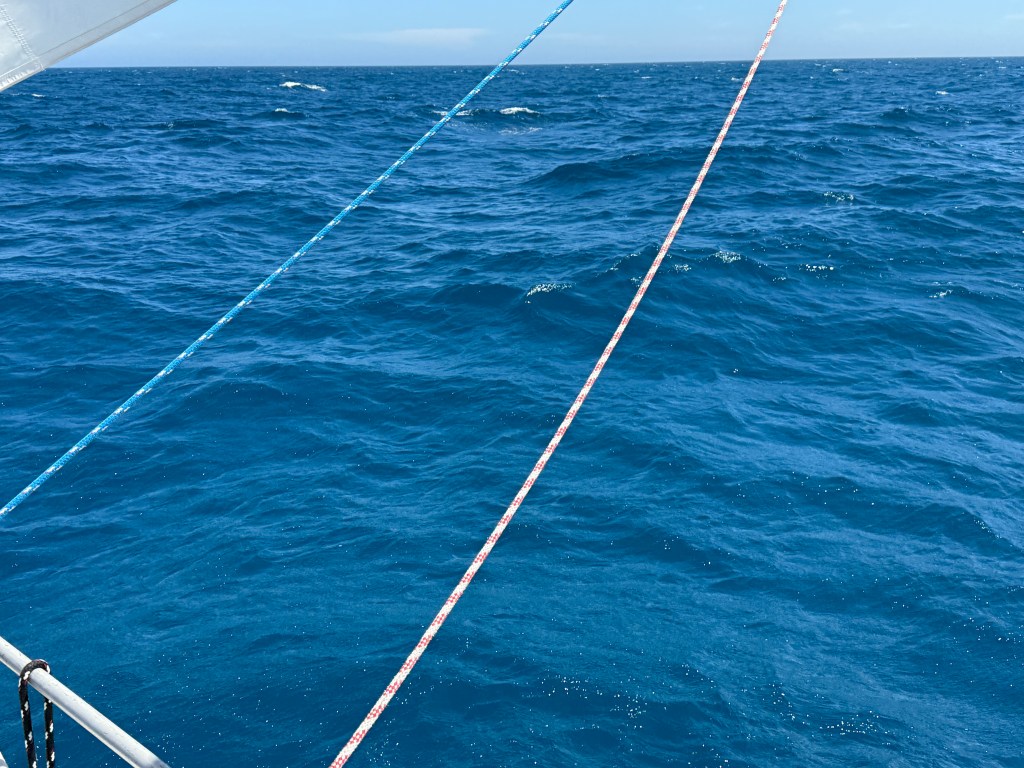
By 0600 on December 1st, we have crossed Latitude 40 meaning we have officially descended into the “roaring forties”. Although calm now, the “roaring forties” refers to the zone of strong westerly winds between 40 and 50 degrees latitude south, characterized by rough seas and powerful waves. These strong winds have been used for centuries to speed up eastward voyages around the globe. Unfortunately for us, we are going west!
As you can see, the water is in the process of changing color from green to turquoise, which makes it look more tropical. The wind is still quite spotty, often blowing less than 10 knots so we find ourselves motor-sailing quite a bit to keep our forward momentum. We also find that in the last couple of days, we have been caught in a counter current of approximately 1.5 knots which also slows our progress.
Meanwhile water temperature has dropped from the mid 60’s when we left Piriápolis to 48 as of tonight. The air temperature has similarly dropped from the mid 70’s to the 50’s at night. It is getting colder and wetter as we go south, and we are continually adding under layers and hats to our wardrobe.
See you all in Stanley!!


 Harmon and Randall's Voyage...
Leave a reply to Harmon Shragge Cancel reply